

Hydraulic port caps and hydraulic plugs both protect hydraulic connections, but they serve different purposes. A hydraulic port cap generally covers and protects an exposed connection, while a hydraulic plug is typically installed into a port to close and seal it.
Although the two components can look similar, using the wrong one can lead to poor sealing, contamination, thread damage, or leakage. Understanding how hydraulic port caps and plugs differ makes it easier to select the right component for assembly, transportation, maintenance, and long-term equipment use.
What Are Hydraulic Port Caps?
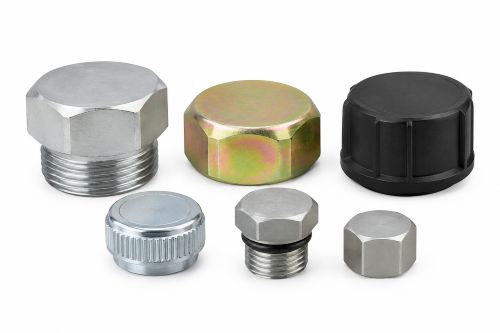
A hydraulic port cap is a protective component designed to cover an exposed hydraulic connection or port. It is commonly used when a hose, tube, fitting, or other hydraulic component is disconnected.
The main purpose of a port cap is protection. It can help keep dust, dirt, moisture, and other contaminants away from the connection. It can also protect exposed threads and sealing surfaces from mechanical damage during handling or storage.
Depending on the design, hydraulic port caps may be made from carbon steel, stainless steel, plastic, or other suitable materials. Some are designed for temporary protection during transportation, while others are built for more demanding industrial environments.
For example, when a hydraulic hose is removed from a machine for maintenance, the exposed connection can be covered with a port cap. This helps prevent contamination from entering the hydraulic system while the hose is disconnected.
What Are Hydraulic Plugs?
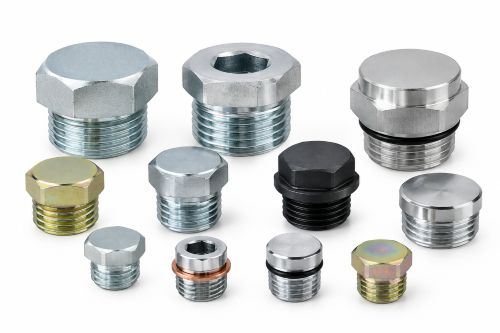
Hydraulic plugs are designed to close hydraulic ports or openings. Unlike a cap that generally fits over a connection, a plug is normally installed into the port itself.
A hydraulic plug can be used to seal an unused port, prevent hydraulic fluid from escaping, or isolate part of a hydraulic circuit. Depending on the design, the plug may seal through tapered threads, parallel threads with a sealing element, an O-ring, a bonded seal, or another sealing arrangement.
Hydraulic plugs are available in many configurations to match different hydraulic connection standards. Common examples include threaded plugs, tapered plugs, bonded seal plugs, ORB plugs, and flange plugs.
The correct plug needs to match the port in terms of thread type, size, sealing method, pressure requirements, and application conditions.
Hydraulic Port Caps vs Hydraulic Plugs: Key Differences
The simplest way to distinguish these components is to consider where they are installed and what they are designed to accomplish.
A port cap normally covers an exposed connection, while a plug normally closes a port.
However, the distinction can vary between manufacturers and product designs, so the actual specifications should always be checked before installation.
1. Installation Position
The installation position is one of the clearest differences.
A hydraulic port cap generally fits over an exposed connection, fitting, hose end, or external thread. It acts as a protective cover for the connection.
A hydraulic plug is generally inserted into a hydraulic port or threaded opening. It closes the passage and, when properly designed and installed, provides a seal.
2. Main Function
Port caps are primarily associated with protection.
They help protect hydraulic connection points from contamination, impact, moisture, and thread damage. This makes them particularly useful during transportation, storage, assembly, and maintenance.
Plugs are primarily associated with closure and sealing.
They are used when a hydraulic port needs to be closed to prevent fluid leakage or isolate an opening within the system.
3. Sealing Method
Not every hydraulic port cap is designed to withstand system pressure. Some are simply protective covers and should not be treated as pressure-containing components.
Hydraulic plugs, on the other hand, are often designed specifically for sealing a hydraulic port. Depending on the product, sealing may be achieved through tapered threads, O-rings, bonded seals, metal-to-metal sealing surfaces, or other methods.
This difference is especially important in high-pressure hydraulic systems. A protective cap should not automatically be substituted for a pressure-rated plug.
4. Thread Configuration
Caps and plugs can have different thread configurations depending on how they attach to the hydraulic component.
A cap may be designed to cover an external male thread or connection. A plug may have male threads that screw into a female hydraulic port.
Hydraulic systems can use several thread standards, including NPT, BSP, JIC, ORB, and metric threads. The thread standard and size must match the mating connection.
A component that appears to fit may still be unsuitable if the thread form or pitch is incorrect.
5. Typical Applications
Hydraulic port caps are commonly used for:
➡️ Protecting disconnected hose ends
➡️ Covering exposed fittings
➡️ Protecting hydraulic ports during shipping
➡️ Preventing contamination during equipment assembly
➡️ Protecting threads and sealing surfaces during storage
➡️ Hydraulic plugs are commonly used for:
➡️ Closing unused hydraulic ports
➡️ Sealing hydraulic passages
➡️ Preventing fluid leakage
➡️ Isolating sections of hydraulic circuits
➡️ Closing ports during maintenance
➡️ Protecting hydraulic components from unwanted fluid loss
Hydraulic Port Caps vs Hydraulic Plugs Comparison
|
Feature |
Hydraulic Port Caps |
Hydraulic Plugs |
|
Basic purpose |
Protect exposed connections |
Close or seal hydraulic ports |
|
Typical position |
Over a connection or external thread |
Inside a hydraulic port or opening |
|
Main function |
Contamination and physical protection |
Port closure and fluid sealing |
|
Pressure capability |
Depends on design; many are protective only |
Often available in pressure-rated designs |
|
Sealing |
May or may not provide a pressure seal |
Commonly designed with a sealing method |
|
Typical use |
Storage, shipping, maintenance, assembly |
Hydraulic system operation and maintenance |
|
Thread compatibility |
Depends on cap design |
Must match the hydraulic port |
|
Materials |
Steel, stainless steel, plastic, and others |
Steel, stainless steel, brass, and others |
|
Reusability |
Often reusable when undamaged |
Often reusable if threads and seals remain in good condition |
Common Types of Hydraulic Port Caps
Hydraulic port caps are available in several designs because hydraulic connections vary considerably between applications.
Threaded Port Caps
Threaded port caps are designed to attach securely to compatible hydraulic connections. They can provide better mechanical protection than simple push-on covers.
They are useful when equipment will be transported, stored, or exposed to environments where a loose protective cover could be removed easily.
Push-On Port Caps
Push-on caps are designed for quick installation and removal. They are often used for temporary protection during assembly, transportation, or maintenance.
Their simple design makes them convenient when frequent access to hydraulic connections is required.
Protective Dust Caps
Dust caps focus primarily on contamination control. They help keep dust and debris away from exposed hydraulic connections when equipment is not connected or operating.
They are particularly useful in workshops, manufacturing environments, and field service applications.
Metal Hydraulic Port Caps
Metal caps are commonly selected when higher mechanical strength or environmental resistance is required. Steel and stainless steel designs can provide durable protection against impact, corrosion, and harsh operating conditions.
The exact suitability depends on the material, coating, design, and environment.
Common Types of Hydraulic Plugs
Hydraulic plugs also come in many configurations.
Threaded Hydraulic Plugs
Threaded plugs are among the most common designs. They screw into a compatible hydraulic port and can be used to close unused openings or seal hydraulic passages.
The plug must have the correct thread type, diameter, pitch, and sealing arrangement for the port.
Tapered Plugs
Tapered plugs use a tapered thread or sealing geometry that becomes tighter as the plug is installed.
They are commonly used in hydraulic and fluid systems where the connection design relies on tapered threads. Installation should follow the manufacturer’s recommendations to avoid excessive tightening or thread damage.
Bonded Seal Plugs
Bonded seal plugs use a sealing element, typically combining a metal washer with an elastomeric sealing ring.
When tightened against the port’s sealing surface, the seal helps prevent fluid from passing through the connection. These plugs can be useful where a reliable static seal is required.
ORB Plugs
ORB, or O-Ring Boss, plugs are designed for ports using an O-ring-based sealing system. The O-ring provides the primary seal between the plug and the port.
Because ORB connections depend on the correct O-ring size and sealing geometry, selecting a compatible plug is essential.
Hydraulic Flange Plugs
Flange plugs are designed for hydraulic flange connections. They are commonly used to close or protect flange ports during equipment assembly, transportation, and maintenance.
Their dimensions and pressure capabilities must correspond with the relevant flange connection.
When Should You Use a Hydraulic Port Cap?
A hydraulic port cap is generally appropriate when the primary requirement is to protect an exposed connection.
For example, imagine a hydraulic cylinder being removed from a machine. Once the hydraulic hoses are disconnected, the exposed hose ends and ports can collect dirt or moisture. Installing suitable protective caps helps keep these areas clean while the equipment is being serviced.
Port caps are also useful during:
➡️ Equipment transportation
➡️ Component storage
➡️ Hydraulic system assembly
➡️ Hose replacement
➡️ Preventive maintenance
➡️ Factory production and testing
In these situations, contamination control can be just as important as mechanical protection.
When Should You Use a Hydraulic Plug?
A hydraulic plug is generally appropriate when a port needs to be closed or sealed.
For example, a hydraulic manifold may contain several ports, but not every port is required for a particular circuit configuration. An appropriately rated plug can close an unused port and prevent hydraulic fluid from escaping.
Plugs are also useful during maintenance when a particular hydraulic passage needs to be isolated.
However, the plug must be suitable for the pressure and temperature of the system. A basic protective plug should not be used in a pressurized hydraulic circuit unless its specifications specifically permit that application.
How to Choose Between a Hydraulic Port Cap and a Hydraulic Plug
Choosing between the two starts with identifying the purpose of the component.
If you need to cover and protect an exposed connection, a hydraulic port cap may be the appropriate choice.
If you need to close and seal a hydraulic port, a hydraulic plug is generally the better option.
After identifying the purpose, consider several other factors.
Check the Thread Type and Size
Thread compatibility is critical. Check the thread standard, nominal size, pitch, and gender of the connection before ordering.
Common hydraulic connection standards include NPT, BSP, JIC, ORB, and metric threads. Similar-looking threads are not necessarily interchangeable.
Consider Pressure Requirements
Determine whether the component will only provide temporary protection or will remain installed while the hydraulic system is pressurized.
For pressure-containing applications, use a component with a suitable pressure rating and sealing design.
Check the Sealing Method
Consider how the component is expected to seal.
Depending on the connection, sealing may rely on an O-ring, bonded seal, tapered thread, sealing face, or another method. The sealing method should correspond to the port design.
Select the Right Material
Material selection depends on the working environment.
Carbon steel may be suitable for many general hydraulic applications, while stainless steel may be preferred when greater corrosion resistance is required. Surface treatments and coatings can also improve corrosion resistance for certain steel components.
Consider Temperature and Fluid Compatibility
The component should be compatible with the hydraulic fluid and operating temperature.
This is particularly important when the plug or cap includes elastomeric sealing elements. The seal material must be suitable for the fluid and temperature range.
Common Mistakes to Avoid
One common mistake is assuming that a hydraulic cap and plug are interchangeable simply because they have similar dimensions.
They are not necessarily designed for the same purpose.
Another mistake is selecting a component based only on nominal size. Thread standards can differ even when two components have similar dimensions. For example, a metric thread should not be substituted with a similarly sized inch thread simply because it appears to fit.
Over-tightening is another issue. Excessive torque can damage threads, sealing surfaces, or sealing elements. Always follow the manufacturer’s installation recommendations.
It is also important not to assume that every protective cap can withstand hydraulic pressure. Some caps are intended only for contamination and physical protection during storage or transportation.
Applications of Hydraulic Port Caps and Plugs
Both components are widely used throughout the hydraulic industry.
Construction Equipment
Excavators, loaders, cranes, and other construction machines use hydraulic hoses, valves, cylinders, pumps, and fittings. Caps can protect disconnected connections during service, while plugs can close unused ports.
Agricultural Machinery
Tractors, harvesters, sprayers, and other agricultural machines operate in environments with significant exposure to dust, soil, moisture, and debris. Protective caps can help reduce contamination when hydraulic connections are disconnected.
Industrial Hydraulic Systems
Industrial machinery often contains manifolds, valves, cylinders, pumps, and multiple hydraulic circuits. Plugs can close unused ports, while caps can protect components during manufacturing and maintenance.
Hydraulic Hose Assemblies
When hoses are shipped or stored before installation, protective caps can help protect the hose ends and connection surfaces.
Hydraulic Pumps and Valves
Plugs can be used to close designated ports on pumps, valves, and manifolds. Caps may be used to protect connection points during transportation or servicing.
Maintenance and Handling Tips
Proper handling can extend the useful life of both hydraulic caps and plugs.
Keep components clean before installation and avoid placing them on dirty surfaces. Inspect threads and sealing surfaces for scratches, deformation, corrosion, or contamination.
If a plug uses an O-ring or another sealing element, inspect the seal before installation. A damaged or hardened seal can cause leakage even when the plug itself is in good condition.
When removing a cap or plug, avoid damaging the mating connection. After removal, store reusable components in a clean and dry location.
For pressure-rated applications, always follow the manufacturer’s specifications for installation torque, pressure limits, temperature range, and sealing requirements.
Final Thoughts
Hydraulic port caps and hydraulic plugs may look similar, but they perform different jobs. Port caps are generally used to protect exposed hydraulic connections, while hydraulic plugs are primarily used to close and seal hydraulic ports.
The right choice depends on more than size. Thread type, sealing method, pressure rating, material, temperature, hydraulic fluid, and application conditions should all be considered before selecting a component.
For temporary protection during transportation or maintenance, a suitable hydraulic port cap can help keep connections clean and protected. When a hydraulic port needs to remain closed during operation, a properly specified hydraulic plug is generally the more appropriate solution.
Post time: Sep-29-2026