

Hydraulic tapered plugs are mainly used to seal unused threaded ports, prevent hydraulic fluid leakage, keep contaminants out, and protect hydraulic components during assembly, operation, storage, and transport. Their tapered thread design allows the plug to engage with a matching tapered port and create a secure connection.
Although hydraulic tapered plugs are small components, they play an important role in maintaining the reliability of hydraulic systems. They are commonly found in manifolds, valves, pumps, cylinders, hydraulic power units, and mobile equipment.
Understanding how these plugs work and where they are used can help engineers, maintenance teams, and hydraulic equipment manufacturers choose the right component for each application.
What Is a Hydraulic Tapered Plug?
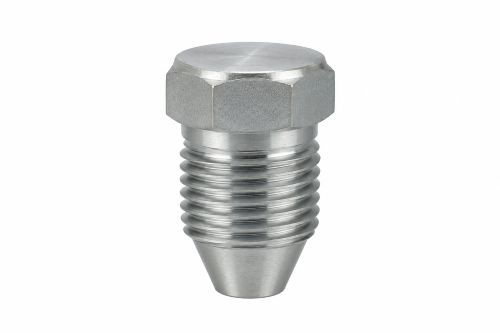
A hydraulic tapered plug is a threaded fitting designed to close an opening in a hydraulic component. Unlike a parallel-thread plug, the external threads on a tapered plug gradually increase in diameter along the threaded section.
When the plug is installed into a matching tapered port, the threads progressively engage as the plug is tightened. This creates contact between the mating threads and helps form a pressure-resistant connection.
Hydraulic tapered plugs are available in different thread standards, sizes, materials, and configurations. NPT and BSPT are common tapered thread types, although the exact thread used depends on the hydraulic component and system design.
Common materials include carbon steel and stainless steel. Surface treatments such as zinc plating may also be used on steel plugs to improve corrosion resistance.
What Are Hydraulic Tapered Plugs Used For?
Hydraulic tapered plugs have several practical uses in hydraulic equipment. Their primary purpose is to close an opening, but they can also help protect components and maintain the cleanliness of a hydraulic circuit.
1. Sealing Unused Hydraulic Ports
One of the most common uses of a hydraulic tapered plug is closing an unused port.
Hydraulic manifolds, valve blocks, pumps, cylinders, and other components may have ports that are not required in every system configuration. Leaving these openings exposed could result in hydraulic fluid leakage or allow contaminants to enter the system.
A properly selected tapered plug closes the unused port and helps maintain the integrity of the hydraulic circuit.
For example, a manifold may be manufactured with several possible connection points even though a particular machine only uses some of them. The remaining ports can be closed with suitable hydraulic plugs.
2. Preventing Hydraulic Fluid Leaks
Hydraulic systems often operate under significant pressure, so open or poorly sealed ports can quickly become a source of leakage.
A tapered plug provides a threaded closure for the port. As it is tightened into the matching tapered thread, the increasing thread diameter creates contact between the mating surfaces.
Depending on the thread standard and application, an appropriate thread sealant may also be used. The manufacturer’s installation recommendations should always be followed because excessive sealant or incorrect installation can create other problems.
Using the correct plug and installing it properly helps reduce the risk of leakage around unused ports.
3. Protecting Hydraulic Ports From Contamination
Hydraulic contamination can come from dirt, dust, moisture, metal particles, and other foreign materials. Once contaminants enter a hydraulic circuit, they can affect sensitive components such as valves, pumps, and actuators.
Tapered plugs can help close exposed ports and reduce the chance of contaminants entering through those openings.
This is particularly useful during equipment assembly, maintenance, transportation, and storage. A component with an exposed threaded port can be temporarily closed until the hydraulic hose or fitting is installed.
It is important to distinguish between a pressure-rated hydraulic plug and a simple protective cap. Not every plug intended for contamination protection is designed to withstand operating pressure.
4. Closing Ports During Hydraulic Equipment Assembly
Hydraulic equipment is often built around a specific configuration. Some ports may be used in one machine model but remain unused in another.
Hydraulic tapered plugs make it possible to close those unused openings without redesigning the entire component.
For equipment manufacturers, this provides flexibility when using standardized manifolds, valve blocks, or other hydraulic components across different product configurations.
During assembly, plugs can also be used temporarily before the final connection is installed. However, the plug must be appropriate for the intended pressure and service conditions if the system will be pressurized while the plug is installed.
5. Isolating Parts of a Hydraulic Circuit
Hydraulic plugs can also be used when a particular port needs to remain closed to isolate part of a circuit.
For example, a manifold may contain several internal passages and connection points. A selected port can be closed to prevent hydraulic fluid from entering or leaving through that opening.
This can be useful when adapting a hydraulic system to a particular machine configuration or during certain maintenance procedures.
However, a plug should not be treated as a substitute for a properly designed isolation valve where controlled isolation is required. The appropriate component depends on the system design and maintenance procedure.
6. Protecting Components During Transportation and Storage
Hydraulic components are often transported from a manufacturer to an equipment assembly plant or stored before installation. During this time, exposed ports can collect dirt and moisture or suffer thread damage.
A suitable plug can close the opening and provide physical protection.
For example, hydraulic valves or manifolds may be shipped with their unused ports plugged. Once the component reaches the assembly area, the plugs can be removed and the required hydraulic connections installed.
This simple step can help keep threaded ports cleaner and reduce the risk of damage before the component enters service.
Common Applications of Hydraulic Tapered Plugs
Hydraulic tapered plugs are used across many types of hydraulic equipment.
Hydraulic Manifolds
Manifolds commonly have multiple threaded ports for connecting valves, hoses, tubes, gauges, and other components. Tapered plugs can be used to close ports that are not required.
Hydraulic Valves
Valve bodies can contain several connection points depending on the valve design. Suitable plugs can close unused threaded openings and help protect the internal passages.
Hydraulic Pumps and Motors
Some pumps and motors have auxiliary or optional ports. A properly rated plug may be used to close an unused opening according to the manufacturer’s design.
Hydraulic Cylinders
Hydraulic cylinders can also contain ports or threaded openings that require sealing during assembly, testing, or certain configurations.
Hydraulic Power Units
Hydraulic power units often contain manifolds, valves, pumps, filters, and other components with multiple connection points. Plugs are frequently used to close ports that are not connected to external lines.
Construction and Agricultural Equipment
Mobile machinery such as excavators, loaders, tractors, and other equipment can use hydraulic components with unused or auxiliary ports. Tapered plugs provide a convenient way to close these openings when required.
Industrial Hydraulic Machinery
Presses, machine tools, material-handling equipment, and other industrial systems can also use hydraulic tapered plugs in manifolds and other hydraulic components.
Checkout these other resources ⬇️⬇️⬇️
What Is a Hydraulic Fitting with Orifice and How Does It Work?
What Is a Hydraulic Steering Adapter and How Does It Work?
What Is a Hydraulic Extension Adapter and How Does It Work?
How Do Hydraulic Tapered Plugs Seal?
The sealing action of a tapered plug comes from the interaction between the plug’s tapered external threads and the matching internal threads in the port.
As the plug is tightened, the threads become increasingly engaged. The tapered geometry creates interference between the mating threads, helping establish a tight connection.
The exact sealing method depends on the thread standard and system design. Some tapered threaded connections rely primarily on the threaded interface, while others use a suitable thread sealant to improve sealing.
Installation is important. If the plug is cross-threaded, overtightened, damaged, or installed with an incompatible sealant, the connection may leak or the port may be damaged.
For this reason, the manufacturer’s recommended installation method and torque requirements should be followed whenever available.
Common Thread Types Used in Hydraulic Tapered Plugs
Thread compatibility is one of the most important considerations when selecting a tapered plug.
NPT
National Pipe Taper threads are widely used in industrial fluid systems, including many hydraulic applications. NPT threads are tapered and are designed to engage with a matching NPT port.
BSPT
British Standard Pipe Taper threads are another common tapered thread type. BSPT and NPT may look similar, but their dimensions and thread forms are different.
They should not automatically be treated as interchangeable.
Metric Threads
Metric hydraulic systems may use various metric thread designs. However, not every metric hydraulic plug is tapered. Some metric systems use parallel threads with separate sealing elements.
Therefore, simply knowing that a port is “metric” is not enough. The complete thread specification and sealing arrangement should be identified before selecting a plug.
Hydraulic Tapered Plugs vs. Parallel-Thread Plugs
The main difference between tapered and parallel-thread plugs is the shape of their threads and how the connection is sealed.
|
Feature |
Hydraulic Tapered Plugs |
Parallel-Thread Plugs |
|
Thread profile |
Tapers along the threaded section |
Constant diameter |
|
Sealing |
Thread interference and, where specified, sealant |
Usually relies on a sealing element or sealing face |
|
Common examples |
NPT, BSPT |
Many metric, BSPP, and other straight-thread systems |
|
Installation |
Tightened into a matching tapered port |
Tightened against a sealing surface or element |
|
Selection |
Must match the port thread |
Must match both thread and sealing arrangement |
The two designs should not be mixed simply because their nominal sizes appear similar. Thread type, pitch, diameter, sealing method, and pressure requirements all need to be considered.
Materials Used for Hydraulic Tapered Plugs
The material of a hydraulic tapered plug should be suitable for the hydraulic fluid, pressure, temperature, and surrounding environment.
Carbon Steel
Carbon steel is widely used because it offers good mechanical strength and is suitable for many industrial hydraulic applications. Surface treatments such as zinc plating can provide additional corrosion protection.
Stainless Steel
Stainless steel tapered plugs are useful where greater corrosion resistance is required. They may be selected for applications exposed to moisture, corrosive environments, or demanding operating conditions.
Surface Treatments
Steel plugs may receive protective coatings or treatments to improve corrosion resistance and extend service life.
Common finishes can include zinc plating and zinc-nickel plating. The appropriate finish depends on the application and environmental requirements.
How to Choose the Right Hydraulic Tapered Plug
Choosing a tapered plug is not simply a matter of finding a plug with the correct outside diameter. Several factors need to be checked.
Confirm the Thread Standard
First, identify the exact thread standard of the hydraulic port. For example, determine whether the port uses NPT, BSPT, or another thread specification.
Check the Size
The nominal size of the plug must match the port. Thread diameter and pitch should be verified rather than estimated from appearance.
Consider Working Pressure
Make sure the plug is suitable for the hydraulic system’s operating pressure. If the port will be exposed to high pressure, use a plug specifically rated for the application.
Select the Correct Material
Choose carbon steel, stainless steel, or another suitable material based on pressure, temperature, hydraulic fluid, and environmental conditions.
Check Fluid Compatibility
The plug material and any sealant used during installation should be compatible with the hydraulic fluid.
Consider the Environment
For outdoor machinery, marine environments, or equipment exposed to moisture and chemicals, corrosion resistance becomes particularly important.
Verify the Sealing Method
Determine whether the connection requires thread sealant or another sealing method. Do not assume that every tapered threaded connection should be installed in exactly the same way.
Common Mistakes to Avoid
A small plug can cause a surprisingly large problem when the wrong type is used.
One common mistake is mixing thread standards. NPT and BSPT threads can appear similar, but they are not simply interchangeable.
Another mistake is overtightening. Applying excessive force can damage the plug, port, or surrounding component. It may also make future removal difficult.
Using too much thread sealant can create problems as well. Excess material may enter the hydraulic circuit, so the manufacturer’s recommended sealant and application method should be followed.
It is also important not to ignore pressure ratings. A plug used only as a protective closure may not be suitable for a pressurized hydraulic circuit.
Finally, avoid installing a plug with damaged threads. Damaged threads can prevent proper engagement and increase the risk of leakage.
Installation Tips for Hydraulic Tapered Plugs
Before installation, clean the port and remove dirt, debris, old sealant, or other contamination.
Inspect both the plug and port for damaged or distorted threads. Start the plug by hand to make sure it engages correctly. This helps reduce the risk of cross-threading.
If the application requires thread sealant, use a product that is compatible with the hydraulic fluid and follow the manufacturer’s instructions.
Tighten the plug according to the recommended installation procedure. Avoid using excessive force simply to achieve a tighter connection.
After installation, inspect the connection and perform the appropriate pressure or leak test before putting the hydraulic equipment into normal operation.
Frequently Asked Questions
Are hydraulic tapered plugs suitable for high-pressure systems?
They can be, but suitability depends on the specific plug design, thread type, material, installation method, and pressure rating. Always verify the manufacturer’s specifications before using a tapered plug in a high-pressure circuit.
Do hydraulic tapered plugs require thread sealant?
Some tapered threaded connections use thread sealant, while the exact requirement depends on the thread standard and application. Always follow the manufacturer’s recommendations for the specific connection.
What is the difference between NPT and BSPT hydraulic plugs?
NPT and BSPT are different tapered thread standards with differences in dimensions and thread form. A plug should match the corresponding port rather than being selected based only on nominal size.
Can hydraulic tapered plugs be reused?
Reusability depends on the plug’s condition and the manufacturer’s recommendations. A plug with damaged, worn, or contaminated threads should not be reused. If a sealing compound is required, the connection may also require fresh sealant during reinstallation.
How do I determine the correct hydraulic tapered plug size?
Identify the port’s thread standard, nominal size, and sealing requirements. Thread gauges, manufacturer documentation, and component specifications can help confirm the correct plug.
Can tapered plugs be used with different hydraulic fluids?
The plug material, surface treatment, and sealant should all be compatible with the hydraulic fluid and operating temperature. Check the manufacturer’s compatibility information before selecting the component.
Conclusion
Hydraulic tapered plugs are simple but useful components for managing threaded openings in hydraulic systems. They can be used to close unused ports, help prevent fluid leakage and contamination, protect components during transportation and storage, and adapt hydraulic equipment to different configurations.
The most important part of choosing a tapered plug is making sure it matches the application. Thread standard, size, pressure rating, material, sealing method, and environmental conditions should all be considered before installation.
When the correct plug is selected and installed properly, it provides a practical and reliable way to close threaded hydraulic ports while helping maintain the overall integrity of the hydraulic system.
Post time: Sep-16-2026