

Hydraulic systems rely on secure connections to move fluid efficiently and maintain consistent pressure. Even a small leak around an unused port or threaded connection can lead to fluid loss, contamination, reduced system performance, and unnecessary maintenance.
This is where hydraulic bonded seal plugs can make a difference. Designed to close hydraulic ports while providing a dependable seal, these plugs are commonly used in hydraulic equipment, manifolds, pumps, valves, and mobile machinery.
But with different thread types, materials, seal compounds, and sizes available, choosing the right bonded seal plug is important.
In this guide, we will explain what hydraulic bonded seal plugs are, how they prevent leaks, their main benefits, common applications, and what to consider when selecting the best option for your hydraulic system.
What Are Hydraulic Bonded Seal Plugs?
Hydraulic bonded seal plugs are threaded plugs designed to close unused or service ports in hydraulic systems. They typically feature a metal plug body combined with a bonded sealing element, usually consisting of a metal washer with an elastomer sealing ring.
When the plug is tightened into the port, the elastomer portion of the bonded seal is compressed between the plug and the sealing surface. This creates a barrier that helps prevent hydraulic fluid from escaping.
Unlike a basic threaded plug that may depend mainly on the threads or a separate sealing method, a bonded seal plug provides a dedicated sealing element at the connection point.
This makes it particularly useful where reliable leak prevention is important.
Main Components of a Hydraulic Bonded Seal Plug
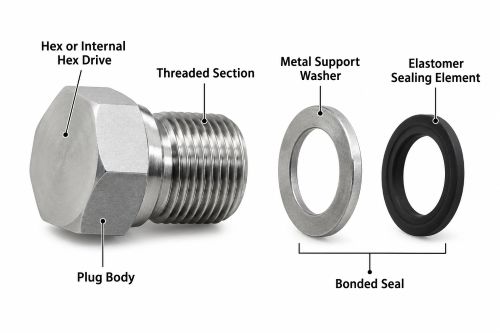
Although the design is relatively simple, each component has an important function.
Plug body:
The main structural component of the plug. It contains the required thread and is manufactured from materials such as carbon steel or stainless steel.
Threaded section:
The threaded portion connects the plug to the hydraulic port. The thread must match the port specification.
Hex or internal hex drive:
This provides a convenient way to install and remove the plug using the appropriate tool.
Bonded seal:
The bonded seal consists of a metal support washer and an elastomer sealing element. The elastomer provides the primary sealing function while the metal portion supports the seal.
How Do Hydraulic Bonded Seal Plugs Prevent Leaks?
The main purpose of a bonded seal plug is to create a secure barrier against hydraulic fluid leakage.
When the plug is tightened correctly, the bonded seal is compressed against the mating surface. This compression allows the elastomer to conform to small irregularities in the sealing area.
At the same time, the metal washer helps support the elastomer and limits excessive deformation.
The result is a compact sealing arrangement that can perform reliably when the plug, seal material, pressure rating, temperature range, and port are properly matched.
1. Creates a Sealed Port Connection
The bonded seal sits at the interface between the plug and the port. When compressed, it helps close potential leakage paths around the connection.
2. Maintains Sealing Pressure
Proper installation creates the necessary compression on the sealing element. This helps maintain the seal during normal hydraulic operation.
3. Helps Handle System Vibration
Hydraulic machinery can experience vibration and pressure fluctuations. A properly installed bonded seal can help maintain sealing performance under these conditions.
However, the plug should always be selected according to the manufacturer’s specifications for the intended application.
Key Benefits of Hydraulic Bonded Seal Plugs
There are several reasons bonded seal plugs are widely used in hydraulic systems.
Reliable Leak Prevention
The primary advantage is their ability to provide a dedicated sealing point between the plug and port. When correctly selected and installed, they can help minimize hydraulic fluid leakage.
Suitable for High-Pressure Applications
Many hydraulic systems operate under significant pressure. Bonded seal plugs are available in designs intended for demanding hydraulic applications.
However, it is important not to assume that every bonded seal plug is suitable for high-pressure service. Always check the manufacturer’s working pressure rating.
Compact Design
Hydraulic equipment often has limited installation space. The compact design of bonded seal plugs makes them practical for manifolds, valve blocks, pumps, and other space-constrained applications.
Good Vibration Resistance
Hydraulic machinery can experience continuous vibration. A properly installed plug with a suitable bonded seal can provide dependable sealing performance in vibrating environments.
Easy Installation
Many bonded seal plugs feature an external hex or internal hex design, making them relatively easy to install and remove using standard tools.
Protection Against Contamination
Closing unused ports helps prevent dirt, dust, moisture, and other contaminants from entering the hydraulic circuit.
Reduced Maintenance Problems
Preventing leaks can help reduce fluid loss, cleanup requirements, and unplanned maintenance. This can contribute to more reliable hydraulic equipment operation.
What Makes the Best Hydraulic Bonded Seal Plug?
Not all hydraulic bonded seal plugs are the same. The best option depends on the specific hydraulic application.
Here are some of the most important factors to consider.
1. Correct Thread Type
Thread compatibility is one of the first things to check.
Depending on the hydraulic system, you may encounter:
➡️ BSP threads
➡️ SAE/UNF threads
➡️ NPT threads
➡️ Other application-specific thread standards
A plug that looks similar to the correct size may still have a different thread pitch, diameter, or sealing configuration.
Using the correct thread specification is essential for proper installation and leak prevention.
2. Plug Material
Common plug materials include carbon steel and stainless steel.
Carbon steel is widely used because it provides good mechanical strength and is generally a cost-effective choice. Protective finishes such as zinc plating may also improve corrosion resistance.
Stainless steel offers greater corrosion resistance and can be a better choice for harsh environments, moisture exposure, or applications where corrosion resistance is a priority.
The material should be selected according to the operating environment and system requirements.
3. Seal Material
The elastomer used in the bonded seal is another important consideration.
Common seal materials include:
➡️ NBR
➡️ FKM
➡️ EPDM in suitable applications
NBR is commonly used in many hydraulic applications, while FKM can provide better performance in certain higher-temperature or chemically demanding environments.
Seal selection should always take into account the hydraulic fluid, operating temperature, pressure, and manufacturer’s compatibility recommendations.
4. Pressure Rating
Hydraulic systems can operate at different pressure levels, so the plug must be rated appropriately.
Before purchasing a bonded seal plug, check:
➡️ Maximum working pressure
➡️ Pressure rating of the plug
➡️ Pressure capability of the sealing element
➡️ Port and thread specifications
Never select a plug based only on its physical size.
5. Temperature Range
Temperature can affect elastomer performance.
If the hydraulic system operates at elevated or very low temperatures, choose a sealing material designed for the expected temperature range.
The manufacturer’s specifications should be used to confirm suitability.
6. Corrosion Resistance
The surrounding environment also matters.
For indoor industrial equipment with controlled conditions, a plated carbon steel plug may be sufficient. For equipment exposed to moisture, chemicals, salt, or other corrosive conditions, stainless steel or another suitable corrosion-resistant option may be more appropriate.
Types of Hydraulic Bonded Seal Plugs
Hydraulic bonded seal plugs are available in different configurations to suit various systems.
Metric Bonded Seal Plugs
Metric bonded seal plugs are designed for hydraulic systems using metric threads. They are commonly found in industrial machinery, mobile equipment, and hydraulic assemblies using metric connection standards.
BSP Bonded Seal Plugs
BSP-compatible plugs are used in systems that use British Standard Pipe thread configurations. It is important to distinguish between different BSP thread and sealing arrangements before selecting a plug.
SAE Bonded Seal Plugs
SAE-style threaded plugs are used in many hydraulic systems manufactured around SAE connection standards. Correct thread identification is essential because different thread standards may appear visually similar.
NPT Bonded Seal Plugs
NPT plugs are designed for systems using National Pipe Thread connections. Because NPT is a tapered pipe thread, its sealing requirements can differ from those of straight-thread connections.
Always verify that the plug is specifically designed for the port being sealed.
Carbon Steel Bonded Seal Plugs
Carbon steel plugs offer a combination of strength, durability, availability, and cost-effectiveness. With an appropriate protective finish, they can be suitable for many general hydraulic applications.
Stainless Steel Bonded Seal Plugs
Stainless steel plugs are commonly selected when corrosion resistance is particularly important. They can be useful in demanding industrial environments and applications exposed to moisture or corrosive conditions.
Hydraulic Bonded Seal Plugs vs. Standard Hydraulic Plugs
The main difference is the sealing method.
A bonded seal plug incorporates a dedicated bonded sealing element that sits between the plug and sealing surface. A standard hydraulic plug may use a different sealing design, such as an O-ring, metal-to-metal seal, thread seal, or another configuration.
Bonded seal plugs can be especially useful when a compact, reliable seal is required around a threaded hydraulic port.
However, that does not mean a bonded seal plug is automatically better for every application. The correct choice depends on the port design, thread type, pressure, temperature, fluid, and equipment manufacturer’s specifications.
Applications of Hydraulic Bonded Seal Plugs
Hydraulic bonded seal plugs can be used across many types of hydraulic equipment.
Hydraulic Power Units
Power units often contain multiple ports, some of which may not be used in every configuration. Bonded seal plugs can be used to close unused connections and help prevent fluid leakage.
Pumps and Motors
Hydraulic pumps and motors may include service or auxiliary ports. Suitable plugs can help seal these openings when they are not being used.
Hydraulic Valves and Manifolds
Valve blocks and manifolds often have multiple connection points. Bonded seal plugs can help close unused ports while maintaining a compact assembly.
Construction Equipment
Excavators, loaders, cranes, and other heavy machinery rely on hydraulic systems that operate under demanding conditions. Reliable port sealing is important for minimizing fluid loss and maintenance issues.
Industrial Machinery
Hydraulic presses, manufacturing equipment, material-handling systems, and other industrial machines can use bonded seal plugs to close unused hydraulic ports.
Mobile Hydraulic Systems
Mobile equipment can experience vibration, pressure fluctuations, temperature changes, and exposure to dirt or moisture. Properly selected bonded seal plugs can help provide reliable port sealing in these environments.
How to Choose the Right Hydraulic Bonded Seal Plug
Selecting the correct plug does not have to be complicated if you follow a systematic approach.
Step 1: Identify the Port Thread
Determine the thread type and size of the hydraulic port. Do not rely solely on visual inspection.
Step 2: Confirm the Plug Size
Make sure the plug dimensions correspond to the port specifications.
Step 3: Check the Working Pressure
Determine the normal and maximum pressure of the hydraulic system and select a plug rated accordingly.
Step 4: Identify the Hydraulic Fluid
The sealing material must be compatible with the hydraulic fluid being used.
Step 5: Check the Temperature
Consider both normal operating temperature and possible temperature extremes.
Step 6: Select the Appropriate Material
Choose carbon steel, stainless steel, or another suitable material based on strength, corrosion resistance, and environmental conditions.
Step 7: Verify Applicable Standards
Where applicable, check the relevant dimensional or thread standards to ensure compatibility with the hydraulic system.
Step 8: Follow Manufacturer Specifications
Always use manufacturer-provided specifications for pressure, temperature, torque, seal compatibility, and installation.
Installation Tips for Hydraulic Bonded Seal Plugs
Even a high-quality plug can leak if it is installed incorrectly.
Clean the Port
Before installation, remove dirt, debris, old seal material, and other contaminants from the port.
Inspect the Sealing Surface
Check the mating surface for scratches, corrosion, burrs, or other damage. A damaged sealing surface can prevent the bonded seal from working properly.
Inspect the Bonded Seal
Make sure the seal is correctly positioned and free from cuts, cracks, deformation, or other visible damage.
Start the Plug by Hand
Thread the plug into the port by hand first. This helps reduce the risk of cross-threading.
Use the Correct Torque
Tighten the plug according to the manufacturer’s recommended torque. Proper torque provides the required seal compression without unnecessarily damaging the connection.
Avoid Over-Tightening
More torque does not necessarily mean a better seal. Excessive tightening can damage the threads, sealing surface, plug, or bonded seal.
Check for Leakage
After installation, operate the hydraulic system according to appropriate safety procedures and inspect the connection for signs of leakage.
Common Mistakes to Avoid
Choosing the Wrong Thread
Thread mismatch is one of the most common causes of poor connections and leakage.
Using the Wrong Seal Material
A seal that is incompatible with the hydraulic fluid or operating temperature may deteriorate prematurely.
Ignoring Pressure Ratings
A plug should never be selected simply because it fits the port. Its pressure capability must also match the application.
Reusing Damaged Seals
A damaged or permanently deformed bonded seal may not provide the same sealing performance as a new seal.
Over-Tightening
Excessive torque can cause damage rather than improve sealing.
Installing on a Damaged Surface
Scratches, corrosion, and burrs around the sealing area can create leakage paths.
Mixing Thread Standards
Threads that look similar are not necessarily interchangeable. Always verify the exact thread specification.
Maintenance and Inspection
Hydraulic bonded seal plugs typically require little maintenance when properly selected and installed. However, they should still be included in routine hydraulic system inspections.
Look for:
1. Hydraulic fluid seepage
2. Damaged or deformed seals
3. Corrosion
4. Loose plugs
5. Thread damage
6. Contamination around the connection
If a leak is detected, identify the cause before simply tightening the plug further. The problem could be related to the wrong thread, damaged sealing surface, incorrect seal material, excessive pressure, or a damaged bonded seal.
Replacing a worn sealing element during scheduled maintenance can also help maintain reliable performance.
Why Quality Matters When Choosing Hydraulic Bonded Seal Plugs
A bonded seal plug may be a small component, but its performance can affect the reliability of the entire hydraulic connection.
When choosing a supplier, consider factors such as:
1. Consistent dimensions
2. Accurate thread manufacturing
3. Quality sealing materials
4. Material traceability
5. Corrosion-resistant finishes
6. Appropriate pressure ratings
7. Quality-control procedures
8. Available technical specifications
9. Applicable industry standards
Working with a reliable manufacturer or supplier can make it easier to obtain consistent products and the technical information needed for proper selection.
Frequently Asked Questions
Are hydraulic bonded seal plugs suitable for high-pressure systems?
They can be suitable for high-pressure hydraulic systems when the specific plug design, sealing material, thread, and pressure rating are appropriate for the application. Always check the manufacturer’s specifications.
What are hydraulic bonded seal plugs used for?
They are primarily used to close unused, auxiliary, or service ports in hydraulic systems while providing a reliable seal against fluid leakage.
What materials are hydraulic bonded seal plugs made from?
Common plug materials include carbon steel and stainless steel. The bonded sealing element may use elastomers such as NBR or FKM, depending on the application.
Can hydraulic bonded seal plugs be reused?
Reuse depends on the condition of the plug and sealing element. A damaged, cracked, or permanently deformed seal should be replaced. Follow the manufacturer’s recommendations for reuse.
How do I choose the correct bonded seal plug?
Start by identifying the port thread and size. Then consider working pressure, operating temperature, hydraulic fluid, plug material, seal material, corrosion exposure, and applicable specifications.
What causes a bonded seal plug to leak?
Common causes include incorrect thread selection, damaged sealing surfaces, incorrect torque, damaged seals, incompatible seal materials, and operating conditions that exceed the plug’s specifications.
Are stainless steel bonded seal plugs better than carbon steel plugs?
Not necessarily. Stainless steel provides better corrosion resistance in many environments, while carbon steel can offer high strength and cost-effectiveness. The right choice depends on the application.
How often should hydraulic bonded seal plugs be replaced?
There is no universal replacement interval. Inspection should be based on equipment maintenance schedules and operating conditions. Replace plugs or seals when they show signs of wear, damage, corrosion, or leakage.
Conclusion
Hydraulic bonded seal plugs are a simple but important component for maintaining reliable hydraulic connections and preventing fluid leakage. Their combination of a strong metal plug and bonded elastomer sealing element provides an effective way to close unused or service ports.
Choosing the best plug requires more than finding one that fits. Thread type, plug material, seal material, pressure rating, temperature range, hydraulic fluid, and environmental conditions all need to be considered.
With the correct product and proper installation, bonded seal plugs can help reduce leakage, protect hydraulic systems from contamination, and support dependable equipment performance.
For the best results, always select hydraulic bonded seal plugs according to the manufacturer’s specifications and the actual requirements of your hydraulic system.
Post time: Sep-01-2026