

Hydraulic systems depend on clean fluid to operate efficiently and reliably. Whether used in construction equipment, agricultural machinery, industrial machines, or mobile hydraulic systems, hydraulic oil continuously moves through pumps, valves, cylinders, hoses, and other components.
Over time, these components can produce tiny metal particles through normal wear. If these particles remain in the hydraulic fluid, they can circulate through the system and contribute to additional wear and performance problems.
This is where hydraulic magnetic drain plugs can help. These simple components use a built-in magnet to attract and collect ferrous metal particles in hydraulic reservoirs and tanks. They can also provide maintenance technicians with a useful indication of unusual component wear.
In this guide, we will explain what hydraulic magnetic drain plugs are, how they work, their benefits, applications, specifications, and how to choose the right one.
What Are Hydraulic Magnetic Drain Plugs?
A hydraulic magnetic drain plug is a threaded plug designed to close a drain port or opening in a hydraulic reservoir while using a magnet to collect ferrous metal contaminants.
Unlike a standard drain plug, which primarily seals the opening, a magnetic drain plug performs an additional function. Its magnetic element attracts iron- and steel-based particles that may be present in the hydraulic oil.
A typical hydraulic magnetic drain plug consists of:
1. A threaded plug body
2. A built-in magnetic element
3. A sealing surface or sealing washer
4. A hexagonal head or internal drive for installation
These plugs are available in different thread sizes, materials, finishes, and configurations to suit different hydraulic systems.
How Do Hydraulic Magnetic Drain Plugs Work?
The operating principle is relatively simple.
As hydraulic oil circulates through a system, mechanical components can produce small amounts of metal debris. Some of this debris eventually settles in the reservoir. When a magnetic drain plug is installed in a suitable location, its magnet attracts ferrous particles and holds them around the magnetic surface.
1. The Plug Is Installed in the Reservoir
The magnetic drain plug is installed into a compatible threaded opening, often at or near the drain point of a hydraulic reservoir.
The thread must match the reservoir connection correctly. A suitable seal is also required to prevent hydraulic fluid from leaking around the plug.
2. The Magnet Attracts Ferrous Particles
The built-in magnet creates a magnetic field that attracts ferrous materials.
Small particles made from iron or steel can be drawn toward the magnet and held in place rather than continuing to circulate freely in the oil.
3. Metal Debris Accumulates Around the Magnet
As the system operates, additional particles can collect on the magnetic element.
The amount and appearance of collected material can provide useful information during maintenance. A small amount of fine debris may be associated with normal wear, while a sudden or unusually large accumulation may warrant further investigation.
4. The Plug Can Be Inspected During Maintenance
During an oil change or scheduled maintenance, the plug can be removed and inspected.
Technicians can clean the magnet and examine the collected debris. This makes the magnetic drain plug more than just a sealing component, it can also become a simple part of a preventive maintenance routine.
Main Components of a Hydraulic Magnetic Drain Plug
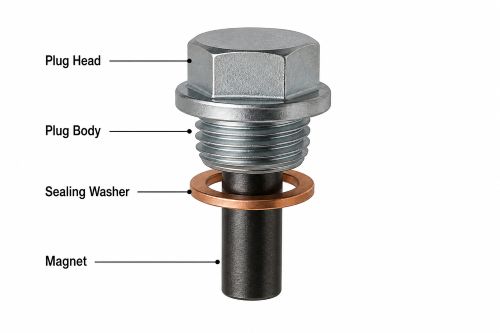
Although hydraulic magnetic drain plugs are relatively simple, each component has an important function.
Plug Body
The plug body provides the main structural support. It contains the threaded section that connects the plug to the hydraulic reservoir.
Common materials include carbon steel and stainless steel, depending on the application and environmental requirements.
Magnetic Element
The magnetic element is the key feature that distinguishes a magnetic drain plug from a standard plug.
Its purpose is to attract and hold ferrous particles. Magnet size, strength, and placement can vary depending on the plug design.
Sealing Element
A reliable seal helps prevent hydraulic fluid from escaping through the threaded connection.
Depending on the design, the sealing method may involve an O-ring, bonded seal, sealing washer, or another sealing arrangement.
Head or Drive Section
The head allows technicians to install and remove the plug using the appropriate tool.
Common designs include external hex heads and internal hex configurations.
Why Do Hydraulic Systems Need Magnetic Drain Plugs?
Hydraulic systems are exposed to contamination from several sources. Dirt, dust, moisture, and particles can enter through different points, while internal components can generate wear debris during operation.
Metal contamination is particularly important because particles can circulate through sensitive hydraulic components.
For example, excessive contamination can affect:
1. Hydraulic pumps
2. Control valves
3. Cylinders
4. Motors
5. Precision hydraulic components
6. Seals and other internal parts
A magnetic drain plug cannot remove every type of contaminant, but it can help collect ferrous particles and provide another layer of contamination control.
Benefits of Hydraulic Magnetic Drain Plugs
1. Capture Ferrous Metal Particles
The primary advantage is their ability to attract iron and steel particles.
By collecting these particles at the reservoir or drain area, magnetic plugs can help reduce the amount of ferrous debris freely circulating in the hydraulic oil.
2. Support Hydraulic Fluid Cleanliness
Clean hydraulic fluid is important for reliable system operation. Magnetic drain plugs provide a simple way to supplement the system’s existing contamination-control strategy.
They should generally be viewed as a complement to proper hydraulic filtration rather than a replacement for it.
3. Help Protect Hydraulic Components
Reducing the presence of certain metal particles can help support the service life and performance of hydraulic components.
This is particularly useful in systems containing expensive pumps, valves, and other precision components.
4. Easy to Inspect
Magnetic drain plugs are relatively easy to inspect during routine maintenance.
A technician can remove the plug, clean the magnetic surface, and examine the collected material before reinstalling it.
5. Provide an Early Warning of Potential Wear
One of the most useful advantages is that the collected debris can provide clues about what’s happening inside the hydraulic system.
If the amount of metal debris suddenly increases, it may indicate abnormal wear or a developing mechanical problem. Further inspection can then be performed before the issue becomes more serious.
6. Simple and Cost-Effective
A magnetic drain plug is a relatively straightforward component that can provide both contamination collection and maintenance information without significantly complicating the hydraulic system.
7. Support Preventive Maintenance
Regular inspection of the magnetic plug can become part of a broader preventive maintenance program.
Instead of waiting for a component to fail, technicians can monitor changes in the condition of collected debris and investigate potential problems earlier.
What Types of Contaminants Can Magnetic Drain Plugs Capture?
Hydraulic magnetic drain plugs are specifically useful for ferrous contaminants.
These may include:
➡️ Iron particles
➡️ Steel particles
➡️ Ferrous wear debris
➡️ Small magnetic metal fragments
However, magnets cannot effectively attract all types of contamination.
For example, they generally do not capture:
➡️ Aluminum particles
➡️ Copper particles
➡️ Brass particles
➡️ Dirt
➡️ Dust
➡️ Water
➡️ Non-metallic debris
For this reason, a magnetic drain plug should not be considered a complete filtration solution. Proper hydraulic filtration, fluid maintenance, and contamination-control practices are still essential.
Common Applications of Hydraulic Magnetic Drain Plugs
Hydraulic magnetic drain plugs can be used in a wide range of hydraulic equipment.
Hydraulic Power Units
Hydraulic power units often contain reservoirs where magnetic drain plugs can be installed to collect ferrous debris and support routine inspection.
Construction Equipment
Excavators, loaders, cranes, and other heavy equipment operate under demanding conditions. Magnetic drain plugs can provide an additional method of monitoring metal contamination.
Agricultural Machinery
Tractors and agricultural machines use hydraulic systems for steering, lifting, implements, and other functions. Magnetic drain plugs can support routine hydraulic maintenance.
Industrial Machinery
Hydraulic presses, production machines, material-handling equipment, and other industrial systems can benefit from additional contamination monitoring.
Mobile Hydraulic Equipment
Mobile hydraulic equipment often operates under variable loads and harsh environmental conditions. Magnetic drain plugs can be incorporated into maintenance programs to help monitor ferrous wear debris.
Hydraulic Reservoirs and Tanks
Reservoirs and tanks are common installation locations because they provide a convenient point for collecting and inspecting contaminants during fluid service.
Hydraulic Magnetic Drain Plugs vs. Standard Drain Plugs
A standard hydraulic drain plug is primarily designed to close and seal a drain opening. A magnetic drain plug performs this basic function while adding a magnetic contamination-collection feature.
|
Feature |
Hydraulic Magnetic Drain Plug |
Standard Drain Plug |
|
Seals drain opening |
Yes |
Yes |
|
Captures ferrous particles |
Yes |
No |
|
Helps monitor metal debris |
Yes |
Limited |
|
Supports preventive maintenance |
Yes |
Basic |
|
Requires compatible thread |
Yes |
Yes |
|
Available with seals |
Yes |
Yes |
The choice depends on the hydraulic system and maintenance requirements. Where monitoring ferrous contamination is valuable, a magnetic design can provide an additional advantage.
Important Hydraulic Magnetic Drain Plug Specifications
Choosing the correct plug requires more than simply selecting a magnet. Several specifications should be considered.
Thread Size
The thread must match the reservoir or drain-port connection.
Using the wrong thread size can cause poor engagement, leakage, or thread damage.
Thread Type
Hydraulic magnetic drain plugs are available with different thread standards. Depending on the equipment, you may encounter metric, BSP, and other thread configurations.
Always verify the equipment manufacturer’s requirements before selecting a plug.
Material
Carbon steel is commonly used for hydraulic plugs because it provides good strength and durability.
Stainless steel may be preferred in applications where greater corrosion resistance is required.
Surface Finish
Surface treatments such as zinc plating may be used to improve corrosion resistance and provide additional protection to the plug body.
The appropriate finish depends on the operating environment and application requirements.
Magnet Strength
Magnet strength is another important consideration. The magnetic element needs to provide sufficient attraction to hold the ferrous particles generated by the application.
Pressure and Temperature
The plug should be suitable for the hydraulic system’s operating conditions. Check the manufacturer’s pressure and temperature ratings before installation.
Seal Type
The sealing method should be compatible with the plug design, hydraulic fluid, pressure, and operating temperature.
Common sealing options include O-rings, bonded seals, and sealing washers.
For more information about hydraulic plugs, refer to the below resources ⬇️⬇️⬇️
DIN Compression Plug Specifications: A Complete Guide
Zinc Plated Hydraulic Plugs: Features, Applications, and Advantages
What Is a Hydraulic Bonded Seal Plug and How Does It Work?
How to Choose the Right Hydraulic Magnetic Drain Plug
Selecting the correct plug starts with understanding the hydraulic system.
Consider the following factors:
1. Identify the thread size and type.
2. Check the reservoir drain-port dimensions.
3. Choose a suitable body material.
4. Consider corrosion and environmental conditions.
5. Verify pressure and temperature requirements.
6. Check hydraulic fluid compatibility.
7. Consider magnet size and strength.
8. Select the correct sealing method.
9. Verify the plug’s dimensions and installation requirements.
10. Purchase from a reliable hydraulic component manufacturer or supplier.
If the application involves demanding operating conditions, it is especially important to confirm the specifications with the manufacturer.
How to Install a Hydraulic Magnetic Drain Plug
Installation is generally straightforward, but proper preparation is important.
Step 1: Prepare the Drain Port
Make sure the drain port is clean and free from dirt, old sealant, and damaged material.
If the hydraulic fluid needs to be drained, follow the equipment manufacturer’s safety and maintenance procedures.
Step 2: Inspect the Plug
Before installation, check the threads, magnetic element, sealing surface, and overall condition of the plug.
Do not install a damaged component.
Step 3: Install the Seal
Use the appropriate O-ring, bonded seal, or sealing washer if required by the plug design.
Step 4: Thread the Plug Into Position
Carefully start the plug by hand to avoid cross-threading.
Once properly engaged, tighten it according to the manufacturer’s recommended torque.
Step 5: Check for Leakage
After the hydraulic system is returned to operation, inspect the connection for signs of leakage.
Step 6: Inspect During Future Maintenance
During future fluid changes or scheduled maintenance, remove the plug and inspect the magnetic element.
Clean away collected particles and examine the debris before reinstalling the plug.
Maintenance Tips for Hydraulic Magnetic Drain Plugs
Regular inspection can help you get the most value from a magnetic drain plug.
1. Inspect the plug during scheduled hydraulic maintenance.
2. Clean accumulated metal particles from the magnet.
3. Check the magnetic element for damage.
4. Inspect the threads for wear or damage.
5. Replace worn or damaged seals.
6. Check the plug for corrosion.
7. Pay attention to sudden increases in metal debris.
8. Follow the equipment manufacturer’s recommended maintenance schedule.
The appearance of the collected debris can also be useful. A significant change in the amount or type of metal particles may justify a closer inspection of pumps, motors, valves, bearings, or other components.
Common Mistakes to Avoid
Even a simple component can cause problems if it is incorrectly selected or installed.
Choosing the Wrong Thread
The thread must match the hydraulic reservoir connection. Never force a plug into an incompatible thread.
Using the Wrong Seal
A poor seal can result in hydraulic fluid leakage. Always use the sealing method recommended for the plug.
Over-Tightening
Excessive torque can damage the plug, threads, or sealing components. Follow the manufacturer’s torque recommendations.
Ignoring Metal Debris
The purpose of a magnetic drain plug is not simply to collect particles. The collected material can provide useful maintenance information. Large or unusual amounts of debris should not be ignored.
Treating the Plug as a Replacement for Filtration
Magnetic drain plugs only target magnetic ferrous contaminants. They do not remove every type of hydraulic contamination.
Frequently Asked Questions
What is a hydraulic magnetic drain plug?
A hydraulic magnetic drain plug is a threaded drain plug with a built-in magnet designed to collect ferrous metal particles from hydraulic fluid.
How does a magnetic drain plug work?
The magnet attracts iron- and steel-based particles in the hydraulic fluid and holds them around the magnetic element.
What contaminants can a hydraulic magnetic drain plug capture?
It primarily captures ferrous contaminants such as iron and steel particles. It does not effectively capture non-ferrous metals, dirt, water, or other non-metallic contaminants.
Can a magnetic drain plug replace a hydraulic filter?
No. A magnetic drain plug is an additional contamination-control component. Proper hydraulic filtration is still necessary for controlling other types and sizes of contaminants.
How often should a magnetic drain plug be cleaned?
It should generally be inspected and cleaned during scheduled hydraulic maintenance or fluid changes. The exact maintenance interval depends on the equipment and manufacturer’s recommendations.
Can magnetic drain plugs help detect component wear?
Yes. An unusual increase in collected metal debris can provide an early indication of possible internal wear. However, the debris should be evaluated alongside other maintenance findings.
Are hydraulic magnetic drain plugs suitable for all hydraulic systems?
Not necessarily. The plug must be compatible with the system’s thread, pressure, temperature, hydraulic fluid, installation location, and environmental conditions.
What materials are used to make hydraulic magnetic drain plugs?
Common materials include carbon steel and stainless steel. The appropriate material depends on the application, strength requirements, and corrosion environment.
Conclusion
Hydraulic magnetic drain plugs are simple components that can provide valuable benefits in hydraulic systems. By using a built-in magnet to capture ferrous metal particles, they can help control certain types of contamination while also giving maintenance personnel a convenient way to monitor metal debris.
Their value goes beyond simply sealing a reservoir drain. When inspected regularly, the collected particles can provide useful clues about the condition of hydraulic components and help support preventive maintenance.
However, magnetic drain plugs are not a replacement for proper filtration or good hydraulic maintenance practices. They work best as part of a complete contamination-control strategy that includes clean hydraulic fluid, effective filtration, regular inspections, and proper component maintenance.
When choosing a hydraulic magnetic drain plug, pay close attention to thread type, size, material, sealing method, magnet strength, pressure rating, temperature rating, and application requirements. Selecting the right plug can help provide reliable sealing while adding another useful layer of protection and monitoring to the hydraulic system.
Post time: Aug-25-2026