

A hydraulic flange elbow is a hydraulic fitting designed to change the direction of fluid flow while providing a strong, secure connection between hydraulic components. It is commonly used in high-pressure hydraulic systems where hoses, pipes, pumps, valves, cylinders, and manifolds need to be connected at an angle.
Unlike a standard threaded elbow, a hydraulic flange elbow uses a flange connection that is secured with bolts. This design provides strong mechanical support and makes flange elbows particularly useful for demanding applications where high pressure, vibration, and heavy loads are present.
In this guide, we will look at what hydraulic flange elbows are, how they work, their main components, common types, applications, and how to select the right one for a hydraulic system.
What Is a Hydraulic Flange Elbow?
A hydraulic flange elbow is an angled fitting with a flange connection used to redirect hydraulic fluid from one direction to another. The elbow body contains an internal flow passage, while the flange provides the connection point for attaching the fitting to another hydraulic component.
Hydraulic flange elbows are available in different configurations, sizes, materials, and angles. The most common angles are 45 degrees and 90 degrees.
For example, a 90-degree flange elbow can redirect a hydraulic line around a tight corner, while a 45-degree elbow provides a more gradual change in direction.
The flange itself normally includes bolt holes that allow the fitting to be fastened securely to a mating flange. Depending on the design, the connection may also use an O-ring or another sealing element to prevent hydraulic fluid from escaping.
Because flange connections provide strong mechanical support, they are widely used in heavy-duty hydraulic equipment and high-pressure systems.
How Does a Hydraulic Flange Elbow Work?
The basic function of a hydraulic flange elbow is simple: it changes the direction of hydraulic flow while maintaining a secure and sealed connection.
Hydraulic fluid enters through one port of the elbow and travels through the internal passage. The angled body redirects the fluid before it exits through the other connection.
At the same time, the flange connection keeps the fitting securely attached to the mating component.
1. Redirecting Hydraulic Flow
The angled body determines the direction in which the hydraulic fluid travels.
A 90-degree hydraulic flange elbow changes the flow direction by approximately 90 degrees. This is useful when a hydraulic line needs to make a sharp turn.
A 45-degree hydraulic flange elbow creates a more gradual change in direction. It can be useful when there is enough space for smoother routing or when designers want to avoid an unnecessarily sharp bend.
2. Creating a Secure Connection
The flange ends of the fitting are positioned against a matching flange surface. Bolts are then used to secure the two components together.
Unlike some threaded fittings, the flange does not rely entirely on the threads to withstand the mechanical forces acting on the connection. The bolted flange assembly provides strong support, which is one reason flange fittings are common in larger hydraulic systems.
3. Preventing Hydraulic Leaks
A properly designed flange connection uses a sealing surface and, depending on the flange design, an O-ring or another sealing element.
When the connection is correctly aligned and tightened, the seal prevents hydraulic fluid from escaping from the joint.
Proper installation is important. A damaged seal, contaminated sealing surface, incorrect bolt tightening, or misalignment can lead to leakage even when the fitting itself is correctly manufactured.
Key Components of a Hydraulic Flange Elbow
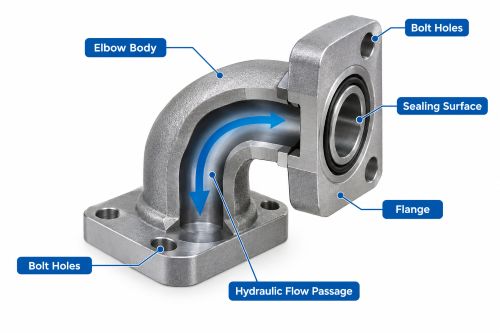
Although designs vary between manufacturers, most hydraulic flange elbows contain several important features.
Elbow Body
The elbow body is the main structural component. It contains the internal flow passage and provides the angled path that redirects hydraulic fluid.
The body must be strong enough to withstand the pressure, vibration, temperature, and mechanical loads present in the hydraulic system.
Flange
The flange provides the connection between the elbow and another flanged hydraulic component.
It normally contains bolt holes that allow the fitting to be securely fastened to a mating flange.
Sealing Surface
The sealing area creates the interface between the two connected components. Depending on the design, an O-ring may be positioned in a dedicated groove to provide a reliable fluid seal.
Keeping this area clean and free from scratches or damage is important during installation.
Bolt Holes
Bolt holes allow the flange to be attached to its mating component. Correct bolt selection, alignment, tightening sequence, and torque all contribute to a reliable connection.
Hydraulic Flow Passage
The internal passage allows hydraulic fluid to move through the fitting. Its size and geometry can affect pressure loss and overall flow performance.
Common Types of Hydraulic Flange Elbows
Hydraulic flange elbows can be categorized by angle, flange standard, material, and configuration.
90-Degree Hydraulic Flange Elbows
90-degree elbows are among the most common designs. They are used when hydraulic lines need to make a sharp directional change.
They can help simplify piping layouts and reduce the need to bend hoses or tubes excessively.
45-Degree Hydraulic Flange Elbows
A 45-degree elbow provides a less abrupt directional change.
These fittings can be useful when system layout allows additional space and a smoother routing path is preferred.
SAE Hydraulic Flange Elbows
SAE flange elbows are designed around applicable SAE hydraulic flange specifications and are commonly found in industrial and mobile hydraulic equipment.
They are available in different sizes and pressure classes to suit different hydraulic applications.
DIN Hydraulic Flange Elbows
DIN-based flange elbows are used in hydraulic systems designed around applicable DIN standards.
They are particularly common in machinery and equipment using metric hydraulic components.
Split-Flange Elbows
Some hydraulic flange assemblies use split-flange designs. A split flange typically consists of flange halves that hold the fitting against the mating connection.
This arrangement can make installation and maintenance easier, especially in applications where large hydraulic hoses or pipes are involved.
What Materials Are Hydraulic Flange Elbows Made From?
Material selection depends on pressure, temperature, hydraulic fluid, environmental conditions, and the expected service life of the equipment.
Carbon Steel
Carbon steel is one of the most widely used materials for hydraulic flange elbows.
It offers good mechanical strength and durability and is suitable for many industrial and mobile hydraulic applications. Surface treatments such as zinc plating can also be used to improve corrosion resistance.
Stainless Steel
Stainless steel flange elbows are useful in environments where corrosion resistance is especially important.
They may be selected for applications exposed to moisture, chemicals, marine environments, or other corrosive conditions.
Surface Treatments
For carbon steel fittings, surface treatments can provide additional protection against corrosion. The appropriate finish depends on the operating environment and performance requirements.
When selecting a flange elbow, the base material and surface treatment should both be considered.
Checkout these other resources ⬇️⬇️⬇️
Hydraulic Flange Hose Caps for SAE and DIN Hydraulic Connections
Hydraulic Fittings with O Ring Inside: Design, Sealing, and Applications
Hydraulic End Plugs vs Hydraulic Caps: What’s the Difference?
Where Are Hydraulic Flange Elbows Used?
Hydraulic flange elbows are used across many industries because they combine directional control with a strong connection.
Common applications include:
1. Construction machinery
2. Agricultural equipment
3. Mining equipment
4. Industrial hydraulic systems
5. Mobile hydraulic equipment
6. Hydraulic power units
7. Hydraulic pumps and motors
8. Hydraulic cylinders
9. Hydraulic valves and manifolds
10. Heavy-duty hydraulic hose assemblies
They are especially useful where hydraulic connections are exposed to high pressure, vibration, mechanical loads, or limited installation space.
Advantages of Hydraulic Flange Elbows
Hydraulic flange elbows offer several practical advantages compared with some other connection methods.
Strong Mechanical Connection
The bolted flange provides a robust connection that can withstand demanding operating conditions.
Suitable for High-Pressure Applications
Many flange systems are designed specifically for high-pressure hydraulic applications. However, the actual pressure capability always depends on the specific flange type, size, material, and manufacturer rating.
Easier Hydraulic Line Routing
An angled fitting can simplify the routing of hoses and pipes around equipment components.
Instead of forcing a hose to make a sharp bend, an elbow can provide the required direction change through the fitting itself.
Good Support for Large Hydraulic Connections
Flange connections are particularly useful for larger hydraulic lines where threaded fittings may become less practical.
Easy Inspection and Maintenance
Bolted flange connections can be inspected and serviced without necessarily replacing the entire hydraulic line.
How to Choose the Right Hydraulic Flange Elbow
Choosing a hydraulic flange elbow is not simply a matter of selecting an angle. Several specifications should be checked before placing an order.
Check the Flange Standard
First, determine which flange standard your hydraulic system requires.
The mating flange, elbow, hose assembly, or hydraulic component must be compatible with the selected fitting.
Using the wrong flange standard can result in poor alignment, improper sealing, or an unsafe connection.
Select the Correct Size
The flange size and hydraulic line size should match the requirements of the system.
Consider:
1. Port size
2. Hose or tube size
3. Required flow rate
4. Available installation space
5. Mating component dimensions
An incorrectly sized fitting can create unnecessary restrictions or installation problems.
Check the Pressure Rating
The flange elbow must be rated for the hydraulic system’s maximum working pressure.
Do not select a fitting based only on the normal operating pressure. Pressure spikes and other transient conditions should also be considered according to the equipment manufacturer’s specifications.
Choose the Correct Angle
Determine whether the installation requires a 45-degree or 90-degree elbow.
A 90-degree fitting may save space, while a 45-degree design may provide a smoother routing path.
Consider the Material
Choose the material based on the environment and operating conditions.
Carbon steel may be suitable for many standard applications, while stainless steel can be a better choice where corrosion resistance is a major concern.
Verify the Sealing Method
Check how the flange connection seals and make sure the required O-ring or sealing component is compatible with the hydraulic fluid and operating temperature.
How to Install a Hydraulic Flange Elbow
Proper installation has a major effect on the reliability of a hydraulic flange connection.
Before installation, clean the mating surfaces and inspect the fitting for damage. Check the flange, sealing surface, bolts, and O-ring if applicable.
Position the elbow so that the hydraulic hose or pipe can be routed naturally without excessive twisting or bending.
Next, align the flange surfaces correctly. Do not use the bolts to force two misaligned components together.
Install the bolts and tighten them according to the manufacturer’s recommended sequence and torque specifications. Even tightening helps distribute the load across the flange.
Once installation is complete, inspect the connection before putting the system into normal operation. After pressurizing the system, check carefully for signs of leakage or movement.
Common Problems With Hydraulic Flange Elbows
Even a high-quality flange elbow can experience problems when the wrong fitting is selected or installation is poor.
Hydraulic Leaks
Leaks can result from damaged O-rings, contaminated sealing surfaces, poor alignment, insufficient tightening, or excessive tightening.
Loose Connections
Vibration and repeated mechanical loading can affect flange connections if the assembly is not installed correctly.
Regular inspection is particularly important on mobile machinery and other equipment exposed to constant vibration.
Damaged Sealing Surfaces
Scratches, dents, dirt, and corrosion on sealing surfaces can prevent the connection from sealing correctly.
Cracked or Damaged Fittings
Excessive pressure, impact, corrosion, or incorrect installation can damage the elbow body or flange.
A damaged fitting should be replaced rather than repaired with an improvised solution.
Flow Restrictions
An incorrectly sized elbow or poorly planned hydraulic routing can contribute to unnecessary pressure losses.
For systems with high flow requirements, fitting size and internal passage should be considered during system design.
Hydraulic Flange Elbow vs. Threaded Hydraulic Elbow
Both flange elbows and threaded elbows can redirect hydraulic flow, but they are designed for different connection requirements.
A threaded elbow connects through male or female threads, making it convenient for many smaller hydraulic connections.
A flange elbow uses a bolted flange assembly and is often preferred for larger, higher-pressure, or heavy-duty connections where mechanical support is important.
The best choice depends on the system’s pressure, size, space limitations, maintenance requirements, and applicable connection standard.
Maintenance Tips for Hydraulic Flange Elbows
Routine inspection can help identify problems before they result in hydraulic downtime.
Check the following during maintenance:
➡️ Look for signs of hydraulic leakage.
➡️ Inspect the flange and surrounding area for corrosion.
➡️ Check sealing components for wear or damage.
➡️ Inspect bolts and connections for signs of loosening.
➡️ Look for cracks, dents, or other physical damage.
➡️ Keep sealing surfaces clean during servicing.
➡️ Replace damaged seals and fittings promptly.
➡️ Confirm that replacement fittings have the correct specifications.
For critical hydraulic equipment, inspections should be performed according to the manufacturer’s recommended maintenance schedule.
Frequently Asked Questions
What is a hydraulic flange elbow used for?
A hydraulic flange elbow is used to change the direction of hydraulic fluid while creating a strong connection between hydraulic components. It is commonly used in high-pressure and heavy-duty hydraulic systems.
What is the difference between a 45-degree and 90-degree hydraulic flange elbow?
A 45-degree elbow changes the direction of flow more gradually, while a 90-degree elbow provides a sharper directional change. The choice depends mainly on hydraulic line routing and available installation space.
Are hydraulic flange elbows suitable for high-pressure systems?
Yes. Many hydraulic flange elbows are specifically designed for high-pressure applications. However, the fitting must have a pressure rating appropriate for the system and must be installed correctly.
What materials are hydraulic flange elbows made from?
Carbon steel and stainless steel are common materials. The appropriate material depends on pressure, temperature, hydraulic fluid, corrosion exposure, and other operating conditions.
How do I choose the correct hydraulic flange elbow?
Consider the required flange standard, size, pressure rating, angle, material, sealing method, and installation environment. The elbow should also be compatible with the mating hydraulic components.
How can I prevent leaks at a hydraulic flange elbow?
Use compatible sealing components, keep mating surfaces clean, align the flange correctly, and tighten the bolts according to the manufacturer’s recommended procedure and torque.
Conclusion
A hydraulic flange elbow is more than just an angled hydraulic fitting. It provides a practical way to redirect hydraulic flow while maintaining a strong and reliable connection between system components.
Its flange design makes it particularly useful for high-pressure hydraulic equipment, large hydraulic lines, and applications exposed to vibration and mechanical loads. With options such as 45-degree and 90-degree configurations, different flange standards, sizes, and materials, hydraulic flange elbows can be adapted to a wide range of system designs.
For reliable performance, always select the elbow according to the required flange standard, size, pressure rating, material, sealing method, and application. Proper alignment and installation are equally important for preventing leaks and ensuring long-term service.
Post time: Oct-06-2026