

Hydraulic flange hose caps are used to protect hydraulic hose and flange connections from dirt, moisture, corrosion, and physical damage. For systems using SAE or DIN hydraulic connections, selecting a cap that matches the correct flange standard and size is important for reliable protection.
Although flange hose caps are relatively simple components, they play an important role during hydraulic equipment assembly, transportation, storage, and maintenance. A properly fitted cap can help keep sealing surfaces clean and ready for installation while reducing the risk of contamination.
What Are Hydraulic Flange Hose Caps?
A hydraulic flange hose cap is a protective component fitted over the end of a hydraulic hose, flange connection, or exposed hydraulic port. Its main purpose is to protect the connection when it is not being used.
During manufacturing and assembly, hydraulic components can be exposed to dust, metal particles, moisture, and other contaminants. These contaminants can eventually enter a hydraulic system and affect valves, pumps, cylinders, and other precision components.
A flange hose cap provides a physical barrier against these contaminants. Depending on the design, it may also protect the flange face, sealing area, threads, or other connection surfaces from scratches and mechanical damage.
Hydraulic flange hose caps can be manufactured from materials such as carbon steel, stainless steel, or engineering plastics. The appropriate material depends on the application and the level of protection required.
Understanding SAE Hydraulic Flange Connections
SAE hydraulic flange connections are widely used in mobile and industrial hydraulic equipment. One of the most commonly referenced standards is SAE J518, which covers hydraulic flange connections used with high-pressure hydraulic systems.
Two common SAE flange configurations are Code 61 and Code 62.
Code 61 flanges are commonly used in a wide range of hydraulic applications, while Code 62 designs are generally intended for higher-pressure or more demanding applications.
When selecting a protective hose cap for an SAE flange, it is important to identify the correct flange type and size. A cap designed for one configuration should not automatically be assumed to fit another.
The cap should provide adequate coverage without interfering with the flange or sealing surfaces. For equipment that operates in harsh environments, material and surface treatment are also important considerations.
Understanding DIN Hydraulic Flange Connections
DIN hydraulic connections are widely used in European-designed hydraulic equipment and many international industrial systems. DIN-based hydraulic components are available in different sizes and configurations, and many are associated with metric dimensions.
Depending on the specific connection, DIN hydraulic flange systems may follow applicable DIN or ISO standards covering dimensions, pressure ratings, and sealing arrangements.
The correct protective cap therefore depends on the exact connection being protected. Simply choosing a cap based on nominal hose size may not be sufficient.
Before ordering a DIN flange hose cap, buyers should confirm the connection standard, flange dimensions, sealing arrangement, and required protection level.
SAE vs DIN Hydraulic Flange Hose Caps
SAE and DIN hydraulic flange hose caps serve essentially the same basic purpose: protecting hydraulic connections when they are not in service. However, their dimensions and connection designs can differ.
|
Feature |
SAE Hydraulic Flange Caps |
DIN Hydraulic Flange Caps |
|
Common systems |
SAE hydraulic equipment |
DIN/ISO hydraulic equipment |
|
Typical sizing |
SAE-based flange sizes |
Metric/DIN-based sizing |
|
Common applications |
Mobile and industrial hydraulics |
Industrial and European hydraulic systems |
|
Connection design |
SAE flange configurations |
DIN/ISO flange configurations |
|
Selection |
Flange type and size |
Standard, flange type, and size |
The important point is that SAE and DIN should not be considered automatically interchangeable. Even when two connections appear similar, differences in dimensions or sealing arrangements can prevent proper fitment.
For this reason, the connection standard should always be confirmed before selecting a protective cap.
Key Components of a Hydraulic Flange Hose Cap
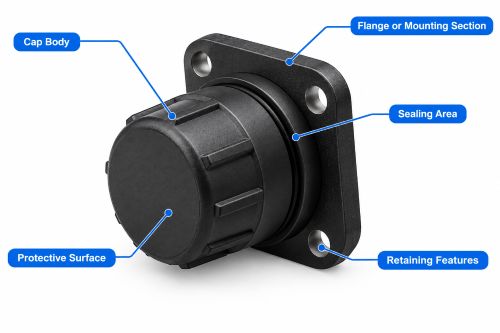
The exact design varies between manufacturers and applications, but a hydraulic flange hose cap may contain several important features.
Cap Body
The cap body provides the main protective barrier around the hydraulic connection. It needs to withstand the expected handling and storage conditions without cracking, deforming, or becoming loose.
Flange or Mounting Section
Some designs incorporate a flange-shaped section that corresponds to the hydraulic connection. This helps position the cap correctly and provides coverage around the connection.
Sealing Area
Depending on the design, the cap may include a sealing surface or an O-ring. The sealing element can help prevent dust, moisture, and other contaminants from reaching the protected area.
Retaining Features
A cap may use a threaded connection, fastening arrangement, snap feature, or another retention method. The retaining system should keep the cap securely in place during transportation and handling.
Protective Surface
The external surface may also be treated or designed to resist corrosion, abrasion, and environmental exposure. This is particularly useful when caps are used in outdoor equipment or long-term storage.
Materials Used for Hydraulic Flange Hose Caps
Material selection affects the durability, weight, corrosion resistance, and cost of a hydraulic flange hose cap.
Carbon Steel
Carbon steel is a common choice for demanding industrial applications. It provides good mechanical strength and durability.
Surface treatments such as zinc plating can improve corrosion resistance and make carbon steel caps more suitable for general industrial environments.
Stainless Steel
Stainless steel is useful when corrosion resistance is a major concern. It can be suitable for equipment exposed to moisture, chemicals, outdoor conditions, or other corrosive environments.
The specific stainless steel grade should be selected according to the operating environment.
Engineering Plastics
Plastic caps are lightweight and are often used for temporary protection, transportation, and storage.
They can provide an economical way to keep hydraulic connections clean before assembly. However, the appropriate plastic material should be selected based on temperature, chemical exposure, and mechanical requirements.
How Hydraulic Flange Hose Caps Protect Hydraulic Connections
One of the biggest advantages of a flange hose cap is contamination control.
Hydraulic systems depend on clean fluid and properly sealed connections. Dust, dirt, moisture, and metal particles entering an open hydraulic connection can cause problems after assembly.
A protective cap can help prevent these contaminants from reaching the connection.
Caps can also protect sealing surfaces from accidental scratches. This matters because even relatively small damage to a sealing surface can contribute to leakage after the hydraulic system is pressurized.
During transportation, caps provide an additional layer of physical protection. Hydraulic hoses and components may be moved through warehouses, production areas, shipping facilities, and installation sites before they reach their final location.
Keeping the connection covered throughout this process helps maintain cleanliness and reduces unnecessary damage.
How to Choose the Right Hydraulic Flange Hose Cap
Choosing the correct cap starts with identifying the connection that needs protection.
1. Identify the Hydraulic Standard
First determine whether the connection follows an SAE, DIN, ISO, or another applicable standard.
This is especially important when working with imported hydraulic components because similar-looking connections may have different dimensions.
2. Confirm the Flange Size
The flange size should be confirmed using the manufacturer’s specifications or by measuring the connection correctly.
Do not select a cap based only on the outside appearance of the hose.
3. Check the Flange Configuration
For SAE connections, determine whether the application uses the appropriate Code 61, Code 62, or another configuration.
For DIN systems, confirm the specific flange design and applicable standard.
4. Consider the Material
Select the material according to the environment.
Carbon steel may be suitable for general industrial use, stainless steel can provide greater corrosion resistance, and engineering plastics may be ideal for lightweight temporary protection.
5. Consider the Operating Environment
Think about where the cap will be used.
An outdoor construction machine may require different protection from a hydraulic component stored indoors. Temperature, moisture, chemicals, dust, and mechanical handling can all affect material selection.
6. Check the Sealing Requirements
If contamination control is particularly important, consider whether the cap needs an O-ring or another sealing arrangement.
The sealing material should also be compatible with the expected environment.
Common Applications of Hydraulic Flange Hose Caps
Hydraulic flange hose caps are used across many types of equipment and industries.
Common applications include:
➡️ Hydraulic hose assemblies
➡️ Hydraulic cylinders
➡️ Hydraulic pumps
➡️ Hydraulic motors
➡️ Construction machinery
➡️ Agricultural equipment
➡️ Industrial hydraulic systems
➡️ Mobile hydraulic equipment
➡️ Hydraulic component storage
➡️ Hydraulic component transportation
For OEM manufacturers, protective caps can be fitted to hydraulic components before they leave the production line. This helps maintain cleanliness during shipment and ensures that connections remain protected until final assembly.
Maintenance teams can also use caps when hydraulic hoses or components are temporarily disconnected during service.
Installation and Removal Tips
Installing a hydraulic flange hose cap is usually straightforward, but a few basic practices can improve protection.
Before installation, clean the connection and surrounding area. Dirt trapped between the cap and connection can defeat the purpose of using a protective cap.
Check that the cap is the correct size and configuration. It should fit securely without requiring excessive force.
If the cap uses an O-ring or other sealing element, inspect it before installation. A damaged seal should be replaced rather than reused.
Avoid forcing a cap onto an incompatible flange. Excessive force can damage the cap, flange, or sealing surface.
When removing the cap, keep the exposed connection clean and avoid placing it directly on a dirty surface.
Common Mistakes to Avoid
Several simple mistakes can reduce the effectiveness of hydraulic flange hose caps.
Using the wrong standard: A cap designed for an SAE connection may not properly fit a DIN connection.
Confusing flange configurations: SAE Code 61 and Code 62 connections should be identified correctly before selecting a cap.
Choosing only by hose size: The hose diameter does not necessarily determine the correct flange cap.
Ignoring the environment: A cap used outdoors or in a corrosive environment may require a different material or surface treatment.
Reusing damaged caps: Cracked, deformed, or heavily worn caps may not provide adequate protection.
Ignoring sealing components: If an O-ring is part of the design, its condition and material compatibility should be checked.
Hydraulic Flange Hose Caps for Storage and Transportation
Hydraulic components often spend considerable time in storage or transit before installation. During this period, exposed hydraulic connections can collect dust and moisture.
This is particularly important for OEM manufacturers and hydraulic component suppliers shipping products internationally.
A protective flange hose cap helps keep the connection covered from the production floor through packaging, transportation, warehouse storage, and final assembly.
For long-term storage, the cap should be selected according to the storage environment. Corrosive conditions, humidity, temperature changes, and exposure to chemicals may require more durable materials and sealing arrangements.
Frequently Asked Questions
Are SAE and DIN hydraulic flange hose caps interchangeable?
Not necessarily. SAE and DIN connections can have different dimensions, flange configurations, and sealing arrangements. Always verify the connection standard and dimensions before selecting a cap.
What is the difference between SAE Code 61 and Code 62?
Code 61 and Code 62 are different SAE flange configurations designed for different hydraulic applications and pressure requirements. The correct protective cap should match the specific flange configuration.
What materials are hydraulic flange hose caps made from?
Common materials include carbon steel, stainless steel, and engineering plastics. The best option depends on the required mechanical strength, corrosion resistance, environment, and intended use.
Can hydraulic flange hose caps be reused?
Some caps can be reused if they remain clean and undamaged. However, any cap showing cracks, deformation, excessive wear, or damaged sealing elements should be replaced.
How do I determine the correct flange hose cap size?
Identify the hydraulic connection standard, flange configuration, and nominal size first. Then confirm the dimensions against the manufacturer’s specifications or product documentation.
Conclusion
Hydraulic flange hose caps are simple components, but they provide valuable protection for hydraulic connections during storage, transportation, assembly, and maintenance.
When working with SAE and DIN hydraulic connections, the most important consideration is compatibility. The correct cap should match the connection standard, flange configuration, size, material requirements, and operating environment.
For manufacturers, distributors, and maintenance teams, using the right hydraulic flange hose cap can help keep connections clean, protect sealing surfaces, and reduce the risk of contamination before a hydraulic system is put into operation.
Post time: Oct-05-2026