

Hydraulic end plugs and hydraulic caps are both used to close, seal, or protect hydraulic connections, but they are not always used for the same purpose. The main difference is how they interact with the hydraulic connection: an end plug is generally installed into an opening or port to close it, while a hydraulic cap typically covers the outside of a port, fitting, hose, or connection.
Although the terms are sometimes used interchangeably, understanding the difference can help engineers, maintenance teams, and hydraulic equipment manufacturers select the right component for each application.
What Are Hydraulic End Plugs?
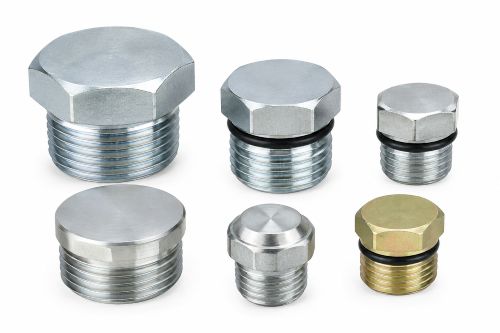
Hydraulic end plugs are components designed to close an open port, passage, or threaded connection in a hydraulic system. They are commonly installed directly into a hydraulic port and may use threads, O-rings, bonded seals, or other sealing methods to prevent fluid leakage.
End plugs are often used when a port is not required for a particular hydraulic circuit. For example, a hydraulic manifold may have several machined ports, but not all of them are used in every configuration. An end plug can close an unused opening while maintaining the integrity of the hydraulic circuit.
Depending on the design, hydraulic end plugs can be made from carbon steel, stainless steel, brass, or other suitable materials. Surface treatments such as zinc plating may also be used to improve corrosion resistance.
Common applications include hydraulic manifolds, valves, pumps, cylinders, test ports, and other fluid-power equipment.
What Are Hydraulic Caps?
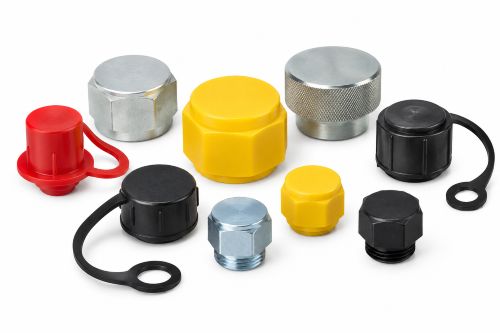
Hydraulic caps are generally designed to cover and protect the outside of a hydraulic port, fitting, hose end, or connection. Their primary purpose may be sealing, contamination protection, or both.
For example, a protective hydraulic cap can be installed over an exposed fitting during equipment storage or transportation. It helps keep dust, dirt, moisture, and other contaminants away from the connection.
Some hydraulic caps are also designed for pressure-containing applications. In these cases, the cap must be specifically rated and designed to withstand the pressure of the hydraulic system.
Hydraulic caps can be threaded or use other connection methods depending on the application. They are commonly found on hydraulic hoses, tube fittings, adapters, ports, and equipment connections.
Hydraulic End Plugs vs Hydraulic Caps: Key Differences
The easiest way to understand the difference is to look at where each component is installed and what it is intended to do.
|
Feature |
Hydraulic End Plugs |
Hydraulic Caps |
|
Primary purpose |
Close or seal a port or passage |
Cover, protect, or seal an external connection |
|
Typical position |
Installed into an opening or port |
Installed over the end of a port, fitting, hose, or connection |
|
Connection |
Commonly threaded |
Threaded or designed to fit over a connection |
|
Sealing |
Threads, O-rings, bonded seals, or other seals |
Threads, O-rings, sealing surfaces, or protective fit |
|
Typical use |
Closing unused hydraulic passages |
Protecting or closing exposed hydraulic connections |
|
Pressure use |
Often available for pressure applications |
Depends on the specific cap design |
|
Maintenance |
Removed when access to the port is required |
Often removed when the connection is put back into service |
|
Contamination protection |
Can provide sealing when properly installed |
Often specifically used for contamination protection |
The exact terminology can vary between manufacturers, so the component’s design and rated function are more important than the name alone.
Common Types of Hydraulic End Plugs
Hydraulic end plugs come in several configurations to suit different ports and sealing requirements.
Threaded Hydraulic End Plugs
Threaded end plugs are among the most common designs. They screw directly into a matching threaded port and can provide a secure closure.
Depending on the hydraulic standard, threads may be metric, BSP, NPT, SAE, or another configuration. Thread compatibility is important because even threads that look similar may have different dimensions or sealing characteristics.
O-Ring Hydraulic End Plugs
Some end plugs use an O-ring to create the primary seal between the plug and the port. The O-ring can provide reliable sealing without relying solely on the threads.
The O-ring material should be selected according to the hydraulic fluid, temperature, pressure, and application environment.
Tapered Hydraulic Plugs
Tapered plugs use a tapered thread or sealing geometry to create a tight connection as the plug is installed. They are commonly used in applications where the port and plug are designed around a compatible tapered thread standard.
Hex Socket and Hex Head Plugs
Hydraulic plugs may feature an internal hex socket or external hex head for installation. These designs make it easier to apply the appropriate tool and torque during assembly or removal.
High-Pressure Hydraulic End Plugs
High-pressure systems require plugs designed for the system’s operating conditions. The plug material, thread design, sealing method, and overall construction must be capable of handling the required pressure.
A standard protective plug should not automatically be treated as a pressure-rated component.
Common Types of Hydraulic Caps
Hydraulic caps also come in different designs depending on whether they are intended for sealing, protection, or both.
Threaded Hydraulic Caps
Threaded caps screw onto a matching threaded connection. They may be used to close a hydraulic connection or protect the connection from external contamination.
Hydraulic Port Caps
Port caps are commonly used to cover exposed hydraulic ports. They are particularly useful during equipment assembly, servicing, storage, and transportation.
Flare Caps
Flare caps are designed to fit specific flare connections. They can help protect the flare surface and prevent contamination when the connection is not in use.
Protective Caps
Protective caps are primarily intended to keep dirt, dust, moisture, and debris away from hydraulic connections. They are especially useful during shipping and equipment storage.
Not every protective cap is designed to contain hydraulic pressure, so the manufacturer’s specifications should always be checked before using one as a pressure-sealing component.
O-Ring Sealing Caps
Some hydraulic caps use O-rings or other sealing elements to improve sealing performance. These designs may be used where a more reliable seal is required around the connection.
Sealing Methods for Hydraulic Plugs and Caps
Sealing is one of the most important considerations when selecting either a hydraulic end plug or cap.
Thread Sealing
Some threaded plugs and caps rely on the thread design and a compatible sealing method. Depending on the thread standard, additional sealing products may or may not be appropriate.
O-Ring Sealing
O-rings are widely used in hydraulic connections because they can provide an effective seal when the groove, material, dimensions, and installation conditions are correct.
Bonded Seals
Bonded seals combine a metal washer with an elastomer sealing element. They are commonly used with certain hydraulic plugs and threaded connections to create a reliable seal between the component and the port face.
Metal-to-Metal Sealing
Some hydraulic connections use precisely machined metal sealing surfaces. Proper surface condition, alignment, and tightening are important for achieving the intended sealing performance.
The correct sealing method depends on the plug or cap design and the corresponding port standard. Using an incompatible seal can result in leakage or damage.
Hydraulic End Plugs vs Caps: Which One Should You Choose?
The choice should start with the hydraulic connection itself rather than simply the name of the component.
1. Check the Port Design
Identify whether the component needs to be installed inside a threaded port or placed over an external connection. This is one of the easiest ways to distinguish between a typical end plug and a cap.
2. Identify the Thread Standard
Check whether the connection uses a metric, BSP, NPT, SAE, or another thread standard. The thread diameter alone is not enough to confirm compatibility.
3. Consider Working Pressure
If the component will be exposed to hydraulic pressure, select a plug or cap with an appropriate pressure rating.
A protective cap intended only for storage should not be substituted for a pressure-rated component.
4. Select the Right Sealing Method
Consider whether the connection requires an O-ring, bonded seal, tapered thread, metal-to-metal seal, or another sealing arrangement.
5. Choose a Suitable Material
Carbon steel is widely used for general hydraulic applications, while stainless steel may be preferred where greater corrosion resistance is needed. Brass may also be suitable for certain lower-pressure or specialized applications.
6. Consider the Environment
Outdoor equipment, marine environments, construction machinery, and industrial systems can expose hydraulic components to moisture, chemicals, dust, and temperature changes. The material and surface finish should match these conditions.
Where Are Hydraulic End Plugs and Caps Used?
Both components are found throughout hydraulic systems, although their specific roles can differ.
Hydraulic Manifolds
Manifolds often contain multiple ports and internal passages. End plugs can be used to close selected passages or unused ports according to the manifold’s configuration.
Hydraulic Pumps and Valves
Plugs can close service ports, unused connections, or machined passages in pumps and valves. Caps can also protect exposed connections during maintenance or transportation.
Hydraulic Cylinders
Certain cylinder designs include ports or openings that may require suitable plugs or caps during assembly, maintenance, or storage.
Hydraulic Hose Assemblies
Caps are commonly used to protect hose ends and fittings from contamination before installation. This can be particularly useful during transportation and assembly.
Construction and Agricultural Equipment
Mobile hydraulic equipment often operates in dusty, wet, or dirty environments. Properly selected caps and plugs can help protect hydraulic connections and maintain system cleanliness.
Industrial Hydraulic Systems
Manufacturing equipment, hydraulic power units, presses, and other industrial systems can use plugs and caps to close unused ports and protect connections during servicing.
Common Mistakes When Selecting Hydraulic Plugs or Caps
A few simple mistakes can lead to leakage, damaged threads, or poor protection.
Choosing the wrong thread type is one of the most common problems. Metric, BSP, NPT, and SAE threads are not interchangeable simply because they have similar-looking dimensions.
Ignoring the pressure rating can also create problems. A component intended for contamination protection may not be suitable for containing hydraulic pressure.
Using the wrong sealing method can result in leakage even when the thread size is correct. The sealing method should match the design of the port and plug or cap.
Over-tightening the component can damage threads, sealing surfaces, or the plug itself. Always follow the manufacturer’s recommended installation requirements.
Using the wrong material or finish may reduce service life in corrosive environments. Material selection should take operating conditions into account.
Installation and Maintenance Tips
Before installing a hydraulic end plug or cap, clean the connection and inspect the threads and sealing surfaces. Dirt or metal particles can interfere with proper sealing and may enter the hydraulic system.
Make sure the plug or cap is correctly aligned before tightening. Cross-threading can permanently damage the port.
If an O-ring or bonded seal is used, inspect it for cuts, deformation, or other damage before installation. Replace damaged sealing elements rather than attempting to reuse them when the application requires a new seal.
Use the recommended tightening torque where specified. Excessive torque does not necessarily create a better seal and can damage the connection.
During routine maintenance, inspect plugs and caps for corrosion, damaged threads, leaks, or worn sealing elements. Replace components that no longer provide the required protection or sealing performance.
Frequently Asked Questions
Are hydraulic end plugs and hydraulic caps the same?
No. Although the terms may sometimes be used interchangeably, an end plug is generally installed into an opening or port, while a cap commonly covers the outside of a port, fitting, hose, or connection. The exact terminology depends on the manufacturer’s design.
Can a hydraulic cap be used as a plug?
Only if the cap is specifically designed and rated for that application. A protective cap should not automatically be used as a pressure-rated plug.
Are hydraulic end plugs suitable for high-pressure systems?
Yes, specific hydraulic end plugs are designed for high-pressure applications. However, the plug must have a suitable pressure rating and compatible thread and sealing design.
How do I identify the correct hydraulic plug size?
Start by identifying the port thread standard, nominal size, thread pitch or thread form, sealing method, and required pressure rating. Measuring the outside diameter alone is usually not enough.
What is the difference between a threaded plug and a protective cap?
A threaded plug is generally installed into a port or opening to close it, while a protective cap is commonly placed over an exposed connection to prevent contamination or damage. Some caps can also provide pressure sealing if specifically designed for that purpose.
Which sealing method is best for hydraulic end plugs?
There is no single sealing method that is best for every application. O-rings, bonded seals, tapered threads, and metal-to-metal sealing are all used in hydraulic systems. The correct option depends on the port design, pressure, temperature, fluid, and applicable standard.
Conclusion
Hydraulic end plugs and hydraulic caps may look similar, but their intended functions can be different. End plugs are generally used to close hydraulic ports or internal passages, while caps are commonly used to cover and protect external hydraulic connections.
When selecting either component, pay attention to the thread standard, dimensions, sealing method, material, pressure rating, and operating environment. Choosing a component based only on size or appearance can result in leakage, poor protection, or connection damage.
For reliable hydraulic performance, the plug or cap should always be matched to the specific port design and application requirements.
Post time: Oct-01-2026