

Hydraulic steering end caps are used to close, seal, and protect specific sections of hydraulic steering assemblies while helping maintain proper positioning of internal components. They are commonly found in hydraulic steering systems used in agricultural machinery, construction equipment, mobile equipment, and other hydraulic applications.
Although an end cap may look like a relatively simple component, its design can affect sealing performance, system reliability, and maintenance access. The right end cap needs to match the steering assembly in terms of dimensions, mounting method, sealing arrangement, material, and operating conditions.
What Is a Hydraulic Steering End Cap?
A hydraulic steering end cap is a machined or formed component installed at the end of a hydraulic steering housing or related assembly. Its primary purpose is to close an opening and create a secure boundary around internal components.
Depending on the design, the end cap may use threads, bolts, retaining features, or another mounting method. Sealing elements such as O-rings or other hydraulic seals may also be incorporated to prevent fluid from escaping.
The exact construction varies between hydraulic steering systems. Some end caps are designed mainly for sealing and protection, while others also help support or locate internal components.
What Are Hydraulic Steering End Caps Used For?
Hydraulic steering end caps perform several important functions within a steering system.
1. Closing and Protecting the Steering Housing
One of the basic functions of an end cap is to close an open section of the steering housing or assembly.
Once installed, the cap creates a physical barrier that helps keep internal components protected from dust, dirt, moisture, and other contaminants. This is especially important for equipment that operates outdoors or in harsh working environments.
A properly fitted end cap can also help protect machined surfaces and internal components from unnecessary exposure to the surrounding environment.
2. Preventing Hydraulic Fluid Leaks
Hydraulic systems depend on controlled fluid containment. Even a small leak around a steering assembly can eventually lead to fluid loss, contamination, or reduced system performance.
Hydraulic steering end caps are therefore commonly designed with sealing surfaces or sealing elements. An O-ring, bonded seal, or another suitable seal can create a tight interface between the end cap and the mating component.
The seal must be compatible with the hydraulic fluid, temperature, pressure, and materials used in the system. Incorrect sealing components or damaged sealing surfaces can result in leakage.
3. Helping Maintain Hydraulic Pressure
Hydraulic steering systems rely on pressurized fluid to transmit force. The end cap and its sealing arrangement must therefore be capable of containing the hydraulic fluid under the system’s operating conditions.
A correctly manufactured end cap provides a stable connection with the surrounding housing. Together with the appropriate seal, it helps prevent pressure loss through the end of the assembly.
The pressure capability of an end cap should always be considered as part of the complete steering system rather than as an isolated component.
4. Supporting or Positioning Internal Components
Some hydraulic steering end caps do more than close an opening. Their internal geometry may be designed to support, retain, or position components inside the assembly.
Depending on the steering design, an end cap may work alongside shafts, bearings, bushings, seals, or other internal parts.
Accurate dimensions are particularly important in these applications. If the end cap is incorrectly sized, it can affect component alignment or create unwanted movement within the assembly.
5. Providing Access for Maintenance
Another useful feature of some end-cap designs is service access.
A removable threaded or bolt-on end cap can allow technicians to reach internal components without replacing the entire steering housing. During maintenance, the end cap may be removed to inspect seals, clean internal areas, or replace worn components.
This makes the design of the end cap relevant not only to normal operation but also to the long-term serviceability of the equipment.
Main Components of a Hydraulic Steering End Cap
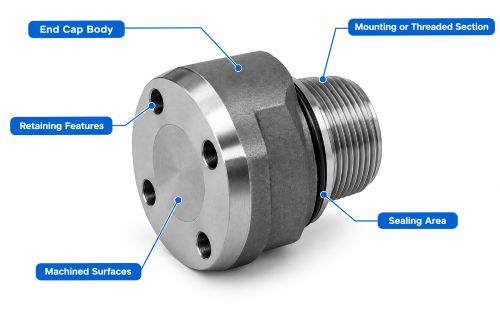
Hydraulic steering end caps can have different configurations, but many designs include several common features.
End cap body: The main structural section provides the basic shape and interfaces with the steering housing.
Mounting or threaded section: This connects the end cap to the mating component. Depending on the design, it may use external threads, internal threads, bolts, or another retention method.
Sealing area: A machined groove or sealing surface accommodates an O-ring or another sealing element.
Retaining features: Some designs include grooves, shoulders, bolt holes, or other features that prevent unwanted movement after installation.
Machined surfaces: Precision-machined surfaces help ensure proper fit, alignment, and sealing.
Not every hydraulic steering end cap contains all of these features. The configuration depends on the steering system and its specific requirements.
Common Types of Hydraulic Steering End Caps
Threaded End Caps
Threaded end caps are installed by screwing them into a mating threaded section. They can provide a secure connection while still allowing the component to be removed during maintenance.
The thread specification, diameter, engagement length, and sealing arrangement all need to match the steering assembly.
Bolt-On End Caps
Bolt-on designs are attached using bolts or other fasteners. They are often useful where regular service access is required.
The bolt pattern, mounting surface, gasket or seal arrangement, and tightening requirements need to be matched to the original design.
Sealed End Caps
Some end caps are specifically designed around hydraulic sealing requirements. They may incorporate O-ring grooves, sealing faces, or other features intended to prevent fluid leakage.
For these designs, seal material and groove dimensions are just as important as the end-cap body itself.
Custom Hydraulic Steering End Caps
OEM and specialized machinery may require custom end caps with specific dimensions, mounting configurations, materials, or sealing arrangements.
Custom components can be manufactured to match an existing steering assembly or a new equipment design, depending on the application.
Materials Used for Hydraulic Steering End Caps
Material selection depends on the mechanical and environmental conditions of the application.
Carbon steel is widely used where high mechanical strength and durability are required. Surface treatments can also be applied to improve corrosion resistance.
Stainless steel may be selected for applications where corrosion resistance is especially important or where the equipment operates in demanding environments.
Aluminum and other materials may be suitable for applications where lower weight or particular design requirements are important.
When selecting a material, manufacturers and engineers should consider pressure, mechanical loads, temperature, corrosion exposure, hydraulic-fluid compatibility, and the surrounding equipment.
Where Are Hydraulic Steering End Caps Used?
Hydraulic steering end caps can be found in many types of hydraulic equipment and machinery.
Common applications include:
1. Agricultural machinery
2. Construction equipment
3. Material-handling equipment
4. Mobile hydraulic machinery
5. Industrial hydraulic systems
6. Hydraulic steering assemblies
7. Specialized off-road equipment
In these applications, the end cap works as part of a larger steering or hydraulic assembly rather than as an independent component.
Important Hydraulic Steering End Cap Specifications
Before selecting a replacement or designing a new hydraulic steering end cap, several specifications should be checked.
Thread or Mounting Configuration
The thread type, diameter, pitch, bolt pattern, and mounting dimensions must match the mating component.
Overall Dimensions
Outside diameter, inside diameter, thickness, thread length, and other critical dimensions can affect installation and internal component positioning.
Pressure Requirements
The end cap and sealing arrangement must be suitable for the hydraulic system’s operating pressure and any expected pressure peaks.
Material
Material should be selected according to mechanical strength, corrosion resistance, operating temperature, and fluid compatibility.
Seal Type and Size
The seal must match the groove and mating surfaces while being compatible with the hydraulic fluid and operating temperature.
Surface Treatment
For steel components, coatings or other surface treatments may be used to improve corrosion resistance and service life.
How to Choose the Right Hydraulic Steering End Cap
Choosing an end cap is not simply a matter of finding one with the same general shape. The component needs to match the complete steering assembly.
Start by identifying the equipment and steering system in which the end cap will be installed. If possible, check the original manufacturer’s part number and technical drawings.
Next, verify the important dimensions, including the mounting configuration, thread specifications, sealing groove, outside diameter, and overall length.
The operating conditions should also be considered. Check the system pressure, temperature range, hydraulic fluid, and environmental exposure before selecting the material and sealing components.
For replacement applications, comparing the new component with the original end cap can help prevent problems caused by incorrect dimensions or incompatible seals.
Checkout these other resources ⬇️⬇️⬇️
Understanding Hydraulic Cylinder Gland Caps and Their Role
Hydraulic Flare Caps: Types, Uses, and Applications
What Are Hydraulic Cylinder Vent Plugs and How Do They Work?
Common Problems With Hydraulic Steering End Caps
Like other hydraulic components, steering end caps can experience problems during long-term operation.
Hydraulic leaks may occur when seals become worn, damaged, incorrectly installed, or incompatible with the operating conditions.
Thread damage can result from cross-threading, excessive tightening, contamination, or repeated installation and removal.
Corrosion can affect unprotected metal surfaces, particularly when equipment operates in wet, humid, or chemically aggressive environments.
Cracks or deformation may occur if the component is exposed to loads or pressures beyond its intended design conditions.
Incorrect installation is another common issue. Using the wrong seal, applying excessive torque, or failing to clean mating surfaces can compromise the connection.
When a steering end cap shows visible damage or persistent leakage, replacing the affected component and inspecting the mating parts is often necessary.
Hydraulic Steering End Cap Maintenance Tips
Regular inspection can help identify problems before they affect the wider steering system.
Check the end cap for signs of hydraulic fluid leakage, corrosion, cracks, or physical damage. During service, inspect the sealing surfaces and replace worn seals rather than reusing damaged sealing elements.
Keep threads and mating surfaces clean before installation. If the manufacturer specifies an installation torque, follow that specification instead of tightening the component as much as possible.
It is also important to avoid using a replacement end cap based only on appearance. Small differences in thread dimensions, sealing grooves, or internal geometry can affect system performance.
Hydraulic Steering End Caps vs. Standard Hydraulic End Caps
Hydraulic steering end caps and general hydraulic end caps may look similar, but their designs are determined by their applications.
A steering end cap may need to work with specific internal steering components, provide precise positioning, or meet particular space and sealing requirements. A general hydraulic end cap may primarily function as a closure or pressure boundary.
For this reason, an end cap should be selected according to the equipment manufacturer’s specifications and the actual requirements of the steering assembly.
Frequently Asked Questions
What is a hydraulic steering end cap?
A hydraulic steering end cap is a component used to close and seal part of a hydraulic steering assembly. Depending on its design, it can also protect, support, or position internal components.
What are hydraulic steering end caps used for?
They are primarily used for closing steering housings, preventing hydraulic fluid leakage, maintaining pressure, protecting internal components, and providing access for maintenance.
Do hydraulic steering end caps prevent hydraulic leaks?
They can help prevent leaks when correctly designed and installed with suitable sealing elements. The seal, mating surfaces, installation method, and operating conditions all affect sealing performance.
What materials are hydraulic steering end caps made from?
Common materials include carbon steel and stainless steel. Other materials may be used when weight, corrosion resistance, or specific equipment requirements call for them.
How do I choose the correct hydraulic steering end cap?
Check the original part number or drawing when available, then verify the dimensions, thread or mounting configuration, pressure requirements, material, sealing arrangement, and operating environment.
Can a damaged hydraulic steering end cap be repaired?
Minor issues such as a worn seal may be addressed by replacing the sealing element. However, a cracked, badly deformed, or severely damaged end cap generally needs to be replaced with a suitable component.
Conclusion
Hydraulic steering end caps play an important role in keeping steering assemblies properly closed, sealed, and protected. Depending on their design, they can also support internal components and make maintenance more convenient.
For replacement or OEM applications, the most important considerations are not just the external shape of the end cap. Thread specifications, dimensions, sealing configuration, material, pressure rating, and operating conditions all need to match the steering system.
Selecting the right hydraulic steering end cap can help maintain reliable sealing, protect internal components, and support the long-term performance of hydraulic steering equipment.
Post time: Sep-25-2026