

A hydraulic plug with O-ring is designed to close a hydraulic port while providing a reliable seal against fluid leakage. Unlike a simple threaded plug that may rely on thread sealing or metal-to-metal contact, an O-ring plug uses an elastomeric sealing ring positioned in a specially designed groove.
This relatively simple design is widely used in hydraulic manifolds, pumps, valves, cylinders, mobile equipment, and other fluid power systems. Proper plug selection, O-ring compatibility, installation, and maintenance all play an important role in achieving a dependable connection.
What Is a Hydraulic Plug with O-Ring?
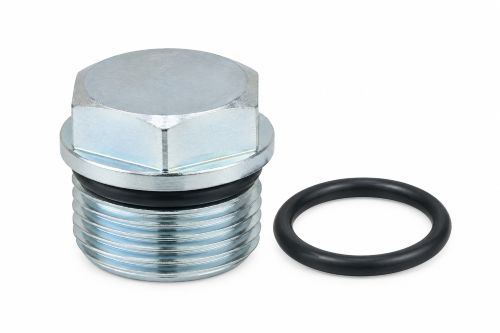
A hydraulic plug with O-ring is a threaded component used to close, isolate, or protect a hydraulic port. The O-ring sits in a groove on the plug and compresses against the mating surface when the plug is installed.
The main purpose is to prevent hydraulic oil from escaping through the connection while also helping keep contaminants out of the system.
These plugs are available in different thread types, sizes, materials, and pressure ratings. Depending on the application, they may be designed for permanent installation or for ports that need to be opened periodically during maintenance.
One important advantage of an O-ring sealing arrangement is that the threads primarily provide the mechanical connection, while the O-ring performs the sealing function.
Hydraulic Plug with O-Ring Design
Although hydraulic plug designs vary, most contain several basic features that work together to create a secure connection.
Plug Body
The plug body is the main structural part of the component. It contains the threaded section, sealing area, and usually a hexagonal or other drive section for installation.
The body must have sufficient mechanical strength to withstand the pressure and operating conditions of the hydraulic system.
Carbon steel is commonly used for general hydraulic applications, while stainless steel may be selected when greater corrosion resistance is required.
Threaded Connection
The threaded section allows the plug to connect with the corresponding hydraulic port. Depending on the application, plugs may use metric, SAE, or other recognized hydraulic thread configurations.
Thread compatibility is important. A plug with the wrong thread type or size may not engage correctly and can damage the port or create a poor connection.
It is also important to remember that not all hydraulic threads provide the seal in the same way. In an O-ring plug design, the O-ring generally provides the primary fluid seal rather than the threads themselves.
O-Ring Groove
The O-ring groove is a critical part of the plug design. It holds the O-ring in the correct position and allows the ring to compress against the mating surface during installation.
Groove dimensions must be matched to the O-ring size and application. If the groove is too deep, the O-ring may not compress sufficiently. If it is too shallow, excessive compression can damage the O-ring or make installation difficult.
For this reason, both the plug and O-ring should be selected as a matched sealing system.
O-Ring
The O-ring is the main sealing element. It is normally made from an elastomer that can deform slightly when compressed.
When the plug is tightened, the O-ring fills the small clearance between the mating surfaces. This creates a barrier that helps prevent hydraulic fluid from passing through the connection.
Common O-ring materials include NBR, FKM, and EPDM. The correct choice depends on the hydraulic fluid, temperature, pressure, and surrounding environment.
Hex or Drive Section
Many hydraulic plugs include a hex section that allows a wrench or suitable tool to install and remove the component.
Using the correct tool helps prevent damage to the plug. Applying excessive force to an unsuitable area can deform the plug or damage its surface.
How Does a Hydraulic Plug with O-Ring Seal?
The sealing process is relatively straightforward.
When the plug is installed, the O-ring is compressed between the plug and its mating surface. The elastomer deforms to fill microscopic gaps and irregularities in the sealing interface.
As hydraulic pressure is applied, the O-ring can also be pressed against the sealing surfaces, helping maintain the barrier against fluid leakage.
However, good sealing does not depend on the O-ring alone. The plug dimensions, groove design, thread condition, installation torque, surface finish, fluid compatibility, and operating temperature can all affect performance.
A damaged O-ring, incorrect size, contaminated sealing surface, or damaged port can cause leakage even when the plug itself is correctly manufactured.
Common Types of Hydraulic Plugs with O-Rings
Hydraulic plugs with O-rings are available in several configurations.
O-Ring Boss Plugs
O-ring boss plugs are commonly used with ports designed to accept an O-ring as the primary seal. They are widely found in hydraulic manifolds, valves, pumps, and other fluid power components.
Metric O-Ring Plugs
Metric versions are designed for metric hydraulic ports and equipment. They are frequently used in machinery manufactured according to metric dimensional standards.
SAE O-Ring Plugs
SAE-style O-ring plugs are commonly used in hydraulic systems that use SAE port configurations. Correct identification of the thread and port dimensions is necessary before replacement.
Internal and External Threaded Plugs
Depending on the system design, hydraulic plugs may have different thread configurations. The choice depends on whether the plug is intended to fit into an internally threaded port or work with another component.
Service and Protective Plugs
Some O-ring plugs are used during equipment assembly, maintenance, testing, or transportation. They can temporarily close an open port and help prevent hydraulic fluid leakage and contamination.
Materials Used for Hydraulic Plugs with O-Rings
Material selection should consider both the plug body and the O-ring.
Plug Materials
Carbon steel is a common choice for hydraulic plugs because it offers good mechanical strength and is suitable for many industrial applications. Surface treatments such as zinc plating can improve corrosion resistance.
Stainless steel may be selected when the component will be exposed to moisture, corrosive environments, or demanding service conditions.
Brass can also be used for certain lower-pressure or specialized applications where its material properties are appropriate.
O-Ring Materials
The O-ring material must be compatible with the hydraulic fluid and operating conditions.
NBR (nitrile) is widely used in hydraulic applications because it offers good resistance to many petroleum-based hydraulic fluids.
FKM, often known by the trade name Viton®, is commonly selected for applications involving higher temperatures or fluids where improved chemical resistance is needed.
EPDM can be suitable for certain fluid and environmental conditions, but its compatibility with petroleum-based hydraulic oils must be carefully considered.
The best material is therefore not simply the one with the highest temperature or pressure capability. It is the material that matches the actual operating environment.
Key Benefits of Hydraulic Plugs with O-Rings
Hydraulic plugs with O-rings offer several practical advantages.
First, they provide a dedicated sealing element that is separate from the mechanical thread connection. This can provide reliable sealing when the plug, O-ring, and mating port are correctly matched.
They are also relatively easy to install and remove, making them useful for equipment that requires regular inspection or service.
Another advantage is contamination protection. A properly installed plug can help keep dirt, moisture, and other contaminants from entering an unused hydraulic port.
O-ring plugs are also available in a wide range of sizes and configurations, making them suitable for different hydraulic equipment and port designs.
How to Choose the Right Hydraulic Plug with O-Ring
Choosing the correct plug requires more than simply measuring the outside diameter.
1. Identify the Port
Start by identifying the hydraulic port. Determine the thread type, size, and sealing configuration.
Using a thread gauge, measuring tool, equipment documentation, or the original component can help with identification.
2. Select the Correct Plug Size
The plug must match the port dimensions. An incorrectly sized plug may not engage correctly or may provide insufficient O-ring compression.
3. Check Pressure Requirements
Confirm that the plug is rated for the system’s working pressure. Applications involving high hydraulic pressure require components specifically designed and tested for those conditions.
4. Consider Temperature
Operating temperature affects both the plug material and O-ring performance. Make sure the selected O-ring can withstand the minimum and maximum temperatures expected during service.
5. Match the O-Ring to the Hydraulic Fluid
Fluid compatibility is essential. An O-ring that works well with one hydraulic fluid may perform poorly with another.
Always check the manufacturer’s compatibility information before selecting an O-ring material.
6. Consider the Environment
Outdoor machinery, marine equipment, and industrial systems may face moisture, chemicals, dust, or temperature changes. In such environments, corrosion-resistant plug materials and suitable O-ring compounds may be necessary.
How to Install a Hydraulic Plug with O-Ring
Correct installation helps prevent many common sealing problems.
Step 1: Inspect the Port
Before installation, clean the port and inspect the threads and sealing surface. Remove dirt, metal particles, old seal material, or other contaminants.
Step 2: Inspect the O-Ring
Check the O-ring for cuts, cracks, flattening, twisting, or other visible damage. Never install an O-ring that is already damaged.
Step 3: Lubricate the O-Ring When Appropriate
A compatible lubricant can make installation easier and reduce the risk of twisting or damaging the O-ring.
However, the lubricant must be compatible with the O-ring material and hydraulic fluid.
Step 4: Install the Plug Carefully
Align the plug with the port and start the threads by hand whenever possible. This helps reduce the risk of cross-threading.
Do not force a plug into a port if the threads do not engage smoothly.
Step 5: Tighten to the Recommended Torque
Use the manufacturer’s recommended torque value. Over-tightening can damage the plug, threads, or O-ring, while insufficient tightening may allow the connection to loosen or leak.
The correct torque depends on the plug design, thread size, material, and application.
Hydraulic Plug with O-Ring Maintenance
Routine inspection can help extend the service life of hydraulic plugs and prevent unexpected leakage.
During maintenance, look for signs of oil around the plug. Leakage may indicate a damaged O-ring, incorrect installation, loose connection, damaged threads, or a problem with the mating port.
The sealing area should also be kept clean. Dirt or metal particles trapped between the O-ring and sealing surface can create a leakage path.
If an O-ring has become hardened, cracked, flattened, swollen, or otherwise damaged, it should normally be replaced rather than reused.
When replacing an O-ring, use the correct size and material. Simply installing a similar-looking ring is not enough because differences in material, diameter, and cross-section can affect sealing performance.
Common Problems and Troubleshooting
O-Ring Leakage
If hydraulic oil is leaking around the plug, inspect the O-ring first. It may be damaged, incorrectly sized, improperly seated, or incompatible with the hydraulic fluid.
Also check the plug groove and mating surface for damage or contamination.
Damaged O-Ring
An O-ring can be damaged during installation if it is pinched, twisted, stretched excessively, or forced over a sharp edge.
Using an appropriate installation technique and compatible lubricant can reduce these risks.
Plug Loosening
A plug that repeatedly loosens may be affected by vibration, incorrect torque, damaged threads, or an unsuitable installation method.
Check the manufacturer’s installation requirements rather than simply increasing the tightening force.
Damaged Threads
Cross-threading and excessive torque can damage hydraulic threads. Once threads are damaged, replacing the O-ring alone may not solve the problem.
Inspect both the plug and the port before installing a replacement.
Persistent Leakage
If leakage continues after replacing the O-ring, inspect the plug, groove, threads, and mating port. The problem may be related to component damage or an incorrect plug configuration rather than the O-ring itself.
Hydraulic Plug with O-Ring vs. Other Sealing Methods
Hydraulic plugs can use different sealing methods, depending on the port design.
An O-ring plug uses an elastomeric ring to create the primary seal. This makes the O-ring responsible for sealing while the threads provide the mechanical connection.
Other plugs may rely on tapered threads, metal-to-metal contact, or a bonded sealing element.
An O-ring design can be particularly useful when a reliable, serviceable seal is required and the hydraulic port is designed specifically for O-ring sealing.
The important point is that these sealing methods are not necessarily interchangeable. A plug designed for one port configuration should not automatically be substituted with another type simply because the thread appears similar.
Applications of Hydraulic Plugs with O-Rings
Hydraulic plugs with O-rings can be found across many types of equipment.
Common applications include:
➡️ Hydraulic manifolds
➡️ Hydraulic pumps
➡️ Control valves
➡️ Hydraulic cylinders
➡️ Mobile hydraulic machinery
➡️ Construction equipment
➡️ Agricultural machinery
➡️ Industrial machinery
➡️ Hydraulic test and service ports
They may be used to close unused ports, isolate sections of a hydraulic circuit, protect connections during transportation, or provide a removable seal during servicing.
Best Practices for Long-Term Performance
A few simple practices can make a significant difference in service life.
Always use the correct plug and O-ring combination for the port. Keep the sealing surfaces clean and inspect components before installation.
Avoid reusing damaged or severely deformed O-rings. Follow the recommended torque instead of tightening the plug as much as possible.
It is also useful to keep compatible replacement O-rings available for routine maintenance, particularly when equipment is regularly serviced.
For demanding hydraulic systems, maintain records of plug specifications, O-ring materials, and replacement intervals. This makes future maintenance easier and reduces the risk of installing an incompatible component.
Frequently Asked Questions
What is a hydraulic plug with O-ring used for?
A hydraulic plug with O-ring is used to close or seal a hydraulic port while helping prevent fluid leakage and contamination. It can be used in pumps, valves, manifolds, cylinders, and other hydraulic equipment.
How does an O-ring seal a hydraulic plug?
The O-ring is compressed between the plug and the mating sealing surface. Its elastic deformation fills the clearance between the surfaces and creates a barrier against hydraulic fluid.
What material is best for a hydraulic O-ring plug?
The appropriate material depends on the application. Carbon steel is commonly used for the plug body, while stainless steel may be suitable for more corrosive environments. O-ring material should be selected according to the hydraulic fluid, temperature, and operating conditions.
Can a hydraulic plug O-ring be reused?
An O-ring should generally be replaced if it shows signs of wear, damage, permanent deformation, or chemical deterioration. Reusing a damaged or badly deformed O-ring can increase the risk of leakage.
Why does my hydraulic plug with O-ring leak?
Possible causes include a damaged or incorrect O-ring, contamination, incorrect installation, insufficient or excessive tightening, damaged threads, or a damaged sealing surface.
How tight should a hydraulic plug with O-ring be?
The plug should be tightened according to the manufacturer’s specified torque. The correct value depends on the thread size, plug design, material, and application.
How often should hydraulic plug O-rings be replaced?
There is no universal replacement interval. O-rings should be inspected during routine maintenance and replaced when they show signs of wear, damage, hardening, cracking, swelling, or deformation.
Conclusion
A hydraulic plug with O-ring combines a threaded mechanical connection with an elastomeric sealing element to provide a practical way to close and seal hydraulic ports. Its performance depends on several factors, including the plug design, thread compatibility, O-ring material, installation method, hydraulic fluid, and operating conditions.
Choosing the correct plug and O-ring is only the first step. Proper installation and regular inspection are equally important. By keeping the sealing surfaces clean, using compatible O-rings, following recommended torque values, and replacing worn sealing components, hydraulic equipment operators can reduce leakage and maintain dependable connections over time.
Post time: Sep-30-2026