

Hydraulic flare caps are small but important components used to protect flare connections from contamination, damage, corrosion, and unwanted fluid leakage. They are commonly used on hydraulic hoses, tubes, valves, pumps, and other fluid power equipment when a connection is unused, disconnected, or being transported.
Although a flare cap may look like a simple protective component, choosing the correct type is important. The cap must match the connection size, thread type, material, and application requirements. An incorrectly fitted cap can damage threads, fail to seal properly, or allow contaminants to enter the hydraulic system.
This guide covers the main types of hydraulic flare caps, how they work, their common uses and applications, and what to consider when selecting one.
What Are Hydraulic Flare Caps?
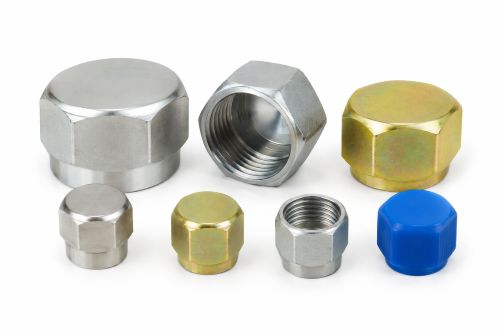
A hydraulic flare cap is a protective or sealing component designed to fit over a compatible flare connection. Its primary purpose is to protect the connection when it is not actively connected to another hydraulic component.
Flare connections are widely used in hydraulic systems because they can provide reliable metal-to-metal sealing when properly assembled. However, once a connection is exposed, its threads and sealing surfaces can become vulnerable to dirt, moisture, impact, and corrosion.
A flare cap provides a simple way to protect these areas.
Depending on the design, a hydraulic flare cap may primarily serve as a dust and contamination cover, or it may provide a more secure seal against fluid leakage. Some designs are intended for temporary protection during assembly and transportation, while others are manufactured for more demanding hydraulic applications.
How Do Hydraulic Flare Caps Work?
The operating principle is straightforward. The cap is installed on a compatible flare connection and covers the exposed end of the fitting.
For protective applications, the cap acts as a barrier between the connection and the surrounding environment. It helps prevent dust, dirt, moisture, and other contaminants from reaching the connection.
For sealing applications, the cap is designed to close the connection securely and help retain hydraulic fluid. The sealing method depends on the specific design of the cap and the connection standard.
Correct compatibility is essential. The thread size, thread form, flare angle, and sealing arrangement must match the connection being capped. The cap should also be installed carefully to avoid cross-threading or damage to the fitting.
In many cases, the cap does not need to be excessively tight. Over-tightening can damage threads or sealing surfaces, especially when the cap is made from a softer material than the fitting.
Types of Hydraulic Flare Caps
Hydraulic flare caps are available in different designs to accommodate different connection standards and operating requirements. Understanding these differences makes it easier to select the right product.
1. SAE Flare Caps
SAE flare connections are commonly found in hydraulic tubing and fluid power systems. SAE flare caps are designed to protect compatible SAE flare fittings and connections when they are disconnected or unused.
They are often used during equipment assembly, maintenance, transportation, and storage. Depending on the design, the cap can protect both the external connection and its sealing surface from contamination.
When selecting an SAE flare cap, it is important to verify the exact fitting specification rather than relying only on nominal size.
2. JIC Flare Caps
JIC connections are widely used in hydraulic systems, particularly where reliable high-pressure connections are required. JIC flare caps are designed to fit compatible JIC connections and help protect the fitting when the connection is not in use.
They can be useful on hydraulic hoses, adapters, manifolds, and other components that may need to be disconnected regularly.
Because JIC connections have specific dimensions and flare geometry, a JIC cap should be selected according to the correct connection specification and size.
3. 45-Degree Flare Caps
Some hydraulic systems use 45-degree flare connections, particularly in applications based on specific SAE-style connection designs.
A 45-degree flare cap is designed to match the corresponding connection geometry. Using the correct cap helps protect the flare surface and threads while keeping the connection ready for future assembly.
The flare angle is an important specification. A cap designed for one flare geometry should not automatically be assumed to fit another simply because the thread size appears similar.
4. Metric Flare Caps
Metric hydraulic connections are common in many industrial, mobile, and international equipment applications. Metric flare caps are designed to protect compatible metric connections.
Metric sizes can differ from inch-based connection systems even when their dimensions appear similar. For this reason, checking the actual thread and fitting specification is important before selecting a cap.
Metric flare caps may be manufactured from steel, stainless steel, or other suitable materials depending on the intended application.
5. Protective and Sealing Flare Caps
Not every flare cap serves exactly the same purpose.
Some caps are primarily designed to protect a connection from dust, moisture, and physical damage. These are particularly useful during manufacturing, transportation, assembly, and storage.
Other caps are designed to provide a stronger fluid seal. These may be used when a hydraulic line or component must remain closed after being disconnected.
Understanding whether you need temporary protection, contamination control, fluid sealing, or a combination of these functions will help you select the right cap.
Common Materials Used for Hydraulic Flare Caps
Material selection affects the durability, corrosion resistance, and suitability of a hydraulic flare cap.
Carbon Steel
Carbon steel is commonly used for hydraulic components because it offers good mechanical strength and durability. Surface treatments such as zinc plating can improve corrosion resistance.
Steel flare caps are suitable for many general industrial and mobile hydraulic applications.
Stainless Steel
Stainless steel flare caps are useful when corrosion resistance is a major concern. They can be suitable for harsh environments, outdoor equipment, marine applications, and systems exposed to moisture or corrosive substances.
The specific stainless steel grade should be selected according to the environmental and mechanical requirements of the application.
Brass
Brass may be used for certain fluid connection applications where its material characteristics are appropriate. It can offer good corrosion resistance and machinability, although its suitability depends on the pressure, fluid, temperature, and connection requirements.
Plastic and Polymer Materials
Some protective caps are manufactured from plastic or polymer materials. These products are often used primarily for contamination and physical protection rather than high-pressure fluid sealing.
They can be particularly convenient for transportation, storage, and assembly operations.
Main Uses of Hydraulic Flare Caps
Hydraulic flare caps have several practical uses throughout the life cycle of hydraulic equipment.
Protecting Unused Hydraulic Ports
An exposed hydraulic connection can collect dust and debris surprisingly quickly. A cap provides a physical barrier that keeps contaminants away from the connection.
This is particularly useful during equipment assembly when some hydraulic ports may remain unused temporarily.
Preventing Fluid Leakage
A suitable sealing flare cap can help close a disconnected hydraulic connection and reduce the risk of residual hydraulic fluid escaping.
This can make maintenance work cleaner and help prevent hydraulic fluid from reaching surrounding components.
However, the cap must be specifically suitable for the pressure and sealing requirements of the application.
Protecting Connections During Transportation
Hydraulic components are often shipped before they are installed. During transportation, exposed threads and sealing surfaces can be damaged by impact, dirt, moisture, or improper handling.
Installing flare caps provides an inexpensive layer of protection before the component reaches the assembly area.
Supporting Hydraulic System Maintenance
Maintenance often requires hoses, tubes, valves, or other hydraulic components to be temporarily disconnected.
Caps can be installed on exposed connections during maintenance to keep them clean until the system is reassembled.
Preventing Corrosion and Contamination
Moisture and contaminants can contribute to corrosion, especially when hydraulic components are stored for long periods.
A properly selected cap can help isolate the connection from the surrounding environment and reduce the chance of contamination or corrosion.
Applications of Hydraulic Flare Caps
Hydraulic flare caps are used across many industries because flare connections are found in a wide range of fluid power systems.
Construction Equipment
Excavators, loaders, cranes, and other construction machines contain numerous hydraulic hoses and fittings. Flare caps can be used during manufacturing, maintenance, transportation, and component replacement.
Agricultural Machinery
Tractors, harvesters, sprayers, and other agricultural equipment often operate in dusty and wet environments. Protecting unused hydraulic connections can help reduce contamination during servicing.
Material-Handling Equipment
Forklifts, lifts, and other material-handling equipment rely on hydraulic systems for lifting and movement. Flare caps can help protect connections during maintenance and component replacement.
Industrial Hydraulic Machinery
Manufacturing equipment, hydraulic presses, machine tools, and production systems may use various hydraulic connections. Caps can protect spare or temporarily disconnected connections during installation and maintenance.
Hydraulic Power Units
Hydraulic power units contain pumps, valves, hoses, manifolds, and other components with multiple hydraulic connections. Caps can be useful during assembly and when individual connections are not immediately connected.
Mobile Hydraulic Systems
Mobile equipment is particularly exposed to dust, moisture, vibration, and physical impact. Properly protecting disconnected hydraulic connections can help maintain system cleanliness and reduce the risk of connection damage.
Benefits of Using Hydraulic Flare Caps
Despite their simple design, flare caps provide several practical benefits.
Contamination control: They help prevent dust, dirt, moisture, and other foreign materials from entering exposed connections.
Connection protection: Caps can protect threads and sealing surfaces from scratches, dents, and other physical damage.
Leak prevention: Sealing-type caps can help contain residual hydraulic fluid when a connection is disconnected.
Longer component life: Keeping connections clean and protected can reduce unnecessary wear and corrosion.
Easier maintenance: Protected connections are generally easier to inspect and reconnect during servicing.
Better transportation protection: Caps help protect fittings and hydraulic components while they are being moved or stored.
How to Choose the Right Hydraulic Flare Cap
Selecting a flare cap should start with the connection itself. Several factors need to be checked before ordering.
Identify the Connection Type
First determine whether the connection is JIC, SAE, metric, or another flare standard. Different connection designs may use similar-looking threads but have different sealing geometries.
Check the Thread Size
Confirm the actual thread size and specification. Do not rely only on the outside diameter of the fitting because similar-looking connections may use different thread standards.
Confirm the Flare Geometry
The flare angle and sealing surface must be compatible. This is particularly important when working with different flare standards.
Select the Correct Material
Choose carbon steel, stainless steel, brass, plastic, or another material according to the application.
Consider factors such as corrosion exposure, mechanical requirements, temperature, and expected service conditions.
Consider Pressure and Temperature
If the cap will be used to seal a pressurized hydraulic connection, verify that its design and material are suitable for the operating pressure and temperature.
A protective cap intended only for storage should not automatically be treated as a pressure-rated sealing component.
Check Dimensional Compatibility
A good fit is essential. The cap should install smoothly without excessive force, cross-threading, or looseness.
For OEM and high-volume applications, manufacturers should also consider dimensional tolerances and consistency between batches.
Hydraulic Flare Caps vs. Hydraulic Plugs
Hydraulic flare caps and hydraulic plugs are sometimes confused because both can be used to close or protect hydraulic connections. However, they serve different purposes.
A cap generally covers an external connection, while a plug is commonly inserted into an internal port or opening.
For example, a flare cap may be installed over the end of a male flare fitting to protect its threads and sealing surface. A hydraulic plug may instead be installed into a female port to close the opening.
The correct choice depends on the connection being protected. Using a plug where a cap is required, or vice versa, can result in poor fit and ineffective protection.
Installation and Maintenance Tips
Installing a hydraulic flare cap is usually straightforward, but a few simple practices can prevent problems.
Before installation, clean the fitting and check for dirt, metal particles, damaged threads, or corrosion. A dirty connection can compromise the seal or carry contaminants into the hydraulic system later.
Start the cap by hand and make sure the threads engage correctly. If the cap does not turn smoothly, stop and check the thread size and alignment rather than forcing it.
Avoid excessive tightening. Over-tightening can damage threads, sealing surfaces, or the cap itself.
During maintenance, inspect caps for cracks, deformation, damaged threads, or excessive wear. Replace any cap that no longer provides a proper fit.
For long-term storage, keep the caps and fittings clean and protected from unnecessary moisture and contamination.
Common Problems When Using the Wrong Flare Cap
Using an incompatible flare cap can cause several problems.
One common issue is incorrect thread size. A cap may appear close to the correct size but fail to engage properly.
Another problem is cross-threading, which can permanently damage the fitting and make future connections difficult.
An incorrect flare angle or sealing design can also result in poor sealing and potential leakage.
Using an unsuitable material may lead to corrosion or premature component failure, particularly in outdoor or chemically aggressive environments.
Finally, a cap that does not fit securely can allow contaminants to enter the connection, defeating the main purpose of using a protective cap.
Frequently Asked Questions
What is a hydraulic flare cap used for?
A hydraulic flare cap is used to protect a compatible flare connection from contamination, physical damage, moisture, and, in suitable sealing designs, fluid leakage.
What is the difference between a flare cap and a flare plug?
A flare cap generally covers an external flare connection, while a flare plug is typically installed into an internal port or opening. The correct choice depends on the connection design.
Are hydraulic flare caps reusable?
Some hydraulic flare caps can be reused if they remain undamaged and clean. However, damaged, deformed, cracked, or worn caps should be replaced.
How do I know which size flare cap I need?
Identify the connection standard, thread size, flare geometry, and sealing design of the fitting. When specifications are uncertain, check the fitting manufacturer’s documentation before selecting the cap.
What materials are hydraulic flare caps made from?
Common materials include carbon steel, stainless steel, brass, and various plastics or polymers. The appropriate material depends on the application and environmental conditions.
Can hydraulic flare caps be used in high-pressure systems?
Some flare caps are designed for high-pressure sealing applications, while others are intended only for protection during storage or transportation. Always confirm the manufacturer’s pressure rating before using a cap on a pressurized system.
Are JIC and SAE flare caps interchangeable?
Not necessarily. Although some JIC and SAE connections can appear similar, their dimensions and connection specifications must be verified before using one cap in place of another.
Conclusion
Hydraulic flare caps are simple components, but they play an important role in keeping hydraulic connections clean, protected, and ready for use. They can help prevent contamination, protect threads and sealing surfaces, reduce fluid leakage, and safeguard components during transportation, maintenance, and storage.
The key to choosing the right flare cap is compatibility. Always consider the connection standard, thread size, flare geometry, material, pressure requirements, and intended use before making a selection.
For manufacturers and hydraulic equipment suppliers, selecting reliable flare caps can also help improve assembly quality and protect hydraulic components throughout their service life.
Post time: Sep-22-2026