

Hydraulic cone plugs are used to close, seal, and protect hydraulic ports and connections when a passage is not being used. Their conical sealing design allows the plug to fit securely into a compatible connection, helping prevent hydraulic fluid leakage while keeping dirt, moisture, and other contaminants out of the system.
Although a hydraulic cone plug is a relatively small component, it can play an important role in maintaining the reliability of hydraulic equipment. Choosing the right size, thread type, material, and pressure rating is essential, especially in high-pressure applications.
What Are Hydraulic Cone Plugs?
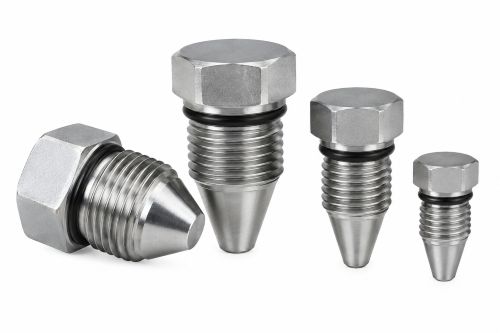
A hydraulic cone plug is a type of hydraulic fitting component designed to close a hydraulic port or passage. It typically consists of a metal body with a threaded section and a conical or tapered sealing surface.
When installed into a compatible hydraulic connection, the cone portion makes contact with the corresponding sealing surface. As the plug is tightened, the mating surfaces create a secure seal that helps prevent hydraulic oil from escaping.
Hydraulic cone plugs are commonly used on hydraulic manifolds, valve blocks, cylinders, pumps, hoses, and other equipment where a hydraulic port needs to be temporarily or permanently closed.
The exact design can vary depending on the manufacturer and connection standard. Some cone plugs are designed for specific metric or inch-based hydraulic systems, so checking compatibility before installation is important.
How Do Hydraulic Cone Plugs Work?
The working principle of a hydraulic cone plug is relatively simple. The plug is inserted into a compatible port and tightened until the sealing surfaces make proper contact.
Several factors work together to create a reliable connection.
1. The Plug Is Inserted Into the Port
First, the cone plug is positioned inside the hydraulic port. Its threaded section must match the internal thread of the mating connection.
The plug should normally start by hand rather than being forced with a wrench. If the threads do not engage smoothly, the plug may have the wrong size or thread specification.
2. The Conical Surface Creates the Seal
The most important feature of a cone plug is its conical sealing surface.
As the plug moves into the mating connection, the cone contacts the corresponding surface inside the port. Proper contact between these surfaces creates the sealing interface.
Unlike some sealing designs that rely primarily on an O-ring or bonded seal, a cone-style connection can use metal-to-metal contact as part of the sealing mechanism, depending on the specific design.
For this reason, the cone angle and machining accuracy are important. A plug with an incorrect sealing geometry may not seat correctly, even if the thread appears to fit.
3. Thread Engagement Secures the Plug
The threads hold the plug in position and allow the plug to be tightened against the sealing surface.
Correct thread engagement is important because the connection needs to withstand the forces created by hydraulic pressure. Using a plug with incompatible threads can cause cross-threading, leakage, or permanent damage to the port.
4. Tightening Creates the Required Sealing Force
When the plug is tightened to the manufacturer’s recommended torque, the conical surfaces are pressed together.
The correct amount of tightening force is important. If the plug is too loose, the sealing surfaces may not make sufficient contact. If it is overtightened, the threads or sealing surfaces can be damaged.
This is why installation should always follow the manufacturer’s specifications rather than relying only on how tight the plug feels.
Main Components of a Hydraulic Cone Plug
While hydraulic cone plugs come in different designs, most contain several basic features.
Plug Body
The plug body provides the main structural support. It contains the sealing geometry and connects the different sections of the component.
Because hydraulic systems can operate under significant pressure, the body needs sufficient mechanical strength for the intended application.
Conical Sealing Surface
The cone is the key sealing feature. Its shape allows it to mate with the corresponding surface in the hydraulic connection.
Accurate machining is particularly important because even small dimensional differences can affect how the sealing surfaces contact each other.
Threaded Section
The threaded section allows the plug to be installed into the hydraulic port.
Hydraulic systems can use different thread standards, including metric and inch-based designs. Depending on the application, the connection may use standards such as NPT, BSP, SAE, or metric threads.
The thread type should always be verified before selecting a replacement plug.
Hex Head or Drive Section
Many cone plugs have a hexagonal section that allows a wrench or other suitable tool to be used during installation and removal.
A properly sized tool helps prevent damage to the plug during maintenance.
What Materials Are Hydraulic Cone Plugs Made From?
Hydraulic cone plugs are manufactured from different materials depending on pressure, temperature, corrosion exposure, and application requirements.
Carbon Steel
Carbon steel is widely used for hydraulic components because it provides a good combination of strength, durability, and cost.
A protective surface treatment such as zinc plating may be applied to improve corrosion resistance.
Stainless Steel
Stainless steel cone plugs are useful in environments where corrosion resistance is particularly important.
They may be used in applications exposed to moisture, chemicals, outdoor conditions, or other corrosive environments. The specific stainless steel grade should be selected according to the operating conditions.
Brass
Brass can also be used for certain hydraulic connection applications. It offers good corrosion resistance and is relatively easy to machine.
However, the material needs to be suitable for the pressure and operating conditions of the hydraulic system. Brass should not automatically be considered interchangeable with steel simply because the dimensions appear similar.
Surface Treatments
Steel hydraulic cone plugs may receive protective finishes to improve their resistance to corrosion and environmental exposure.
Common surface treatments include zinc plating and other specialized coatings. The appropriate finish depends on the operating environment and the expected service life.
Where Are Hydraulic Cone Plugs Used?
Hydraulic cone plugs are used in many types of hydraulic equipment and fluid power systems.
Typical applications include:
1. Hydraulic manifolds and valve blocks
2. Hydraulic cylinders
3. Pumps and motors
4. Hydraulic hoses and pipe assemblies
5. Construction equipment
6. Agricultural machinery
7. Material-handling equipment
8. Industrial hydraulic systems
9. Mobile hydraulic machinery
10. Hydraulic testing and maintenance equipment
One common use is closing an unused port. A manufacturer may provide a hydraulic manifold with several connection points, but not every port will necessarily be used in a particular machine configuration. A suitable cone plug can close the unused passage and help protect the system.
They can also be used during equipment assembly, maintenance, transportation, or storage.
Benefits of Hydraulic Cone Plugs
Help Prevent Hydraulic Fluid Leakage
A properly selected and correctly installed cone plug creates a secure closure for the hydraulic connection. This helps reduce the possibility of fluid escaping from unused or disconnected ports.
Protect Unused Ports
Open hydraulic ports can allow dust, moisture, and other contaminants to enter the system. Installing a suitable plug helps protect the internal passage when the connection is not in use.
Support High-Pressure Applications
Hydraulic cone plugs can be manufactured for demanding pressure conditions. However, actual pressure capability depends on the plug’s material, dimensions, thread design, sealing geometry, and manufacturing specifications.
The pressure rating should therefore be checked before installation.
Simplify Maintenance
A threaded cone plug can generally be installed and removed using standard tools appropriate for its design. This makes it useful when hydraulic ports need to be opened during inspection, maintenance, or system modification.
Improve Hydraulic System Reliability
A small component can have a significant effect on system performance. Properly closing unused ports helps prevent leakage and contamination, supporting the overall reliability of the hydraulic circuit.
Checkout these other resources ⬇️⬇️⬇️
What Is a Hydraulic Fitting with Orifice and How Does It Work?
What Are Hydraulic Cylinder End Caps and How Do They Work?
ORB Hydraulic Caps vs ORB Plugs: What’s the Difference?
Hydraulic Cone Plugs vs. Other Hydraulic Plugs
Hydraulic cone plugs are not the only type of component used to close hydraulic ports. Their design differs from other plugs and caps primarily in how they connect and seal.
Hydraulic Cone Plugs vs. Tapered Plugs
The terms “cone plug” and “tapered plug” can sometimes be used to describe similar-looking components, but the exact design should be checked rather than assuming they are interchangeable.
The sealing geometry, thread type, cone angle, and application requirements all need to match.
Hydraulic Cone Plugs vs. Threaded Plugs
A conventional threaded plug may rely on thread sealing, an O-ring, a sealing washer, or another sealing method.
A cone plug, on the other hand, uses its conical sealing surface as a major part of the connection design.
The correct choice depends on the hydraulic port and the applicable connection standard.
Hydraulic Cone Plugs vs. Hydraulic Caps
A hydraulic plug generally closes an opening from inside a port or connection, while a hydraulic cap is commonly designed to cover the outside of a fitting, hose, or connection.
Both can protect hydraulic connections, but they serve different purposes and are not normally interchangeable.
How to Choose the Right Hydraulic Cone Plug
Choosing a cone plug should involve more than simply checking its outside diameter. Several specifications need to match the hydraulic system.
Check the Port Size
Start by identifying the size of the hydraulic port. The plug must fit the port dimensions and sealing geometry correctly.
Confirm the Thread Standard
Thread standards are particularly important. A metric thread should not be confused with an inch-based thread, and similar-looking threads are not necessarily compatible.
Depending on the system, you may encounter metric, NPT, BSP, SAE, and other thread standards.
Check the Pressure Rating
Determine the maximum operating pressure of the hydraulic system and select a plug rated for the intended application.
It is also useful to consider pressure spikes rather than looking only at normal operating pressure.
Select the Appropriate Material
Consider the environment where the plug will be installed.
For example, carbon steel may be suitable for many general industrial applications, while stainless steel may be preferred where corrosion resistance is a higher priority.
Consider Surface Treatment
For steel plugs, the surface finish can affect corrosion resistance. Zinc-plated and other treated surfaces may provide additional protection in demanding environments.
Check Temperature Requirements
Temperature can affect the performance of materials and sealing components. Make sure the plug is suitable for the minimum and maximum temperatures expected in the hydraulic system.
Verify the Sealing Geometry
The cone angle and mating surface need to be compatible. A plug that has the correct thread but an incompatible sealing surface may still leak.
How to Install Hydraulic Cone Plugs Correctly
Proper installation helps the plug perform as intended and reduces the risk of thread or sealing damage.
Step 1: Clean the port.
Remove dirt, hydraulic oil residue, metal particles, and other contaminants from the connection.
Step 2: Inspect the plug.
Check the threads and conical sealing surface for damage, burrs, corrosion, or contamination.
Step 3: Verify compatibility.
Confirm the thread type, size, pressure rating, material, and sealing design.
Step 4: Start the plug by hand.
Carefully engage the threads without forcing the plug. If it does not start smoothly, stop and verify the specifications.
Step 5: Tighten correctly.
Use the appropriate tool and follow the manufacturer’s recommended torque.
Step 6: Inspect the connection.
Make sure the plug is seated correctly and that there is no visible damage around the connection.
Step 7: Check for leaks.
After the hydraulic system is returned to service, inspect the connection for leakage under appropriate operating conditions.
Common Hydraulic Cone Plug Installation Mistakes
Several simple mistakes can cause leakage or damage.
One of the most common is using the wrong thread. Two threads can look almost identical while having different dimensions or thread angles.
Over-tightening is another problem. Applying excessive torque can damage threads, deform sealing surfaces, or make future removal more difficult.
Under-tightening can also be an issue because the sealing surfaces may not develop enough contact force.
Other mistakes include installing a contaminated plug, using a damaged sealing surface, ignoring the pressure rating, and assuming that a plug is suitable simply because it physically fits the opening.
Taking a few minutes to verify the specifications before installation can prevent much larger maintenance problems later.
Maintenance and Inspection Tips
Hydraulic cone plugs generally require little maintenance once properly installed, but periodic inspection is still useful.
Look for signs of leakage, corrosion, mechanical damage, or thread deterioration. If a plug is removed during maintenance, inspect the sealing surface before reinstalling it.
Keep replacement plugs clean and protected from moisture and contamination. Damaged or heavily worn plugs should be replaced rather than reused.
It is also a good practice to follow the manufacturer’s torque and installation recommendations whenever a plug is installed or replaced.
Frequently Asked Questions About Hydraulic Cone Plugs
What is a hydraulic cone plug?
A hydraulic cone plug is a component used to close and seal a hydraulic port. It typically has a threaded section and a conical sealing surface designed to mate with a compatible hydraulic connection.
What is the purpose of a hydraulic cone plug?
Its main purpose is to close an unused hydraulic passage while helping prevent fluid leakage and protecting the port from external contamination.
How does a hydraulic cone plug seal?
The plug seals through contact between its conical sealing surface and the corresponding mating surface. Thread engagement and proper tightening help maintain the required sealing force.
Are hydraulic cone plugs suitable for high-pressure systems?
They can be used in high-pressure hydraulic systems when the specific plug is designed and rated for the required pressure. Material, thread design, sealing geometry, and installation all affect performance.
How do I choose the correct hydraulic cone plug size?
Check the hydraulic port size, thread specification, sealing geometry, pressure rating, and material requirements. Do not rely only on the plug’s outside dimensions.
Can hydraulic cone plugs be reused?
Some plugs can potentially be reused if they remain in good condition and the manufacturer’s recommendations allow it. Always inspect the threads and sealing surface before reuse.
What materials are hydraulic cone plugs made from?
Common materials include carbon steel, stainless steel, and brass. The appropriate choice depends on pressure, temperature, corrosion exposure, and the specific hydraulic application.
Conclusion
Hydraulic cone plugs are simple but important components for closing and protecting hydraulic connections. Their threaded design secures the plug in the port, while the conical sealing surface provides the contact needed to create a reliable seal.
For the best results, the plug should always match the hydraulic port in terms of thread, size, sealing geometry, material, and pressure rating. Proper installation is equally important, particularly when working with high-pressure hydraulic equipment.
Whether used in a hydraulic manifold, cylinder, mobile machine, or industrial system, the right cone plug can help prevent leaks, protect unused ports, and keep hydraulic equipment operating reliably.
Post time: Sep-21-2026