

A hydraulic fitting with orifice is a specialized fitting designed to connect hydraulic lines while restricting or controlling the flow of hydraulic fluid through a small, precisely sized opening. Unlike a standard fitting, it does more than connect two components, it can also create a controlled restriction within the hydraulic circuit.
These fittings are useful when a hydraulic system needs to limit flow, slow down an actuator, reduce sudden movement, or create a controlled pressure drop. Their relatively simple design makes them practical for many hydraulic machines and fluid power applications.
Understanding how an orifice works and how to select the correct size is important because the wrong restriction can affect system performance, pressure, and actuator speed.
What Is a Hydraulic Fitting with Orifice?
A hydraulic fitting with orifice combines a conventional hydraulic connection with a built-in flow restriction. The orifice is a small opening inside the fitting that limits the amount of fluid that can pass through at a given pressure difference.
A standard hydraulic fitting is primarily used to connect hoses, tubes, valves, cylinders, pumps, and other components. An orifice fitting performs this connection function while also influencing the flow characteristics of the circuit.
The size of the orifice is one of its most important characteristics. A smaller opening generally provides greater resistance to fluid flow, while a larger opening allows more fluid to pass through.
This makes orifice fittings useful in applications where unrestricted hydraulic flow could cause an actuator to move too quickly or where controlled flow is needed for smoother operation.
Main Components of a Hydraulic Fitting with Orifice
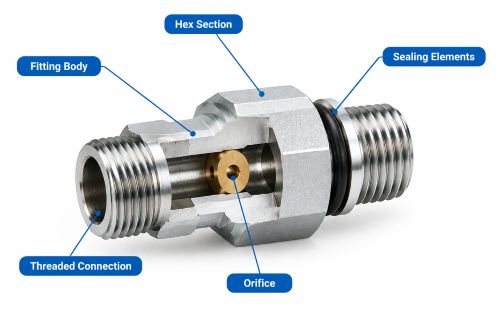
Although designs vary depending on the manufacturer and application, most hydraulic orifice fittings contain several basic components.
Fitting Body
The fitting body provides the main structural support. It contains the internal fluid passage and holds the connection points and orifice.
Because hydraulic systems can operate at high pressures, the body needs to have sufficient mechanical strength for the intended application.
Orifice
The orifice is the defining feature of this type of fitting. It is a small opening that restricts the flow of hydraulic fluid.
The diameter of this opening directly affects the amount of restriction. Selecting the correct orifice size is therefore important when designing or modifying a hydraulic circuit.
Threaded Connection
The fitting may use different connection types depending on the hydraulic system. Common examples include NPT, BSP, JIC, and metric connections.
The thread must match the mating component correctly. A fitting with the correct orifice but the wrong thread type will not provide a reliable connection.
Sealing Elements
Depending on the design, the fitting may use an O-ring, bonded seal, sealing washer, or another sealing method.
Proper sealing is essential because even a small leak can cause pressure loss, contamination, or reduced system performance.
Hex Section
Many fittings include a hexagonal section that allows a wrench to be used during installation. Proper tightening helps secure the fitting without damaging the threads or sealing surfaces.
How Does a Hydraulic Fitting with Orifice Work?
The working principle is relatively simple.
Hydraulic fluid enters the fitting and travels through the internal passage. Before leaving the fitting, the fluid passes through the smaller orifice opening. Because the opening is smaller than the surrounding flow passage, it restricts the movement of fluid.
When fluid is forced through the restricted opening, a pressure difference develops across the orifice. The relationship between flow rate, orifice size, fluid properties, and pressure difference determines how much fluid can pass through.
For example, imagine a hydraulic cylinder that moves too quickly when supplied with unrestricted flow. Installing an appropriately sized orifice in the relevant flow path can limit the amount of fluid entering or leaving the cylinder. This can reduce the cylinder’s movement speed.
However, an orifice is a fixed restriction. Unlike an adjustable flow control valve, its flow characteristics cannot normally be changed during operation.
What Does the Orifice Do in a Hydraulic System?
The main purpose of an orifice is to introduce a controlled restriction into the hydraulic circuit.
Depending on its location, a hydraulic fitting with orifice can be used to:
1. Restrict hydraulic fluid flow
2. Control actuator speed
3. Create a pressure drop
4. Reduce sudden hydraulic movement
5. Provide damping in certain circuits
6. Limit excessive flow through a specific line
For example, if a hydraulic actuator moves too aggressively, a properly selected restriction can help make its movement slower and more controlled.
It is important to understand that an orifice does not automatically regulate pressure or flow in the same way as a dedicated hydraulic valve. Its effect depends on the system conditions and the pressure difference across the restriction.
Types of Hydraulic Fittings with Orifice
Hydraulic orifice fittings are available in several configurations to suit different applications.
Fixed-Orifice Fittings
A fixed-orifice fitting contains a permanent opening with a predetermined diameter. It is a simple solution when the required flow restriction is known.
Restrictor Fittings
Restrictor fittings are designed specifically to limit flow through a hydraulic line. They can be supplied in different sizes and connection configurations.
Inline Orifice Fittings
These fittings are installed directly into a hydraulic line and provide a restriction while maintaining the connection between two sections of tubing or hose.
Orifice Fittings with Check Valves
Some designs combine an orifice with a check valve. This allows different flow characteristics depending on the direction of fluid movement.
These can be useful when restriction is required in one direction while relatively unrestricted flow is needed in the opposite direction.
Different Thread and Connection Configurations
Orifice fittings can also be manufactured with different thread standards and connection styles, including metric, BSP, NPT, and JIC configurations.
The correct choice depends on the hydraulic components being connected and the requirements of the application.
Common Applications of Hydraulic Orifice Fittings
Hydraulic fittings with orifice are used across many types of hydraulic equipment.
Hydraulic Cylinders
An orifice can be used to limit fluid flow to or from a cylinder, helping control piston movement.
Construction Equipment
Excavators, loaders, cranes, and other mobile machines may use flow restrictions to help manage hydraulic actuator movement.
Agricultural Machinery
Hydraulic systems on tractors and agricultural equipment often require controlled actuator movement. Orifice fittings can be used in suitable low- or controlled-flow applications.
Industrial Hydraulic Systems
Manufacturing equipment and hydraulic machinery may use fixed restrictions to achieve predictable flow characteristics.
Damping Applications
A properly selected orifice can help reduce rapid changes in fluid movement and provide a damping effect in certain hydraulic circuits.
Checkout these other resources ⬇️⬇️⬇️
Hydraulic Nut Adapter: Types, Uses, and Applications
What Is a Hydraulic Steering Adapter and How Does It Work?
What Is a Hydraulic Extension Adapter and How Does It Work?
Advantages of Using a Hydraulic Fitting with Orifice
One of the biggest advantages is simplicity. Instead of installing a separate restriction component in some applications, the restriction can be integrated directly into the fitting.
Other benefits include compact construction, straightforward installation, and predictable flow restriction when the system conditions are known.
An orifice fitting can also be a cost-effective option when the application requires a fixed flow restriction rather than continuous adjustment.
Because there are no complicated adjustment mechanisms in a basic fixed-orifice fitting, the design can also be relatively simple and durable.
How to Choose the Right Hydraulic Fitting with Orifice
Choosing an orifice fitting should start with the requirements of the hydraulic circuit rather than the fitting itself.
1. Determine the Required Flow Rate
First, determine how much hydraulic fluid needs to pass through the fitting. The required flow rate provides a starting point for selecting the orifice.
2. Select the Appropriate Orifice Size
The orifice diameter has a major effect on flow restriction. A very small opening can create a significant pressure drop, while a larger opening provides less restriction under the same conditions.
The correct size should therefore be selected using the expected flow rate and pressure conditions.
3. Check the Pressure Rating
The fitting must be capable of handling the maximum working pressure of the hydraulic system. Do not select a fitting based only on its physical size or thread type.
4. Match the Connection Type
Check whether the system requires NPT, BSP, JIC, metric, or another connection standard.
Thread compatibility is essential for safe and leak-resistant installation.
5. Consider the Hydraulic Fluid
The fitting material and sealing components should be compatible with the hydraulic fluid being used.
6. Consider Temperature and Environment
Operating temperature, vibration, moisture, corrosion, and exposure to contaminants can all affect fitting selection.
For demanding environments, material and surface treatment may be especially important.
Hydraulic Orifice Size and Flow Control
Orifice size plays a central role in determining how much restriction the fitting creates.
A smaller orifice generally produces greater resistance to flow. This can reduce flow through the fitting, but it may also create a larger pressure drop and increase the possibility of unwanted heat generation.
A larger orifice creates less restriction and allows more fluid to pass.
For this reason, choosing the smallest possible opening is not necessarily the best solution. The orifice should be sized according to the desired flow, pressure conditions, actuator requirements, and overall hydraulic circuit.
In practical applications, manufacturers may specify orifice diameters and corresponding flow characteristics to help engineers select the appropriate configuration.
Hydraulic Fitting with Orifice vs. Standard Hydraulic Fitting
The main difference is that a standard hydraulic fitting is designed primarily to provide a connection, while an orifice fitting also introduces a deliberate flow restriction.
A standard fitting is generally preferable when the hydraulic circuit requires unrestricted flow through the connection.
A hydraulic fitting with orifice is more appropriate when the system needs a fixed restriction to control flow or actuator behavior.
The choice should be based on the function required from the connection. Adding an orifice where unrestricted flow is needed can unnecessarily increase pressure loss.
Common Problems with Hydraulic Orifice Fittings
Despite their simple construction, orifice fittings can cause problems if they are incorrectly selected or maintained.
Orifice Blockage
Hydraulic contamination can collect around a small orifice and restrict flow more than intended. This is particularly important when working with very small openings.
Incorrect Orifice Size
An incorrectly sized orifice can cause excessive restriction, insufficient actuator speed, or unexpected pressure loss.
Excessive Pressure Drop
If the restriction is too large for the required flow rate, the resulting pressure drop may negatively affect system performance.
Leakage
Leaks can occur because of damaged sealing elements, incorrect installation, incompatible threads, or improper tightening.
Thread Mismatch
Using incompatible thread types can damage components and create unreliable seals. Always verify the connection standard before installation.
Installation and Maintenance Tips
Proper installation helps ensure that the orifice performs as intended.
Before installation, clean the hydraulic components and make sure there is no dirt or metal debris that could enter the small opening.
Confirm that the fitting and mating component have compatible threads and sealing arrangements. Tighten the fitting according to the manufacturer’s recommended procedure rather than applying excessive force.
During maintenance, inspect the fitting for leakage, corrosion, mechanical damage, or contamination. If the orifice becomes blocked, clean or replace the fitting according to the manufacturer’s instructions.
Hydraulic filtration and good contamination-control practices are also important because a small orifice can be more sensitive to debris than a normal unrestricted passage.
Frequently Asked Questions
What is a hydraulic fitting with orifice?
A hydraulic fitting with orifice is a fitting that includes a small internal opening designed to restrict hydraulic fluid flow while also providing a connection between hydraulic components.
What is the purpose of an orifice in a hydraulic system?
An orifice introduces a controlled restriction that can limit flow, create a pressure drop, reduce actuator speed, or provide damping in certain applications.
Does a smaller orifice reduce hydraulic flow?
Generally, yes. Under comparable pressure conditions, a smaller orifice provides greater flow restriction and allows less fluid to pass through.
How do I determine the correct orifice size?
Orifice size should be selected based on factors such as required flow rate, available pressure difference, hydraulic fluid properties, actuator requirements, and the desired system response.
Can an orifice fitting control cylinder speed?
It can restrict the flow entering or leaving a hydraulic cylinder and therefore influence cylinder speed. However, the actual result depends on the circuit design and where the fitting is installed.
What is the difference between an orifice and a flow control valve?
An orifice is generally a fixed restriction, while a flow control valve can provide adjustable or controlled flow under changing operating conditions.
Can hydraulic orifice fittings be used in high-pressure systems?
Yes, provided the fitting is specifically designed and rated for the system’s pressure, temperature, fluid, and connection requirements. The pressure rating of the individual fitting should always be verified before use.
Conclusion
A hydraulic fitting with orifice provides two functions in one component: it creates a reliable hydraulic connection and introduces a controlled restriction to fluid flow. This makes it useful for applications where flow needs to be limited or actuator movement needs to be more controlled.
The most important selection factors are orifice size, flow rate, pressure rating, connection type, material, sealing method, and operating conditions. Choosing the right combination helps prevent unnecessary pressure loss and ensures that the hydraulic system performs as expected.
For fixed-flow applications, an orifice fitting can be a simple and practical solution. For applications requiring continuous adjustment or precise compensation for changing conditions, however, a dedicated flow-control valve may be a better choice.
Post time: Sep-15-2026