

Hydraulic systems rely on precision. Whether you’re operating construction equipment, agricultural machinery, factory automation systems, or industrial presses, every connection in the hydraulic circuit must withstand high pressure while remaining completely leak-free. Even a small leak can reduce efficiency, increase maintenance costs, and lead to unexpected equipment downtime.
This is where DIN metric bite fittings play an essential role. Designed to create strong, reliable, and reusable tube connections, these fittings have become the preferred choice in hydraulic systems worldwide. Their robust construction, excellent vibration resistance, and compliance with internationally recognized standards make them ideal for demanding industrial applications.
If you’re new to hydraulic fittings, the different standards, thread types, and sealing methods can seem confusing. This beginner’s guide breaks everything down into simple, easy-to-understand terms. By the end of this article, you’ll understand what DIN metric bite fittings are, how they work, their key components, and why they’re trusted across countless industries.
What Are DIN Metric Bite Fittings?
DIN metric bite fittings are compression-type hydraulic tube fittings designed to securely connect metric steel tubing in high-pressure hydraulic systems. They are manufactured according to DIN 2353 and ISO 8434-1 standards, ensuring consistent dimensions, reliable performance, and global compatibility.
Unlike flare fittings that require the tube end to be flared before installation, DIN metric bite fittings use a specially engineered bite ring, also known as a cutting ring, to grip the outside of the tube. As the fitting is tightened, the bite ring cuts slightly into the tube’s outer surface, creating a strong mechanical connection and a dependable metal-to-metal seal.
This unique design eliminates the need for welding or complex tube preparation while providing exceptional resistance to vibration, pressure fluctuations, and mechanical stress.
Because of their reliability and ease of installation, DIN metric bite fittings are widely used in industries where hydraulic systems must operate safely under demanding conditions.
Key Characteristics of DIN Metric Bite Fittings
Some of the defining features of DIN metric bite fittings include:
1. Designed for metric tubing systems
2. Manufactured according to DIN 2353 and ISO 8434-1 standards
3. Utilize a bite ring (cutting ring) for secure tube retention
4. Create leak-free metal-to-metal sealing
5. Suitable for medium- and high-pressure hydraulic applications
6. Available in carbon steel, stainless steel, and other materials
7. Resistant to vibration and pressure pulsation
8. Reusable when properly maintained
9. Offered in a wide range of configurations and sizes
DIN metric bite fittings provide a simple yet highly effective solution for creating secure, high-pressure hydraulic tube connections without requiring tube flaring or welding.
How Do DIN Metric Bite Fittings Work?
The strength of a DIN metric bite fitting lies in its straightforward but highly engineered design. Rather than relying on adhesives, sealants, or O-rings alone, the fitting creates a mechanical grip on the tube while simultaneously forming a reliable hydraulic seal.
Here’s a closer look at how the process works.
Step 1: Preparing the Hydraulic Tube
Proper installation begins with correctly preparing the hydraulic tube.
The tube should be:
➡️ Cut perfectly square
➡️ Free of burrs
➡️ Clean inside and outside
➡️ Undamaged and free from scratches or dents
Any imperfections can prevent the bite ring from seating correctly, increasing the risk of leaks or premature fitting failure.
Proper tube preparation is one of the most important factors in achieving a successful hydraulic connection.
Step 2: Installing the Components
Before tightening the fitting, the components are assembled in the correct order.
Typically, the sequence is:
➡️ Compression nut
➡️ Bite ring (cutting ring)
➡️ Hydraulic tube
➡️ Fitting body
The tube is inserted fully into the fitting body until it reaches the internal stop. This ensures the bite ring engages the correct section of the tube during tightening.
Step 3: Tightening the Compression Nut
As the compression nut is tightened, it pushes the bite ring forward against the fitting body.
The fitting’s internal geometry forces the bite ring to compress around the tube.
During this process:
1. The front cutting edges begin biting into the tube wall.
2. The rear section grips the tube tightly.
3. Radial compression locks the tube securely in place.
4. Axial forces prevent the tube from pulling out under pressure.
The bite ring permanently forms a mechanical connection with the tubing while maintaining the integrity of the hydraulic system.
Step 4: Creating the Hydraulic Seal
Once the recommended tightening torque is reached, several sealing actions occur simultaneously.
The bite ring:
1. Creates a secure mechanical grip on the tube.
2. Forms a metal-to-metal sealing surface.
3. Prevents hydraulic fluid from escaping.
4. Maintains alignment between the tube and fitting body.
Unlike temporary sealing methods, this mechanical connection becomes highly resistant to loosening caused by vibration or repeated pressure cycling.
Why the Bite Ring Is So Effective
The bite ring is the heart of the entire fitting assembly.
Its specially designed cutting edges perform two critical functions:
1. Tube Retention
The ring grips the tube firmly, preventing movement caused by hydraulic pressure or vibration.
2. Leak Prevention
The metal-to-metal contact creates an effective seal without requiring extensive tube preparation or flaring.
Because both functions occur simultaneously, DIN metric bite fittings achieve exceptional reliability even in harsh operating environments.
Understanding the Mechanical Grip
To better understand why these fittings are so dependable, it’s helpful to look at the forces involved during assembly.
Radial Compression
As the nut is tightened, the bite ring compresses inward, gripping the tube evenly around its circumference. This distributes the holding force uniformly and minimizes localized stress.
Axial Holding Force
The bite ring’s geometry resists forces that try to pull the tube out of the fitting. This is especially important in hydraulic systems that experience frequent pressure surges or mechanical movement.
Metal-to-Metal Sealing
The precision-machined contact surfaces between the fitting body, bite ring, and tube create a durable seal capable of withstanding high hydraulic pressures without relying solely on elastomeric seals.
Resistance to Vibration
Industrial machinery often operates under constant vibration. The bite ring’s mechanical engagement helps maintain connection integrity, reducing the likelihood of loosening over time.
Why DIN Metric Bite Fittings Perform So Well
Several engineering advantages contribute to the popularity of DIN metric bite fittings:
1. Uniform load distribution around the tube
2. High resistance to hydraulic pressure
3. Excellent vibration performance
4. Reliable sealing under pressure fluctuations
5. Consistent performance when installed correctly
6. Long service life with minimal maintenance
These characteristics make them a trusted solution in industries where hydraulic reliability is essential.
Common Industries That Depend on DIN Metric Bite Fittings
Because of their durability and leak-free performance, DIN metric bite fittings are used in a wide variety of equipment and industries, including:
➡️ Construction machinery
➡️ Agricultural equipment
➡️ Mining vehicles
➡️ Industrial manufacturing systems
➡️ Hydraulic power units
➡️ Material handling equipment
➡️ Marine hydraulic systems
➡️ Oil and gas installations
➡️ Factory automation
➡️ Mobile hydraulic equipment
In each of these environments, dependable hydraulic connections are critical to maintaining safety, efficiency, and productivity.
Main Components of a DIN Metric Bite Fitting
Although a DIN metric bite fitting may appear simple from the outside, it consists of several precision-engineered components that work together to create a secure, leak-free hydraulic connection. Understanding the role of each part will help you install the fitting correctly, troubleshoot issues, and select the right fitting for your application.
1. Fitting Body
The fitting body is the main component that connects the hydraulic tube to other parts of the system, such as valves, pumps, cylinders, or hoses. It contains precision-machined surfaces that guide the bite ring into position and create the metal-to-metal sealing interface.
Depending on the application, the fitting body can be manufactured in different configurations, including:
➡️ Straight connectors
➡️ Elbows
➡️ Tee fittings
➡️ Cross fittings
➡️ Bulkhead fittings
➡️ Male stud connectors
➡️ Female swivel connectors
The fitting body is typically made from zinc-plated carbon steel or stainless steel for excellent strength and corrosion resistance.
2. Bite Ring (Cutting Ring)
The bite ring is the defining feature of a DIN metric bite fitting. It is specifically designed to grip the outside of the hydraulic tube during assembly.
When the compression nut is tightened, the bite ring is forced into the fitting body, causing its cutting edges to bite into the tube’s outer surface. This action creates both a strong mechanical grip and a reliable seal.
The bite ring performs several important functions:
➡️ Prevents the tube from slipping under pressure
➡️ Creates a vibration-resistant connection
➡️ Forms the primary sealing mechanism
➡️ Maintains alignment between the tube and fitting body
Because it is responsible for the integrity of the connection, the bite ring should always be inspected for wear or damage before reuse.
3. Compression Nut
The compression nut provides the force required to activate the bite ring. As it is tightened, it compresses the bite ring against the fitting body, allowing the cutting edges to engage the tube.
A properly tightened compression nut ensures:
➡️ Even force distribution
➡️ Correct bite ring positioning
➡️ Secure tube retention
➡️ Long-lasting leak-free performance
Using the manufacturer’s recommended tightening torque is essential. Overtightening can damage the fitting, while undertightening may result in leaks or tube movement.
4. Hydraulic Tube
The hydraulic tube is the pathway through which hydraulic fluid flows. DIN metric bite fittings are designed specifically for metric steel tubing that meets the required dimensional and material standards.
The tube must have:
➡️ The correct outside diameter
➡️ Appropriate wall thickness
➡️ A clean, smooth surface
➡️ No cracks, dents, or deep scratches
Using incompatible or damaged tubing can compromise the connection and reduce system reliability.
How the Components Work Together
Each component has a specific purpose, but they only achieve optimal performance when functioning as a complete assembly.
Here’s how the process works:
1. The hydraulic tube is inserted fully into the fitting body.
2. The bite ring is positioned around the tube.
3. The compression nut is tightened.
4. The bite ring grips the tube securely.
5. A metal-to-metal seal is created.
6. The completed assembly withstands high pressure without leaking.
This straightforward design is one of the main reasons DIN metric bite fittings are trusted in demanding hydraulic systems worldwide.
DIN Standards Behind Metric Bite Fittings
One of the greatest advantages of DIN metric bite fittings is their compliance with internationally recognized engineering standards. These standards ensure that fittings produced by different manufacturers maintain consistent dimensions, pressure ratings, and performance characteristics.
For equipment manufacturers and maintenance professionals, standardized fittings simplify system design, replacement, and sourcing.
DIN 2353
DIN 2353 is the primary German industrial standard governing metric compression tube fittings used in hydraulic systems.
It specifies requirements for:
➡️ Tube outside diameters
➡️ Thread dimensions
➡️ Bite ring design
➡️ Pressure ratings
➡️ Assembly requirements
➡️ Material compatibility
By following DIN 2353, manufacturers produce fittings that offer consistent quality and compatibility across a wide range of hydraulic applications.
ISO 8434-1
ISO 8434-1 is the international standard that aligns closely with DIN 2353. It establishes global specifications for metallic tube connections used in fluid power systems.
The standard covers:
➡️ Design requirements
➡️ Performance testing
➡️ Interchangeability
➡️ Dimensional tolerances
➡️ Pressure performance
➡️ Safety requirements
Compliance with ISO 8434-1 ensures that fittings meet internationally accepted performance expectations.
Types of DIN Metric Bite Fittings
Hydraulic systems come in countless configurations, which is why DIN metric bite fittings are available in a wide variety of designs. Each type is engineered to solve a specific connection challenge while maintaining the same dependable sealing performance.
Straight Connectors
Straight connectors are the most common type of DIN metric bite fitting. They join two hydraulic components in a straight line and are ideal for simple tube runs.
Typical applications include:
➡️ Hydraulic power units
➡️ Industrial machinery
➡️ Factory automation
➡️ General hydraulic piping
Elbow Fittings
Elbow fittings redirect hydraulic tubing where space is limited or the tube must change direction.
Common configurations include:
➡️ 45-degree elbows
➡️ 90-degree elbows
These fittings reduce unnecessary tube bending and help create cleaner hydraulic layouts.
Tee Fittings
Tee fittings divide one hydraulic line into two separate flow paths.
They are frequently used for:
➡️ Pressure distribution
➡️ Branch hydraulic circuits
➡️ Instrument connections
➡️ Control valve installations
Cross Fittings
Cross fittings connect four hydraulic lines at a single junction.
Although less common than tee fittings, they provide an efficient solution for complex hydraulic circuits requiring multiple flow directions.
Bulkhead Fittings
Bulkhead fittings allow hydraulic tubing to pass securely through panels, tanks, machine frames, or protective enclosures while maintaining a sealed connection.
They provide:
➡️ Secure mounting
➡️ Improved system organization
➡️ Reduced tube movement
Reducers
Reducers connect tubing with different outside diameters while maintaining pressure integrity throughout the hydraulic system.
They are particularly useful when upgrading equipment or integrating components with varying tube sizes.
Male Stud Connectors
Male stud connectors combine a DIN bite-type tube connection with a threaded male end that connects to hydraulic ports.
These fittings are commonly found on:
➡️ Hydraulic pumps
➡️ Cylinders
➡️ Directional control valves
➡️ Pressure gauges
Female Swivel Connectors
Female swivel connectors simplify installation by allowing the fitting to rotate during assembly without twisting the hydraulic tube.
They are especially useful in applications where alignment is difficult or where frequent maintenance is required.
Adjustable Elbows
Adjustable elbows offer directional flexibility after installation, allowing installers to orient the fitting correctly before final tightening.
This feature improves routing efficiency in compact hydraulic systems.
Tube Caps and Plugs
Tube caps and plugs temporarily or permanently seal unused hydraulic ports and tube ends.
They help:
➡️ Prevent contamination
➡️ Protect internal components
➡️ Maintain system cleanliness during storage or maintenance
DIN metric bite fittings are available in numerous configurations, making it possible to design safe, efficient, and reliable hydraulic systems for virtually any industrial application.
Light Series (L) vs. Heavy Series (S)
One of the first decisions you’ll make when selecting a DIN metric bite fitting is whether you need the Light Series (L) or the Heavy Series (S). While both series use the same bite-type sealing principle, they are designed for different operating pressures and tubing specifications.
Choosing the correct series is essential for ensuring safety, reliability, and long service life.
Light Series (L)
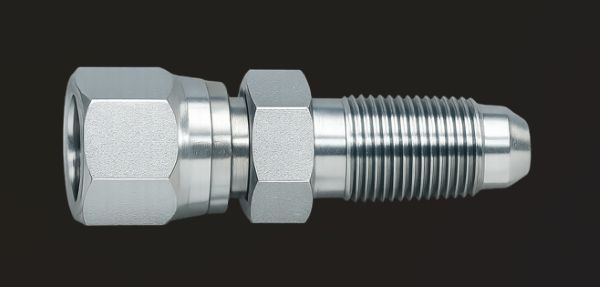
Light Series fittings are intended for hydraulic systems operating under moderate pressure. They are commonly paired with thinner-wall metric tubing and are suitable for general industrial applications where extreme pressure is not a concern.
Typical Features:
1. Designed for medium-pressure hydraulic systems
2. Compatible with thinner-wall metric tubing
3. Compact and lightweight
4. Cost-effective for standard applications
5. Easy to install and maintain
Common Applications:
Light Series DIN metric bite fittings are frequently used in:
1. Industrial manufacturing equipment
2. Machine tools
3. Factory automation systems
4. Pneumatic systems
5. Light hydraulic power units
6. Material handling equipment
For applications where operating pressures remain within the recommended limits, the Light Series offers an excellent balance of performance and affordability.
Heavy Series (S)
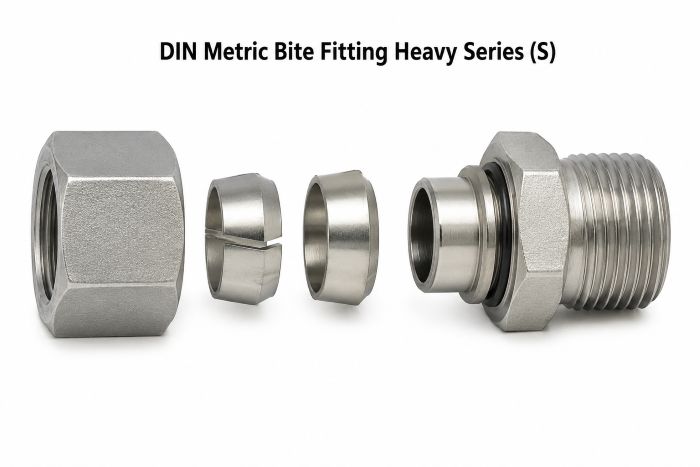
Heavy Series fittings are engineered for demanding hydraulic environments where systems operate under significantly higher pressures. They are manufactured to withstand greater mechanical loads and are typically used with thicker-wall tubing.
Typical Features:
1. Designed for high-pressure hydraulic systems
2. Greater mechanical strength
3. Improved resistance to vibration and shock loads
4. Suitable for harsh operating environments
5. Longer service life in demanding applications
Common Applications:
Heavy Series fittings are widely used in:
➡️ Construction machinery
➡️ Mining equipment
➡️ Agricultural machinery
➡️ Marine hydraulic systems
➡️ Oil and gas equipment
➡️ Heavy industrial presses
➡️ Mobile hydraulic equipment
These industries often expose hydraulic components to continuous vibration, pressure surges, and heavy mechanical stress, making the Heavy Series the preferred choice.
Light Series vs. Heavy Series Comparison
|
Feature |
Light Series (L) |
Heavy Series (S) |
|
Pressure Capacity |
Medium |
High |
|
Tube Wall Thickness |
Thinner |
Thicker |
|
Weight |
Lighter |
Heavier |
|
Typical Applications |
Industrial machinery |
Heavy-duty equipment |
|
Cost |
Lower |
Higher |
|
Durability |
Excellent |
Exceptional |
Which Series Should You Choose?
The best choice depends on your hydraulic system’s operating conditions. Before selecting a fitting, consider:
1. Maximum operating pressure
2. Pressure spikes
3. Tube wall thickness
4. Equipment vibration
5. Environmental conditions
6. Industry safety requirements
Using a fitting that is undersized for the application can result in leaks, premature wear, or even system failure. When in doubt, consult the fitting manufacturer or hydraulic system specifications.
Common Materials Used in DIN Metric Bite Fittings
The material of a hydraulic fitting directly influences its strength, corrosion resistance, service life, and overall performance. DIN metric bite fittings are available in several materials to suit different operating environments.
Carbon Steel
Carbon steel is the most commonly used material for hydraulic bite fittings because it offers an excellent combination of strength, durability, and cost-effectiveness.
To improve corrosion resistance, carbon steel fittings are often finished with zinc plating or other protective coatings.
Advantages:
➡️ High mechanical strength
➡️ Excellent pressure resistance
➡️ Economical
➡️ Widely available
➡️ Suitable for most hydraulic applications
Typical Applications:
➡️ Industrial machinery
➡️ Construction equipment
➡️ Agricultural systems
➡️ Hydraulic power units
➡️ Manufacturing equipment
Stainless Steel
Stainless steel fittings are designed for harsh environments where corrosion is a significant concern. They maintain their performance even when exposed to moisture, chemicals, or saltwater.
Advantages:
➡️ Outstanding corrosion resistance
➡️ Excellent chemical resistance
➡️ Long service life
➡️ Hygienic surface finish
➡️ Performs well in extreme environments
Typical Applications:
➡️ Marine equipment
➡️ Offshore platforms
➡️ Food processing
➡️ Pharmaceutical manufacturing
➡️ Chemical plants
➡️ Water treatment facilities
Although stainless steel fittings generally cost more than carbon steel versions, their durability often results in lower long-term maintenance costs.
Brass
Brass DIN metric fittings are less common in high-pressure hydraulic systems but are suitable for lower-pressure fluid and pneumatic applications.
Advantages:
➡️ Good corrosion resistance
➡️ Easy machining
➡️ Attractive appearance
➡️ Suitable for moderate operating conditions
Typical Applications:
➡️ Pneumatic systems
➡️ Instrumentation
➡️ Low-pressure fluid transfer
➡️ General industrial equipment
Choosing the Right Material
Selecting the appropriate material depends on several factors, including:
➡️ Operating pressure
➡️ Hydraulic fluid compatibility
➡️ Environmental exposure
➡️ Temperature range
➡️ Corrosion risk
➡️ Maintenance expectations
➡️ Budget
Considering these factors during the design stage helps maximize system reliability and minimize future maintenance costs.
Advantages of DIN Metric Bite Fittings
DIN metric bite fittings have earned a strong reputation across the hydraulic industry because they offer a combination of performance, durability, and ease of installation that few connection methods can match.
Leak-Free Performance
The precision bite ring creates a secure metal-to-metal seal that minimizes the risk of hydraulic fluid leakage, even under high operating pressures.
Excellent Vibration Resistance
Heavy machinery often generates continuous vibration that can loosen conventional fittings. DIN metric bite fittings maintain their grip, helping preserve connection integrity over time.
High Pressure Capability
When correctly installed, these fittings are capable of handling demanding hydraulic pressures, making them suitable for industrial and mobile equipment.
Easy Installation
Unlike flare fittings, DIN metric bite fittings do not require flaring equipment. Proper tube preparation and correct tightening are typically all that’s needed for installation.
Reusable Components
Many components of the fitting assembly can be reused if they remain in good condition and meet the manufacturer’s inspection criteria, helping reduce maintenance costs.
Long Service Life
High-quality materials, precision machining, and standardized manufacturing contribute to an extended operational lifespan, even in demanding environments.
Wide Range of Configurations
Whether you need straight connectors, elbows, tees, reducers, or bulkhead fittings, DIN metric bite fittings are available in configurations to suit virtually every hydraulic system design.
International Standardization
Compliance with DIN 2353 and ISO 8434-1 makes sourcing replacement parts easier and improves compatibility across global markets.
Lower Maintenance Requirements
A properly installed fitting requires minimal maintenance beyond routine inspection, reducing equipment downtime and operating costs.
Improved System Reliability
Reliable hydraulic connections help maintain consistent system pressure, improve equipment performance, and reduce the likelihood of unexpected failures.
Common Applications of DIN Metric Bite Fittings
Thanks to their versatility and proven reliability, DIN metric bite fittings are found in a wide range of industries and hydraulic systems.
Construction Equipment
Excavators, bulldozers, cranes, and loaders rely on high-pressure hydraulic systems where dependable fittings are essential for safe operation.
Agricultural Machinery
Tractors, harvesters, sprayers, and balers use DIN metric bite fittings to ensure reliable hydraulic performance in challenging outdoor environments.
Industrial Manufacturing
Hydraulic presses, CNC machines, injection molding equipment, and automated production lines benefit from leak-free hydraulic connections that minimize downtime.
Mining Equipment
Mining machinery operates under heavy loads and extreme conditions. Heavy Series DIN metric bite fittings provide the durability needed for these demanding applications.
Hydraulic Power Units
Power packs and centralized hydraulic systems use these fittings to connect pumps, valves, manifolds, and cylinders with confidence.
Material Handling Equipment
Forklifts, lifting platforms, conveyors, and warehouse automation systems depend on secure hydraulic connections for efficient operation.
Marine Hydraulic Systems
Stainless steel DIN metric bite fittings are widely used in marine applications where corrosion resistance is critical.
Oil and Gas Equipment
Hydraulic control systems in oil and gas operations require fittings that can withstand high pressures and harsh environmental conditions.
Factory Automation
Modern automated production facilities use DIN metric bite fittings to support reliable hydraulic control systems that maximize productivity.
Mobile Hydraulics
From utility vehicles to specialized machinery, mobile hydraulic equipment benefits from the vibration resistance and durability of DIN metric bite fittings.
Key Takeaway
DIN metric bite fittings are trusted across industries because they deliver consistent, leak-free performance in both standard and high-pressure hydraulic applications.
How to Install DIN Metric Bite Fittings
Proper installation is one of the most important factors in ensuring a DIN metric bite fitting performs as intended. Even the highest-quality fitting can leak or fail prematurely if it is assembled incorrectly. Fortunately, the installation process is straightforward when you follow the recommended procedures.
Step 1: Inspect All Components
Before assembly, inspect every component carefully.
Check that:
1. The fitting body is free from cracks or visible damage.
2. The bite ring is not worn or deformed.
3. The compression nut threads are clean and undamaged.
4. The hydraulic tube has the correct outside diameter and wall thickness.
Using damaged or incompatible components can compromise the integrity of the connection.
Step 2: Prepare the Hydraulic Tube
Proper tube preparation is essential for creating a secure seal.
Make sure the tube is:
1. Cut square using an appropriate tube cutter or saw.
2. Deburred inside and outside.
3. Clean and free from dirt, oil, and metal chips.
4. Free of dents, deep scratches, or corrosion.
A poorly prepared tube can prevent the bite ring from seating correctly and may lead to leaks.
Step 3: Assemble the Components
Slide the compression nut onto the tube first, followed by the bite ring. Next, insert the tube fully into the fitting body until it reaches the internal stop.
Ensuring full tube insertion is critical because the bite ring must engage the correct section of the tube during tightening.
Step 4: Tighten the Compression Nut
Hand-tighten the compression nut until all components are seated properly. Then use the appropriate wrench to tighten the fitting according to the manufacturer’s recommended torque specifications.
Avoid guessing the tightening force. Both overtightening and undertightening can affect sealing performance.
Step 5: Verify the Assembly
After tightening, inspect the completed connection.
Check for:
1. Proper tube alignment
2. Even seating of the compression nut
3. No visible gaps between components
4. Secure positioning of the tube
A visual inspection helps identify installation issues before the system is pressurized.
Step 6: Perform a Pressure Test
Before placing the hydraulic system into regular service, conduct a pressure test according to the equipment manufacturer’s procedures.
During testing:
1. Gradually increase system pressure.
2. Inspect all connections for leaks.
3. Verify that the fitting remains secure under operating pressure.
A successful pressure test confirms that the connection has been installed correctly.
Installation Best Practices
To maximize the performance and lifespan of DIN metric bite fittings:
1. Use only high-quality, standards-compliant fittings.
2. Follow the manufacturer’s installation instructions.
3. Tighten fittings to the specified torque.
4. Keep all components clean during assembly.
5. Use the correct tube size and wall thickness.
6. Replace damaged bite rings or fittings immediately.
7. Never mix incompatible hydraulic fitting standards.
Correct installation is the foundation of a reliable hydraulic connection. Careful preparation, proper tightening, and thorough inspection help ensure leak-free performance and long service life.
Common Installation Mistakes to Avoid
Many hydraulic fitting problems stem from simple installation errors rather than defective components. Understanding these common mistakes can save time, reduce maintenance costs, and improve system reliability.
Incomplete Tube Insertion
If the tube is not fully inserted into the fitting body, the bite ring may not engage correctly. This can result in poor sealing and reduced pull-out resistance.
Solution: Always push the tube firmly against the internal stop before tightening.
Overtightening
Applying excessive torque can damage the bite ring, deform the fitting body, or overstress the hydraulic tube.
Solution: Always follow the recommended tightening torque provided by the manufacturer.
Undertightening
Insufficient tightening prevents the bite ring from properly gripping the tube, increasing the likelihood of leaks and tube movement.
Solution: Use calibrated tools and follow the specified assembly procedure.
Using Damaged Components
Reusing worn bite rings, cracked fitting bodies, or damaged nuts can compromise the connection.
Solution: Replace any component that shows signs of wear, corrosion, or mechanical damage.
Mixing Different Standards
Combining DIN metric fittings with incompatible thread or tube standards may result in poor sealing or unsafe installations.
Solution: Verify that all components comply with the same applicable standards, such as DIN 2353 and ISO 8434-1.
Contaminated Components
Dust, metal particles, or debris inside the fitting can damage sealing surfaces and contaminate the hydraulic system.
Solution: Keep all components clean throughout installation.
How to Choose the Right DIN Metric Bite Fittings
Selecting the correct fitting is about more than matching thread sizes. A well-chosen fitting improves safety, system efficiency, and long-term reliability.
Consider the following factors before making a purchase:
Operating Pressure
Choose a fitting that is rated for your system’s maximum working pressure, including any pressure spikes.
Tube Size
Ensure the fitting matches the outside diameter and wall thickness of your hydraulic tubing.
Material
Select carbon steel for most industrial applications or stainless steel for corrosive environments such as marine or chemical processing.
Thread Type
Confirm that the fitting thread matches the hydraulic component it will connect to. Using incompatible thread types can lead to leaks and damaged equipment.
Environmental Conditions
Evaluate factors such as:
➡️ Moisture
➡️ Salt exposure
➡️ Chemicals
➡️ Dust
➡️ Temperature extremes
➡️ UV exposure (for outdoor equipment)
Fluid Compatibility
Verify that the fitting material is compatible with the hydraulic fluid used in your system.
Compliance with Standards
Choose fittings manufactured according to recognized standards like DIN 2353 and ISO 8434-1 to ensure compatibility and reliable performance.
Buying Checklist:
Before purchasing DIN metric bite fittings, ask yourself:
1. Is the fitting rated for my operating pressure?
2. Does it match my tube size?
3. Have I selected the correct Light (L) or Heavy (S) Series?
4. Is the material suitable for my environment?
5. Does it comply with DIN 2353 and ISO 8434-1?
6. Am I buying from a reputable manufacturer?
Choosing the right DIN metric bite fitting involves evaluating your system requirements, operating conditions, and applicable standards—not just the fitting’s dimensions.
Maintenance and Inspection Tips
Although DIN metric bite fittings require relatively little maintenance, routine inspections can significantly extend their service life and reduce the risk of unexpected failures.
Regularly:
1. Inspect fittings for hydraulic leaks.
2. Check for signs of corrosion or physical damage.
3. Ensure fittings remain securely tightened.
4. Replace worn or damaged components promptly.
5. Keep hydraulic systems clean to prevent contamination.
Follow the maintenance schedule recommended by the equipment manufacturer.
Preventive maintenance not only protects the fittings but also helps maintain the efficiency and safety of the entire hydraulic system.
Frequently Asked Questions (FAQs)
What is the difference between DIN metric bite fittings and flare fittings?
DIN metric bite fittings use a cutting ring that grips the outside of the tube, while flare fittings require the tube end to be flared before assembly. Bite fittings generally simplify installation and provide excellent resistance to vibration.
Are DIN metric bite fittings reusable?
Many components can be reused if they remain in good condition. However, any damaged bite ring, nut, or fitting body should be replaced to maintain system safety and performance.
What tubing should be used with DIN metric bite fittings?
These fittings are designed for metric steel tubing that complies with the relevant dimensional and material standards. Always verify compatibility before installation.
What is the difference between Light (L) and Heavy (S) Series fittings?
Light Series fittings are intended for medium-pressure applications, while Heavy Series fittings are designed to withstand higher operating pressures and more demanding service conditions.
Can DIN metric bite fittings be used in high-pressure hydraulic systems?
Yes. Heavy Series DIN metric bite fittings are specifically designed for high-pressure hydraulic applications when installed correctly and used within their rated specifications.
How long do DIN metric bite fittings last?
With proper installation, routine maintenance, and suitable operating conditions, high-quality DIN metric bite fittings can provide many years of reliable service.
Conclusion
DIN metric bite fittings are a trusted solution for creating secure, leak-free connections in hydraulic systems. Their durable bite ring design, high-pressure capability, and compliance with DIN 2353 and ISO 8434-1 standards make them a reliable choice for a wide range of industrial applications.
Choosing high-quality fittings from a reputable manufacturer is essential for ensuring long-term performance and system safety. With Sannke’s precision-engineered DIN metric bite fittings, you can achieve dependable hydraulic connections backed by quality manufacturing and expert support.
Post time: Jul-17-2026