

Hydraulic systems operate under demanding conditions, often involving high pressures, vibration, and extreme environments. To ensure safety, reliability, and leak-free performance, every connection within the system must be secure. This is where DIN 2353 bite type fittings play a critical role.
Widely used in hydraulic and fluid transfer applications worldwide, DIN 2353 bite type fittings provide a dependable method for connecting tubes without the need for welding. Their robust design, ease of installation, and excellent sealing performance have made them a preferred choice across industries such as construction, agriculture, mining, manufacturing, and marine engineering.
In this complete guide, we’ll explain what DIN 2353 bite type fittings are, how they work, their key components, advantages, applications, and how to choose the right fitting for your hydraulic system.
What Are DIN 2353 Bite Type Fittings?
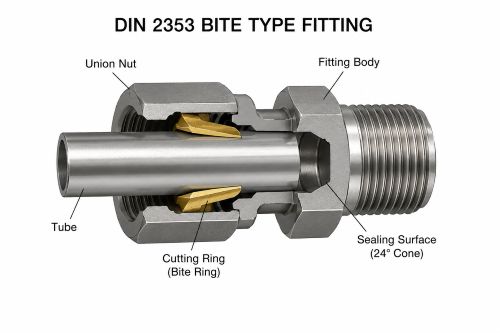
DIN 2353 bite type fittings are hydraulic tube fittings designed according to the German DIN 2353 standard. They use a cutting ring, often referred to as a bite ring, that mechanically grips the outside surface of a tube to create a secure and leak-free connection.
Unlike welded connections, DIN 2353 fittings create a strong mechanical joint through the interaction of three primary components:
➡️ Fitting body
➡️ Cutting ring (bite ring)
➡️ Nut
When properly assembled, the cutting ring bites into the tube surface, creating a reliable seal while preventing the tube from pulling out under pressure.
Because of their proven performance, DIN 2353 fittings have become one of the most widely accepted standards for hydraulic tube connections worldwide.
How Do DIN 2353 Bite Type Fittings Work?
The effectiveness of DIN 2353 fittings comes from their unique cutting ring design.
During installation, the tube is inserted into the fitting body, and the nut is tightened. As tightening continues, the cutting ring is forced onto the tube surface. The ring’s cutting edges penetrate slightly into the tube wall, creating a mechanical grip.
This process accomplishes two important objectives:
1. Creates a strong mechanical connection between the tube and fitting.
2. Establishes a reliable seal that prevents hydraulic fluid leakage.
The resulting connection can withstand:
1. High operating pressures
2. Continuous vibration
3. Mechanical shock
4. Temperature fluctuations
This makes DIN 2353 bite type fittings particularly suitable for demanding hydraulic applications.
Components of a DIN 2353 Bite Type Fitting
Understanding the individual components helps explain why these fittings are so reliable.
1. Fitting Body
The fitting body forms the main structure of the connection. It contains the seating surface that works with the cutting ring to create the seal.
Depending on the application, fitting bodies are available in various configurations, including:
➡️ Straight connectors
➡️ Elbows
➡️ Tees
➡️ Cross fittings
➡️ Bulkhead fittings
➡️ Adapters
2. Cutting Ring (Bite Ring)
The cutting ring is the most important component in the assembly.
Its functions include:
1. Gripping the tube securely
2. Creating the primary seal
3. Preventing tube pull-out
4. Providing vibration resistance
The ring’s precision-engineered cutting edges ensure consistent performance when installed correctly.
3. Nut
The nut applies the force necessary to compress the cutting ring onto the tube.
Proper tightening is essential because insufficient or excessive torque can compromise the connection’s integrity.
4. Hydraulic Tube
DIN 2353 fittings are designed to work with metric hydraulic tubing manufactured to specified tolerances.
Common tube materials include:
➡️ Carbon steel
➡️ Stainless steel
➡️ Precision seamless tubing
DIN 2353 Light Series (L) vs Heavy Series (S)
DIN 2353 fittings are available in two primary pressure classes.
Light Series (L)
The Light Series is designed for medium-pressure applications and provides a more compact solution.
Typical applications include:
1. Industrial automation
2. Manufacturing equipment
3. General hydraulic systems
Benefits include:
1. Lower weight
2. Reduced installation space
3. Cost-effective performance
Heavy Series (S)
The Heavy Series is designed for high-pressure hydraulic applications.
Common uses include:
1. Construction machinery
2. Mining equipment
3. Mobile hydraulics
4. Heavy industrial systems
Benefits include:
1. Higher pressure ratings
2. Increased durability
3. Enhanced safety margins
Selecting the correct series depends on system pressure requirements and operating conditions.
Materials Used in DIN 2353 Fittings
The choice of material significantly affects performance, durability, and corrosion resistance.
Carbon Steel
Carbon steel is the most commonly used material for hydraulic fittings.
Advantages include:
➡️High strength
➡️ Cost efficiency
➡️ Excellent pressure resistance
These fittings are often protected with zinc-nickel or zinc plating to improve corrosion resistance.
Stainless Steel
Stainless steel fittings are preferred in harsh environments where corrosion is a concern.
Typical industries include:
1. Marine
2. Offshore
3. Chemical processing
4. Food and beverage production
Benefits include:
1. Superior corrosion resistance
2. Longer service life
3. Reduced maintenance
Brass
Brass fittings are sometimes used in lower-pressure fluid transfer systems where corrosion resistance is required.
Advantages of DIN 2353 Bite Type Fittings
DIN 2353 fittings offer several advantages over alternative connection methods.
Leak-Free Performance
The cutting ring design creates a secure metal-to-metal seal capable of maintaining integrity under pressure.
High Vibration Resistance
Unlike some fitting designs, DIN 2353 fittings perform exceptionally well in environments with constant vibration and movement.
Easy Installation
No welding equipment is required, reducing installation time and labor costs.
Excellent Pressure Capability
Heavy Series fittings can handle demanding high-pressure hydraulic applications.
Long Service Life
When properly installed and maintained, DIN 2353 fittings provide years of reliable operation.
Standardization
Because DIN 2353 is an internationally recognized standard, components are widely available and interchangeable across many manufacturers.
Common Applications of DIN 2353 Bite Type Fittings
DIN 2353 fittings are found in a wide range of industries and equipment.
Construction Equipment
Hydraulic excavators, loaders, cranes, and other heavy machinery rely on secure tube connections to maintain system performance.
Agricultural Machinery
Tractors, harvesters, and irrigation systems often utilize DIN 2353 fittings due to their durability and resistance to vibration.
Industrial Manufacturing
Hydraulic power units, presses, and automated production equipment frequently use DIN 2353 tube fittings.
Mining Equipment
Harsh operating conditions make reliable hydraulic connections essential in mining applications.
Marine Systems
Stainless steel DIN 2353 fittings are commonly used in marine hydraulic circuits where corrosion resistance is critical.
Mobile Hydraulics
Hydraulic systems in vehicles and mobile machinery benefit from the fitting’s resistance to shock and vibration.
DIN 2353 vs Other Hydraulic Fitting Types
DIN 2353 vs JIC Fittings
JIC fittings use a 37-degree flare sealing method, while DIN 2353 fittings rely on a cutting ring mechanism.
DIN 2353 fittings generally provide:
1. Better vibration resistance
2. Strong tube retention
3. Excellent performance in hydraulic systems
DIN 2353 vs Flare Fittings
Flare fittings require tube end forming before installation.
DIN 2353 fittings eliminate this step, making installation faster and more convenient.
DIN 2353 vs Compression Fittings
Although both use compression principles, DIN 2353 fittings are specifically engineered for hydraulic applications involving higher pressures and greater mechanical loads.
Installation Best Practices
Correct installation is essential for achieving optimal performance.
Prepare the Tube Properly
Ensure the tube is:
➡️ Cut squarely
➡️ Deburred internally and externally
➡️ Thoroughly cleaned
Follow Manufacturer Instructions
Always use the recommended assembly procedures and torque specifications.
Use Proper Tools
Specialized pre-assembly tools can improve consistency and installation quality.
Verify Alignment
Misalignment can cause uneven loading and reduce fitting performance.
Inspect the Assembly
After installation, inspect the fitting to ensure proper cutting ring engagement and sealing.
Common Installation Mistakes to Avoid
Even high-quality fittings can fail if installed incorrectly.
Common mistakes include:
1. Over-tightening the nut
2. Under-tightening the assembly
3. Using damaged components
4. Poor tube preparation
5. Reusing damaged cutting rings
6. Mixing incompatible components
Avoiding these issues can significantly improve system reliability.
How to Choose the Right DIN 2353 Fitting
Selecting the appropriate fitting requires careful consideration of several factors.
Operating Pressure
Determine whether a Light Series or Heavy Series fitting is required.
Tube Dimensions
Verify tube diameter and wall thickness compatibility.
Fluid Type
Ensure material compatibility with the hydraulic fluid or medium being conveyed.
Environmental Conditions
Consider:
1. Corrosion exposure
2. Temperature extremes
3. Vibration levels
4. Outdoor operation
Material Selection
Choose carbon steel, stainless steel, or another suitable material based on application requirements.
Regulatory Requirements
Certain industries may require specific material certifications or compliance standards.
Frequently Asked Questions
What does DIN 2353 mean?
DIN 2353 is a German industrial standard that specifies dimensions, design requirements, and performance criteria for hydraulic tube fittings.
Are DIN 2353 fittings reusable?
The fitting body and nut are generally reusable if undamaged. However, cutting rings should be inspected carefully and replaced if wear or damage is present.
What is the difference between Light Series and Heavy Series fittings?
Light Series fittings are intended for lower-pressure applications, while Heavy Series fittings are designed for higher-pressure hydraulic systems.
Can DIN 2353 fittings handle high-pressure applications?
Yes. Heavy Series DIN 2353 fittings are specifically designed for demanding high-pressure hydraulic systems.
Do DIN 2353 fittings require welding?
No. They are designed to create secure mechanical connections without welding.
Conclusion
DIN 2353 bite type fittings have become a trusted solution for hydraulic tube connections across numerous industries. Their innovative cutting ring technology provides exceptional sealing performance, strong tube retention, and reliable operation under high pressure and vibration.
Whether used in construction equipment, agricultural machinery, industrial automation, or marine systems, DIN 2353 fittings offer a proven method for creating leak-free hydraulic connections. By selecting the correct fitting series, material, and installation method, engineers and maintenance professionals can maximize system efficiency and reliability.
As hydraulic systems continue to evolve, DIN 2353 bite type fittings remain one of the most dependable and widely accepted connection technologies available today.
Post time: Jun-02-2026