

Hydraulic connections play an important role in maintaining the performance, safety, and reliability of hydraulic systems. Among the many connection components used in industrial equipment, DIN hydraulic fittings are widely recognized for their standardized dimensions, mechanical strength, and reliable tube connections.
DIN 3861 is particularly relevant to the cutting rings used in metric hydraulic compression fitting assemblies. These components work with compatible DIN 2353 fittings to create secure, non-soldered tube connections in hydraulic applications.
Understanding the different fitting configurations, cutting ring designs, materials, and applications helps engineers and buyers select suitable components for their equipment.
In this guide, we will explore common types of DIN 2353 hydraulic fittings, explain the role of DIN 3861 cutting rings, and discuss how to choose the right components for different hydraulic systems.
What Are DIN 3861 Hydraulic Fittings?
DIN 3861 is a German industrial standard associated with the design of cutting rings used in non-soldered compression fittings. These cutting rings are designed to work within compatible metric tube fitting assemblies, particularly those covered by DIN 2353.
A typical DIN hydraulic compression fitting assembly consists of several components:
1. Fitting body: Provides the connection housing and sealing interface.
2. Cutting ring: Grips the tube and creates a mechanical connection.
3. Union nut: Applies the force needed to secure the tube and cutting ring.
4. Hydraulic tube: Carries pressurized fluid through the system.
During installation, the union nut pushes the cutting ring against the fitting body. The cutting ring bites into the tube surface, creating a secure mechanical connection that helps prevent tube movement and fluid leakage.
DIN 3861 cutting rings are therefore important components in hydraulic tube connection systems. Their dimensions and compatibility must be checked against the applicable fitting standard and manufacturer’s specifications.
Common Types of DIN 2353 Hydraulic Fittings
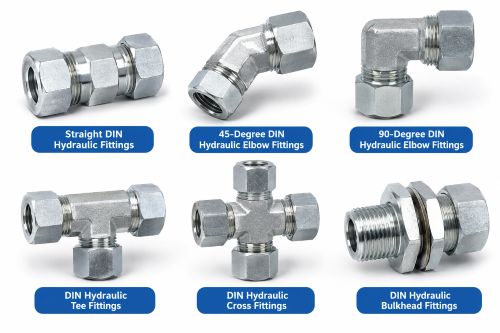
Although DIN 3861 focuses on cutting ring design rather than defining complete fitting configurations, its cutting rings are used in compatible DIN 2353 hydraulic compression fitting systems.
These systems are available in several configurations to accommodate different hydraulic installation requirements.
Straight DIN Hydraulic Fittings
Straight hydraulic fittings are among the most common components in metric hydraulic connection systems. They connect tubes directly to hydraulic ports, adapters, or other compatible components.
Their straightforward design makes them suitable for installations where the tube and connection port are aligned.
Common applications include:
1. Hydraulic pump connections.
2. Hydraulic cylinder ports.
3. Industrial machinery.
4. Hydraulic power units.
5. General-purpose hydraulic tube assemblies.
Straight fittings are particularly useful when installation space allows direct tube routing without additional directional changes.
45-Degree DIN Hydraulic Elbow Fittings
45-degree elbow fittings change the direction of a hydraulic tube by 45 degrees. They provide an alternative to straight connections when the hydraulic line needs to pass around nearby components or follow a specific routing path.
Their angled design can help engineers organize hydraulic lines while maintaining a relatively gradual change in direction.
Common applications include:
1. Compact industrial hydraulic systems.
2. Mobile construction machinery.
3. Agricultural equipment.
4. Hydraulic power assemblies.
5. Equipment with angled tube routing requirements.
When selecting a 45-degree fitting, buyers should consider the available installation clearance, tube dimensions, and required connection orientation.
90-Degree DIN Hydraulic Elbow Fittings
90-degree elbow fittings redirect hydraulic tubes at a right angle. They are particularly useful when equipment layouts require tubes to change direction within limited installation spaces.
Compared with straight fittings, elbow configurations offer greater flexibility when connecting hydraulic components positioned at different angles.
Common applications include:
1. Hydraulic cylinders.
2. Construction equipment.
3. Agricultural machinery.
4. Industrial production systems.
5. Hydraulic manifolds and power units.
A properly selected 90-degree fitting can simplify tube routing and reduce unnecessary bends in hydraulic installations.
DIN Hydraulic Tee Fittings
Tee fittings feature three connection ports arranged in a T-shaped configuration. They allow hydraulic lines to branch from a main tube, making them useful in systems that need to distribute hydraulic fluid to multiple components.
Depending on the design, tee fittings can connect three tubes or combine tube and threaded-port connections.
Common applications include:
1. Hydraulic fluid distribution systems.
2. Multi-cylinder hydraulic circuits.
3. Industrial machinery.
4. Hydraulic power units.
5. Equipment requiring multiple branch connections.
When selecting a tee fitting, it is important to check the port sizes, connection types, pressure requirements, and intended flow arrangement.
DIN Hydraulic Cross Fittings
Cross fittings have four connection ports arranged in a cross-shaped configuration. They allow multiple hydraulic lines to connect at a central point.
These fittings are useful in hydraulic systems that require more complex fluid distribution arrangements. However, their use depends on the system’s flow requirements and available installation space.
Common applications include:
1. Hydraulic distribution assemblies.
2. Industrial machinery.
3. Multi-line hydraulic circuits.
4. Specialized hydraulic equipment.
5. Fluid connection systems with multiple branches.
Before installation, engineers should verify that the cross fitting’s internal flow path and pressure rating meet the requirements of the hydraulic circuit.
DIN Hydraulic Bulkhead Fittings
Bulkhead fittings are designed to connect hydraulic tubes through panels, walls, or equipment partitions. They typically include a threaded mounting section and a locknut to secure the fitting in position.
This configuration helps create organized connections between hydraulic lines located on opposite sides of a structural panel.
Common applications include:
1. Hydraulic control cabinets.
2. Machine enclosures.
3. Hydraulic tanks and reservoirs.
4. Mobile equipment frames.
5. Industrial hydraulic installations.
Bulkhead fittings are especially useful when hydraulic connections must pass through equipment structures while maintaining a stable mounting arrangement.
How DIN 3861 Cutting Rings Work in Hydraulic Connections
The cutting ring is an essential component in a DIN hydraulic compression fitting assembly. Its primary function is to grip the outside surface of the hydraulic tube and create a secure mechanical connection.
The installation process generally involves the following steps:
Step 1: Prepare the hydraulic tube
Cut the tube to the required length and ensure the end is properly prepared. The tube should be clean, free from excessive burrs, and within the dimensional tolerances specified by the fitting manufacturer.
Step 2: Position the union nut and cutting ring
Slide the union nut and compatible cutting ring onto the tube in the correct orientation.
Step 3: Insert the tube into the fitting body
Push the tube fully into the fitting body until it reaches the designated tube stop.
Step 4: Tighten the union nut
Tighten the union nut according to the manufacturer’s assembly instructions. The cutting ring moves against the fitting body’s internal geometry and forms a controlled bite into the tube surface.
Step 5: Inspect the connection
Check that the cutting ring has been properly assembled and that the tube is securely retained. Follow the manufacturer’s inspection and pressure-testing procedures before putting the hydraulic system into operation.
Correct assembly is essential because improper tightening, incompatible components, or poorly prepared tubing can lead to leakage and connection failure.
Common DIN 3861 Cutting Ring Designs and Configurations
DIN 3861 specifies the design of cutting rings used in non-soldered compression fitting systems. Different cutting ring configurations are available to accommodate tube dimensions and fitting requirements.
When selecting a cutting ring, buyers should pay attention to its design, dimensions, material, and compatibility with the corresponding fitting assembly.
Important considerations include:
1. Cutting ring profile: The ring must match the fitting body’s internal geometry.
2. Tube diameter: The cutting ring must be suitable for the outside diameter of the hydraulic tube.
3. Material: Steel and stainless steel are common options for different operating environments.
4. Surface treatment: Protective coatings can help improve corrosion resistance.
5. Compatibility: The ring must match the fitting body, union nut, and applicable connection standard.
DIN 3861 cutting rings are also available for different metric tube fitting series, including LL, L, and S configurations.
Understanding LL, L, and S Hydraulic Fitting Series
DIN 2353 hydraulic compression fitting systems are commonly divided into three series: LL (very light), L (light), and S (heavy).
These classifications help engineers select suitable components according to tube dimensions, pressure requirements, and application conditions.
LL Series (Very Light)
The LL series is designed for relatively small tube sizes and applications with lower mechanical and pressure requirements.
Common applications include:
1. Low-pressure hydraulic connections.
2. Lubrication systems.
3. Small industrial machinery.
4. Instrumentation and control equipment.
L Series (Light)
The L series is widely used in general industrial hydraulic systems. It offers a balance between connection size, mechanical strength, and pressure capability.
Common applications include:
1. Industrial hydraulic equipment.
2. Agricultural machinery.
3. Mobile hydraulic systems.
4. General-purpose fluid power installations.
S Series (Heavy)
The S series is designed for more demanding hydraulic applications that require heavier-duty connections.
Common applications include:
1. High-pressure hydraulic systems.
2. Construction machinery.
3. Heavy industrial equipment.
4. Hydraulic power units.
5. Machinery operating under demanding conditions.
The LL, L, and S classifications have different dimensional and pressure requirements. Actual pressure ratings depend on tube dimensions, materials, fitting design, temperature, and manufacturer specifications. Buyers should always consult the relevant technical documentation before making a selection.
Materials Used in DIN Hydraulic Fitting Components
Material selection affects the strength, durability, corrosion resistance, and service life of hydraulic fittings and cutting rings.
The most common material options include carbon steel, stainless steel, and brass.
Carbon Steel
Carbon steel is widely used in hydraulic fitting manufacturing because of its mechanical strength, machinability, and cost-effectiveness.
It is suitable for many industrial and mobile hydraulic applications where reliable mechanical connections are required.
Common characteristics include:
1. Good mechanical strength.
2. Suitable for various hydraulic pressure requirements.
3. Easy to machine and manufacture.
4. Compatible with different protective surface treatments.
Carbon steel hydraulic fittings are often available with zinc plating, zinc-nickel plating, and other protective finishes to improve corrosion resistance.
Stainless Steel
Stainless steel is an excellent choice for hydraulic systems operating in corrosive or demanding environments.
Its corrosion resistance makes it suitable for applications where carbon steel components may require additional protection or more frequent maintenance.
Typical applications include:
1. Marine equipment.
2. Chemical processing machinery.
3. Food and beverage production equipment.
4. Outdoor industrial installations.
5. Hydraulic systems exposed to moisture.
Stainless steel fittings generally cost more than standard carbon steel options, but they can provide longer service life in suitable environments.
Brass
Brass is another material used for certain hydraulic and fluid connection components.
It offers good corrosion resistance and machinability, making it suitable for applications where its mechanical and pressure characteristics meet system requirements.
Common applications include:
1. Low-pressure fluid systems.
2. Lubrication equipment.
3. Instrumentation connections.
4. Specialized industrial installations.
Brass should only be selected when its pressure rating, mechanical properties, and fluid compatibility are appropriate for the application.
Applications of DIN Hydraulic Fittings
DIN 2353 compression fitting systems equipped with compatible DIN 3861 cutting rings are used in many industries. Their standardized connection designs make them suitable for different hydraulic tube installation requirements.
Industrial Hydraulic Machinery
Manufacturing equipment frequently uses metric compression fittings to connect hydraulic pumps, valves, cylinders, and other components.
These fittings help create organized hydraulic circuits and support reliable fluid transfer during continuous operation.
Construction and Agricultural Machinery
Excavators, loaders, tractors, and other heavy-duty machines rely on hydraulic systems to operate lifting mechanisms, steering systems, and working attachments.
DIN hydraulic fittings provide connection solutions for different tube routing arrangements in this equipment.
Hydraulic Power Units
Hydraulic power units use pumps, valves, reservoirs, and tube assemblies to generate and distribute hydraulic power.
Straight fittings, elbows, tees, and bulkhead connections help engineers arrange hydraulic lines according to equipment layout and connection requirements.
Mobile Hydraulic Equipment
Mobile machinery often has limited installation space and experiences vibration during operation.
Different DIN fitting configurations allow hydraulic tubes to connect components positioned at various angles while maintaining a compact installation.
Industrial Fluid and Lubrication Systems
DIN compression fitting systems can also be used in suitable fluid and lubrication applications.
Their mechanical connection design makes them useful where removable tube connections and standardized components are required.
How to Choose the Right DIN 3861-Compatible Components
Selecting the correct cutting ring and hydraulic fitting assembly requires more than checking the nominal thread size. Buyers should consider several technical factors to ensure proper compatibility and reliable performance.
Here are seven important considerations.
1. Identify the tube outside diameter
Measure the hydraulic tube accurately before selecting a cutting ring. The ring must match the specified tube diameter to ensure proper engagement and assembly.
2. Determine the correct fitting series
Identify whether the application requires LL, L, or S series components. The selection should be based on the tube dimensions and operating requirements.
3. Check connection dimensions
Verify the thread type, thread size, fitting body dimensions, and port configuration. Metric connections should not be confused with BSP, NPT, or other thread systems.
4. Consider operating pressure
Choose components with suitable pressure ratings for the hydraulic system. Remember that the pressure capability of the complete assembly depends on the tube, fitting body, cutting ring, and installation conditions.
5. Select the appropriate material
Carbon steel is suitable for many general-purpose hydraulic applications, while stainless steel is often preferred for corrosive environments.
6. Evaluate surface treatment
Consider zinc plating, zinc-nickel plating, or other protective finishes depending on the working environment and corrosion protection requirements.
7. Verify standard compatibility
Check that the cutting ring, fitting body, union nut, and tube are designed to work together. Use the applicable DIN and ISO standards and the manufacturer’s assembly instructions as references.
Common Installation Mistakes to Avoid
Even high-quality hydraulic fittings can experience leakage or connection failure when installed incorrectly.
Avoiding common assembly mistakes helps improve system reliability and reduce maintenance requirements.
Some frequent mistakes include:
1. Using incompatible components: Mixing cutting rings, fitting bodies, and union nuts from incompatible systems can affect connection performance.
2. Incorrect tube preparation: Poorly cut or excessively burred tube ends can interfere with proper assembly.
3. Wrong cutting ring orientation: Installing the ring in the wrong direction can prevent correct engagement with the fitting body.
4. Over-tightening: Excessive tightening may damage the tube or fitting components.
5. Under-tightening: Insufficient tightening can result in poor cutting ring engagement and fluid leakage.
6. Ignoring manufacturer instructions: Different fitting designs may require specific assembly procedures and inspection methods.
Proper tube preparation, compatible components, and correct assembly procedures are essential for dependable hydraulic connections.
DIN 3861 vs. DIN 2353 vs. ISO 8434-1
DIN 3861, DIN 2353, and ISO 8434-1 are closely related standards used in metric hydraulic compression fitting systems. However, they have different purposes.
|
Standard |
Main purpose |
|
Specifies the design of cutting rings used in non-soldered compression fittings. |
|
|
Covers complete non-soldered compression fittings with cutting rings and their configurations. |
|
|
ISO 8434-1 |
Specifies design and performance requirements for 24-degree cone connectors with cutting rings. |
DIN 3861 focuses on the cutting ring itself, while DIN 2353 addresses complete fitting assemblies and their selection.
ISO 8434-1 provides an international standard for 24-degree cone connectors with cutting rings. DIN 3861 supplements it with additional sizes and details.
For buyers and engineers, understanding these differences helps prevent confusion when sourcing hydraulic fittings and replacement components.
It is important to verify the specific standard, dimensions, and manufacturer specifications rather than assuming that all DIN and ISO components are interchangeable.
Why Choose Sannke for Hydraulic Fittings?
Choosing a reliable hydraulic fitting manufacturer is important for maintaining consistent product quality and dependable connection performance.
Sannke is a hydraulic fittings manufacturer with 15 years of manufacturing experience, offering hydraulic connection products for industrial equipment manufacturers, distributors, and hydraulic system suppliers.
The company provides several manufacturing and customization services to support different customer requirements.
OEM and ODM Manufacturing
Sannke offers OEM and ODM services for customers who need hydraulic fittings manufactured according to their drawings, specifications, and application requirements.
Custom Hydraulic Components
Available product categories include:
1. Hydraulic hose fittings.
2. Hydraulic adapters.
3. Hydraulic ferrules.
4. Hydraulic flanges.
5. Hydraulic plugs and accessories.
Material Options
Customers can choose from different materials depending on their application requirements, including carbon steel, stainless steel, and brass.
Surface Treatment Options
Available surface treatments include zinc plating, zinc-nickel plating, and other protective finishes. Custom finishing options can also be discussed according to project requirements.
Engineering and Production Support
With experienced engineers and advanced manufacturing equipment, Sannke supports customized hydraulic fitting production and different connection requirements.
Whether customers need standard hydraulic adapters or custom-designed components, Sannke provides manufacturing solutions for different hydraulic applications.
Frequently Asked Questions (FAQs)
Q1: What are DIN 3861 hydraulic fittings?
DIN 3861 is a standard covering the design of cutting rings used in non-soldered compression fitting systems. These rings are commonly used with DIN 2353 hydraulic fittings to create secure metric tube connections.
Q2: What is the difference between DIN 3861 and DIN 2353?
DIN 3861 specifies the design of cutting rings, while DIN 2353 covers complete non-soldered compression fitting assemblies with cutting rings.
Q3: What is the function of a DIN 3861 cutting ring?
A DIN 3861 cutting ring grips the outside surface of a hydraulic tube during assembly. It helps secure the tube within the fitting body and contributes to a reliable mechanical connection.
Q4: Are DIN 3861 fittings compatible with ISO 8434-1?
DIN 3861 cutting rings supplement ISO 8434-1 with additional sizes and details. However, compatibility should be verified against the specific fitting design, dimensions, and manufacturer specifications.
Q5: What materials are used for DIN hydraulic cutting rings?
Common materials include carbon steel and stainless steel. Some product ranges also offer brass options. Material selection depends on pressure requirements, corrosion exposure, and application conditions.
Q6: What are the LL, L, and S series in DIN hydraulic fittings?
LL, L, and S represent very light, light, and heavy fitting series. They differ in dimensions and pressure capabilities and are selected according to tube size and system requirements.
Q7: How do you select the correct DIN cutting ring?
Check the tube outside diameter, fitting series, cutting ring design, material, and compatibility with the fitting body and union nut. Always refer to the manufacturer’s technical specifications.
Q8: Can DIN hydraulic fittings be customized?
Yes. Hydraulic fitting manufacturers can provide customized components based on customer drawings, dimensions, materials, thread specifications, and surface treatment requirements.
Conclusion
DIN 3861 cutting rings play an important role in metric hydraulic compression fitting systems. When used with compatible DIN 2353 fitting components, they help create secure mechanical connections for industrial machinery, construction equipment, agricultural systems, and hydraulic power units.
Understanding the differences between fitting configurations, cutting ring designs, materials, and LL, L, and S series helps buyers make better purchasing decisions.
For reliable hydraulic connections, always check component compatibility, tube dimensions, operating pressure, and installation requirements before selecting a fitting assembly.
Post time: Nov-24-2026