

In industrial fluid and gas handling systems, the reliability of every connection matters. A single leak can lead to costly downtime, safety hazards, product contamination, and reduced operational efficiency. That’s why selecting the right tube fitting is critical for ensuring system integrity and long-term performance.
Among the most commonly used compression fittings are single ferrule bite fittings and double ferrule fittings. While both are designed to create secure, leak-tight connections, they differ significantly in design, performance, installation, and application suitability.
This guide explores the key differences between single ferrule and double ferrule bite fittings, helping engineers, maintenance professionals, and procurement specialists determine which option is best suited for their specific requirements.
Understanding Bite-Type Tube Fittings
Bite-type tube fittings are mechanical connectors used to join tubing in fluid and gas systems. They create a leak-proof seal by compressing a ferrule onto the tubing when the fitting nut is tightened.
The ferrule “bites” into the outer surface of the tube, creating a strong grip while simultaneously forming a seal against pressure leakage.
A typical bite fitting consists of:
➡️ Fitting body
➡️ Nut
➡️ Ferrule or ferrules
➡️ Tube
These fittings are widely used in industries such as oil and gas, chemical processing, power generation, instrumentation, hydraulics, and pharmaceuticals due to their reliability and ease of installation.
What Is a Single Ferrule Bite Fitting?
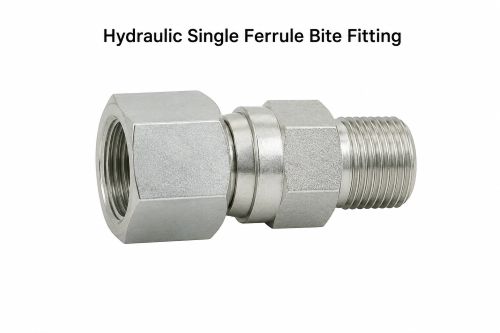
A single ferrule bite fitting uses one ferrule to perform both sealing and gripping functions.
When the nut is tightened, the ferrule is compressed between the fitting body and the nut. This action causes the ferrule to bite into the tubing while simultaneously creating a seal against fluid or gas leakage.
The ferrule deforms slightly during installation, creating:
1. Mechanical grip on the tube
2. Pressure-tight seal
3. Resistance to pull-out forces
Because a single component performs both sealing and gripping functions, the design remains simple and cost-effective.
Advantages of Single Ferrule Bite Fittings
1. Simple Design
With fewer components, single ferrule fittings are easy to understand, install, and maintain.
2. Cost-Effective
The reduced number of parts lowers manufacturing costs, making these fittings an economical solution for many applications.
3. Quick Installation
Installation requires less assembly time compared to more complex fitting systems.
4. Compact Construction
The streamlined design makes them suitable for installations where space is limited.
Limitations of Single Ferrule Bite Fittings
While effective in many applications, single ferrule fittings do have some limitations:
1. Lower resistance to vibration and shock
2. Reduced tube grip compared to double ferrule systems
3. Less suitable for highly critical applications
4. Potentially greater risk of leakage under extreme operating conditions
Common Applications
Single ferrule fittings are commonly used in:
➡️ Hydraulic systems
➡️ Pneumatic equipment
➡️ Water treatment plants
➡️ General industrial piping
➡️ Manufacturing facilities
What Is a Double Ferrule Fitting?
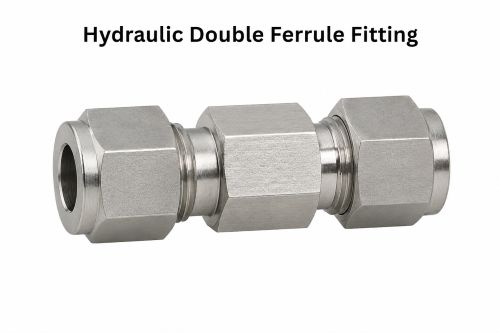
A double ferrule fitting uses two separate ferrules, each performing a distinct function.
The design includes:
➡️ Front ferrule
➡️ Back ferrule
This separation of responsibilities provides improved sealing performance and tube gripping strength.
When the fitting nut is tightened:
1. Front Ferrule
The front ferrule creates the primary seal between the fitting body and the tubing.
2. Back Ferrule
The back ferrule grips the tube securely, providing mechanical support and preventing tube movement.
Because sealing and gripping functions are separated, each ferrule can perform its task more efficiently.
Advantages of Double Ferrule Fittings
1. Superior Leak Prevention
The front ferrule creates a highly reliable seal capable of handling demanding operating conditions.
2. Enhanced Tube Grip
The back ferrule provides excellent holding power and resistance to pull-out.
3. Better Vibration Resistance
Double ferrule fittings maintain connection integrity even in environments with continuous vibration.
4. High Pressure Capability
They perform exceptionally well in systems operating under high pressure and fluctuating conditions.
5. Increased Reliability
The dual-ferrule design reduces the likelihood of connection failures.
Limitations of Double Ferrule Fittings
Despite their performance advantages, double ferrule fittings have some drawbacks:
1. Higher purchase cost
2. More components to assemble
3. Slightly longer installation process
However, many organizations find that the improved reliability offsets the higher initial investment.
Common Applications
Double ferrule fittings are frequently used in:
1. Oil and gas facilities
2. Chemical processing plants
3. Instrumentation systems
5. Power generation facilities
6. Semiconductor manufacturing
7. Pharmaceutical production
Single Ferrule vs. Double Ferrule Bite Fittings: Key Differences
1. Design Structure
Single ferrule fittings use one ferrule for sealing and gripping.
Double ferrule fittings use two ferrules with separate functions, improving overall performance.
2. Sealing Performance
Single ferrule fittings provide reliable sealing for standard operating conditions.
Double ferrule fittings generally offer superior sealing performance, particularly in critical applications involving hazardous fluids, gases, or extreme pressures.
3. Tube Grip Strength
Tube retention is one of the most significant differences between the two designs.
Double ferrule fittings provide stronger gripping action because the back ferrule is specifically engineered for tube holding.
4. Vibration Resistance
In environments with heavy machinery, compressors, pumps, or transportation equipment, vibration can compromise fitting performance.
Double ferrule fittings are specifically designed to resist vibration-induced loosening and maintain long-term sealing integrity.
5. Pressure Handling Capability
While both fitting types can handle significant pressures, double ferrule fittings generally perform better under:
➡️ High-pressure conditions
➡️ Pressure cycling
➡️ Pressure surges
➡️ Critical process applications
6. Ease of Installation
Single ferrule fittings are typically easier and faster to install due to their simpler design.
Double ferrule fittings may require greater attention during assembly but provide additional performance benefits.
7. Maintenance Requirements
Both fitting types require periodic inspection. However, double ferrule fittings often provide longer service intervals due to their enhanced reliability and sealing performance.
8. Cost Considerations
Single ferrule fittings have a lower upfront cost.
Double ferrule fittings have a higher initial purchase price but may reduce long-term costs by minimizing leaks, maintenance, and downtime.
Comparison Table
|
Feature |
Single Ferrule Fittings |
Double Ferrule Fittings |
|
Number of Ferrules |
One |
Two |
|
Design Complexity |
Simple |
Advanced |
|
Sealing Performance |
Good |
Excellent |
|
Tube Grip Strength |
Moderate |
Superior |
|
Vibration Resistance |
Moderate |
High |
|
Pressure Capability |
High |
Very High |
|
Installation Speed |
Faster |
Slightly Slower |
|
Maintenance Frequency |
Moderate |
Lower |
|
Initial Cost |
Lower |
Higher |
|
Best Applications |
General Industrial Use |
Critical Industrial Use |
Factors to Consider When Choosing a Fitting
1. Operating Pressure
Higher operating pressures typically favor double ferrule designs because of their superior sealing and gripping capabilities.
2. System Vibration
Applications involving pumps, compressors, rotating equipment, or transportation systems often benefit from double ferrule fittings.
3. Safety Requirements
If a leak could result in:
➡️ Personnel injury
➡️ Environmental damage
➡️ Product contamination
➡️ Production shutdown
Double ferrule fittings are often the preferred choice.
4. Budget Constraints
For non-critical systems operating under stable conditions, single ferrule fittings may provide excellent value and performance.
5. Environmental Conditions
Consider factors such as:
-
Temperature fluctuations
-
Corrosive chemicals
-
Outdoor exposure
-
Moisture levels
Harsh operating environments may justify investing in higher-performance double ferrule fittings.
6. Regulatory Compliance
Certain industries impose strict requirements for leak prevention and connection reliability. Always verify compliance with applicable standards and regulations.
Common Installation Mistakes to Avoid
1. Over-Tightening
Excessive tightening can damage ferrules, deform tubing, and compromise sealing performance.
2. Under-Tightening
Insufficient tightening may result in leakage and inadequate tube retention.
3. Poor Tube Preparation
Always ensure tubing is:
➡️ Clean
➡️ Burr-free
➡️ Properly cut
➡️ Square at the end
4. Mixing Components
Avoid combining nuts, ferrules, and bodies from different manufacturers unless compatibility has been verified.
5. Ignoring Manufacturer Guidelines
Proper installation procedures vary by manufacturer and fitting design. Always follow recommended assembly instructions.
Frequently Asked Questions
Are double ferrule fittings always better than single ferrule fittings?
Not necessarily. The best choice depends on operating conditions, performance requirements, and budget considerations.
Can single ferrule fittings be used in high-pressure applications?
Yes. Many single ferrule fittings are designed for high-pressure service, although double ferrule designs generally offer additional safety margins.
Which fitting type offers better vibration resistance?
Double ferrule fittings typically provide superior vibration resistance due to their dedicated gripping ferrule.
Are double ferrule fittings worth the additional cost?
For critical applications where leaks, downtime, or safety concerns are significant, the additional investment is often justified.
Can these fittings be reused?
Many fitting systems can be reassembled and reused when inspected properly and used according to manufacturer recommendations.
Conclusion
Choosing between single ferrule and double ferrule bite fittings ultimately depends on your application’s specific requirements.
Single ferrule fittings are an excellent choice for general industrial applications where simplicity, affordability, and ease of installation are priorities. They provide dependable performance in many hydraulic, pneumatic, and utility systems.
Double ferrule fittings, on the other hand, deliver enhanced sealing, stronger tube grip, superior vibration resistance, and greater reliability under demanding operating conditions. They are often the preferred option for critical applications in oil and gas, chemical processing, instrumentation, and power generation.
Before making a final decision, carefully evaluate operating pressure, vibration levels, environmental conditions, safety requirements, and long-term maintenance costs. Selecting the right fitting today can significantly improve system reliability, reduce downtime, and protect your investment for years to come.
Post time: Jun-17-2026