

Hydraulic systems rely on strong, reliable connections to transfer fluid under pressure. Whether used in excavators, agricultural machinery, industrial equipment, or hydraulic power units, every connection must withstand demanding operating conditions without leaking. This is where SAE J518 hydraulic flange fittings play an important role.
SAE J518 flange fittings are widely used in hydraulic applications because they provide secure connections, effective sealing, and reliable performance under high pressure. Their standardized designs also make it easier for equipment manufacturers and maintenance teams to select compatible components.
However, choosing the right flange fitting involves more than checking its size. Buyers also need to understand the differences between Code 61 and Code 62, available fitting types, materials, sealing methods, and installation requirements.
In this guide, we’ll explore how SAE J518 hydraulic flange fittings work, their main components, common applications, and how to select the right option for your hydraulic system.
What Are SAE J518 Hydraulic Flange Fittings?
SAE J518 hydraulic flange fittings are standardized connections designed to join hydraulic pipes, hoses, pumps, valves, cylinders, and other system components.
The SAE J518 standard specifies flange connection dimensions and configurations to help ensure compatibility between hydraulic components. These connections typically use a flange head, an O-ring seal, split flange clamps, and mounting bolts.
Unlike threaded connections, which rely on mating threads to secure and seal a joint, SAE J518 flange connections use mechanical clamping force to compress an O-ring against a prepared sealing surface.
This design offers several advantages:
1. Reliable sealing: O-rings help prevent hydraulic fluid leakage.
2. High-pressure capability: Properly selected flange assemblies can handle demanding hydraulic conditions.
3. Vibration resistance: Bolted connections provide stable mechanical support.
4. Easy maintenance: Split flange clamps make installation and replacement more convenient.
5. Standardized compatibility: Standard dimensions simplify component selection and replacement.
SAE J518 flange fittings are commonly divided into two main pressure classes: Code 61 and Code 62.
Key Components of SAE J518 Flange Fittings
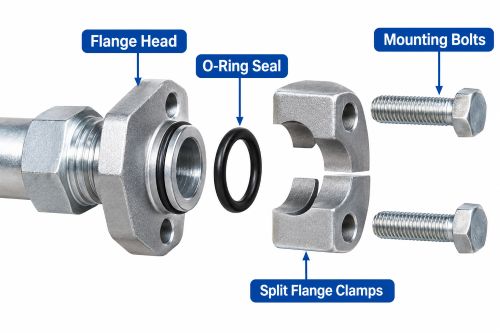
Although SAE J518 flange fittings are available in different shapes and configurations, most assemblies share several basic components.
Flange Head
The flange head is the main connection component. It provides the interface between the hydraulic line and the equipment port.
Its sealing face contains a groove or designated area for the O-ring, depending on the design. The flange head must match the corresponding port dimensions and pressure class to ensure a proper connection.
Split Flange Clamps
Split flange clamps are usually made of two separate halves that fit around the flange head.
They hold the flange against the mounting surface and distribute the clamping force when the bolts are tightened. Their split design also makes installation and removal easier, particularly in confined hydraulic equipment spaces.
O-Ring Seal
The O-ring is one of the most important parts of the assembly. It creates a seal between the flange head and the mating port surface.
When the connection is tightened, the O-ring is compressed to prevent hydraulic fluid from escaping. The correct O-ring size and material are essential for maintaining sealing performance.
Mounting Bolts
Mounting bolts secure the split flange clamps and maintain the required clamping force.
They must have the correct size, strength, and tightening torque. Uneven tightening or insufficient bolt torque can cause poor sealing, while excessive tightening may damage the components.
SAE J518 Code 61 vs. Code 62: What Are the Differences?
One of the most important considerations when selecting SAE J518 hydraulic flange fittings is understanding the difference between Code 61 and Code 62.
Both configurations are commonly used in hydraulic systems, but they are designed for different pressure classes and have different dimensional requirements.
SAE J518 Code 61
SAE J518 Code 61 is commonly known as the 3000 PSI hydraulic flange connection.
It is designed for many standard and medium-to-high-pressure hydraulic applications. Its standardized flange dimensions allow it to connect with compatible pumps, valves, cylinders, and hydraulic lines.
Common applications include:
➡️ Agricultural machinery
➡️ Industrial hydraulic equipment
➡️ Construction machinery
➡️ Hydraulic power units
➡️ Material handling systems
Code 61 is a practical choice when the operating pressure and equipment requirements fall within the component’s rated limits.
SAE J518 Code 62
SAE J518 Code 62 is commonly associated with the 6000 PSI hydraulic flange connection.
It is designed for more demanding applications where higher pressure capabilities are required. Compared with Code 61, Code 62 generally uses heavier construction and different flange and bolt dimensions.
Typical applications include:
➡️ Heavy-duty construction equipment
➡️ Mining machinery
➡️ High-pressure hydraulic circuits
➡️ Industrial hydraulic presses
➡️ Heavy mobile equipment
Code 62 is suitable when the hydraulic system requires a higher-pressure flange connection, provided that every component in the assembly is rated for the intended operating conditions.
Key Differences Between Code 61 and Code 62
|
Feature |
||
|
Common pressure class |
3000 PSI |
6000 PSI |
|
Design |
Standard-duty flange |
Higher-pressure flange |
|
Dimensions |
Code 61 dimensions |
Code 62 dimensions |
|
Bolt configuration |
Code 61 pattern |
Code 62 pattern |
|
Typical applications |
Industrial and mobile hydraulics |
Heavy-duty and high-pressure hydraulics |
Important: The 3000 PSI and 6000 PSI descriptions refer to common pressure classes, not universal ratings for every size. Actual allowable working pressure varies by flange size, material, manufacturer, and assembly configuration. Always check the manufacturer’s pressure specifications.
Code 61 and Code 62 should not be treated as interchangeable simply because their nominal sizes appear similar.
Common Types of SAE J518 Hydraulic Flange Fittings
SAE J518 flange fittings are available in different configurations to accommodate hydraulic system layouts and installation requirements.
Straight Hydraulic Flange Fittings
Straight flange fittings provide a direct connection between two hydraulic components.
They are commonly used where the hydraulic line and equipment port are aligned. Their simple design makes them suitable for many standard hydraulic installations.
45-Degree Hydraulic Flange Elbows
A 45-degree flange elbow changes the direction of hydraulic flow while maintaining a relatively gradual routing angle.
These fittings are useful when hydraulic lines need to avoid nearby components or fit into limited installation spaces.
90-Degree Hydraulic Flange Elbows
A 90-degree flange elbow allows hydraulic lines to turn at a right angle.
They are frequently used in compact hydraulic equipment where straight connections would require excessive installation space or create difficult hose routing.
Hydraulic Flange Adapters
Hydraulic flange adapters connect SAE J518 flange ports to other compatible hydraulic connection types.
Depending on their design, they can provide connections to threaded ports, tube fittings, or other hydraulic interfaces.
They are especially useful when modifying existing hydraulic systems or connecting equipment with different port configurations.
Split Flange Fittings
Split flange fittings use two-piece clamps to secure the flange head to the mating port.
Their design allows technicians to remove the clamps without disconnecting other nearby components, making them convenient for maintenance and replacement.
Materials and Surface Treatments
Material selection affects the strength, durability, corrosion resistance, and service life of SAE J518 hydraulic flange fittings.
The right material depends on the working environment, hydraulic fluid, operating pressure, and equipment requirements.
Carbon Steel
Carbon steel is one of the most common materials used for hydraulic flange fittings.
It offers good mechanical strength, durability, and cost-effectiveness. This makes it suitable for construction machinery, agricultural equipment, industrial hydraulic systems, and other general-purpose applications.
Carbon steel fittings are often treated with protective coatings to improve corrosion resistance.
Stainless Steel
Stainless steel flange fittings are suitable for environments where corrosion resistance is particularly important.
They are commonly used in marine equipment, chemical processing systems, food-related machinery, and other applications exposed to moisture or corrosive substances.
Although stainless steel generally costs more than carbon steel, its corrosion resistance can provide long-term benefits in demanding environments.
Common Surface Treatments
Surface treatments help protect hydraulic flange fittings from corrosion and environmental damage.
Common options include:
➡️ Zinc plating: Provides basic corrosion protection for carbon steel components.
➡️ Zinc-nickel plating: Offers enhanced corrosion resistance compared with conventional zinc coatings.
➡️ Trivalent chromium passivation: Helps improve the protective performance of zinc-plated surfaces.
➡️ Electroless nickel plating: Provides a uniform nickel coating with good wear and corrosion resistance.
➡️ Stainless steel passivation: Improves the corrosion resistance of stainless steel surfaces.
When choosing a surface treatment, consider the equipment’s operating environment and any customer-specific corrosion testing requirements.
Common Applications of SAE J518 Flange Fittings
SAE J518 hydraulic flange fittings are widely used in equipment that requires secure and dependable fluid connections.
Some common applications include:
Construction machinery: Excavators, loaders, bulldozers, and other heavy equipment use flange fittings to connect hydraulic pumps, cylinders, and control valves.
Agricultural equipment: Tractors, harvesters, and agricultural machinery rely on hydraulic flange connections for lifting, steering, and operating attachments.
Industrial hydraulic systems: Manufacturing equipment, hydraulic presses, and production machinery use flange fittings to connect different hydraulic components.
Mining machinery: Heavy-duty mining equipment requires reliable hydraulic connections that can withstand demanding working conditions.
Hydraulic pumps and motors: Flange connections are commonly used at pump and motor ports to provide secure connections for hydraulic fluid transfer.
Material handling equipment: Forklifts, lifting platforms, and industrial handling systems use hydraulic flange fittings in their lifting and control circuits.
Across these applications, selecting the correct flange type and pressure rating helps improve system reliability and reduce maintenance problems.
How to Choose the Right SAE J518 Hydraulic Flange Fittings?
Selecting the right flange fitting requires checking several technical details before purchasing or installation.
Here are six important factors to consider.
Working Pressure
Start by identifying the maximum working pressure of the hydraulic system.
Choose Code 61 or Code 62 according to the required pressure rating. Remember to consider pressure spikes and other operating conditions, not just normal system pressure.
Flange Size and Dimensions
Check the nominal flange size, port dimensions, bolt spacing, and mounting configuration.
Even fittings with similar nominal sizes may have different dimensional specifications. Always verify compatibility with the equipment manufacturer’s drawings or the relevant standard.
Material Selection
Choose a material based on the operating environment.
Carbon steel is suitable for many general hydraulic applications, while stainless steel is a better option when corrosion resistance is a major concern.
O-Ring Compatibility
The O-ring must match the flange connection design, groove dimensions, hydraulic fluid, and operating temperature.
Common O-ring materials include NBR, FKM, and other application-specific elastomers.
Operating Environment
Consider factors such as vibration, temperature changes, moisture, dust, and chemical exposure.
For example, equipment operating outdoors or in marine environments may require additional corrosion protection.
Connection Compatibility
Make sure the flange head, clamps, bolts, O-ring, and mating port are compatible.
Mixing Code 61 and Code 62 components or using incorrect sealing parts can lead to installation difficulties and hydraulic leakage.
Installation Tips for SAE J518 Flange Fittings
Correct installation is essential for achieving reliable sealing and long-term performance.
Even high-quality hydraulic flange fittings can leak if they are installed incorrectly.
Follow these practical tips:
1. Clean the connection surfaces: Remove dirt, oil residue, and other contaminants before installation.
2. Inspect the O-ring: Check for cuts, cracks, deformation, or other damage. Replace defective seals.
3. Check flange alignment: Position the flange head correctly against the mating port without forcing the connection.
4. Install the split clamps: Make sure both halves fit properly around the flange head.
5. Tighten bolts evenly: Follow the manufacturer’s specified tightening sequence and torque requirements.
6. Inspect the connection: After installation, pressurize the system according to the equipment’s commissioning procedure and check for leaks.
Avoid reusing damaged O-rings or tightening bolts beyond the recommended torque. Both practices can reduce sealing performance and shorten component life.
Common Problems and Maintenance Tips
Like other hydraulic components, SAE J518 flange fittings can experience wear or damage over time.
Understanding common problems helps maintenance teams identify potential failures before they cause serious equipment downtime.
Common Problems
Hydraulic oil leakage: Leakage may result from damaged O-rings, incorrect installation, uneven bolt tightening, or damaged sealing surfaces.
Worn or damaged O-rings: High temperatures, incompatible fluids, excessive compression, and aging can cause O-ring deterioration.
Loose mounting bolts: Vibration and improper installation can affect bolt clamping force and lead to leakage.
Incorrect flange alignment: Misalignment can create uneven sealing pressure and place additional stress on the connection.
Corrosion and surface damage: Moisture, chemicals, and harsh operating conditions can damage exposed metal surfaces.
Maintenance Recommendations
To keep hydraulic flange connections in good condition:
1. Inspect connections regularly for signs of leakage.
2. Replace damaged or worn O-rings.
3. Check bolts according to the equipment manufacturer’s maintenance instructions.
4. Examine flange faces for scratches, corrosion, and deformation.
5. Use compatible replacement components.
6. Keep hydraulic connections clean during maintenance.
Regular inspection can help prevent unexpected failures and extend the service life of hydraulic equipment.
Why Choose a Reliable SAE J518 Hydraulic Flange Fittings Manufacturer?
The quality of hydraulic flange fittings directly affects connection reliability and hydraulic system performance. For equipment manufacturers, distributors, and hydraulic service companies, choosing a dependable supplier is an important purchasing decision.
A reliable manufacturer should offer:
1. Consistent dimensional accuracy: Products should meet the required flange specifications.
2. Material quality control: Materials should meet the required mechanical and application requirements.
3. Pressure and leakage testing: Appropriate testing helps verify product performance.
4. Custom manufacturing: Different sizes, configurations, materials, and connection requirements should be available.
5. Surface treatment options: Protective coatings should meet the customer’s corrosion resistance requirements.
6. OEM and ODM services: Custom designs, specifications, and branding can support different equipment manufacturing needs.
7. Stable delivery: Consistent production capacity helps customers manage their supply chains.
At Sannke, we specialize in hydraulic fittings and connection components for industrial and mobile hydraulic applications. With 15 years of manufacturing experience, we provide OEM and ODM services to meet different customer requirements.
Our manufacturing capabilities include customized hydraulic adapters, hose fittings, flange fittings, ferrules, and related accessories. Customers can choose from carbon steel, stainless steel, and brass materials, along with different surface treatments such as zinc plating and zinc-nickel plating.
Whether you need standard SAE J518 flange fittings or customized hydraulic connection solutions, working with an experienced manufacturer can help ensure consistent quality and reliable product supply.
Frequently Asked Questions (FAQs)
Q1: What is the SAE J518 standard for hydraulic flange fittings?
SAE J518 is a standard for hydraulic flange connections. It establishes dimensional and design requirements for flange connections used in hydraulic systems, helping ensure compatibility between mating components.
Q2: What is the difference between SAE J518 Code 61 and Code 62?
Code 61 is commonly associated with the 3000 PSI pressure class, while Code 62 is commonly associated with the 6000 PSI pressure class. They also have different flange dimensions and bolt configurations, so they should not be used interchangeably.
Q3: What pressure can SAE J518 flange fittings handle?
The pressure capability depends on the code, nominal size, material, and manufacturer’s specifications. Code 61 is commonly associated with 3000 PSI, while Code 62 is commonly associated with 6000 PSI. Always verify the rated working pressure of the complete assembly.
Q4: Are SAE J518 flange fittings suitable for high-pressure hydraulic systems?
Yes. SAE J518 flange fittings are widely used in high-pressure hydraulic applications. Code 62 configurations are commonly selected for systems requiring higher pressure capabilities.
Q5: What materials are commonly used to manufacture SAE J518 flange fittings?
Carbon steel and stainless steel are two common materials. Carbon steel offers strength and cost-effectiveness, while stainless steel provides better corrosion resistance in demanding environments.
Q6: How do you prevent leakage in SAE J518 flange connections?
Use the correct O-ring, inspect sealing surfaces, align the flange properly, and tighten mounting bolts evenly according to the manufacturer’s torque specifications. Regular inspection also helps identify potential leakage problems.
Q7: Can SAE J518 flange fittings be customized?
Yes. Manufacturers can offer different sizes, configurations, materials, surface treatments, and OEM or ODM options depending on production capabilities and customer requirements.
Conclusion
SAE J518 hydraulic flange fittings are important components in hydraulic systems that require strong, secure, and reliable connections. Their standardized designs, O-ring sealing methods, and different pressure classes make them suitable for a wide range of industrial and mobile equipment.
Understanding the differences between Code 61 and Code 62, selecting compatible materials, and following proper installation procedures can help improve connection performance and reduce hydraulic leakage.
When sourcing these components, work with an experienced manufacturer that offers consistent quality, customization options, and reliable technical support. Sannke provides hydraulic flange fittings and customized hydraulic connection solutions to support different industrial and mobile equipment requirements.
Post time: Nov-03-2026