

Hydraulic systems rely on precision, reliability, and compatibility. Every component, from pumps and valves to hoses and cylinders must work together seamlessly to ensure safe and efficient fluid transfer. One often-overlooked yet essential component is the hydraulic adapter, which connects parts with different thread standards.
Among the most common thread conversion solutions are Hydraulic NPSM to BSPP adapters. These adapters allow hydraulic components manufactured to American thread standards to connect securely with equipment built using British thread specifications. Whether you’re maintaining industrial machinery, repairing heavy equipment, or integrating imported hydraulic components, understanding these adapters can help prevent leaks, reduce downtime, and improve overall system performance.
In this comprehensive guide, we’ll explain what Hydraulic NPSM to BSPP adapters are, how they work, their benefits, common applications, selection criteria, installation best practices, and maintenance tips.
What Is a Hydraulic NPSM to BSPP Adapter?
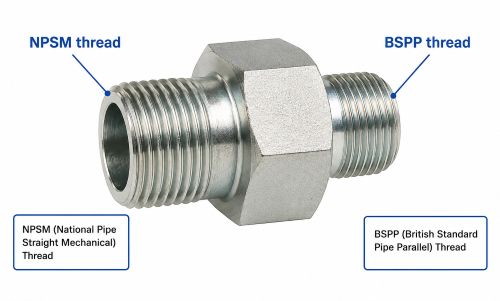
A Hydraulic NPSM to BSPP adapter is a specialized hydraulic fitting designed to connect components with NPSM (National Pipe Straight Mechanical) threads to components with BSPP (British Standard Pipe Parallel) threads.
Because these thread standards differ in design and specifications, they cannot typically be connected directly without risking leaks, damaged threads, or system failure. A properly engineered adapter bridges this gap, creating a secure, leak-resistant connection while maintaining hydraulic system integrity.
These adapters are commonly used in hydraulic systems where equipment from different manufacturers or countries must work together.
Understanding NPSM Threads
What Does NPSM Stand For?
NPSM stands for National Pipe Straight Mechanical, an American thread standard commonly used in hydraulic and industrial applications.
Unlike tapered pipe threads, NPSM threads are straight (parallel), meaning the diameter remains constant along the thread length. They rely on a separate sealing mechanism rather than thread interference to prevent leakage.
Characteristics of NPSM Threads
Key characteristics include:
1. Straight, parallel thread profile
2. Mechanical sealing design
3. Typically sealed using an O-ring, gasket, or mating seat
4. Easy assembly and disassembly
5. Suitable for medium- and high-pressure hydraulic systems
Common Applications
NPSM threads are frequently found in:
1. Hydraulic power units
2. Industrial machinery
3. Manufacturing equipment
4. Hydraulic pumps
5. Fluid transfer systems
6. Mobile hydraulic equipment
Understanding BSPP Threads
What Does BSPP Stand For?
BSPP stands for British Standard Pipe Parallel, an internationally recognized thread standard widely used throughout Europe, Asia, Australia, and many other regions.
Like NPSM, BSPP threads are parallel rather than tapered. However, they follow different dimensional and thread specifications.
Characteristics of BSPP Threads
Typical BSPP features include:
1. Parallel thread design
2. Excellent sealing performance
3. Usually seals with bonded washers, O-rings, or soft seals
4. Designed for repeated assembly
5. Reliable under high-pressure hydraulic conditions
Common Industries Using BSPP
BSPP fittings are widely used in:
1. Agricultural equipment
2. Marine systems
3. Mining equipment
4. Construction machinery
5. Industrial automation
6. Hydraulic manufacturing
7. Oil and gas operations
NPSM vs. BSPP: What’s the Difference?
Although both thread types are parallel, they are not interchangeable.
Thread Standard
1. NPSM: American National Standard
2. BSPP: British/ISO Standard
Each follows different dimensional specifications and manufacturing tolerances.
Thread Angle
One major distinction is the thread angle.
1. NPSM uses a 60-degree thread angle.
2. BSPP uses a 55-degree thread angle.
This difference affects how the threads engage and seal.
Thread Pitch
Even when thread diameters appear similar, thread pitch often differs. Using mismatched thread pitches can damage fittings and compromise sealing performance.
Sealing Method
Neither thread type relies solely on the threads to create a seal.
Instead, sealing is typically achieved through:
➡️ O-rings
➡️ Bonded seals
➡️ Gaskets
➡️ Flat sealing surfaces
Using the correct sealing method is essential for leak-free operation.
Interchangeability
Despite their visual similarities, NPSM and BSPP threads should never be forced together. Doing so can result in:
1. Thread damage
2. Hydraulic leaks
3. Pressure loss
4. Premature component wear
5. Equipment downtime
A dedicated Hydraulic NPSM to BSPP adapter provides the safest and most reliable solution.
Why Hydraulic NPSM to BSPP Adapters Are Necessary
Connect Different Thread Standards
Global industries often use equipment sourced from multiple countries. These adapters make it possible to connect American-made hydraulic components with machinery designed to British standards.
Avoid Expensive Equipment Modifications
Replacing pumps, valves, cylinders, or hoses simply because of incompatible threads can be costly. A properly selected adapter provides an efficient and economical alternative.
Reduce Downtime
Quickly solving thread compatibility issues minimizes maintenance delays and keeps production running smoothly.
Improve System Flexibility
Adapters allow engineers and maintenance professionals to integrate components from multiple manufacturers without redesigning an entire hydraulic system.
Extend Equipment Life
Using the correct adapter helps maintain proper sealing and reduces stress on hydraulic connections, contributing to longer service life for system components.
Common Applications
Hydraulic NPSM to BSPP adapters are used across a wide range of industries.
Construction Equipment
Excavators, loaders, cranes, and other heavy machinery often contain hydraulic components sourced from different manufacturers that require thread conversion.
Agricultural Machinery
Tractors, sprayers, combines, and irrigation systems frequently use adapters to connect imported hydraulic parts.
Industrial Manufacturing
Factories rely on hydraulic systems for automation, presses, machine tools, and production equipment where compatibility between components is critical.
Marine Equipment
Marine hydraulic steering systems, winches, and deck machinery commonly use BSPP fittings, making adapters valuable when integrating American components.
Mining Operations
Mining equipment operates under demanding conditions where durable hydraulic connections are essential for reliable performance.
Oil and Gas
Hydraulic systems in drilling, production, and processing facilities often require thread conversion to accommodate internationally sourced equipment.
Benefits of Using Hydraulic NPSM to BSPP Adapters
Choosing high-quality adapters provides numerous advantages.
Leak-Resistant Connections
Properly manufactured adapters ensure reliable sealing and minimize the risk of hydraulic fluid leaks.
Easy Installation
Most adapters can be installed without modifying existing equipment, reducing maintenance time.
Cost Savings
Adapters eliminate the need to replace otherwise functional hydraulic components due to thread incompatibility.
Improved Equipment Compatibility
Maintenance teams can integrate hydraulic parts from multiple suppliers while maintaining system performance.
Reduced Maintenance Costs
Secure, properly sealed connections help prevent leaks that can lead to costly repairs and downtime.
High-Pressure Capability
Many hydraulic adapters are designed to withstand demanding pressure conditions when selected according to manufacturer specifications.
Corrosion Resistance
Materials such as stainless steel and plated steel offer excellent protection in harsh operating environments.
Materials Used in Hydraulic NPSM to BSPP Adapters
Selecting the appropriate material depends on the operating environment.
Carbon Steel
Carbon steel is widely used because it offers:
➡️ High strength
➡️ Excellent pressure resistance
➡️ Cost-effective performance
➡️ Good durability
It is suitable for most industrial hydraulic applications.
Stainless Steel
Stainless steel provides outstanding corrosion resistance, making it ideal for:
➡️ Marine environments
➡️ Food processing
➡️ Chemical plants
➡️ Outdoor equipment
➡️ High-humidity conditions
Brass
Brass adapters are commonly used in lower-pressure systems where corrosion resistance is important.
Specialty Materials
Certain applications require specialized materials such as:
➡️ Nickel-plated steel
➡️ Zinc-plated steel
➡️ Custom alloys
➡️ High-performance corrosion-resistant materials
Material selection should always consider pressure, fluid compatibility, and environmental exposure.
How to Choose the Right Hydraulic NPSM to BSPP Adapter
Choosing the correct adapter is critical for system safety and performance.
Verify Thread Size
Measure thread diameter and pitch carefully using appropriate gauges to avoid mismatched connections.
Confirm Thread Type
Ensure that one end is NPSM and the other is BSPP. Similar-looking threads may differ in angle, pitch, or dimensions.
Check Pressure Ratings
The adapter should be rated for the maximum operating pressure of the hydraulic system, including any pressure spikes.
Select the Proper Material
Consider:
➡️ Corrosion exposure
➡️ Temperature
➡️ Operating pressure
➡️ Hydraulic fluid compatibility
Consider Temperature Requirements
Extreme temperatures may require specialized materials or sealing components.
Verify Fluid Compatibility
Hydraulic fluids, synthetic oils, water-based fluids, and specialty chemicals may require different seal materials.
Follow Manufacturer Specifications
Always consult equipment documentation to ensure compatibility with the intended application.
Installation Best Practices
Proper installation helps maximize adapter performance and service life.
Inspect Threads
Check for damage, burrs, corrosion, or contamination before installation.
Clean Connection Surfaces
Remove dirt, metal particles, oil residue, and debris that could compromise sealing.
Use the Correct Seal
Install the recommended O-ring, bonded washer, or gasket as specified by the manufacturer.
Avoid Cross-Threading
Start threading by hand before using tools to ensure proper alignment.
Apply Correct Torque
Overtightening can damage threads or seals, while undertightening may result in leaks. Follow the manufacturer’s recommended torque values.
Pressure Test the System
After installation, gradually pressurize the hydraulic system and inspect for leaks before returning equipment to full operation.
Perform Routine Inspections
Regularly inspect hydraulic connections for wear, corrosion, vibration damage, or signs of leakage.
Common Mistakes to Avoid
Avoiding these common errors can significantly improve hydraulic system reliability.
Mixing Thread Standards
Never assume similar-looking threads are compatible.
Using Incorrect Seals
Different thread types require different sealing methods.
Overtightening
Excessive torque can deform sealing surfaces and damage fittings.
Ignoring Pressure Ratings
Using an adapter below the required pressure rating creates unnecessary safety risks.
Reusing Damaged Adapters
Replace adapters showing worn threads, corrosion, cracks, or sealing damage.
Purchasing Low-Quality Components
High-quality hydraulic adapters are manufactured to tighter tolerances and generally provide better sealing reliability and longer service life.
Maintenance Tips
Routine maintenance extends the life of hydraulic adapters and helps prevent unexpected failures.
1. Inspect hydraulic fittings regularly.
2. Check for signs of fluid leakage.
3. Replace worn seals promptly.
4. Remove corrosion before it spreads.
5. Keep threaded connections clean.
6. Verify torque during scheduled maintenance.
7. Replace damaged adapters immediately.
Preventive maintenance reduces downtime while improving overall hydraulic system reliability.
Frequently Asked Questions
Can NPSM threads connect directly to BSPP threads?
No. Although both are parallel thread types, they differ in thread angle, pitch, and dimensional standards. A dedicated Hydraulic NPSM to BSPP adapter should be used.
Are NPSM and BSPP threads interchangeable?
No. Attempting to connect them directly can damage threads and create unreliable seals.
How can you identify NPSM and BSPP threads?
Use thread gauges, calipers, and manufacturer specifications to verify thread diameter, pitch, and thread angle. If you’re unsure, consult the equipment documentation or a hydraulic fitting specialist.
Can these adapters handle high-pressure hydraulic systems?
Yes, provided the adapter is designed, manufactured, and rated for the system’s operating pressure. Always verify the pressure rating before installation.
Do Hydraulic NPSM to BSPP adapters require thread sealant?
In most cases, sealing is achieved using O-rings, bonded washers, or other designated sealing components rather than thread sealant. Follow the adapter and equipment manufacturer’s recommendations.
How long do hydraulic adapters last?
Service life depends on factors such as operating pressure, environmental conditions, material quality, maintenance practices, and installation. High-quality adapters that are correctly installed and maintained can provide many years of reliable performance.
Conclusion
Hydraulic NPSM to BSPP adapters play a vital role in ensuring compatibility between American and British thread standards. By enabling secure, leak-resistant connections, these adapters allow hydraulic systems to integrate components from different manufacturers and regions without extensive modifications.
Understanding the differences between NPSM and BSPP threads, including thread angle, pitch, and sealing methods is essential when selecting the right adapter. Choosing the correct material, verifying pressure ratings, and following proper installation and maintenance practices can significantly improve system reliability, reduce downtime, and extend equipment life.
Whether you’re maintaining industrial machinery, servicing agricultural equipment, or designing a new hydraulic system, investing in high-quality Hydraulic NPSM to BSPP adapters helps ensure safe, efficient, and dependable hydraulic performance. Before making a purchase, always confirm thread specifications, sealing requirements, and operating conditions to select the adapter best suited to your application.
Post time: Jul-03-2026