

Hydraulic systems rely on secure connections to maintain pressure, control fluid flow, and protect sensitive components. However, not every port in a hydraulic circuit is used all the time. Some openings remain unused, while others need to be closed during equipment assembly, maintenance, transportation, or storage. This is where hydraulic port plugs become essential.
Hydraulic port plugs are small but important components designed to close threaded openings in hydraulic equipment. They help prevent fluid leakage, keep contaminants out of hydraulic circuits, and protect connection points from damage. Depending on their design, they can also withstand the pressure and operating conditions found in industrial hydraulic systems.
Although they may look like simple threaded fasteners, hydraulic port plugs come in different configurations, materials, thread standards, and sealing designs. Choosing the right one requires an understanding of the port connection, pressure requirements, and application environment.
In this guide, we will explore what hydraulic port plugs are, how they work, their main components, common types, materials, and how to select the right plug for your hydraulic system.
What Are Hydraulic Port Plugs?
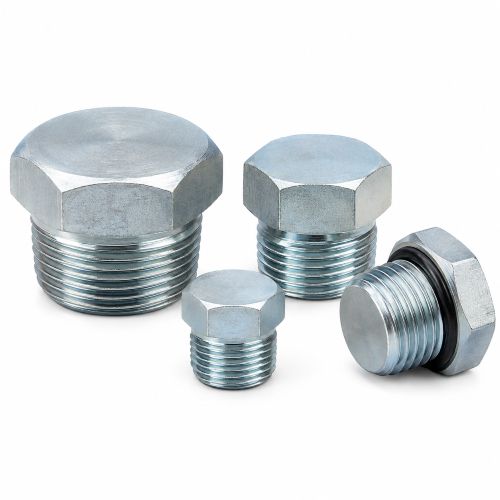
Hydraulic port plugs are threaded components used to close unused or designated openings in hydraulic systems. They are commonly installed in pumps, valves, manifolds, cylinders, motors, and other hydraulic equipment.
Their primary purpose is to create a secure closure that prevents hydraulic fluid from escaping and external contaminants from entering the system. By sealing unused ports, they help maintain system cleanliness and protect internal components from unnecessary exposure.
Hydraulic port plugs are available in various thread configurations, including SAE O-ring boss (ORB), NPT, BSP, and metric threads. Some designs use O-rings or sealing washers, while others rely on tapered threads or specially machined sealing surfaces.
Depending on the application, hydraulic port plugs can serve several purposes:
1. Closing unused ports: Prevent fluid from escaping through openings that are not connected to hoses or tubes.
2. Preventing contamination: Keep dust, dirt, moisture, and other foreign particles away from hydraulic circuits.
3. Protecting threaded connections: Reduce the risk of thread damage during transportation, storage, and maintenance.
4. Supporting equipment assembly: Temporarily or permanently close designated ports during manufacturing and installation.
5. Maintaining system integrity: Help preserve the condition of hydraulic equipment by keeping openings properly sealed.
It is important to distinguish hydraulic port plugs from simple dust caps. A hydraulic port plug may be designed to provide a pressure-resistant closure, whereas a protective dust plug is generally intended to protect an opening during handling or storage. They should not be treated as interchangeable unless their specifications support the intended application.
How Do Hydraulic Port Plugs Work?
Hydraulic port plugs work by engaging with a compatible threaded opening and creating a sealing interface. Once properly installed, the plug closes the port and helps prevent fluid leakage or external contamination.
Their operation depends on several design features.
Threaded Connection
The threaded section connects the plug to the hydraulic port. Most hydraulic port plugs have external threads that engage with the internal threads of the equipment opening.
Thread compatibility is essential. For example, an SAE ORB port requires a compatible ORB plug, while an NPT port needs a matching NPT configuration.
Correct thread engagement provides mechanical retention and helps the plug remain securely installed under the intended operating conditions.
Using an incorrect thread type can cause cross-threading, poor engagement, leakage, or permanent damage to the port.
Sealing Mechanism
The sealing mechanism prevents hydraulic fluid from escaping through the connection. Different hydraulic port plugs use different sealing methods depending on their thread design and application.
Common sealing methods include:
1. O-ring sealing: An elastomeric O-ring compresses against a machined sealing surface to create a leak-resistant connection.
2. Bonded seals: A metal washer with a bonded elastomer sealing element provides sealing between the plug and port face.
3. Tapered thread sealing: Tapered threads create an interference fit as the plug is tightened. Compatible thread sealants may be required depending on the connection specification.
4. Flat sealing surfaces: Some plug designs use a machined face or sealing washer to close the connection.
The correct sealing method depends on the port standard. For example, SAE ORB connections typically use an O-ring, while NPT connections rely on tapered threads.
Pressure Resistance
In hydraulic systems, pressure resistance is an important consideration. A properly specified hydraulic port plug must withstand the pressure conditions associated with its intended application.
The plug body, thread engagement, sealing components, and port design all contribute to the connection’s performance.
When hydraulic pressure acts on a closed port, it can generate a force that pushes against the plug. The connection must be designed and installed to resist this force without loosening or leaking.
For this reason, users should always verify the manufacturer’s pressure ratings and installation requirements rather than assuming that every threaded plug is suitable for high-pressure service.
Contamination Prevention
Hydraulic fluid cleanliness has a direct impact on system performance and component life. Dust, metal particles, moisture, and other contaminants can damage pumps, valves, seals, and other precision components.
Hydraulic port plugs help reduce this risk by closing exposed openings when they are not in use.
They are particularly useful during equipment assembly, maintenance, transportation, and storage, when hydraulic ports may otherwise remain exposed to the surrounding environment.
Key Components of Hydraulic Port Plugs
Hydraulic port plugs are available in different shapes and configurations, but most share several basic structural elements.
Plug Body
The plug body is the main structural component. It provides the mechanical strength needed to close the hydraulic port and withstand the loads associated with installation and operation.
Plug bodies are commonly manufactured from carbon steel, stainless steel, or brass, depending on the application.
Threaded Section
The threaded section allows the plug to connect securely to the hydraulic port.
Its dimensions, pitch, and thread profile must match the receiving port. Common options include SAE, NPT, BSP, and metric configurations.
Accurate thread machining is important for proper engagement and reliable sealing.
Sealing Surface
The sealing surface creates the interface between the plug and the hydraulic port.
Depending on the design, it may include a flat machined face, an O-ring groove, or a tapered thread profile. Its condition and dimensional accuracy directly affect sealing performance.
Hex Head or Installation Drive
Many hydraulic port plugs feature an external hex head or an internal hex socket.
These features allow technicians to install and remove the plug using standard tools. Internal hex designs are especially useful in applications where installation space is limited.
O-Ring or Sealing Element
Some hydraulic port plugs include an O-ring, bonded seal, or another sealing element.
These components help prevent fluid leakage by filling small gaps between mating surfaces. Their material must be compatible with the hydraulic fluid, temperature range, and operating environment.
Common Types of Hydraulic Port Plugs
Hydraulic port plugs are available in several designs to accommodate different connection standards and equipment requirements.
Understanding these variations makes it easier to select a suitable plug for a particular hydraulic application.
SAE ORB Hydraulic Port Plugs
SAE O-ring boss (ORB) plugs are designed for ports that follow the SAE J1926 connection standard.
They use straight threads and an O-ring to create a reliable seal against the port’s machined sealing surface. Unlike tapered pipe threads, the threads themselves are not responsible for creating the primary seal.
SAE ORB plugs are commonly used in hydraulic manifolds, pumps, valves, and other equipment requiring dependable threaded connections.
NPT Hydraulic Port Plugs
NPT hydraulic port plugs feature tapered pipe threads that become tighter as the plug is installed.
The tapered thread design creates an interference fit between the male and female threads. Appropriate thread sealant may be needed depending on the application and connection requirements.
NPT plugs are used in various industrial fluid systems, including compatible hydraulic applications.
However, NPT threads should not be confused with straight-thread hydraulic connections because their sealing principles are different.
BSP Hydraulic Port Plugs
BSP hydraulic port plugs are designed for British Standard Pipe thread connections.
There are two common BSP configurations:
➡️ BSPP: British Standard Pipe Parallel threads, which typically rely on a sealing washer, O-ring, or another sealing arrangement.
➡️ BSPT: British Standard Pipe Taper threads, which use tapered threads to establish the connection.
BSP plugs are commonly found in hydraulic equipment and machinery used in regions where British pipe thread standards are widely adopted.
Metric Hydraulic Port Plugs
Metric hydraulic port plugs are manufactured for metric threaded ports and are widely used in European and international hydraulic equipment.
They are available in different diameters and thread pitches to match specific port specifications.
Depending on the design, metric plugs may use O-rings, bonded seals, or other sealing arrangements.
Correct identification of the thread diameter and pitch is essential when selecting metric hydraulic port plugs.
Hex Socket Hydraulic Port Plugs
Hex socket hydraulic port plugs feature an internal hexagonal drive that allows installation using an Allen key or hex wrench.
Their compact design makes them suitable for applications where external clearance is limited.
They may be available in different thread types and sealing configurations, including straight-thread and tapered-thread designs.
Hydraulic Flange Port Plugs
Hydraulic flange port plugs are designed to close compatible flange connections in hydraulic systems.
They are commonly used with larger hydraulic ports found in heavy machinery, pumps, and industrial hydraulic assemblies.
Depending on the design, flange closures may use sealing elements and bolted connections to provide a secure interface.
Materials Used in Hydraulic Port Plugs
Material selection affects the strength, corrosion resistance, durability, and overall performance of hydraulic port plugs.
The most common materials include carbon steel, stainless steel, and brass.
Carbon Steel
Carbon steel is widely used in hydraulic port plug manufacturing because of its mechanical strength, machinability, and cost-effectiveness.
It is suitable for many general-purpose hydraulic applications, including construction equipment, agricultural machinery, and industrial hydraulic systems.
To improve corrosion resistance, carbon steel plugs may receive surface treatments such as:
1. Zinc plating
2. Zinc-nickel plating
3. Trivalent chromium passivation
4. Electroless nickel plating
The appropriate finish depends on the operating environment and required corrosion protection.
Stainless Steel
Stainless steel hydraulic port plugs are suitable for applications where corrosion resistance is a major consideration.
They are commonly used in environments exposed to moisture, chemicals, or demanding industrial conditions.
Stainless steel also offers good durability and can be passivated to improve its corrosion resistance.
However, the specific stainless steel grade should be selected according to the application’s mechanical and environmental requirements.
Brass
Brass hydraulic port plugs offer good corrosion resistance and machinability.
They are used in selected fluid systems and applications where brass provides suitable mechanical and chemical compatibility.
However, brass generally has different strength characteristics from steel, so its suitability for a particular hydraulic pressure application must be verified.
Surface Treatments and Finishes
Surface treatments help improve the performance and service life of hydraulic port plugs.
Common finishes include zinc plating, zinc-nickel plating, and electroless nickel plating. Stainless steel plugs may also receive passivation treatment.
When choosing a surface finish, buyers should consider corrosion exposure, environmental conditions, material compatibility, and applicable industry requirements.
Common Applications of Hydraulic Port Plugs
Hydraulic port plugs are used across many industries because hydraulic equipment often contains multiple connection points, including openings that are not always connected to active hydraulic lines.
Some common applications include:
Hydraulic pumps and motors: Plugs close unused threaded ports and help protect connection points during assembly and maintenance.
Hydraulic cylinders: They can close designated ports during transportation, storage, or equipment preparation.
Directional control valves: Plugs are used to close compatible unused ports and maintain the intended hydraulic circuit configuration.
Hydraulic manifolds: Manifolds often contain multiple ports, making suitable plugs important for closing openings that are not connected to hoses or tubes.
Construction and agricultural machinery: Excavators, loaders, tractors, and other mobile equipment use hydraulic port plugs to protect hydraulic connections.
Industrial hydraulic power units: Plugs help close unused openings in hydraulic reservoirs, pumps, valves, and other equipment.
Hydraulic hose and tube assemblies: Protective plugs help prevent contamination during manufacturing, shipping, and storage.
The specific plug design and pressure rating should always match the equipment manufacturer’s requirements.
Hydraulic Port Plugs vs. Hydraulic Port Caps: What’s the Difference?
Hydraulic port plugs and hydraulic port caps both help protect hydraulic connections, but they serve different purposes and have different installation designs.
A hydraulic port plug is generally inserted into a threaded opening, while a hydraulic port cap is fitted over an external connection or port.
|
Comparison |
Hydraulic Port Plugs |
Hydraulic Port Caps |
|
Installation |
Inserted into a compatible port |
Fitted over an external connection |
|
Thread design |
Usually external threads |
Often internal threads |
|
Main function |
Close threaded openings |
Cover and protect exposed connections |
|
Typical application |
Unused hydraulic ports |
Exposed fittings and connection ends |
|
Sealing method |
O-rings, bonded seals, tapered threads, or other specified designs |
Depends on cap design and application |
For example, an SAE ORB plug closes a threaded ORB port in a hydraulic manifold, while a protective cap may cover the external end of a hydraulic fitting during transportation.
Both components are important for hydraulic connection protection, but they should be selected according to their intended function.
How to Choose the Right Hydraulic Port Plug
Choosing the correct hydraulic port plug involves more than matching its external dimensions. Buyers and engineers must consider thread compatibility, sealing design, material, pressure requirements, and operating conditions.
Here are several important factors to evaluate.
Identify the Port Thread Standard
Start by identifying the thread standard used by the hydraulic equipment.
Common standards include SAE ORB, NPT, BSPP, BSPT, and metric threads.
Do not assume that threads with similar diameters are interchangeable. Different thread profiles and sealing methods can result in poor connections and leakage.
Check Thread Size and Pitch
After identifying the thread standard, confirm the required thread diameter and pitch.
For metric threads, pitch refers to the distance between adjacent thread peaks. For inch-based threads, thread count is commonly expressed as threads per inch (TPI).
Using the correct dimensions ensures proper thread engagement and reduces the risk of connection damage.
Determine Pressure Requirements
Check the operating pressure of the hydraulic system and select a plug with an appropriate pressure rating.
The pressure rating should be verified for the complete connection, including the plug, port, sealing element, and installation conditions.
A plug intended only for dust protection or storage should never be assumed suitable for closing a pressurized hydraulic port.
Select the Right Material
Choose the material based on mechanical strength, corrosion resistance, fluid compatibility, and operating environment.
Carbon steel is a common choice for general industrial applications, while stainless steel is often preferred in environments where corrosion resistance is especially important.
Brass may be suitable for selected applications with compatible pressure and material requirements.
Choose the Appropriate Sealing Method
The sealing method must match the port design.
For example, SAE ORB connections typically require an O-ring, while BSPP connections may use a bonded seal or another specified sealing arrangement.
Using the wrong sealing element can lead to leakage even when the threads appear to fit correctly.
Consider Surface Treatment
Surface treatment can improve corrosion resistance and extend the service life of hydraulic port plugs.
For carbon steel plugs, options may include zinc plating, zinc-nickel plating, or electroless nickel plating.
For stainless steel, passivation may be appropriate depending on the grade and application.
Verify Quality and Compatibility
Before purchasing, check the plug’s dimensional accuracy, thread quality, sealing surface finish, material specifications, and pressure rating.
Working with an experienced hydraulic fitting manufacturer can also help ensure that the selected plug meets the equipment’s technical requirements.
Installation and Maintenance Tips for Hydraulic Port Plugs
Even a well-manufactured hydraulic port plug may fail to perform properly if it is installed incorrectly.
Following basic installation and maintenance practices helps protect the connection and reduce the risk of leakage.
Here are some practical recommendations:
1. Clean the hydraulic port: Remove dirt, oil residue, metal particles, and other contaminants before installation.
2. Inspect the threads: Check both the plug and receiving port for damaged or deformed threads.
3. Check the sealing element: Inspect O-rings and bonded seals for cracks, cuts, deformation, or wear.
4. Use the correct tools: Select an appropriate wrench or hex key to avoid damaging the plug.
5. Follow recommended torque: Tighten the plug according to the manufacturer’s specifications. Avoid overtightening.
6. Verify compatibility: Confirm that the plug’s thread type, size, and sealing design match the port.
7. Inspect for leakage: After installation and when the system is safely brought into operation, check for signs of leakage.
8. Replace damaged components: Replace worn plugs and damaged sealing elements rather than relying on compromised connections.
Always depressurize the hydraulic system before removing or installing a plug on an existing circuit. Never loosen a plug while the connection is under pressure.
Why Quality Hydraulic Port Plugs Matter
Hydraulic port plugs may be small components, but their quality can affect the reliability and maintenance requirements of an entire hydraulic system.
Poorly manufactured plugs may have inaccurate threads, uneven sealing surfaces, insufficient material strength, or inconsistent dimensions. These problems can lead to leakage, installation difficulties, and premature component failure.
High-quality hydraulic port plugs offer several important advantages:
1. Reliable sealing: Properly machined sealing surfaces and compatible sealing elements help prevent fluid leakage.
2. Contamination protection: Secure closures reduce the risk of dirt, moisture, and foreign particles entering hydraulic circuits.
3. Thread protection: Accurate thread dimensions help prevent damage to hydraulic ports during installation.
4. Longer service life: Suitable materials and surface treatments improve durability under the intended operating conditions.
5. Reduced maintenance: Reliable plugs help minimize unnecessary inspections, replacements, and equipment downtime.
6. Consistent performance: Proper manufacturing and quality control support compatibility across hydraulic assemblies.
For equipment manufacturers and hydraulic fitting distributors, choosing a reliable supplier is equally important. Consistent product quality, material traceability, manufacturing capabilities, and customization options should all be considered when evaluating a hydraulic port plug manufacturer.
Frequently Asked Questions (FAQs)
1. What is the main purpose of a hydraulic port plug?
The main purpose of a hydraulic port plug is to close an unused or designated opening in a hydraulic system. It helps prevent fluid leakage, protects internal components from contamination, and keeps threaded ports secure when they are not connected to other components.
2. How does a hydraulic port plug prevent fluid leakage?
A hydraulic port plug prevents leakage by engaging with a compatible threaded port and creating a sealing interface. Depending on its design, it may use an O-ring, bonded seal, sealing washer, or tapered threads to close the connection.
3. What thread types are commonly used for hydraulic port plugs?
Common thread types include SAE ORB, NPT, BSPP, BSPT, and metric threads. Each type has different dimensions and sealing characteristics, so the correct configuration must be selected for the receiving port.
4. Are hydraulic port plugs designed for high-pressure applications?
Some hydraulic port plugs are designed for high-pressure applications, but not all plugs have the same pressure rating. The plug, port, sealing element, and installation method must all be suitable for the intended operating pressure.
5. What is the difference between hydraulic port plugs and hydraulic port caps?
Hydraulic port plugs are generally installed inside threaded openings to close them, while hydraulic port caps fit over exposed connections to protect their external ends. Their designs and applications are different.
6. Which materials are commonly used to manufacture hydraulic port plugs?
Carbon steel, stainless steel, and brass are common materials. Carbon steel offers good strength and cost-effectiveness, stainless steel provides excellent corrosion resistance, and brass is suitable for selected applications requiring good machinability and corrosion resistance.
7. How do I identify the correct size of a hydraulic port plug?
Identify the port’s thread standard, nominal diameter, thread pitch or TPI, and sealing configuration. Thread gauges and suitable measuring tools can help confirm the dimensions. When necessary, consult the equipment manufacturer’s specifications.
8. Can hydraulic port plugs be reused?
Yes, some hydraulic port plugs can be reused if they remain undamaged and meet the manufacturer’s reuse requirements. However, O-rings and other sealing elements should be inspected and replaced when worn, damaged, or unsuitable for reuse.
9. Do hydraulic port plugs require O-rings?
Not all hydraulic port plugs require O-rings. SAE ORB plugs typically use O-rings, while NPT plugs rely on tapered threads and BSPP plugs may use bonded seals or other sealing arrangements.
10. How often should hydraulic port plugs be inspected or replaced?
Inspection frequency depends on the operating environment and equipment maintenance schedule. Plugs should be checked during routine maintenance for corrosion, thread damage, loose installation, and leakage. Replace any component that no longer meets the required specifications.
Conclusion
Hydraulic port plugs play an important role in protecting hydraulic systems by closing unused threaded openings, preventing fluid leakage, and reducing the risk of contamination. Although their design may appear simple, their performance depends on several factors, including thread compatibility, sealing structure, material selection, and pressure requirements.
From SAE ORB and NPT plugs to BSP and metric configurations, each type is designed for specific connection requirements. Selecting the correct plug and following proper installation practices can help maintain hydraulic system reliability and protect valuable equipment.
For hydraulic equipment manufacturers, distributors, and industrial buyers, working with an experienced hydraulic fittings manufacturer is an important step toward obtaining dependable products. Sannke offers hydraulic plugs, adapters, hose fittings, and customized hydraulic connection solutions to meet different industrial requirements. With OEM and ODM capabilities, material options, and various surface treatments, Sannke supports customers looking for hydraulic fitting products tailored to their applications.
Post time: Nov-09-2026