

Hydraulic fittings play an essential role in connecting tubes, hoses, pumps, valves, and other components in hydraulic systems. A reliable connection helps prevent fluid leakage, maintain operating pressure, and ensure consistent system performance. Among the many connection designs available, compression fittings and flare fittings are two commonly used options.
Although both types create secure connections for fluid transfer, they differ in construction, sealing mechanisms, installation requirements, and applications. Choosing the wrong fitting can lead to leakage, connection failure, and unnecessary maintenance.
So, what is the difference between hydraulic compression and flare fittings? How do they work, and which one is better for your application?
In this guide, we will compare their designs, operating principles, advantages, disadvantages, and common applications to help you make an informed decision.
What Are Hydraulic Compression Fittings?
Hydraulic compression fittings are mechanical connectors designed to join tubes without requiring the tube end to be flared. Instead, they use a compression mechanism to grip the tube and create a secure, leak-resistant connection.
When the compression nut is tightened, it pushes a ferrule or cutting ring against the tube and fitting body. This creates a mechanical connection that helps prevent the tube from slipping out while providing a reliable seal.
Compression fittings are widely used in industrial hydraulic systems, machinery, and equipment that rely on rigid tube connections.
Key Components of Hydraulic Compression Fittings
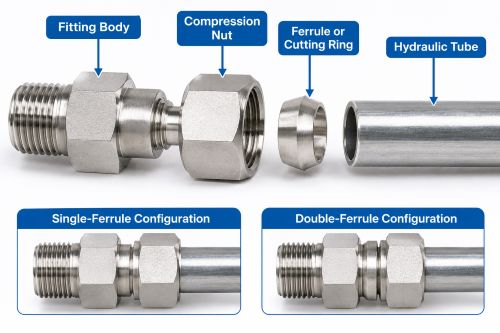
Most hydraulic compression fittings consist of four main components:
1. Fitting body: The main connector that provides the connection point and sealing interface.
2. Compression nut: Applies force to the ferrule or cutting ring when tightened.
3. Ferrule or cutting ring: Grips the tube and helps create a pressure-resistant connection.
4. Hydraulic tube: Carries hydraulic fluid through the system.
Depending on the fitting design, compression connections may use single-ferrule or double-ferrule configurations.
How Do Hydraulic Compression Fittings Work?
The installation process generally involves the following steps:
1. Prepare the tube: Cut the tube to the required length and remove burrs from the edges.
2. Insert the tube: Place the tube into the fitting body until it reaches the designated stop.
3. Tighten the compression nut: Tightening the nut moves the ferrule or cutting ring into position.
4. Create the connection: The ferrule grips the tube and establishes the required sealing and mechanical holding conditions.
DIN 2353 metric bite-type fittings are a common example of hydraulic compression fittings. They are frequently used in industrial hydraulic systems because of their standardized designs and availability in different tube sizes and pressure classes.
What Are Hydraulic Flare Fittings?
Hydraulic flare fittings connect tubes using a specially formed, outward-flared tube end. Unlike compression fittings, which rely on a ferrule or cutting ring, flare fittings create a seal through direct contact between the flared tube surface and the fitting seat.
The flare is compressed against the matching seat when the fitting nut is tightened. This metal-to-metal contact forms a sealing interface that helps prevent hydraulic fluid from escaping.
Flare fittings are widely used in hydraulic equipment, mobile machinery, industrial systems, and fluid power applications.
Key Components of Hydraulic Flare Fittings
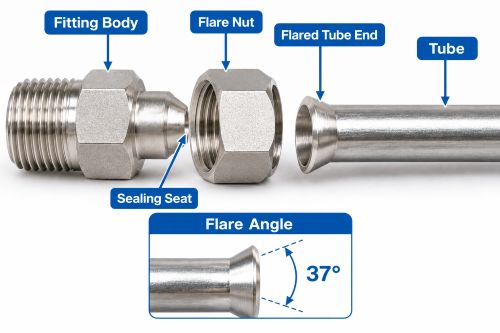
A typical hydraulic flare fitting includes the following components:
1. Fitting body: Provides the threaded connection and matching sealing seat.
2. Flare nut: Holds the flared tube against the fitting seat.
3. Flared tube end: Forms the sealing surface of the connection.
4. Tube: Provides the passage for hydraulic fluid.
The flare angle and fitting design must match to achieve proper sealing.
How Do Hydraulic Flare Fittings Work?
Hydraulic flare fittings generally follow a straightforward installation process:
1. Cut the tube: Prepare the tube to the required length.
2. Prepare the tube end: Remove bulllllllllrrs and ensure the tube is suitable for flaring.
3. Form the flare: Use the appropriate flaring tool to create the specified flare angle.
4. Connect the fitting: Position the flared tube against the matching fitting seat.
5. Tighten the nut: Apply the specified torque to secure the connection and establish metal-to-metal sealing.
Two common examples are SAE J514 JIC 37-degree flare fittings and SAE 45-degree flare fittings. Although both use flared tube ends, their sealing angles are different, meaning they are not interchangeable.
Hydraulic Compression vs Flare Fittings: Key Differences
Compression and flare fittings serve similar purposes, but their connection designs and sealing methods are different. Understanding these differences makes it easier to select the right fitting for a particular hydraulic application.
Connection Design
The most noticeable difference is how each fitting connects to the tube.
Compression fittings use a ferrule or cutting ring that is compressed between the fitting body and tube. This creates a mechanical grip that holds the tube securely.
Flare fittings use a tube end that has been expanded outward to form a specific angle. The flared surface sits against the matching fitting seat to create the connection.
In simple terms, compression fittings rely on ferrule compression, while flare fittings rely on a prepared and shaped tube end.
Sealing Mechanism
The sealing mechanisms also differ.
In compression fittings, the ferrule or cutting ring deforms or engages with the tube and fitting body during installation. This creates the mechanical grip and sealing interface required to contain hydraulic fluid.
In flare fittings, sealing occurs through direct contact between the flared tube surface and the fitting seat. Proper alignment and tightening torque are essential for maintaining a reliable seal.
Both designs can provide dependable sealing when correctly manufactured, selected, and installed.
Installation Requirements
Compression fittings generally require less tube-end preparation because the tube does not need to be flared. The installer typically needs tube-cutting equipment, deburring tools, and suitable wrenches.
Flare fittings require an additional preparation step. The tube end must be formed into the correct flare angle using a compatible flaring tool.
This means flare fittings require greater attention to tube-end geometry, while compression fittings require careful ferrule positioning and assembly.
Pressure Handling
Pressure capability is an important consideration when choosing hydraulic fittings.
Neither compression fittings nor flare fittings are automatically suitable for higher pressure applications. Their actual pressure ratings depend on several factors, including:
1. Fitting design and connection standard.
2. Tube outside diameter and wall thickness.
3. Material grade and manufacturing quality.
4. Correct assembly and tightening torque.
5. Operating temperature and pressure fluctuations.
For example, DIN 2353 compression fittings are available in different pressure classes, including Light (L) and Heavy (S) series. Their suitability depends on the specific tube size and fitting configuration.
Similarly, JIC 37-degree flare fittings are available in different sizes and pressure ratings.
Always check the manufacturer’s technical specifications before selecting a fitting for a high-pressure hydraulic system.
Vibration Resistance
Hydraulic systems used in construction equipment, agricultural machinery, and industrial production lines may experience continuous vibration.
Compression fittings can provide strong mechanical tube retention when the ferrule is correctly installed. Their performance depends on the fitting design, tube preparation, and assembly procedure.
Flare fittings also provide secure connections, but the condition of the flare surface and proper tightening are important for maintaining sealing performance.
For applications involving significant vibration, consider the manufacturer’s recommendations and evaluate the complete tube assembly rather than relying on fitting type alone.
Reusability and Maintenance
Both compression and flare fittings can often be disconnected for inspection or maintenance, but their reusability depends on their construction and condition.
Some compression fitting designs allow components to be reused under specified conditions. However, damaged or permanently deformed ferrules may need replacement.
Flare fittings can also be disconnected and reassembled if the flare and fitting seat remain in good condition. Damaged, cracked, or distorted flare surfaces should not be reused.
Regular inspection helps identify leakage, damaged threads, worn sealing surfaces, and other connection problems before they affect system operation.
Compression Fittings vs Flare Fittings: Comparison Table
The following table summarizes the main differences between hydraulic compression and flare fittings.
|
Comparison Factor |
Compression Fittings |
Flare Fittings |
|
Connection method |
Ferrule or cutting ring compression |
Flared tube connection |
|
Sealing mechanism |
Ferrule-to-tube and fitting contact |
Metal-to-metal flare seat |
|
Tube preparation |
Cutting and deburring |
Cutting, deburring, and flaring |
|
Main components |
Body, nut, ferrule |
Body, nut, flared tube |
|
Installation tools |
Wrenches and tube preparation tools |
Wrenches and flaring tools |
|
Tube retention |
Mechanical grip from ferrule |
Clamping force on flared tube |
|
Common standards |
DIN 2353 |
SAE J514 JIC, SAE 45-degree flare |
|
Maintenance |
Depends on ferrule condition and design |
Depends on flare and seat condition |
|
Typical applications |
Industrial hydraulic tube assemblies |
Hydraulic tube and fluid power connections |
Both fitting types can provide reliable connections when used within their specified operating limits. The best choice depends on system requirements, installation conditions, and applicable connection standards.
Common Types of Hydraulic Compression and Flare Fittings
Hydraulic compression and flare fittings are available in various configurations to accommodate different connection requirements.
Understanding their common types can help engineers and buyers select suitable components for their equipment.
1. Common Hydraulic Compression Fittings
DIN 2353 Hydraulic Compression Fittings
DIN 2353 fittings are widely used metric compression fittings designed for hydraulic tube connections. They typically use a cutting ring that grips the tube during assembly.
They are available in Light (L) and Heavy (S) series, which are designed for different operating conditions and pressure requirements.
Single-Ferrule Compression Fittings
Single-ferrule fittings use one ferrule to grip the tube and establish the required sealing connection. They are commonly used in instrumentation and fluid systems, although their suitability for hydraulic applications depends on their design and pressure rating.
Double-Ferrule Compression Fittings
Double-ferrule fittings use two ferrules to perform different functions. The front ferrule provides the sealing interface, while the back ferrule helps grip and support the tube.
This design is commonly found in instrumentation and specialized fluid systems.
Metric Bite-Type Tube Fittings
Metric bite-type fittings use a cutting ring that bites into the tube surface during installation. They are commonly used in industrial hydraulic systems because of their standardized metric dimensions and available configurations.
2. Common Hydraulic Flare Fittings
JIC 37-Degree Flare Fittings
JIC fittings follow SAE J514 and use a 37-degree flare connection. They are widely used in hydraulic equipment and fluid power systems.
Common configurations include JIC male adapters, JIC female swivel fittings, elbows, tees, and bulkhead adapters.
SAE 45-Degree Flare Fittings
SAE 45-degree flare fittings use a 45-degree sealing surface. They are commonly found in automotive, refrigeration, and selected fluid applications.
Although they look similar to JIC fittings, their flare angles differ, so the two connection types should not be mixed.
Male and Female Flare Adapters
Male and female flare adapters allow different components to connect through compatible threaded and flared interfaces. They are available in different sizes and configurations to meet installation requirements.
Applications: When to Use Compression vs Flare Fittings
Choosing between compression and flare fittings depends largely on the equipment design, operating conditions, and connection requirements.
Compression Fitting Applications
Compression fittings are commonly used in:
1. Industrial hydraulic machinery: Connecting rigid hydraulic tubes in manufacturing and processing equipment.
2. Hydraulic power units: Joining tubes that carry pressurized fluid between pumps, valves, and other components.
3. Construction equipment: Providing tube connections in machinery that requires reliable hydraulic fluid transfer.
4. Agricultural machinery: Connecting hydraulic lines in tractors, harvesters, and other agricultural equipment.
5. Industrial fluid systems: Supporting fluid transfer in applications where standardized tube connections are required.
DIN 2353 compression fittings are particularly common in industrial hydraulic tube assemblies.
Flare Fitting Applications
Flare fittings are frequently used in:
1. Mobile hydraulic equipment: Connecting compatible hydraulic tubes and components in mobile machinery.
2. Industrial machinery: Providing standardized flare connections in hydraulic circuits.
3. Hydraulic pumps and valves: Connecting components through compatible threaded and flared interfaces.
4. Fluid power systems: Supporting hydraulic fluid transfer where JIC or other specified flare connections are required.
5. Equipment maintenance: Replacing or adapting existing flare connections while maintaining the original connection standard.
JIC 37-degree flare fittings are especially common in hydraulic systems because of their widespread use in industrial and mobile equipment.
Advantages and Disadvantages of Each Fitting Type
Neither compression nor flare fittings are perfect for every application. Each offers specific benefits and limitations.
Advantages of Compression Fittings
1. No flaring required: Tubes can be prepared through cutting and deburring without forming a flare.
2. Secure mechanical connection: Ferrules provide tube retention when correctly installed.
3. Standardized configurations: Available in different metric sizes and pressure classes.
4. Wide industrial use: Suitable for many hydraulic tube assemblies and machinery applications.
Disadvantages of Compression Fittings
1. Incorrect ferrule installation can result in leakage.
2. Tube dimensions and material compatibility must be carefully checked.
3. Some designs require specific assembly procedures or pre-assembly tools.
4. Reassembly may require replacing damaged or deformed ferrules.
Advantages of Flare Fittings
1. Reliable sealing: Properly formed flare surfaces create dependable metal-to-metal connections.
2. Standardized designs: Common standards such as SAE J514 help simplify component selection.
3. Straightforward inspection: The flare and fitting seat can be inspected for visible damage.
4. Versatile configurations: Available in different adapters, elbows, tees, and swivel connections.
Disadvantages of Flare Fittings
1. Tube ends require accurate flaring.
2. Damaged or uneven flare surfaces can cause leakage.
3. Incorrect tightening torque may damage the flare or fitting seat.
4. Different flare angles are not interchangeable.
How to Choose the Right Hydraulic Fitting
Selecting the right fitting involves more than comparing the connection design. You should also consider the entire hydraulic system and its operating requirements.
Here are six important factors to evaluate.
1. Operating Pressure
Check the maximum working pressure of the hydraulic system and compare it with the fitting manufacturer’s rated pressure.
Remember to consider pressure spikes and fluctuations, not just normal operating pressure.
2. Tube Material and Dimensions
Make sure the fitting is compatible with the tube material, outside diameter, and wall thickness.
Carbon steel and stainless steel are common materials used in hydraulic tube connections. Stainless steel may be preferred when corrosion resistance is an important requirement.
3. Connection Standards
Verify the applicable connection standard before ordering.
For example:
➡️ DIN 2353 for metric bite-type compression fittings.
➡️ SAE J514 for JIC 37-degree flare fittings.
➡️ SAE 45-degree flare specifications for compatible 45-degree connections.
Avoid mixing fittings with different sealing geometries, even when their threads appear similar.
4. Installation Requirements
Consider the tools, equipment, and technical skills available for installation.
Compression fittings require correct ferrule assembly, while flare fittings require accurate tube flaring. Following the manufacturer’s installation instructions is essential for both.
5. Operating Environment
Consider the working environment, including vibration, temperature, humidity, corrosion, and exposure to chemicals.
For corrosive environments, stainless steel fittings may provide an advantage over standard carbon steel fittings.
6. Maintenance Requirements
Consider how frequently the system will need inspection, disconnection, or component replacement.
Choose a fitting design that meets the equipment’s maintenance requirements and allows convenient access for inspection.
Why Choose Quality Hydraulic Fittings from Sannke?
Choosing a reliable hydraulic fittings manufacturer is important for maintaining consistent product quality and dependable system connections.
Sannke is a hydraulic fittings manufacturer offering a range of hydraulic adapters, hose fittings, ferrules, flanges, and related accessories for industrial and mobile hydraulic applications.
With more than 15 years of manufacturing experience, Sannke provides solutions for customers looking for standard and customized hydraulic connection components.
Key manufacturing capabilities include:
OEM and ODM Services
Sannke supports OEM and ODM requirements, helping customers develop hydraulic fittings according to their drawings, technical specifications, and application needs.
Custom Hydraulic Fittings and Adapters
Customers can request customized hose fittings, hydraulic adapters, ferrules, flanges, and other accessories in different sizes and configurations.
Multiple Material Options
Available material options include carbon steel, stainless steel, and brass, depending on the product design and application requirements.
Surface Treatment Options
Sannke offers different surface treatments, including zinc plating, Zn-Ni plating, and other finishing options. Stainless steel products can also receive passivation treatment.
Engineering and Manufacturing Support
Experienced engineers and advanced manufacturing equipment support product development, machining, and customized production requirements.
Sample Support
Free samples are available for qualifying requirements, allowing customers to evaluate product specifications and compatibility before placing larger orders.
Whether you need DIN 2353 compression fittings, JIC 37-degree flare adapters, or customized hydraulic connections, Sannke can help identify suitable manufacturing solutions.
Contact Sannke to discuss your hydraulic fitting requirements and request product information.
Frequently Asked Questions (FAQs)
Q1: What is the main difference between compression and flare hydraulic fittings?
The main difference is their connection and sealing mechanisms. Compression fittings use a ferrule or cutting ring to grip the tube and create a seal, while flare fittings use a specially formed tube end that seals against a matching fitting seat.
Q2: Are compression fittings better than flare fittings for hydraulic systems?
Neither type is universally better. Compression fittings are useful for applications requiring ferrule-based tube connections without flaring, while flare fittings are suitable for systems designed around standardized flare connections. The correct choice depends on pressure requirements, tube specifications, and application conditions.
Q3: Which fitting type can handle higher hydraulic pressure?
There is no universal answer. Pressure capability depends on the fitting standard, size, material, tube dimensions, and assembly quality. Always check the manufacturer’s pressure ratings for the complete connection.
Q4: Do hydraulic compression fittings require special installation tools?
Basic installation usually requires tube-cutting tools, deburring equipment, and suitable wrenches. Some fitting designs, particularly certain bite-type systems, may also require specific pre-assembly tools or assembly equipment.
Q5: Can flare fittings be reused after disconnection?
They can sometimes be reused if the flare surface, fitting seat, and threads remain undamaged. However, cracked, distorted, or worn components should be replaced before reassembly.
Q6: Are DIN 2353 fittings compression fittings?
Yes. DIN 2353 fittings are metric bite-type compression fittings commonly used in industrial hydraulic systems. They generally use a cutting ring to grip the tube and create a secure connection.
Q7: Are JIC 37-degree fittings considered flare fittings?
Yes. JIC fittings follow SAE J514 and use a 37-degree flare connection. The flared tube end seals against a matching 37-degree fitting seat.
Conclusion
Hydraulic compression and flare fittings are both important connection solutions used in hydraulic systems, but they differ in design, sealing mechanisms, and installation requirements.
Compression fittings use ferrules or cutting rings to grip tubes and establish a seal, while flare fittings rely on a specially shaped tube end that connects to a matching sealing seat.
When selecting between them, consider operating pressure, tube material, connection standards, installation requirements, and environmental conditions. Most importantly, make sure the fitting matches the system’s technical specifications.
For reliable hydraulic connections, working with an experienced manufacturer can help you find the right products for your equipment. Explore Sannke’s hydraulic fittings and customized adapter solutions to support your hydraulic system requirements.
Post time: Nov-18-2026