

Hydraulic systems are widely used in industries such as construction, manufacturing, automotive, and aerospace because they provide reliable power for heavy-duty operations. To keep these systems running safely and efficiently, secure connections between tubes and hoses are essential.
Hydraulic flare fittings are designed to create strong, leak-resistant seals in high-pressure systems. Choosing the right fitting helps improve performance, prevent leaks, and ensure long-term system reliability.
In this article, we’ll explore the most common types of hydraulic flare fittings, how they work, their applications, and how to choose the right one for your hydraulic system.
What Are Hydraulic Flare Fittings?
Hydraulic flare fittings are specialized connectors used to join tubes, pipes, or hoses in hydraulic systems. Unlike compression fittings that rely on ferrules or gaskets, flare fittings use a flared tube end to create a strong metal-to-metal seal.
These fittings are commonly used in high-pressure applications because they provide excellent sealing performance and resistance to vibration. Hydraulic systems often operate under extreme pressure, making secure connections essential for both safety and performance.
How Flare Fittings Work
Flare fittings work by expanding the end of a tube outward using a flaring tool. This creates a cone-shaped flare that matches the angle of the fitting seat. When the fitting nut is tightened, the flared tube presses firmly against the fitting surface, forming a tight seal.
The metal-to-metal sealing mechanism eliminates the need for additional sealing materials such as O-rings or tape in many applications. This design improves durability and reduces the likelihood of leaks under high pressure.
One major advantage of flare fittings is their ability to withstand vibration and repeated pressure cycles. This makes them ideal for hydraulic systems used in industrial machinery, vehicles, and aerospace equipment.
Common Materials Used
Hydraulic flare fittings are manufactured from several different materials depending on the application and operating environment.
Stainless Steel
Stainless steel fittings offer excellent corrosion resistance and high strength. They are commonly used in marine, chemical, and high-pressure applications where durability is critical.
Brass
Brass flare fittings are known for their corrosion resistance and ease of installation. They are often used in lower-pressure systems such as fuel lines and refrigeration equipment.
Carbon Steel
Carbon steel is widely used in industrial hydraulic systems because of its high strength and affordability. Many heavy-duty hydraulic fittings are made from carbon steel with protective coatings.
Aluminum
Aluminum fittings are lightweight and resistant to corrosion, making them suitable for aerospace and racing applications where reducing weight is important.
Why Hydraulic Flare Fittings Are Important
Hydraulic flare fittings are essential for maintaining system efficiency, reliability, and safety.
Leak Prevention
One of the biggest advantages of flare fittings is their ability to create reliable seals. Hydraulic systems operate under significant pressure, and even small leaks can reduce performance or create hazardous conditions.
Flare fittings maintain tight seals even in systems exposed to vibration and fluctuating pressure levels.
Durability in Harsh Environments
Hydraulic systems are often exposed to moisture, chemicals, dirt, and extreme temperatures. High-quality flare fittings are designed to resist corrosion, wear, and environmental damage.
This durability helps extend the lifespan of hydraulic systems while reducing maintenance costs.
Easy Maintenance and Reusability
Many flare fittings can be disconnected and reused multiple times without compromising performance. This makes maintenance and repairs more convenient compared to permanent connection methods.
Technicians can inspect, replace, or modify hydraulic lines without replacing the entire fitting assembly.
Compatibility with Various Hydraulic Systems
Hydraulic flare fittings are used across numerous industries, including:
1. Industrial manufacturing equipment
2. Automotive hydraulic systems
3. Aerospace hydraulic controls
4. Agricultural machinery
5. Construction equipment
Their versatility makes them one of the most widely used connection methods in hydraulic systems.
The Most Common Types of Hydraulic Flare Fittings
There are several types of hydraulic flare fittings available, each designed for specific pressure ratings, industries, and performance requirements.
37-Degree JIC Flare Fittings
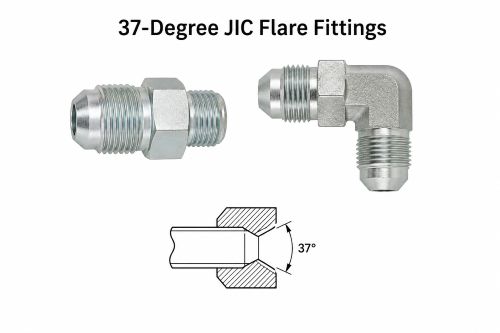
JIC (Joint Industry Council) flare fittings are among the most common hydraulic fittings used today. These fittings feature a 37-degree flare angle and are widely recognized for their reliability in high-pressure applications.
Features
➡️ 37-degree flare angle
➡️ Excellent sealing capability
➡️ High-pressure performance
➡️ Strong vibration resistance
➡️ Reusable design
Common Applications
JIC fittings are commonly found in:
1. Heavy machinery
2. Agricultural equipment
3. Construction hydraulics
4. Industrial hydraulic systems
Pros and Cons
Advantages:
1. Highly reliable under pressure
2. Easy to assemble and disassemble
3. Excellent compatibility with hydraulic systems
Limitations:
1. Requires precise flaring
2. Improper installation may lead to leaks
45-Degree SAE Flare Fittings
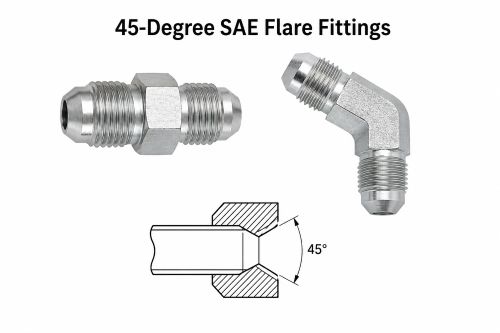
SAE (Society of Automotive Engineers) flare fittings use a 45-degree flare angle and are commonly used in lower-pressure systems.
Features
1. 45-degree flare design
2. Suitable for low- to medium-pressure applications
3. Commonly used in automotive systems
Common Applications
These fittings are frequently used in:
1. Automotive fuel lines
2. Refrigeration systems
3. Plumbing systems
Pros and Cons
Advantages:
➡️ Cost-effective
➡️ Widely available
➡️ Easy to install
Limitations:
1. Lower pressure tolerance compared to JIC fittings
2. Not ideal for demanding hydraulic applications
AN (Army-Navy) Flare Fittings
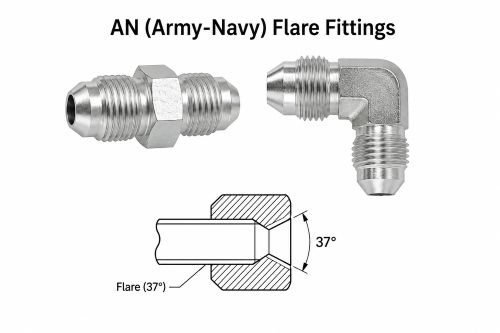
AN flare fittings were originally developed for military and aerospace applications. Although similar to JIC fittings, AN fittings are manufactured with tighter tolerances and higher precision standards.
Features
1. Precision-engineered design
2. High reliability
3. Excellent durability
4. Superior sealing performance
Common Applications
AN fittings are commonly used in:
➡️ Aerospace systems
➡️ Performance racing vehicles
➡️ Military equipment
Pros and Cons
Advantages:
➡️ Exceptional quality
➡️ Reliable under extreme conditions
➡️ Precision manufacturing
Limitations:
➡️ Higher cost
➡️ Often unnecessary for basic industrial systems
Inverted Flare Fittings
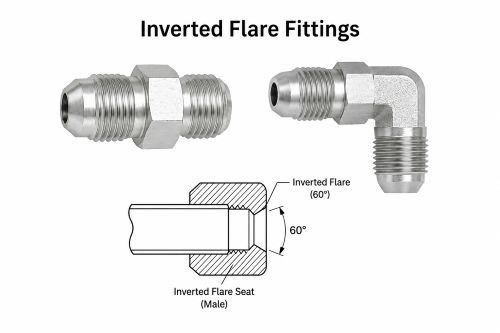
Inverted flare fittings use an internal flare design that provides additional protection for the sealing surface.
Features
1. Compact design
2. Strong sealing performance
3. Improved protection against damage
Common Applications
These fittings are commonly found in:
1. Automotive brake lines
2. Fuel delivery systems
Pros and Cons
Advantages:
➡️ Durable construction
➡️ Reliable sealing
➡️ Compact installation
Limitations:
1. Less common in industrial hydraulics
2. Limited compatibility with high-pressure applications
Differences Between JIC, SAE, and AN Flare Fittings
Understanding the differences between these fittings is essential when selecting components for a hydraulic system.
Flare Angle Comparison
The primary difference between JIC and SAE fittings is the flare angle.
1. JIC fittings use a 37-degree flare
2. SAE fittings use a 45-degree flare
Because of these differences, the fittings are generally not interchangeable.
Pressure Ratings
JIC and AN fittings are typically designed for higher-pressure hydraulic systems, while SAE fittings are more suitable for lower-pressure applications.
AN fittings usually offer the highest precision and reliability due to stricter manufacturing standards.
Compatibility Considerations
Mixing different flare fitting standards can cause leaks, damaged threads, and unsafe operating conditions.
Always verify fitting specifications before installation.
Industry Standards and Certifications
1. SAE fittings follow Society of Automotive Engineers standards
2. AN fittings meet military-grade specifications
3. JIC fittings are standardized for industrial hydraulic systems
Understanding these standards helps ensure proper system compatibility.
How to Choose the Right Hydraulic Flare Fitting
Selecting the proper hydraulic flare fitting depends on several important factors.
Consider Operating Pressure
Always choose fittings rated for the system’s operating pressure. High-pressure systems require fittings capable of handling extreme force without leaking or failing.
Evaluate Material Compatibility
Different hydraulic fluids and operating environments require specific materials.
For example:
1. Stainless steel offers superior corrosion resistance
2. Brass works well in low-pressure environments
3. Carbon steel provides excellent strength
Understand Environmental Conditions
Consider the working environment before selecting a fitting.
Factors include:
➡️ Temperature extremes
➡️ Moisture exposure
➡️ Chemical contact
➡️ Vibration levels
Harsh conditions may require corrosion-resistant materials or specialized coatings.
Check System Requirements
Verify:
➡️ Thread type
➡️ Tube size
➡️ Pressure rating
➡️ Industry standards
Proper compatibility is essential for safe and efficient operation.
Common Hydraulic Flare Fitting Problems
Even high-quality fittings can develop issues if improperly installed or maintained.
Leakage Issues
Leaks are often caused by:
1. Improper flaring
2. Incorrect fitting size
3. Damaged sealing surfaces
4. Loose connections
Regular inspections help identify leaks early.
Over-Tightening Damage
Applying excessive torque can:
1. Crack fittings
2. Distort flare surfaces
3. Damage threads
Always follow manufacturer torque recommendations.
Corrosion and Wear
Harsh environments can cause corrosion that weakens fittings over time. Exposure to moisture, chemicals, or saltwater accelerates deterioration.
Incorrect Installation
Common installation mistakes include:
1. Using mismatched fittings
2. Improper flare angles
3. Poor tube preparation
4. Cross-threading connections
Proper training and quality tools reduce these risks.
Best Practices for Installing Hydraulic Flare Fittings
Correct installation is critical for long-term hydraulic system performance.
Use the Correct Flaring Tool
Precision flaring tools create smooth, properly angled flares that improve sealing performance.
Poor-quality flares often lead to leaks and premature failure.
Inspect the Flare Surface
Before installation, inspect the flare for:
➡️ Cracks
➡️ Uneven surfaces
➡️ Scratches
➡️ Distortion
Any imperfections can compromise the seal.
Follow Torque Specifications
Tightening fittings correctly helps prevent leaks while avoiding thread or fitting damage.
Always use recommended torque values.
Perform Regular Maintenance Checks
Routine inspections help identify:
➡️ Leaks
➡️ Corrosion
➡️ Loose fittings
➡️ Wear damage
Preventive maintenance reduces downtime and repair costs.
Conclusion
Hydraulic flare fittings are essential components in modern hydraulic systems. They provide secure, leak-resistant connections capable of handling demanding pressure conditions across numerous industries.
Among the most common types, JIC fittings are widely used for industrial hydraulic systems, SAE fittings are popular in automotive and plumbing applications, AN fittings deliver military-grade precision, and inverted flare fittings are commonly found in brake and fuel systems.
Selecting the correct fitting is critical for safety, system efficiency, and long-term durability. Proper installation, material selection, and routine maintenance all contribute to reliable hydraulic system performance.
As hydraulic technology continues to advance, newer fitting materials and smarter monitoring systems will further improve reliability, safety, and operational efficiency.
Frequently Asked Questions (FAQs)
What is the difference between JIC and SAE flare fittings?
JIC fittings use a 37-degree flare angle and are designed for high-pressure hydraulic applications, while SAE fittings use a 45-degree flare angle and are typically used in lower-pressure systems.
Can 37-degree and 45-degree flare fittings be used together?
No. Mixing 37-degree and 45-degree flare fittings can result in improper sealing, leaks, and fitting damage.
Which flare fitting is best for high-pressure hydraulic systems?
JIC and AN flare fittings are generally preferred for high-pressure hydraulic systems because of their strong sealing capability and vibration resistance.
Are hydraulic flare fittings reusable?
Yes. Many hydraulic flare fittings are reusable if they are properly maintained and not damaged during installation or removal.
How do I prevent hydraulic flare fitting leaks?
To prevent leaks:
1. Use the correct fitting type
2. Ensure proper flaring
3. Follow torque specifications
4. Inspect fittings regularly
5. Replace damaged components immediately
Post time: May-29-2026