

Hydraulic blind flanges are essential components used to close unused openings in hydraulic systems, helping prevent fluid leakage, contamination, and unnecessary fluid loss. They provide a secure closure for compatible flange connections in hydraulic power units, industrial machinery, construction equipment, and other hydraulic applications.
Selecting the right hydraulic blind flange is important for maintaining system pressure, protecting connection surfaces, and ensuring reliable operation. Factors such as flange standards, pressure ratings, materials, sealing methods, and installation requirements all influence performance.
In this guide, we will explore the main types of hydraulic blind flanges, how they work, the materials used in their construction, and their common industrial applications. We will also cover practical selection and maintenance tips to help equipment manufacturers, distributors, and maintenance professionals choose suitable components.
What Is a Hydraulic Blind Flange?
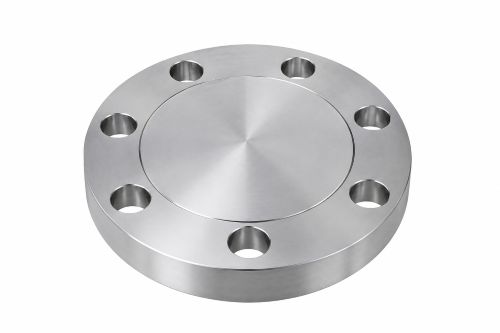
A hydraulic blind flange is a solid flange designed to close a compatible hydraulic port, pipeline opening, or flange connection. Unlike a standard hydraulic flange that connects components and provides a passage for fluid, a blind flange has no through-opening for fluid flow. Instead, it creates a closed end at the connection point.
A typical hydraulic blind flange consists of a solid metal body, a sealing face, and bolt holes or another specified mounting arrangement. Depending on the design, it may also require an O-ring, bonded seal, or other compatible sealing element to prevent hydraulic fluid from escaping.
Blind flanges are commonly installed on hydraulic pumps, valves, manifolds, cylinders, power units, and industrial piping systems. They are useful when a connection is not needed in the current system configuration or when an opening must remain closed during equipment assembly, storage, or servicing.
However, not every blind flange is suitable for every hydraulic connection. The flange must match the connection standard, dimensions, sealing arrangement, and pressure requirements of the system.
Key Functions of Hydraulic Blind Flanges
Hydraulic blind flanges do more than cover open ports. When properly selected and installed, they help protect the hydraulic circuit and support safe, efficient equipment operation.
Sealing Unused Hydraulic Ports
One of the main functions of a hydraulic blind flange is to close unused ports and openings. Hydraulic systems often have multiple connection points to accommodate different configurations, accessories, or future modifications.
When a port is not required, leaving it open can result in fluid leakage or expose the system to contamination. A compatible blind flange provides a secure closure, helping maintain a clean and organized hydraulic circuit.
Maintaining System Pressure
Hydraulic equipment relies on controlled fluid pressure to generate force and perform mechanical work. An improperly sealed opening can cause pressure loss, reduce operating efficiency, and interfere with equipment performance.
A pressure-rated blind flange helps contain hydraulic fluid when installed on a compatible connection. Its pressure capability depends on the flange design, material, dimensions, sealing elements, fasteners, and mating connection.
For this reason, the complete assembly must be suitable for the maximum operating pressure and any applicable pressure surges or specified test conditions.
Preventing Contamination
Dust, dirt, moisture, and other foreign particles can damage hydraulic pumps, valves, seals, and other precision components. Contamination may also accelerate wear and increase maintenance requirements.
Closing unused ports with suitable blind flanges helps prevent these contaminants from entering the hydraulic circuit. This is particularly important during equipment transportation, storage, assembly, and maintenance.
For long-term storage or transportation, a dedicated protective cover may also be necessary to protect exposed connection surfaces from corrosion and physical damage.
Supporting Maintenance and Repairs
Hydraulic systems sometimes require modifications, component replacement, or troubleshooting. Blind flanges can close compatible openings that are no longer needed or must remain sealed during a planned configuration change.
They can also help prevent fluid loss when equipment is prepared for storage or when selected connections are removed from service.
However, a blind flange should never be treated as a substitute for an approved isolation procedure. Before installation or removal, technicians must safely depressurize the system, isolate relevant energy sources, and follow the equipment manufacturer’s maintenance instructions.
Protecting Hydraulic Components
Exposed flange faces and connection openings can be damaged by impact, corrosion, or careless handling. Even minor scratches on a sealing surface may contribute to leakage after the connection is assembled.
A suitable blind flange can close an opening and protect the mating interface in applications where the flange is intended for that purpose. During storage and transportation, non-pressure-rated protective covers may be used where appropriate.
Choosing the correct component helps reduce fluid loss, prevent unnecessary contamination, and protect valuable hydraulic equipment.
Common Types of Hydraulic Blind Flanges
Hydraulic blind flanges are available in different designs to accommodate connection standards, pressure requirements, and installation conditions. Understanding these differences helps buyers select components that fit their hydraulic systems.
SAE Hydraulic Blind Flanges
SAE hydraulic blind flanges are designed for compatible flange connections specified by the relevant SAE standards. They are widely used in industrial hydraulics and mobile equipment.
Two common flange connection systems are SAE Code 61 and SAE Code 62. These systems use different dimensional and pressure-related specifications, including flange dimensions and bolt arrangements.
Code 61 connections are commonly used for many general hydraulic applications, while Code 62 connections are intended for higher-pressure service within their specified limits. The actual allowable pressure depends on the applicable standard, nominal size, component design, and operating conditions.
When selecting an SAE blind flange, verify the correct code, flange size, bolt-hole pattern, sealing interface, and required fasteners. A Code 61 blind flange should not be assumed to fit or perform safely on a Code 62 connection.
DIN Hydraulic Blind Flanges
DIN hydraulic blind flanges are used in systems designed around applicable German or European dimensional standards. They can be found in industrial machinery, manufacturing equipment, and hydraulic installations that follow DIN-based specifications.
Their dimensions, mounting arrangements, and sealing requirements depend on the particular standard and connection design.
Before purchasing a DIN blind flange, confirm the exact specification, nominal size, bolt-hole spacing, flange geometry, and sealing method. Similar-looking components may have different dimensions or may not provide the same pressure capability.
High-Pressure Hydraulic Blind Flanges
High-pressure hydraulic blind flanges are intended for demanding applications where connections must withstand substantial hydraulic loads.
These components may use thicker flange bodies, high-strength materials, and fasteners selected for the specified connection. Their design must account for pressure-induced forces, sealing performance, mechanical stress, and the condition of the mating surfaces.
High-pressure applications can include hydraulic presses, heavy construction equipment, industrial power units, and specialized test systems.
It is important to remember that a thick flange or high-strength material does not automatically guarantee a particular pressure rating. The entire connection assembly must be appropriately designed, rated, and installed for the intended service.
Threaded Hydraulic Blind Flanges
Some hydraulic systems use threaded components to close unused ports. These may include threaded closure plates or other application-specific designs.
However, a threaded blind plug and a conventional bolted blind flange are different components. A threaded plug fits into a compatible threaded port, whereas a bolted blind flange closes a mating flange interface using the specified fastening arrangement.
Thread type, thread size, sealing method, and pressure rating must be checked before installation. NPT, BSP, metric, and other thread systems are not automatically interchangeable.
Selecting a component with the wrong thread or sealing arrangement can lead to leakage, thread damage, or connection failure.
Custom Hydraulic Blind Flanges
Custom hydraulic blind flanges are manufactured to meet application-specific requirements that standard products may not satisfy.
Customization may involve flange dimensions, body thickness, bolt-hole patterns, sealing-face geometry, material selection, surface treatment, or special mounting features.
OEMs and hydraulic equipment manufacturers may require custom designs when developing specialized machinery or maintaining equipment with nonstandard connections.
When sourcing custom components, buyers should provide accurate drawings, dimensional specifications, operating pressure, fluid type, temperature range, and sealing requirements. These details help the manufacturer develop a suitable design and verify compatibility with the intended system.
Materials Used in Hydraulic Blind Flanges
Material selection affects the strength, corrosion resistance, durability, and service life of a hydraulic blind flange. The best option depends on the operating environment and the requirements of the complete connection.
Carbon Steel
Carbon steel is widely used in hydraulic blind flange manufacturing because it offers good mechanical strength, durability, and cost-effectiveness.
It is suitable for many industrial hydraulic systems, mobile machinery, and general equipment applications. Its mechanical properties can support demanding service when the component is correctly designed and manufactured.
However, untreated carbon steel can corrode when exposed to moisture, chemicals, or harsh environments. A suitable protective coating or surface treatment can improve its corrosion resistance.
Stainless Steel
Stainless steel is often selected for applications where corrosion resistance is a priority. It can be suitable for equipment exposed to moisture, certain chemicals, marine conditions, or environments with demanding cleanliness requirements.
The exact stainless steel grade matters because different grades offer different levels of corrosion resistance, strength, and compatibility with particular operating conditions.
Although stainless steel can provide advantages in corrosive environments, it should not be assumed to be suitable for every fluid or pressure requirement. Material grade, design, and application conditions must all be considered.
Alloy Steel
Alloy steel may be used when specific mechanical properties, strength, or resistance to demanding service conditions are required.
Its suitability depends on the alloy composition, heat treatment, manufacturing process, and final component properties. For applications involving high mechanical loads or specialized operating conditions, buyers should verify that the selected material meets the relevant engineering requirements.
Material certification and traceability may also be important for critical hydraulic equipment.
Surface Treatments and Finishes
Surface treatments help improve corrosion resistance and extend component service life, particularly for carbon steel blind flanges.
Common options include:
➡️ Zinc plating: Provides a protective coating against corrosion in many general industrial environments.
➡️ Zinc-nickel plating: Can offer improved corrosion protection compared with conventional zinc coatings when properly specified and applied.
➡️ Passivation: Commonly used on stainless steel to support its corrosion resistance by removing surface contaminants and promoting a protective passive layer.
Other protective finishes: Depending on the application, electroless nickel or other suitable coatings may be considered.
The appropriate finish depends on the base material, surrounding environment, hydraulic fluid, and expected service life. Buyers should also consider coating thickness, adhesion, dimensional effects, and any relevant environmental requirements.
How Do Hydraulic Blind Flanges Work?
Hydraulic blind flanges work by covering a compatible opening and forming a sealed interface with the mating component. When correctly installed, they prevent hydraulic fluid from escaping through the closed connection and help keep contaminants out.
Basic Operating Principle
A blind flange is positioned over the opening that needs to be closed. Its mounting holes are aligned with the corresponding holes on the mating flange, and the specified fasteners secure the components together.
The flange body blocks the fluid passage. A compatible sealing element or sealing face helps prevent fluid from escaping through the interface.
The connection must be designed to withstand the pressure loads generated during operation. If the flange dimensions, material, or mounting arrangement are unsuitable, the assembly may leak or fail.
Sealing Methods
The sealing method depends on the flange connection design. Common arrangements include O-rings, bonded seals, and compatible flange-face seals.
An O-ring sits in a specified groove or sealing location and compresses against the mating surface to create a seal. Bonded seals typically combine a metal washer with an elastomeric sealing element. Other flange systems may use a designated sealing profile or gasket arrangement.
Not every blind flange uses the same sealing method. Some connections rely on a specific flange-face design, while others require a separate sealing element.
Using the wrong seal can result in leakage, extrusion, premature wear, or damage to the mating surfaces. Always follow the connection specification and the manufacturer’s installation instructions.
Bolt Patterns and Fastening
Bolt patterns determine how the blind flange aligns with the mating component. The number of bolt holes, their spacing, the fastener size, and the flange dimensions must match the specified connection.
Correct fastening is equally important. Fasteners that are too small or unsuitable for the application may not provide the required clamping force. Excessive tightening torque can damage threads, distort components, or compromise sealing performance.
Technicians should use the specified fasteners and tighten them in the recommended sequence and to the manufacturer’s stated torque. Where applicable, the prescribed tightening pattern helps distribute clamping force evenly across the flange.
Pressure and Leak Prevention
Reliable sealing depends on several factors working together: correct flange selection, suitable materials, compatible seals, accurate machining, proper fasteners, and correct installation.
The sealing surfaces should be clean and free from scratches, corrosion, or deformation that could compromise the connection. The flange must also be rated for the intended pressure and operating conditions.
After installation, the system should be returned to service using the approved procedure. The connection should then be inspected for leakage under controlled and safe conditions.
Applications of Hydraulic Blind Flanges
Hydraulic blind flanges are used in a wide range of industries because hydraulic systems often contain ports and connections that need to be closed for operational, maintenance, or equipment-configuration reasons.
Hydraulic Power Units
Hydraulic power units contain pumps, reservoirs, valves, manifolds, and other components that work together to supply pressurized fluid.
Blind flanges can close compatible unused flange ports on manifolds or other equipment. This allows the system to accommodate different configurations while keeping unnecessary openings sealed.
Selecting the correct flange is especially important when the closed port may be exposed to operating pressure.
Construction and Agricultural Machinery
Excavators, loaders, tractors, harvesters, and other heavy equipment rely on hydraulic systems to power lifting, steering, digging, and other mechanical functions.
Blind flanges may be used to close compatible connections during assembly, configuration changes, maintenance, or storage. In mobile equipment, vibration, shock loads, dirt, and changing temperatures make correct installation and material selection particularly important.
A suitable flange helps maintain a secure connection while protecting the hydraulic circuit from unnecessary fluid loss and contamination.
Industrial Manufacturing Equipment
Hydraulic presses, forming machines, automated production lines, and material-handling equipment frequently use hydraulic power to perform demanding tasks.
Blind flanges can close unused ports in hydraulic manifolds, valve assemblies, and other compatible components. They may also be used during equipment installation or modifications when certain connections are not required.
In these environments, dimensional accuracy and consistent sealing performance are important for reducing maintenance interruptions and supporting reliable production.
Hydraulic Pumps and Valves
Hydraulic pumps and valves may have multiple ports for pressure, return, drain, control, or auxiliary connections. Depending on the design, some ports may not be used in a particular configuration.
A compatible blind flange can close a designated flange connection when permitted by the equipment design. It may also be used during certain assembly, storage, or servicing operations.
However, ports that are necessary for drainage, cooling, pressure control, or other functions must not be blocked without explicit approval from the equipment manufacturer.
Hydraulic Test Systems
Hydraulic test systems use controlled pressure to evaluate components, connections, and assemblies. Suitable blind flanges can close designated openings when the test setup requires a sealed connection.
The flange, seals, fasteners, and mating components must all be rated for the specified test pressure. Test conditions may differ substantially from normal operating conditions, so the applicable pressure rating and test procedure must be confirmed before use.
Pressure testing should be performed by qualified personnel using appropriate equipment and safety precautions. Never loosen or remove a blind flange while a test assembly is pressurized.
Marine and Corrosive Environments
Marine equipment and machinery operating in corrosive environments may be exposed to saltwater, humidity, chemicals, and other conditions that accelerate corrosion.
In these applications, stainless steel or appropriately protected carbon steel may be considered, depending on the operating environment and mechanical requirements.
The material and coating should be selected according to the expected exposure, maintenance schedule, and required service life. Corrosion protection is particularly important around fasteners and sealing interfaces, where deterioration can affect the integrity of the connection.
Hydraulic Blind Flanges vs. Hydraulic Flange Plugs and Caps
Hydraulic blind flanges, flange plugs, and hydraulic caps can all help close or protect connections, but their designs and intended uses differ.
|
Feature |
Hydraulic Blind Flange |
||
|
Basic design |
Solid flange plate or shaped flange closure |
Plug-shaped component |
Cover fitted over a compatible connection |
|
Typical connection |
Bolted flange interface |
Compatible threaded or port interface, depending on design |
Compatible port or fitting interface |
|
Main purpose |
Close a flange opening |
Seal a compatible port or threaded opening |
Cover and protect a compatible connection |
|
Installation |
Usually secured with bolts |
Usually fitted into a matching port |
Depends on the cap design |
|
Key consideration |
Flange standard, sealing face, bolt pattern, and pressure rating |
Thread or port compatibility and sealing method |
Connection geometry and intended protection |
Hydraulic Blind Flanges
A hydraulic blind flange is primarily used to close a compatible flange connection. Its solid body blocks the opening, while the specified sealing arrangement helps prevent fluid leakage.
Depending on its design and rating, it may be used on a pressurized hydraulic connection.
Hydraulic Flange Plugs
The term hydraulic flange plug can refer to different products, including plugs used in particular flange or port designs. In many cases, a plug is inserted into a compatible opening rather than mounted as a flat plate across a bolted flange interface.
Because product terminology varies, buyers should verify the actual design, connection specification, and intended function before ordering.
Hydraulic Caps
Hydraulic caps are often used to cover the ends of fittings, hoses, ports, or other connections. Some are designed primarily for dust and moisture protection during storage and transportation, while others are engineered for specific sealing applications.
A protective cap should not be used to contain hydraulic pressure unless it is explicitly designed and rated for that purpose.
Although these components may serve similar purposes, they are not interchangeable unless their connection designs, sealing arrangements, and pressure ratings are compatible.
How to Choose the Right Hydraulic Blind Flange
Choosing a suitable hydraulic blind flange requires more than matching the nominal size. Buyers should evaluate the connection design, pressure requirements, materials, and operating environment before making a selection.
Identify the Flange Standard
First, determine which connection standard the hydraulic system uses. Common options include SAE and DIN-based flange systems, along with other manufacturer-specific or application-specific designs.
Confirm the exact standard, flange code where applicable, nominal size, and connection configuration. Do not rely on visual similarity alone because different flange systems may have different bolt patterns and sealing geometries.
Confirm the Pressure Rating
The flange must be suitable for the system’s maximum operating pressure and any applicable transient or test conditions.
Consider the pressure rating of the flange body, fasteners, sealing elements, and mating connection. The rating of the complete assembly is limited by the suitability of its individual components and their compatibility.
When the application involves unusually high pressure or pressure surges, consult the equipment manufacturer or a qualified hydraulic engineer.
Choose the Right Material
Select a material that offers the required strength and durability while remaining compatible with the hydraulic fluid and operating environment.
Carbon steel may be suitable for many general industrial applications, while stainless steel can be beneficial in corrosive environments. Alloy steel may be appropriate where specific mechanical properties are required.
Operating temperature, vibration, external exposure, and maintenance expectations should also be considered.
Check Dimensions and Bolt Patterns
Verify the flange’s outer dimensions, thickness, bolt-hole spacing, hole diameter, and sealing-face geometry.
Accurate measurements help prevent installation problems and ensure proper alignment with the mating component. If the original flange is unavailable or damaged, obtain dimensions from the equipment drawings or the component manufacturer rather than estimating them.
For custom orders, provide a complete engineering drawing with tolerances where necessary.
Select a Compatible Seal
Determine whether the connection requires an O-ring, bonded seal, gasket, or another specified sealing arrangement.
Check the seal dimensions, material, groove design, and compatibility with the hydraulic fluid and operating temperature. A seal that fits physically may still be unsuitable if its material or design does not match the application.
Always follow the connection specification instead of assuming that one sealing method can replace another.
Consider Operating Conditions
The working environment can significantly affect flange performance. Applications involving vibration, temperature fluctuations, corrosive exposure, or frequent maintenance may require specific materials, finishes, or fastening arrangements.
Consider whether the flange will remain installed during normal operation or be used only during assembly, transportation, or testing. This distinction helps determine whether a pressure-rated closure or a protective cover is required.
Evaluate Manufacturer Quality
A reliable manufacturer should be able to demonstrate that its products meet the specified design and dimensional requirements.
Important factors include machining accuracy, material consistency, surface finish, corrosion protection, dimensional inspection, and traceability where required. For pressure-critical applications, ask about the relevant design verification and testing documentation.
B2B buyers should also evaluate technical support, OEM and ODM capabilities, production capacity, lead times, and delivery reliability. These factors become especially important when sourcing customized blind flanges or ordering components in bulk.
Installation and Maintenance Best Practices
Correct installation is essential for achieving reliable sealing and avoiding damage to hydraulic components. Even a well-manufactured blind flange may leak if it is installed incorrectly.
Follow these best practices:
1. Depressurize the system. Shut down the equipment, isolate relevant energy sources, and follow the manufacturer’s lockout and depressurization procedures before installation or removal.
2. Clean the connection surfaces. Remove dirt, oil residue, and debris as appropriate. Inspect the flange faces for scratches, corrosion, cracks, or deformation that could affect sealing.
3. Check the sealing element. Confirm that the O-ring, bonded seal, or other specified seal is compatible with the connection and is free from damage. Position it correctly before assembling the flange.
4. Align the bolt holes. Position the blind flange so that the holes and sealing faces match the mating component. Never force the flange into place or use the fasteners to pull misaligned components together.
5. Use the correct fasteners. Verify the required bolt size, strength grade, and other specifications. Tighten the fasteners in the manufacturer’s recommended sequence and to the specified torque.
6. Restore pressure safely. Once installation is complete, follow the approved procedure to return the equipment to service. Inspect the connection for leakage from a safe position and under the prescribed operating conditions.
7. Perform periodic inspections. Check for corrosion, damaged seals, loose fasteners, and signs of leakage. Inspection intervals should reflect the equipment manufacturer’s recommendations and the severity of the operating environment.
8. Replace unsuitable components. Damaged seals, corroded fasteners, and defective flanges should be replaced when they no longer meet the required specifications. Reusing a component is appropriate only when its condition and the applicable procedure permit it.
Never inspect for hydraulic leaks with your hands. High-pressure fluid can penetrate the skin and cause severe injury. Use approved inspection methods and seek immediate medical attention if a suspected injection injury occurs.
Common Mistakes to Avoid When Using Hydraulic Blind Flanges
Several common mistakes can compromise the performance of hydraulic blind flanges and increase the risk of leakage or equipment damage.
Choosing the wrong flange standard: A flange may look similar to the original component but have a different bolt pattern or sealing interface. Always verify the specified connection standard.
Ignoring pressure ratings: A flange designed for a lower-pressure application may not safely withstand the pressure in another system. Confirm the suitability of the complete assembly.
Using the wrong sealing method: Not all flange connections use O-rings, bonded seals, or gaskets in the same way. Follow the specified sealing arrangement.
Reusing damaged seals: Worn, cut, flattened, or incompatible seals can compromise leak prevention. Inspect seals and replace them when necessary.
Applying incorrect bolt torque: Under-tightening may provide insufficient clamping force, while over-tightening can damage threads, distort components, or harm the seal.
Ignoring material compatibility: Corrosion, temperature, and fluid exposure can affect the service life of the flange and its sealing components. Select materials and finishes appropriate to the environment.
Using a protective cover as a pressure seal: Dust caps and shipping covers are not necessarily designed to withstand hydraulic pressure. Use only components rated for the intended service.
Working on a pressurized system: Installing or removing a blind flange under pressure can expose technicians to serious injury and uncontrolled fluid release. Always follow approved isolation and depressurization procedures.
Avoiding these mistakes helps improve connection reliability, reduce maintenance costs, and protect hydraulic equipment.
Why Quality Matters When Sourcing Hydraulic Blind Flanges
The quality of a hydraulic blind flange directly affects its fit, sealing performance, and service life. For equipment manufacturers, distributors, and industrial maintenance teams, choosing a dependable supplier can help reduce the risk of premature failure and unnecessary downtime.
Dimensional accuracy is particularly important. Incorrect bolt-hole spacing, flange thickness, or sealing-face geometry can make installation difficult and compromise the connection. Consistent machining and inspection help ensure that components meet their specified dimensions.
Material quality also matters. The selected steel grade, manufacturing process, and surface treatment should suit the application’s mechanical and environmental requirements. Reliable documentation can help buyers confirm material specifications and traceability where required.
For pressure-critical applications, manufacturers should be able to explain the applicable design requirements and provide relevant inspection or test documentation. Buyers should not assume that every product has undergone pressure testing; instead, they should verify what testing is performed and whether it applies to the specific component and intended use.
OEM and ODM services can be valuable when standard products do not meet a project’s requirements. A capable manufacturer may offer custom dimensions, bolt patterns, materials, surface finishes, and other design options based on the customer’s drawings and technical specifications.
When evaluating hydraulic blind flange suppliers, consider the following factors:
1. Manufacturing experience and technical expertise.
2. Compliance with the specified connection standards.
3. Material quality and dimensional inspection procedures.
4. Available surface treatments and corrosion protection.
5. Customization and OEM/ODM support.
6. Production capacity, lead times, and delivery consistency.
7. Technical communication and after-sales support.
For B2B buyers, the lowest unit price is not always the most economical choice. A well-matched, consistently manufactured component can help reduce leakage risks, installation difficulties, and replacement costs over the product’s service life.
Conclusion
Hydraulic blind flanges help close unused hydraulic openings, prevent fluid leakage, and protect hydraulic systems from contamination when correctly selected and installed. They are used across hydraulic power units, construction machinery, industrial manufacturing equipment, pumps, valves, and specialized test systems.
Choosing the right component requires careful attention to the flange standard, pressure rating, material, dimensions, bolt pattern, and sealing method. Installation practices and regular inspection are equally important for maintaining a reliable connection.
For equipment manufacturers, distributors, and maintenance teams, working with a dependable hydraulic blind flange manufacturer can simplify sourcing and help ensure that components meet the application’s technical requirements. By prioritizing quality, compatibility, and proper installation, buyers can support safer operation and more reliable hydraulic system performance.
Post time: Oct-16-2026