

Hydraulic oil plays a critical role in keeping hydraulic systems running smoothly. It transfers power, lubricates moving components, and helps control heat. But over time, hydraulic oil can become contaminated with dirt, water, and metal particles.
Metal particles are particularly concerning because they can circulate through the system and contribute to wear on pumps, valves, cylinders, motors, and other components. Fortunately, there are several ways to control this type of contamination. One simple solution is a magnetic plug.
So, how magnetic plugs remove metal particles from hydraulic oil is an important question for anyone responsible for hydraulic system maintenance.
Magnetic plugs use a built-in magnet to attract and hold ferrous metal particles as hydraulic oil passes around them. They can provide an additional layer of contamination control while also giving maintenance teams a useful way to monitor component wear.
In this guide, we will explain how magnetic plugs work, what types of particles they capture, where they are used, their benefits and limitations, and how to maintain them properly.
What Are Magnetic Plugs?
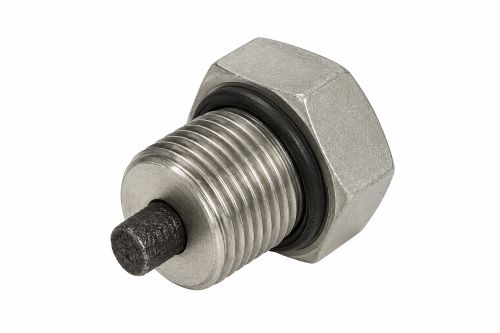
A magnetic plug is a hydraulic plug fitted with a permanent magnet. Its basic purpose is similar to that of a standard hydraulic plug: it closes and seals an opening in a hydraulic component, reservoir, housing, or other fluid-containing area.
The difference is the magnet.
As hydraulic oil moves through the system, ferrous particles can become suspended in the fluid. When these particles pass close enough to the magnetic plug, the magnetic field attracts them and holds them against the magnet.
Magnetic plugs are commonly manufactured with a metal plug body and an integrated magnetic element. Depending on the application, the plug may be made from carbon steel, stainless steel, or another suitable material.
They are available with different thread sizes, thread types, sealing arrangements, and magnetic strengths to suit different hydraulic applications.
Why Do Metal Particles Get Into Hydraulic Oil?
Hydraulic systems contain many moving metal components. Even when a system is properly designed and maintained, some level of wear can occur during normal operation.
Common sources of metal contamination include:
1. Hydraulic pump wear
2. Motor and gear wear
3. Cylinder component wear
4. Valve and spool wear
5. Bearing wear
6. Gear wear
7. Damaged or deteriorating components
8. Corrosion
9. Manufacturing or assembly debris
10. Improper maintenance practices
As components move against each other, microscopic amounts of material can be removed from their surfaces. These particles may enter the hydraulic oil and circulate throughout the system.
Larger metal fragments can also appear when a component starts to fail.
The problem is that circulating metal particles can act as abrasive contaminants. They may pass through clearances in pumps, valves, and other precision components, potentially accelerating wear.
That is why controlling metal contamination is an important part of hydraulic maintenance.
How Magnetic Plugs Remove Metal Particles from Hydraulic Oil
The answer to how magnetic plugs remove metal particles from hydraulic oil comes down to magnetic attraction.
A magnetic plug contains a permanent magnet that produces a magnetic field around its surface. When hydraulic oil carrying ferrous particles flows near the plug, the magnetic field attracts particles containing iron or other magnetic materials.
The basic process is straightforward:
1. Hydraulic oil becomes contaminated with metal particles.
2. The contaminated oil flows through the hydraulic system.
3. Ferrous particles pass close to the magnetic plug.
4. The magnetic field attracts the particles.
5. The particles attach to the magnetic surface.
6. The collected debris remains on the plug until it is removed and cleaned.
This allows the plug to capture metal particles instead of allowing all of them to continue circulating with the hydraulic oil.
The effectiveness of particle capture depends on several factors, including magnetic strength, particle size, oil flow, plug location, and the distance between the particles and the magnet.
Step-by-Step: How a Magnetic Plug Works
1. Contaminated Hydraulic Oil Enters the Area
During normal operation, hydraulic oil carries suspended contaminants through different parts of the system.
Some of these contaminants may be ferrous particles produced by component wear.
2. Particles Pass Through the Magnetic Field
When the oil flows close to the magnetic plug, ferrous particles enter the magnet’s effective field.
The closer a particle gets to the magnet, the stronger the attraction can become.
3. Ferrous Particles Are Captured
The magnetic force pulls suitable particles toward the magnet.
Fine iron and steel particles can attach to the magnetic surface, while larger magnetic fragments may also be held in place.
4. Debris Builds Up on the Plug
Over time, the captured particles accumulate around the magnetic area.
This creates a visible collection of metal debris when the plug is removed during maintenance.
5. The Plug Is Removed and Inspected
During scheduled maintenance, technicians can remove the magnetic plug and inspect the collected material.
Cleaning the magnet restores its available collection surface and allows it to continue capturing metal particles.
The amount and appearance of collected debris can also provide useful information about the condition of the hydraulic system.
What Types of Metal Particles Can Magnetic Plugs Capture?
Magnetic plugs are primarily designed to capture ferrous materials.
These commonly include:
1. Iron particles
2. Steel particles
3. Ferrous wear debris
4. Small steel fragments
5. Other magnetic metal contaminants
However, a magnetic plug does not capture every type of metal.
Materials such as aluminum, copper, brass, and many stainless steels are generally not attracted to a standard permanent magnet in the same way as iron and carbon steel.
This distinction is important.
If a hydraulic system contains significant non-ferrous contamination, a magnetic plug alone will not provide complete contamination control. Conventional hydraulic filtration and other contamination-control methods are still necessary.
Where Are Magnetic Plugs Used in Hydraulic Systems?
Magnetic plugs can be installed in locations where they can come into contact with contaminated hydraulic oil.
Common applications include:
Hydraulic Reservoirs
Reservoirs and tanks can be suitable locations because hydraulic oil passes through the reservoir during system operation.
A magnetic plug may be installed at an appropriate drain or access point to capture ferrous debris.
Drain Ports
Magnetic drain plugs are commonly used because they can collect metal particles that settle near the bottom of a reservoir or housing.
They can also make inspection convenient during oil changes or scheduled maintenance.
Hydraulic Housings
Depending on the system design, magnetic plugs can be used in housings or fluid-containing components where metal contamination is a concern.
The exact installation location should always be selected according to the equipment manufacturer’s recommendations and the plug’s specifications.
Benefits of Using Magnetic Plugs in Hydraulic Oil
Magnetic plugs offer several practical advantages for hydraulic system maintenance.
1. Helps Control Ferrous Contamination
The main advantage is their ability to capture magnetic metal particles.
By removing some ferrous debris from circulation, magnetic plugs can provide an additional layer of contamination control.
2. Supports Component Protection
Metal particles can contribute to abrasive wear when they circulate through sensitive hydraulic components.
Capturing some of this debris can help reduce the amount of ferrous contamination moving through the system.
3. Easy to Inspect
Unlike many hidden filtration components, a magnetic plug can often be removed and visually inspected during routine maintenance.
This makes it a convenient tool for monitoring metal contamination.
4. Helps Identify Abnormal Wear
The amount of debris collected on a magnetic plug can provide an early indication that something may be wearing abnormally.
For example, a sudden increase in metal debris may justify additional inspection of pumps, motors, gears, bearings, or other components.
5. Complements Hydraulic Filtration
Magnetic plugs can work alongside conventional hydraulic filters.
A filter can remove many different types of contaminants depending on its design and rating, while the magnetic plug specifically targets ferrous particles.
Using both approaches can provide more comprehensive contamination control.
Magnetic Plugs vs. Standard Hydraulic Plugs
A standard hydraulic plug is primarily designed to close and seal an opening.
A magnetic plug performs that basic function while adding ferrous-particle collection.
|
Feature |
Magnetic Plug |
Standard Hydraulic Plug |
|
Seals an opening |
Yes |
Yes |
|
Captures ferrous particles |
Yes |
No |
|
Helps monitor metal debris |
Yes |
No |
|
Requires periodic cleaning |
Yes |
Usually minimal |
|
Supports contamination control |
Yes |
Limited |
|
Can provide wear information |
Yes |
No |
If metal contamination is a maintenance concern, a magnetic plug can provide functionality that a standard plug does not.
How to Choose the Right Magnetic Plug
Not every magnetic plug is suitable for every hydraulic application. Before selecting one, consider the following factors.
Thread Size and Type
The plug must match the hydraulic port correctly. Common thread types include metric, BSP, NPT, and other hydraulic thread standards.
Using the wrong thread can lead to leakage, thread damage, or improper installation.
Pressure Rating
Check that the plug is suitable for the pressure conditions of the application.
Even if a plug is installed in a reservoir or low-pressure location, it should still meet the requirements of the equipment.
Material
Carbon steel may be suitable for many general-purpose applications, while stainless steel can provide greater corrosion resistance in demanding environments.
Magnetic Strength
Magnetic strength affects the plug’s ability to attract ferrous particles.
The magnet should be appropriate for the expected contamination level and operating conditions.
Temperature Resistance
The magnetic material and sealing components must be suitable for the hydraulic oil temperature range.
Sealing Method
Consider whether the design uses an O-ring, bonded seal, sealing washer, tapered thread, or another sealing method.
Proper sealing is essential for preventing hydraulic oil leakage.
Installation Location
The location of the plug can influence particle capture. A properly selected installation point allows the magnetic surface to interact effectively with the oil and suspended debris.
How to Install a Magnetic Plug Correctly
Correct installation is important for both sealing performance and reliable operation.
Start by confirming the plug’s thread, size, material, and pressure rating.
Before installation:
1. Shut down the hydraulic equipment safely.
2. Relieve hydraulic pressure where required.
3. Clean the area around the port.
4. Inspect the existing threads.
5. Check the plug and sealing element for damage.
6. Install the appropriate sealing element or sealant according to the manufacturer’s instructions.
7. Tighten the plug to the recommended torque.
8. Restart the system and inspect for leakage.
Avoid excessive tightening. Over-tightening can damage threads, deform sealing components, or make future removal difficult.
Always follow the equipment and plug manufacturer’s installation requirements.
How to Clean and Maintain Magnetic Plugs
Routine inspection is one of the most useful aspects of magnetic plugs.
A typical maintenance process involves:
Remove the Plug Safely
Make sure the system is shut down and pressure is relieved before removing the plug.
Inspect the Collected Debris
Look at the amount, size, and appearance of the material attached to the magnet.
Fine particles may look like sludge or a dark metallic paste, while larger fragments may be easier to identify.
Clean the Magnetic Surface
Remove accumulated debris using a suitable cleaning method that does not damage the magnet or plug.
Inspect the Plug
Check the threads, sealing surface, magnet, and other components for signs of damage.
Reinstall the Plug
Replace damaged sealing components where required and reinstall the plug according to the manufacturer’s specifications.
What Does Metal Debris on a Magnetic Plug Tell You?
A magnetic plug can do more than collect metal particles. It can also act as a simple visual inspection point.
A small amount of fine metallic debris may occur as part of normal component wear. However, a sudden increase in contamination deserves attention.
Large particles or unusual quantities of metal may indicate a developing problem with a pump, motor, gear, bearing, cylinder, or other component.
For this reason, technicians should not simply clean the plug and ignore what they find.
Instead, unusual contamination should be documented and evaluated alongside other maintenance information, such as oil analysis, filter condition, operating performance, temperature, noise, and vibration.
A magnetic plug does not diagnose a failure by itself, but it can provide a valuable clue.
Limitations of Magnetic Plugs
Although magnetic plugs are useful, they are not a complete solution for hydraulic oil contamination.
They Mainly Capture Ferrous Particles
Their biggest limitation is that they primarily attract magnetic materials.
They will not effectively capture contaminants such as dirt, water, dust, or most non-ferrous metal particles.
They Do Not Replace Hydraulic Filters
A magnetic plug should be considered a supplementary contamination-control device.
Hydraulic filters are still needed to remove a broader range of contaminants from the fluid.
Location Matters
A magnetic plug’s effectiveness depends partly on where it is installed.
If contaminated oil rarely passes close to the magnetic surface, particle capture may be limited.
Maintenance Is Still Required
Collected debris needs to be removed periodically. If the magnet becomes heavily covered, its available collection surface may be reduced.
Best Practices for Controlling Metal Contamination
For better hydraulic system cleanliness, magnetic plugs should be used as part of a broader maintenance strategy.
Good practices include:
1. Use properly rated hydraulic filters.
2. Keep hydraulic reservoirs clean.
3. Store hydraulic oil in clean, sealed containers.
4. Prevent dirt from entering open hydraulic ports.
5. Inspect magnetic plugs regularly.
6. Monitor filter condition.
7. Check hydraulic oil for signs of contamination.
8. Perform oil analysis when appropriate.
9. Investigate unusual metal debris.
10. Replace worn components promptly.
Follow the equipment manufacturer’s maintenance schedule.
The goal is not simply to remove contaminants after they appear. Good maintenance aims to prevent contamination and excessive component wear in the first place.
Common Mistakes to Avoid
Several simple mistakes can reduce the effectiveness of a magnetic plug.
Choosing the Wrong Thread
A plug with an incorrect thread may not seal properly and can damage the port.
Ignoring Pressure and Temperature Requirements
The plug, magnet, and sealing components must be suitable for the operating conditions.
Treating the Plug as a Filter Replacement
A magnetic plug only targets a specific type of contamination. It cannot replace a properly selected hydraulic filtration system.
Failing to Inspect Collected Debris
The debris collected on the magnet can provide useful information about system condition. Simply cleaning it without inspection means losing that information.
Overlooking Sudden Increases in Metal
An unusual increase in metal particles can be a warning sign of component wear. It should be investigated rather than dismissed.
Frequently Asked Questions
How magnetic plugs remove metal particles from hydraulic oil?
Magnetic plugs use an integrated permanent magnet to attract ferrous metal particles suspended in hydraulic oil. As contaminated oil passes near the magnetic surface, suitable particles are pulled toward and held by the magnet.
Do magnetic plugs remove all metal particles from hydraulic oil?
No. Magnetic plugs primarily capture ferrous particles such as iron and steel. Non-ferrous materials such as aluminum and copper generally require other filtration or contamination-control methods.
Can a magnetic plug replace a hydraulic filter?
No. A magnetic plug is a supplementary contamination-control device. Hydraulic filters are still needed to remove a broader range of particles and contaminants.
How often should a magnetic plug be cleaned?
The appropriate inspection interval depends on the hydraulic system, operating conditions, contamination levels, and manufacturer’s maintenance recommendations. Regular inspection is especially important in systems with known wear or contamination problems.
What does a large amount of metal on a magnetic plug mean?
A large or sudden increase in metal debris may indicate abnormal component wear or damage. The system should be investigated rather than assuming the contamination is normal.
Where should a magnetic plug be installed?
Magnetic plugs are commonly installed in suitable reservoir drain ports, housings, or other locations where hydraulic oil passes near the magnetic surface. The best location depends on the system design and manufacturer’s recommendations.
Are magnetic plugs useful for hydraulic systems?
Yes. They can help capture ferrous contamination, support oil cleanliness, and provide a convenient way to monitor metal debris. They are most effective when combined with proper filtration and routine maintenance.
Conclusion
Understanding how magnetic plugs remove metal particles from hydraulic oil helps explain why these simple components can play a useful role in hydraulic system maintenance.
A magnetic plug uses a built-in magnet to attract and hold ferrous particles as contaminated hydraulic oil passes nearby. This can reduce the amount of magnetic metal debris circulating through the system while also giving technicians a convenient inspection point.
However, magnetic plugs are not a replacement for hydraulic filters. They work best as part of a complete contamination-control strategy that includes proper filtration, clean oil handling, regular inspections, and preventive maintenance.
When correctly selected, installed, and maintained, a magnetic plug can help control ferrous contamination and provide valuable clues about component wear—supporting cleaner hydraulic oil and more reliable system operation.
Post time: Sep-02-2026