

Hydraulic systems rely on strong, secure, and leak-free connections to maintain efficiency and safety. Whether used in construction equipment, industrial machinery, agricultural systems, or manufacturing plants, hydraulic fittings play a critical role in ensuring smooth fluid transfer under pressure.
Among the many fitting options available, bite type elbow fittings have become increasingly popular for high-pressure and vibration-heavy applications. At the same time, traditional hydraulic fittings such as threaded, flared, and welded fittings continue to be widely used across various industries.
Understanding the differences between bite type elbow fittings and traditional hydraulic fittings can help engineers, maintenance teams, and equipment operators choose the best solution for their hydraulic systems.
In this article, we will compare these fitting types in terms of design, sealing performance, installation, durability, applications, and overall performance.
Understanding Hydraulic Fittings
Hydraulic fittings are mechanical connectors used to join hoses, pipes, and tubes in hydraulic systems. Their primary purpose is to ensure safe and efficient fluid transfer while preventing leaks and maintaining pressure.
Hydraulic systems often operate under extreme pressure and demanding environmental conditions. Because of this, selecting the right fitting type is essential for system reliability, safety, and long-term performance.
Poor-quality or improperly selected fittings can lead to leaks, pressure loss, equipment failure, and costly downtime.
What Are Bite Type Elbow Fittings?
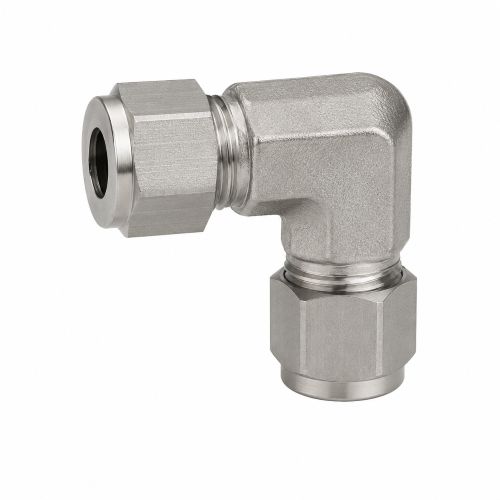
Bite type elbow fittings are compression-style hydraulic fittings designed to connect hydraulic tubing while changing the flow direction, typically at a 90-degree angle.
These fittings use a ferrule, also known as a bite ring, which “bites” into the outer surface of the tube when tightened. This creates a strong mechanical grip and a secure leak-resistant seal.
The elbow design allows hydraulic fluid to change direction smoothly without compromising pressure performance.
Key Components of Bite Type Elbow Fittings
Nut
The nut applies compression force to the ferrule and fitting body during assembly.
Ferrule (Bite Ring)
The ferrule is the key sealing component. As the fitting is tightened, the ferrule bites into the tube surface to create a tight connection.
Fitting Body
The fitting body houses the internal flow path and connects the tubing securely.
Elbow Design
The elbow shape redirects fluid flow while maintaining pressure integrity.
What Are Traditional Hydraulic Fittings?
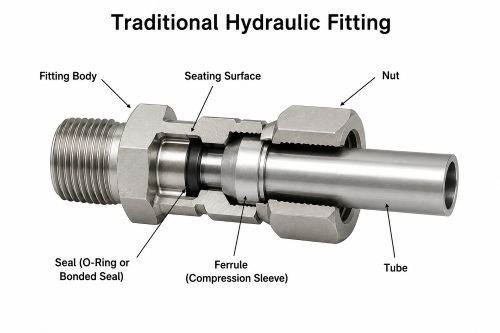
Traditional hydraulic fittings include several common connection types used in hydraulic systems for decades.
These include:
1. Threaded fittings
2. Flared fittings
3. Welded fittings
Each type uses a different sealing and connection method.
Threaded Fittings
Threaded fittings create a seal using threaded connections. These are commonly found in low- to medium-pressure hydraulic systems.
Flared Fittings
Flared fittings use a flared tube end that compresses against the fitting body to create a seal.
Welded Fittings
Welded fittings create permanent connections by welding pipes or tubes together. These fittings are often used in fixed industrial systems.
Major Differences Between Bite Type Elbow Fittings and Traditional Hydraulic Fittings
Although both fitting types serve the same basic purpose, they differ significantly in design, performance, and application.
1. Bite Type Elbow Fittings
Bite type fittings use compression technology. The ferrule mechanically grips the tube surface, creating a highly secure connection.
2. Traditional Hydraulic Fittings
Traditional fittings rely on threads, flares, or welding for sealing and connection.
This difference in connection method has a major impact on performance and maintenance.
3. Sealing Performance
One of the biggest advantages of bite type elbow fittings is their superior sealing capability.
The ferrule creates a strong mechanical seal that resists leakage even under high pressure and vibration.
Traditional threaded fittings are more likely to loosen over time, especially in systems exposed to vibration or thermal expansion.
Welded fittings provide strong sealing but are more difficult to repair or replace.
4. Pressure Handling
Bite type elbow fittings are specifically designed for high-pressure hydraulic applications.
Their compression-based sealing system distributes stress evenly across the tube surface, improving pressure resistance.
Traditional fittings can perform well in many applications, but threaded fittings may become less reliable under extremely high pressure.
Installation Complexity
Bite Type Elbow Fittings
These fittings are relatively easy to install when proper procedures are followed. No welding is required, and installation is faster compared to many traditional systems.
Traditional Hydraulic Fittings
Threaded fittings are simple to install but may require thread sealants or additional tightening procedures.
Welded fittings require skilled labor, specialized equipment, and longer installation times.
Maintenance and Reusability
Bite type elbow fittings are generally reusable if properly maintained and not damaged during disassembly.
Traditional threaded fittings can also be reused, although repeated use may wear down threads and reduce sealing performance.
Welded fittings are difficult to service and often require cutting and rewelding during repairs.
Durability and Reliability
Bite type elbow fittings are highly resistant to vibration, pressure fluctuations, and mechanical stress.
This makes them ideal for mobile equipment, heavy machinery, and industrial hydraulic systems.
Traditional fittings can still perform reliably, but threaded connections may loosen over time in demanding environments.
Advantages of Bite Type Elbow Fittings
Superior Leak Resistance
The ferrule-based sealing mechanism helps minimize leakage risks.
Excellent Vibration Resistance
These fittings perform well in high-vibration applications such as construction and mining equipment.
Faster Installation
No welding is required, reducing labor time and installation complexity.
Reusable Design
Components can often be reused during maintenance.
Compact Construction
Bite type elbow fittings provide efficient hydraulic routing in tight spaces.
Advantages of Traditional Hydraulic Fittings
Widely Available
Traditional fittings are commonly used across many industries.
Lower Initial Cost
Basic threaded fittings are often less expensive upfront.
Suitable for Simpler Systems
Traditional fittings work well in lower-pressure and less demanding applications.
Permanent Connections
Welded fittings provide strong permanent joints for fixed installations.
Disadvantages of Bite Type Elbow Fittings
While bite type elbow fittings offer many benefits, they also have some limitations.
Higher Initial Cost
These fittings are generally more expensive than standard threaded fittings.
Precision Installation Required
Improper ferrule installation can affect sealing performance.
Compatibility Requirements
The fitting must match the tubing material and size accurately.
Disadvantages of Traditional Hydraulic Fittings
Increased Leak Risk
Threaded connections are more likely to leak over time.
Lower Vibration Resistance
Vibration can loosen threaded fittings in mobile systems.
Difficult Maintenance
Welded systems are time-consuming to repair.
Increased Downtime
Repairs may require system shutdowns and specialized labor.
Applications of Bite Type Elbow Fittings
Bite type elbow fittings are commonly used in industries where reliability and pressure performance are critical.
Construction Equipment
Excavators, cranes, loaders, and bulldozers rely on high-pressure hydraulic systems.
Industrial Machinery
Hydraulic presses and automation systems benefit from leak-resistant fittings.
Agricultural Equipment
Tractors and harvesting machines operate in demanding environments where vibration resistance is important.
Marine and Offshore Systems
Corrosion-resistant bite type fittings are ideal for marine applications.
High-Vibration Environments
Mobile hydraulic systems benefit from the secure grip provided by bite-type technology.
Applications of Traditional Hydraulic Fittings
Traditional hydraulic fittings remain popular in many industries.
General Industrial Systems
Many factory and industrial systems use threaded hydraulic fittings.
Plumbing and Fluid Transfer
Lower-pressure systems often rely on traditional connections.
Permanent Installations
Welded fittings are suitable for fixed piping systems.
Automotive and Manufacturing Applications
Conventional fluid systems commonly use traditional hydraulic fittings.
How to Choose Between Bite Type Elbow Fittings and Traditional Hydraulic Fittings
Selecting the right fitting depends on several important factors.
Operating Pressure
High-pressure systems often benefit from bite-type fittings.
Environmental Conditions
Corrosion, vibration, and temperature should be considered.
Maintenance Requirements
Systems requiring frequent servicing may benefit from reusable fittings.
Long-Term Costs
Although bite-type fittings cost more initially, they can reduce maintenance and downtime expenses.
Industry Standards
Always ensure fittings comply with SAE, ISO, or DIN standards.
Installation Tips for Bite Type Elbow Fittings
Proper installation is essential for achieving optimal performance.
Prepare the Tube Properly
Ensure clean cuts and remove burrs before installation.
Position the Ferrule Correctly
Improper placement can lead to leaks.
Follow Torque Specifications
Over-tightening may damage the fitting.
Perform Leak Testing
Always test the hydraulic system after installation.
Common Mistakes to Avoid
Several installation errors can reduce fitting performance.
1. Using incorrect tube sizes
2. Over-tightening fittings
3. Improper alignment
4. Reusing damaged ferrules
5. Ignoring manufacturer guidelines
Avoiding these mistakes helps improve reliability and service life.
Conclusion
Bite type elbow fittings and traditional hydraulic fittings both play important roles in hydraulic systems, but they are designed for different performance requirements.
Bite type elbow fittings offer superior leak resistance, vibration performance, and high-pressure capability, making them ideal for demanding industrial and mobile hydraulic applications.
Traditional hydraulic fittings remain useful for simpler systems, lower-pressure applications, and permanent installations where cost is a primary concern.
By understanding the differences between these fitting types, businesses can make better decisions that improve hydraulic system reliability, efficiency, and long-term performance.
Frequently Asked Questions (FAQs)
What are bite type elbow fittings used for?
They are used to connect hydraulic tubes while changing flow direction and providing a secure, leak-resistant seal.
Are bite type elbow fittings better than threaded fittings?
For high-pressure and vibration-heavy applications, bite type fittings often provide better sealing and reliability.
Can bite type elbow fittings handle high pressure?
Yes, they are specifically designed for medium- and high-pressure hydraulic systems.
Are bite type fittings reusable?
In many cases, yes, as long as the components are not damaged.
What industries use bite type elbow fittings?
Construction, mining, agriculture, manufacturing, marine, and industrial automation industries commonly use them.
How do I prevent leaks in hydraulic fittings?
Use proper installation techniques, follow torque specifications, inspect fittings regularly, and replace damaged seals or components.
What materials are commonly used for hydraulic fittings?
Carbon steel, stainless steel, brass, and specialized alloy materials are commonly used.
How often should hydraulic fittings be inspected?
Hydraulic fittings should be inspected regularly as part of routine maintenance, especially in high-pressure or high-vibration systems.
Post time: May-15-2026