

Quick disconnect fittings, also known as quick couplings, are essential components in many industries where fast, secure, and leak-free connections are required. Whether you’re working with air lines, hydraulic systems, or water applications, choosing the right type of quick disconnect fitting can improve efficiency, safety, and overall performance.
In this guide, we’ll break down the most common types of quick disconnect fittings, their uses, and how to choose the right one for your application.
What Are Quick Disconnect Fittings?
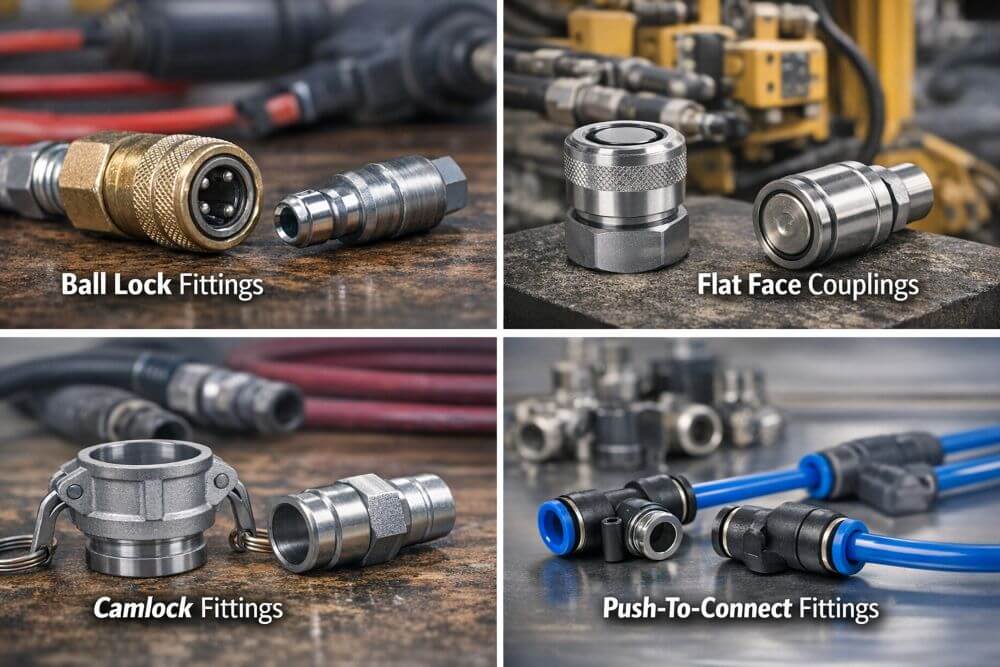
Quick disconnect (QD) fittings are connectors designed to quickly connect and disconnect fluid or air lines without tools. They consist of two main parts:
-
Coupler (female) – receives the plug
-
Plug (male) – inserts into the coupler
-
Internal valve mechanism – controls flow and prevents leaks
How They Work
When the plug is inserted into the coupler, an internal locking mechanism secures the connection and allows fluid or air to flow. When disconnected, built-in valves often shut automatically to prevent spills or pressure loss.
Key Benefits
-
Saves time during setup and maintenance
-
Minimizes leakage and contamination
-
Improves safety in high-pressure systems
-
Easy to use with no specialized tools
Key Factors to Consider When Choosing Quick Disconnect Fittings
Before selecting a fitting, consider the following:
-
Fluid Type – Air, water, oil, chemicals, or gas
-
Pressure Rating – Ensure it can handle system pressure
-
Temperature Range – Important for extreme environments
-
Material – Brass, stainless steel, plastic, or aluminum
-
Connection Size & Style – Must match your system
-
Industry Standards – ISO, ANSI, or application-specific requirements
Common Types of Quick Disconnect Fittings
1. Ball Lock Quick Disconnect Fittings
Ball lock fittings use spring-loaded balls to lock the plug into place securely.
Best For:
-
Pneumatic tools
-
Air compressors
-
General industrial air systems
Pros:
-
Easy to use
-
Reliable locking mechanism
-
Widely available
Cons:
-
Can wear over time with heavy use
2. Pin Lock Quick Disconnect Fittings
Pin lock fittings use external pins to secure the connection, making them slightly different from ball lock designs.
Best For:
-
Beverage dispensing systems
-
Homebrewing setups
Pros:
-
Secure connection
-
Good for low-pressure applications
Cons:
-
Less common than ball lock
-
Not interchangeable with other types
3. Flat Face (Flush Face) Quick Disconnect Fittings
Flat face fittings are designed to minimize fluid loss and prevent air inclusion during connection and disconnection.
Best For:
-
Hydraulic systems
-
Construction and heavy equipment
-
Clean environments
Pros:
-
Minimal leakage
-
Easy to clean
-
Reduces contamination
Cons:
-
Typically more expensive
4. Threaded Quick Disconnect Fittings
These fittings combine threaded connections with quick disconnect functionality, offering extra security.
Best For:
-
High-pressure applications
-
Industrial machinery
-
Oil and gas systems
Pros:
-
Strong and durable
-
Excellent for high-pressure systems
Cons:
-
Slower to connect than other QD types
5. Cam and Groove (Camlock) Fittings
Camlock fittings use cam arms (levers) to lock the connection quickly and securely.
Best For:
-
Chemical transfer
-
Agriculture and irrigation
-
Fuel and liquid handling
Pros:
-
Fast connection and disconnection
-
No tools required
-
Available in various materials
Cons:
-
Not ideal for very high-pressure systems
6. Push-to-Connect Quick Disconnect Fittings
These fittings allow users to simply push tubing into the fitting to create a secure connection.
Best For:
-
Plumbing systems
-
Water filtration units
-
Pneumatic control systems
Pros:
-
Extremely easy to use
-
No tools required
-
Great for tight spaces
Cons:
-
Limited pressure handling compared to other types
7. Dry Break Quick Disconnect Fittings
Dry break fittings are designed to prevent spills and leaks during disconnection, even with hazardous fluids.
Best For:
-
Chemical processing
-
Pharmaceutical applications
-
Fuel transfer
Pros:
-
Maximum safety
-
Prevents environmental contamination
-
Ideal for hazardous materials
Cons:
-
Higher cost
-
More complex design
Quick Comparison of Fitting Types
Here’s a quick comparison guide for all fitting types:
|
Type |
Ease of Use |
Pressure Handling |
Leak Prevention |
Common Use |
|
Ball Lock |
High |
Medium |
Medium |
Air tools |
|
Pin Lock |
Medium |
Low |
Medium |
Beverage systems |
|
Flat Face |
Medium |
High |
High |
Hydraulics |
|
Threaded |
Low |
Very High |
High |
Industrial |
|
Camlock |
High |
Medium |
Medium |
Liquids transfer |
|
Push-to-Connect |
Very High |
Low |
Medium |
Plumbing |
|
Dry Break |
Medium |
High |
Very High |
Chemicals |
Industry Applications of Quick Disconnect Fittings
Quick disconnect fittings are used across a wide range of industries:
-
Automotive – Fuel lines, coolant systems
-
Hydraulics – Excavators, loaders, and heavy equipment
-
Food & Beverage – Sanitary fluid transfer
-
Medical Equipment – Sterile connections
-
Agriculture – Irrigation and spraying systems
Maintenance and Safety Tips
To ensure long-lasting performance:
-
Inspect fittings regularly for wear or damage
-
Clean fittings to prevent contamination
-
Lubricate moving parts when necessary
-
Always confirm a secure connection before use
-
Replace worn-out seals and components promptly
Common Mistakes to Avoid
-
Using the wrong material for your fluid type
-
Ignoring pressure and temperature ratings
-
Mixing incompatible fitting types
-
Improper installation or connection
FAQs About Quick Disconnect Fittings
1. What is the most common type of quick disconnect fitting?
Ball lock fittings are among the most commonly used, especially in pneumatic systems.
2. Are quick disconnect fittings universal?
No, different types and standards are not always interchangeable.
3. How do I choose the right size?
Match the fitting size to your hose or pipe diameter and system requirements.
4. Can quick disconnect fittings leak?
Yes, if worn, damaged, or improperly connected.
5. What materials are best for corrosion resistance?
Stainless steel and certain plastics offer excellent corrosion resistance.
Conclusion
Quick disconnect fittings play a critical role in modern fluid and air systems. From ball lock fittings for air tools to dry break couplings for hazardous chemicals, each type is designed for specific applications.
Choosing the right fitting not only improves efficiency but also ensures safety, reliability, and long-term performance. Always match your fitting type to your system’s requirements for the best results.
Post time: Mar-17-2026