

Hydraulic systems depend on reliable connections to move fluid safely and efficiently. Every fitting, tube, and sealing component plays a role in maintaining system pressure and preventing leaks. Among these components, hydraulic tube insert threaded fittings help connect tubing to compatible threaded ports and other hydraulic components.
Choosing the right fitting involves more than finding a matching thread. Tube dimensions, material, sealing method, working pressure, and installation requirements all affect connection performance. A fitting that does not match the system can lead to leakage, connection failure, or unnecessary maintenance.
In this guide, we will explore the design, function, materials, common types, and applications of hydraulic tube insert threaded fittings. We will also cover practical selection tips to help engineers, equipment manufacturers, and purchasing teams choose suitable components for their hydraulic systems.
What Are Hydraulic Tube Insert Threaded Fittings?
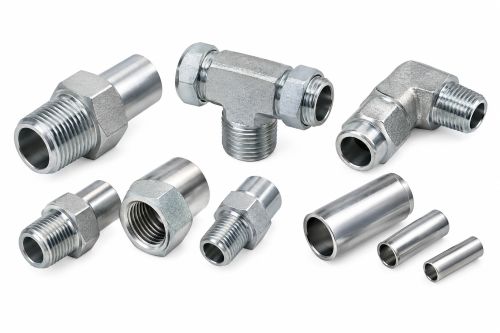
Hydraulic tube insert threaded fittings are connection components designed to join compatible tubing with threaded ports, adapters, or other hydraulic equipment. Depending on the specific design, the tube may be secured through a compression mechanism, an insert-supported connection, or another tube-retention arrangement.
The threaded section connects the fitting to a compatible component, while the tube-side section provides the interface for the tubing. Together, these features create a connection that supports hydraulic fluid flow under the intended operating conditions.
These fittings are used in hydraulic machinery, industrial equipment, mobile machinery, and fluid power systems where tubing must connect securely to other components.
It is important to understand that the term tube insert threaded fitting can describe different product designs. Not every fitting uses the same tube-retention mechanism or sealing method. Buyers should confirm the manufacturer’s drawings and specifications before selecting a product.
Key Design Features of Hydraulic Tube Insert Threaded Fittings
Although hydraulic tube insert threaded fittings come in different configurations, several design features commonly determine how they function.
1. Fitting Body
The fitting body forms the main structure of the component. It contains the fluid passage and provides the connection between the tube-side interface and the threaded section.
The body must withstand the mechanical loads and operating conditions associated with the intended application. Its dimensions, internal passage, and machining quality can affect fluid flow, installation, and overall connection reliability.
For this reason, dimensional accuracy and consistent manufacturing quality are important when selecting fittings for industrial equipment or repeated OEM production.
2. Tube Insert Section
The tube insert section interfaces with the tubing and helps establish the intended connection. Its exact shape and function depend on the fitting design.
In some configurations, an insert supports the tube or provides a defined interface for securing it. Other designs may rely on a compression ring, ferrule, or different retention mechanism.
The tube and insert must be compatible in dimensions and design. A mismatch can result in poor engagement, inadequate support, or an unreliable connection.
3. Threaded Connection
The threaded section allows the fitting to attach to a compatible port, adapter, or component. Depending on the product, it may use male or female threads.
Common thread standards found in hydraulic and fluid systems include:
➡️ Metric threads: Common in equipment designed around metric specifications.
➡️ BSP threads: Used in many industrial fluid systems, with sealing arrangements depending on the specific thread type and connection design.
➡️ NPT threads: Tapered pipe threads used in compatible piping and fluid connections.
➡️ UN/UNF threads: Found in various mechanical and hydraulic connection designs.
These thread types are not automatically interchangeable. Even when two threads appear similar, their profiles, pitches, dimensions, and sealing methods may differ.
Always verify the specified thread standard instead of relying on visual inspection alone.
4. Sealing Components
A hydraulic connection must contain fluid while operating under its intended pressure and temperature conditions. Depending on the design, sealing may be provided by an O-ring, bonded seal, sealing washer, tapered thread, metal-to-metal contact, or another specified arrangement.
The sealing method must match the connection geometry. For example, a connection designed to seal through an O-ring should not be treated like a tapered pipe thread connection.
Using the wrong seal or an unsuitable thread-sealing product can lead to leakage or damage during assembly. When replacing a fitting, confirm both the thread specification and the sealing arrangement.
5. Material and Surface Finish
Hydraulic tube insert threaded fittings are commonly manufactured from carbon steel or stainless steel, with other materials available for specific applications.
Carbon steel is widely used because it offers strength and practical manufacturing costs. Stainless steel is often selected when greater corrosion resistance is required.
Surface treatments can provide additional protection. Depending on the material and application, these may include zinc-based coatings, zinc-nickel plating, or stainless steel passivation.
The correct material and finish depend on operating pressure, fluid compatibility, environmental exposure, and maintenance requirements.
How Do Hydraulic Tube Insert Threaded Fittings Work?
The working principle depends on the fitting’s specific construction, but the general process involves connecting the tube, securing the threaded interface, and establishing a suitable seal.
Step 1: Prepare the Tube and Fitting
Before installation, check that the tube dimensions match the fitting specifications. Inspect the tube end, threads, sealing surfaces, and any retention components for damage or contamination.
The tube may require cutting, deburring, or other preparation according to the manufacturer’s instructions.
Step 2: Position and Secure the Tube
Insert or position the tube according to the fitting design. Some fittings use a compression ring or ferrule to grip the tube, while others use a different insert or retention mechanism.
Follow the specified assembly procedure. Incorrect tube preparation or incomplete engagement can compromise the connection.
Step 3: Connect the Threaded Section
Align the threaded section with the mating port or component. Start the threads carefully to avoid cross-threading, then tighten the connection using the manufacturer’s specified procedure and torque where applicable.
Do not assume that tightening harder will improve the seal. Excessive torque can damage threads, sealing surfaces, or other connection components.
Step 4: Establish the Seal
The connection’s designated sealing features contain the hydraulic fluid. Depending on the design, this may involve compressing an O-ring, seating a bonded seal, engaging a tapered thread, or bringing specified sealing surfaces together.
Correct alignment and compatible components are essential for a reliable seal.
Step 5: Inspect the Assembled Connection
After installation, inspect the connection and follow the equipment manufacturer’s procedure for pressure testing or leak checks. Any testing must be performed with appropriate safety precautions.
Never use your hands to search for leaks in a pressurized hydraulic system. High-pressure fluid escaping through a small opening can penetrate the skin and cause serious injury.
Common Types of Hydraulic Tube Insert Threaded Fittings
Hydraulic tube insert threaded fittings are available in different configurations to accommodate connection layouts, thread requirements, and installation conditions.
Male Threaded Tube Insert Fittings
These fittings have an externally threaded section that connects to a compatible female-threaded port or component.
They are useful when the receiving component has a suitable internal thread and the fitting’s tube-side design matches the tubing.
Female Threaded Tube Insert Fittings
Female-threaded configurations have an internal thread designed to engage a compatible male-threaded component.
They can be used where the connection layout requires an internally threaded fitting. Buyers should check thread dimensions, engagement requirements, and the intended sealing method.
Straight Tube Insert Fittings
Straight fittings provide a direct connection between the tube and the mating component. They are suitable when the available installation space allows a straight connection and the tube can be routed without excessive bending.
Their relatively simple geometry can also make them practical for organized hydraulic line layouts.
Angled Tube Insert Fittings
Angled configurations, such as 45-degree or 90-degree designs, help change the direction of a hydraulic line.
They can be useful in compact equipment or installations where a straight fitting would create routing difficulties. However, the selected angle must suit the tube layout and available clearance.
Custom Hydraulic Tube Insert Threaded Fittings
Some applications require nonstandard dimensions, thread configurations, materials, or sealing arrangements.
Custom fittings may be developed to meet OEM equipment requirements, provided the design is properly specified and validated for the intended service conditions.
When ordering custom components, provide technical drawings, thread details, tube dimensions, material requirements, and operating specifications whenever possible.
Materials Used in Hydraulic Tube Insert Threaded Fittings
Material selection affects durability, corrosion resistance, cost, and suitability for a particular hydraulic environment.
Carbon Steel
Carbon steel is a common choice for hydraulic fittings used in industrial machinery and mobile equipment. It offers good mechanical strength and can be manufactured with precise threads and connection surfaces.
Protective coatings may be applied to improve corrosion resistance. The coating should be selected according to the operating environment and relevant performance requirements.
Carbon steel is often a practical option when mechanical performance and cost need to be balanced.
Stainless Steel
Stainless steel offers improved corrosion resistance compared with many unprotected carbon steel components. It can be suitable for marine equipment, outdoor installations, chemical-processing environments, and other applications where corrosion is a concern.
However, stainless steel is not automatically suitable for every fluid or environment. The specific grade, temperature, chemical exposure, and mechanical requirements should be evaluated before selection.
Surface Treatments and Protective Coatings
Surface treatments can extend service life by reducing corrosion and protecting exposed metal surfaces.
Common options include zinc plating, zinc-nickel coatings, and passivation for suitable stainless steel grades. The choice depends on the base material, environmental exposure, customer specifications, and applicable requirements.
Buyers should also consider how coatings affect dimensional tolerances and threaded engagement, particularly when fittings must fit precisely into existing equipment.
Main Applications of Hydraulic Tube Insert Threaded Fittings
These fittings can be used wherever compatible tubing needs to connect with threaded hydraulic components.
Industrial Hydraulic Machinery
Manufacturing equipment often contains pumps, valves, cylinders, manifolds, and hydraulic power units connected through tubing and fittings.
Threaded tube connections help link these components while accommodating the equipment’s layout and maintenance requirements.
Construction and Agricultural Equipment
Excavators, loaders, tractors, and other mobile machines use hydraulic systems for lifting, steering, positioning, and operating attachments.
Suitable tube insert threaded fittings can support connections within these systems, provided their pressure ratings, materials, and retention mechanisms meet the equipment specifications.
Hydraulic Power Units and Pumps
Hydraulic power units distribute pressurized fluid to different parts of a machine. Fittings connect tubing to compatible ports and help establish the required fluid pathways.
Correct sizing and connection compatibility are important for maintaining system performance and reducing the risk of leaks.
Automotive and Transportation Equipment
Some automotive and transportation applications use hydraulic connections for specific functions, including compatible actuation and control systems.
The fitting must meet the relevant equipment specifications and any applicable industry requirements. A general-purpose hydraulic fitting should not be substituted for a safety-critical component without proper verification.
Marine and Corrosive Environments
Marine installations and equipment exposed to moisture or chemicals may require fittings with improved corrosion resistance.
Stainless steel or appropriately protected carbon steel may be suitable, depending on the environment. Saltwater exposure, chemical compatibility, and maintenance practices should all be considered.
Benefits of Hydraulic Tube Insert Threaded Fittings
When correctly selected and installed, hydraulic tube insert threaded fittings offer several practical advantages.
1. Secure connections: Compatible tube-retention and threaded interfaces help keep components connected under specified operating conditions.
2. Flexible system design: Different thread types, fitting configurations, and connection orientations accommodate a range of equipment layouts.
3. Material options: Carbon steel, stainless steel, and suitable protective finishes allow buyers to select components for different environments.
4. Maintenance convenience: Some threaded configurations can be disconnected for inspection or replacement when the system is safely depressurized and the design permits disassembly.
5. OEM customization: Manufacturers may supply customized dimensions, threads, materials, and finishes to suit specific equipment requirements.
6. Consistent assembly: Standardized specifications and repeatable manufacturing processes can simplify component sourcing and assembly across production runs.
These benefits depend on choosing the right fitting for the application. Incorrect thread matching, poor installation, or operation outside the specified limits can undermine connection reliability.
How to Choose the Right Hydraulic Tube Insert Threaded Fittings
Selecting a fitting requires more than matching its outside appearance to an existing component. The following factors can help engineers and purchasing teams narrow down the right option.
1. Confirm Tube Dimensions
Check the tube’s outside diameter, wall thickness, material, and any relevant dimensional tolerances.
The fitting must be designed for the specific tube dimensions and retention method. Do not assume that a fitting intended for one tube type will work with another.
2. Identify the Thread Standard
Determine whether the connection requires metric, BSP, NPT, UN/UNF, or another specified thread.
Confirm the diameter, pitch, profile, and male or female configuration. Also identify whether the connection seals at the threads or through a separate sealing surface.
3. Verify Working Pressure and Temperature
Check the manufacturer’s rated working pressure and temperature range for the complete connection.
The allowable operating pressure may depend on the fitting configuration, tube dimensions, material, and installation method. The weakest component in the assembly can limit the system’s safe operating conditions.
4. Select the Appropriate Material
Consider the hydraulic fluid, surrounding environment, corrosion exposure, mechanical loading, and expected service life.
Carbon steel may suit many standard industrial applications, while stainless steel can be preferable in environments requiring additional corrosion resistance.
5. Check the Sealing Method
Confirm whether the fitting uses an O-ring, bonded seal, sealing washer, tapered thread, or another sealing design.
Use compatible replacement seals and follow the manufacturer’s installation instructions to avoid damaging the sealing surfaces or creating leakage paths.
6. Evaluate Manufacturing Quality
For critical hydraulic connections, review the supplier’s dimensional tolerances, thread inspection procedures, material traceability where required, and quality-control processes.
Samples and technical drawings can help verify that the product matches the intended application before placing a larger order.
Common Installation Mistakes to Avoid
Even a well-manufactured fitting can fail when installed incorrectly. Avoid these common mistakes:
1. Mixing incompatible threads: Similar-looking threads may have different profiles or sealing requirements.
2. Ignoring tube preparation: Burrs, damaged tube ends, or incorrect cutting can interfere with assembly.
3. Overtightening the connection: Excessive torque may damage threads or sealing components.
4. Reusing damaged seals: Worn or deformed sealing elements may not seal properly.
5. Using unsuitable thread sealant: Some connection designs rely on a dedicated sealing surface and are not intended for additional sealant.
6. Exceeding operating limits: Pressure and temperature must remain within the approved limits of the complete assembly.
7. Skipping inspection: Check the finished connection and follow the prescribed leak-testing procedure before returning equipment to service.
Always depressurize the hydraulic system before installing, removing, or servicing fittings. Follow the equipment manufacturer’s safety procedures.
Hydraulic Tube Insert Threaded Fittings for OEM and Wholesale Buyers
For OEMs, distributors, and hydraulic equipment manufacturers, selecting a fitting supplier involves more than comparing unit prices.
Consistent dimensions, reliable quality, and clear technical documentation can help reduce assembly problems and simplify repeat orders. Buyers should evaluate whether a supplier can meet the required specifications and maintain consistency across production batches.
When sourcing hydraulic tube insert threaded fittings, consider the following:
1. Product customization: Confirm whether the manufacturer can produce the required tube dimensions, thread configurations, materials, and surface finishes.
2. Quality control: Ask about dimensional inspection, thread verification, material checks, and any application-specific testing.
3. Technical support: Look for a supplier that can review drawings, clarify connection requirements, and help identify compatibility issues.
4. Sample availability: Samples can help verify fit and assembly before committing to a production order.
5. Production capacity and lead times: Confirm manufacturing capabilities, minimum order quantities, and delivery schedules.
6. Export and packaging requirements: Check whether the supplier can meet your documentation, packaging, and shipping needs.
Sannke manufactures hydraulic fittings and related connection components for industrial and OEM applications. When evaluating a potential supplier, buyers can discuss required specifications, material options, surface treatments, and customization needs to determine whether the available products match their equipment.
Providing a clear technical drawing and complete operating requirements is one of the most effective ways to support accurate quotations and suitable product selection.
Frequently Asked Questions
1. What are hydraulic tube insert threaded fittings used for?
They connect compatible tubing to threaded ports, adapters, or other hydraulic components. Their specific tube-retention mechanism and sealing arrangement depend on the fitting design.
2. What materials are commonly used for hydraulic tube insert threaded fittings?
Carbon steel and stainless steel are common choices. The appropriate material depends on mechanical requirements, hydraulic fluid compatibility, corrosion exposure, and operating conditions.
3. How do I identify the correct thread type?
Check the thread diameter, pitch, profile, and connection gender against the relevant standard or manufacturer’s specification. Also verify the sealing method because similar-looking threads may not be interchangeable.
4. Can hydraulic tube insert threaded fittings be used in high-pressure systems?
Yes, if the specific fitting and complete assembly are rated for the required pressure and temperature. Confirm the manufacturer’s ratings, tube compatibility, retention method, and installation requirements before use.
5. How can I prevent leaks in threaded hydraulic connections?
Use compatible components, prepare the tube correctly, inspect the sealing surfaces, and follow the specified tightening procedure. Ensure that the sealing method matches the fitting design and inspect the assembly using an appropriate procedure.
6. Can hydraulic tube insert threaded fittings be customized?
Some manufacturers offer custom dimensions, thread configurations, materials, and surface finishes. Provide a technical drawing and operating requirements so the manufacturer can assess feasibility and suitability.
Conclusion
Hydraulic tube insert threaded fittings help connect tubing with compatible threaded components in a wide range of hydraulic systems. Their performance depends on the relationship between the fitting body, tube interface, threaded connection, sealing method, and selected material.
Understanding these design features makes it easier to select suitable fittings for industrial machinery, mobile equipment, hydraulic power units, and specialized OEM applications.
Before purchasing, verify tube dimensions, thread standards, pressure ratings, temperature limits, and material compatibility. Proper installation and routine inspection are equally important for maintaining reliable connections.
For OEMs, distributors, and industrial buyers, working with an experienced hydraulic fittings manufacturer can simplify product selection and customization. By confirming the technical requirements early, you can choose fittings that meet your application needs and support consistent hydraulic system performance.
Post time: Oct-30-2026