

Hydraulic systems are essential in many industries, powering everything from construction equipment and mining machinery to manufacturing systems and agricultural vehicles. To keep these systems operating efficiently, secure and leak-free hydraulic connections are critical. One of the most reliable connection methods used in high-pressure hydraulic systems is the split hydraulic flange.
Split hydraulic flanges are designed to provide strong, durable, and leak-resistant connections for hydraulic pipes, hoses, and tubes. Their ability to withstand extreme pressure and harsh operating conditions makes them a preferred choice in heavy-duty industrial applications.
In this article, we will explore what split hydraulic flanges are, how they work, their advantages, common applications, installation process, and maintenance tips.
What Are Split Hydraulic Flanges?
A split hydraulic flange is a mechanical connection system used to join hydraulic pipes, hoses, valves, and tubes in high-pressure hydraulic applications. Unlike threaded fittings, split flanges use a two-piece clamp system that securely holds a flanged connection together.
These flanges are commonly used in hydraulic systems where high pressure, vibration, and frequent maintenance make traditional threaded connections less practical.
The “split” design refers to the two separate clamp halves that fit around the flange head and are bolted together. This design allows for easier installation and removal while maintaining a strong and reliable seal.
Key Components of a Split Hydraulic Flange
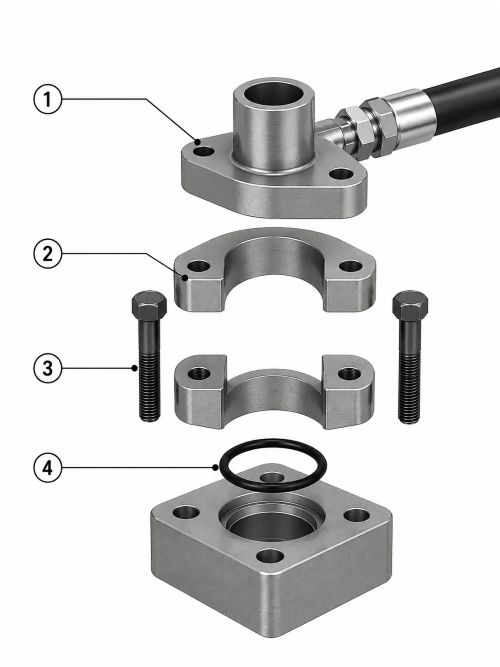
Understanding the main components of a split hydraulic flange helps explain how the system functions.
1. Flange Head
The flange head is attached to the hydraulic tube or hose assembly. It provides the surface that connects with the mating port and creates the sealing area.
2. Split Clamp Halves
The clamp consists of two separate halves that fit around the flange head. Once assembled, the clamps hold the flange securely in place.
3. Bolts and Fasteners
High-strength bolts connect the clamp halves and apply the necessary force to compress the assembly tightly.
4. O-Ring Seal
An O-ring is placed between the flange head and the mounting surface. This seal prevents hydraulic fluid leakage even under extremely high pressure.
How Do Split Hydraulic Flanges Work?
Split hydraulic flanges work by creating a secure clamping force around a flanged hydraulic connection.
The process begins when the flange head is positioned against the hydraulic port. An O-ring is placed in a groove between the flange and the port surface. The split clamp halves are then positioned around the flange head and secured with bolts.
As the bolts are tightened, the clamp applies even pressure around the flange head. This compresses the O-ring, creating a leak-proof seal that can withstand high hydraulic pressures.
Because the force is distributed evenly around the flange, split hydraulic flanges can handle higher pressure levels and vibration better than many threaded connections.
Pressure Handling Capabilities
One of the main reasons split hydraulic flanges are widely used is their excellent pressure resistance.
These flanges are designed for medium- and high-pressure hydraulic systems and are commonly used in applications exceeding several thousand PSI. The exact pressure rating depends on the flange type, material, and size.
The even distribution of clamping force helps reduce stress concentrations, making the connection more reliable under demanding operating conditions.
Types of Split Hydraulic Flanges
There are several types of split hydraulic flanges used in industrial hydraulic systems.
SAE Code 61 Flanges
SAE Code 61 flanges are designed for medium-pressure hydraulic applications. They are commonly used in industrial equipment, agricultural machinery, and mobile hydraulic systems.
SAE Code 62 Flanges
SAE Code 62 flanges are intended for high-pressure applications. These flanges are thicker and stronger than Code 61 versions and are widely used in heavy-duty machinery and demanding industrial environments.
Standard and Custom Flanges
In addition to standard SAE flanges, manufacturers also produce custom split hydraulic flanges designed for specialized applications, unique pressure requirements, or specific equipment configurations.
Materials Used in Split Hydraulic Flanges
The material used in a split hydraulic flange affects its durability, corrosion resistance, and overall performance.
Carbon Steel
Carbon steel is one of the most common materials used for split hydraulic flanges. It provides excellent strength and durability at a relatively low cost.
Stainless Steel
Stainless steel split flanges offer superior corrosion resistance, making them ideal for marine, offshore, chemical, and food-processing environments.
Specialized Alloys
Some hydraulic systems require specialized alloys or coated materials for improved wear resistance, temperature tolerance, or corrosion protection.
Advantages of Split Hydraulic Flanges
Split hydraulic flanges provide several important benefits compared to traditional hydraulic connection methods.
Leak-Free Performance
The O-ring sealing system helps prevent leaks, even in high-pressure environments.
High Pressure Resistance
Split flanges are designed to handle demanding hydraulic pressures and vibrations.
Easy Installation and Maintenance
The two-piece clamp design allows for easier assembly and disassembly compared to welded or threaded fittings.
Reduced Downtime
Quick maintenance and replacement help minimize equipment downtime.
Improved Safety
Secure hydraulic connections reduce the risk of fluid leaks, equipment failure, and workplace accidents.
Common Applications of Split Hydraulic Flanges
Split hydraulic flanges are widely used in industries that rely on high-pressure hydraulic systems.
Construction Equipment
Excavators, bulldozers, loaders, and cranes commonly use split hydraulic flanges for reliable hydraulic connections.
Mining Machinery
Heavy-duty mining equipment operates under extreme pressure and vibration, making split flanges an ideal choice.
Agricultural Machinery
Tractors, harvesters, and irrigation systems use hydraulic flanges for dependable fluid transfer.
Industrial Manufacturing
Hydraulic presses, automation systems, and factory equipment often require high-pressure hydraulic connections.
Marine and Offshore Systems
Corrosion-resistant stainless steel split flanges are frequently used in marine hydraulic systems and offshore platforms.
Split Hydraulic Flanges vs Traditional Hydraulic Connections
Compared to Threaded Connections
Threaded fittings can loosen under vibration and may become difficult to maintain in high-pressure applications. Split flanges provide a more secure and reliable sealing solution.
Compared to Welded Connections
Welded connections offer strength but can be difficult to repair or replace. Split flanges allow easier maintenance without extensive welding work.
Cost and Performance
While split hydraulic flanges may have a higher initial cost, they often reduce long-term maintenance expenses and system downtime.
Installation Process for Split Hydraulic Flanges
Proper installation is essential for ensuring reliable performance.
Step 1: Inspect All Components
Check the flange, clamps, bolts, and O-ring for damage or wear.
Step 2: Position the O-Ring
Place the O-ring correctly in the flange groove.
Step 3: Align the Flange Head
Carefully align the flange head with the mounting surface.
Step 4: Attach the Split Clamp Halves
Position both clamp halves around the flange head.
Step 5: Tighten the Bolts Evenly
Tighten bolts gradually and evenly to ensure balanced clamping pressure.
Step 6: Test the Hydraulic System
After installation, test the system for leaks and proper operation.
Common Installation Mistakes to Avoid
Improper installation can lead to leaks and system failure.
Some common mistakes include:
-
Over-tightening bolts
-
Using damaged O-rings
-
Misaligned flange heads
-
Uneven bolt tightening
-
Using incorrect flange sizes
Careful installation helps maximize performance and reliability.
Maintenance Tips for Split Hydraulic Flanges
Regular maintenance extends the life of hydraulic components and prevents costly downtime.
Inspect for Leaks
Regularly check connections for hydraulic fluid leakage.
Replace Worn O-Rings
Damaged or worn seals should be replaced immediately.
Check Bolt Torque
Loose bolts can compromise sealing performance.
Prevent Corrosion
Clean and protect flange surfaces, especially in harsh environments.
How to Choose the Right Split Hydraulic Flange
Selecting the correct flange depends on several factors.
Pressure Rating
Ensure the flange can handle the hydraulic system’s operating pressure.
Material Selection
Choose corrosion-resistant materials for harsh environments.
Size Compatibility
The flange size must match the hydraulic hose, pipe, or port dimensions.
Industry Standards
Verify compliance with SAE and ISO standards.
Conclusion
Split hydraulic flanges play a critical role in modern hydraulic systems by providing strong, reliable, and leak-resistant connections. Their ability to handle high pressure, vibration, and harsh operating conditions makes them ideal for industries such as construction, mining, agriculture, manufacturing, and marine operations.
With easy installation, reduced maintenance requirements, and excellent sealing performance, split hydraulic flanges offer significant advantages over traditional hydraulic connection methods.
Choosing the right split hydraulic flange and maintaining it properly can help improve hydraulic system efficiency, reduce downtime, and enhance overall operational safety.
Frequently Asked Questions (FAQs)
What is the purpose of a split hydraulic flange?
A split hydraulic flange provides a secure, leak-resistant connection for hydraulic hoses, pipes, and tubes in high-pressure systems.
What pressure can split hydraulic flanges handle?
Pressure ratings vary depending on the flange type and size, but many are designed for medium- to high-pressure hydraulic applications.
Are split hydraulic flanges reusable?
Yes, split hydraulic flanges are generally reusable if the components are undamaged and properly maintained.
What is the difference between SAE Code 61 and Code 62 flanges?
Code 61 flanges are used for medium-pressure systems, while Code 62 flanges are designed for higher-pressure applications.
How often should split hydraulic flanges be inspected?
Regular inspections should be part of routine hydraulic system maintenance, especially in demanding operating environments.
Can split hydraulic flanges be used in corrosive environments?
Yes, stainless steel and coated split hydraulic flanges are suitable for corrosive and marine environments.
Post time: May-14-2026