

SAE ORB fittings are widely used in hydraulic systems because of their reliable sealing performance, strong mechanical connections, and ability to handle demanding operating conditions. Also known as O-Ring Boss fittings, these connectors use straight threads and an O-ring seal to create a leak-resistant connection between hydraulic components.
Unlike tapered pipe fittings that rely on thread interference for sealing, SAE ORB fittings use an O-ring positioned between the fitting and the port. This design helps reduce fluid leakage while providing a secure connection in high-pressure hydraulic applications.
From construction machinery and agricultural equipment to industrial hydraulic systems, SAE ORB fittings play an important role in maintaining efficient fluid transmission.
In this guide, we will explore SAE ORB fitting standards, design features, specifications, common types, applications, and selection considerations to help engineers, equipment manufacturers, and hydraulic buyers make informed decisions.
What Are SAE ORB Fittings?
SAE ORB fittings are hydraulic connectors that use straight threads and an O-ring to establish a secure, leak-resistant connection. ORB stands for O-Ring Boss, referring to the sealing method used in this type of hydraulic fitting.
These fittings are commonly designed with Unified National Fine (UNF) straight threads. During installation, the fitting screws into a compatible threaded port, and its O-ring compresses against a specially designed sealing surface to prevent hydraulic fluid from escaping.
The straight threads provide mechanical engagement, while the O-ring performs the primary sealing function.
SAE ORB fittings are commonly found in:
1. Hydraulic pumps and motors
2. Directional control valves
3. Hydraulic cylinders
4. Construction and agricultural machinery
5. Industrial hydraulic power units
6. Hydraulic hose and tube assemblies
One of their main advantages is that the sealing function does not depend on thread deformation or excessive tightening. When properly installed, the O-ring provides reliable sealing even in demanding hydraulic environments.
Standards Governing SAE ORB Fittings
Understanding the relevant standards is important when selecting SAE ORB fittings. Standardized dimensions and connection designs help ensure compatibility between hydraulic components from different manufacturers.
SAE J1926 Standard
SAE J1926 is one of the primary standards associated with straight-thread O-ring boss port connections.
It covers the design and dimensional requirements for inch-series ports and fittings that use straight threads and O-ring sealing. The standard helps establish consistent connection geometry, including thread dimensions, port configurations, and sealing arrangements.
SAE J1926 fittings are commonly used in hydraulic systems where reliable connections and interchangeability are important.
Some key characteristics include:
1. Straight-thread connection design.
2. UN/UNF thread specifications, depending on size.
3. O-ring-based sealing.
4. Standardized port and fitting dimensions.
5. Compatibility with appropriately designed SAE J1926 connections.
When purchasing SAE ORB fittings, buyers should confirm that the fitting and mating port follow compatible specifications.
Related Hydraulic Fitting Standards
Several other standards are relevant when comparing hydraulic connection systems.
ISO 6149: This standard covers metric straight-thread ports and stud ends with O-ring sealing. Although it shares the same general sealing principle as SAE ORB fittings, its metric thread specifications and dimensions are different.
SAE J514: This standard covers 37-degree flared hydraulic tube fittings, commonly known as JIC fittings. These connections use a metal-to-metal sealing surface rather than an O-ring boss arrangement.
SAE J1453: This standard covers O-ring face seal (ORFS) hydraulic connections. ORFS fittings use an O-ring positioned on the face of the fitting to create a leak-resistant connection.
These standards should not be treated as interchangeable. Correct thread dimensions, sealing geometry, and connection specifications must be verified before installation.
Key Design Features of SAE ORB Fittings
The performance of SAE ORB fittings comes from the combination of their fitting body, straight threads, O-ring, and sealing surface. Each component contributes to connection strength and leak prevention.
Fitting Body
The fitting body is the main structural component of an SAE ORB fitting. It provides the passage for hydraulic fluid and connects different parts of a hydraulic circuit.
Depending on the application, the body may have a straight, elbow, tee, or other configuration. Its internal passage is designed to allow hydraulic fluid to flow between connected components.
Common materials include carbon steel and stainless steel. The appropriate material depends on operating pressure, environmental conditions, corrosion exposure, and fluid compatibility.
O-Ring Seal
The O-ring is the most important sealing component in an SAE ORB connection.
It is installed in a designated groove near the fitting’s threaded end. When the fitting is tightened into the port, the O-ring compresses against the port sealing surface.
This compression creates a seal that helps prevent hydraulic fluid from leaking through the connection.
Common O-ring materials include:
1. Nitrile rubber (NBR): Commonly used with petroleum-based hydraulic fluids.
2. Fluorocarbon (FKM): Suitable for many applications requiring higher temperature and chemical resistance.
3. Ethylene propylene diene monomer (EPDM): Used in applications involving compatible fluids, including certain water-based hydraulic fluids.
The correct material should be selected according to the hydraulic fluid, operating temperature, and system requirements.
Straight Threads
SAE ORB fittings use straight threads rather than tapered pipe threads.
The threads provide mechanical engagement between the fitting and the hydraulic port. Unlike NPT connections, the threads are not responsible for creating the primary fluid seal.
This design reduces the need to rely on thread interference and allows the O-ring to perform the sealing function.
Sealing Surface and Port
The hydraulic port provides the mating surface against which the O-ring is compressed.
Its dimensions, surface finish, and condition directly affect sealing performance. Scratches, contamination, corrosion, or damaged port surfaces may prevent the O-ring from sealing properly.
For this reason, the port should be inspected before installing an SAE ORB fitting.
Common Types of SAE ORB Fittings
SAE ORB fittings are available in different configurations to accommodate various hydraulic system layouts.
SAE ORB Male Adapters
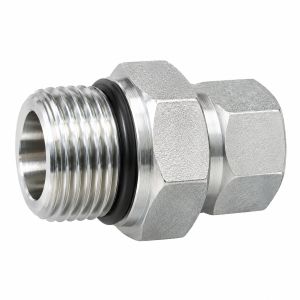
SAE ORB male adapters feature an external straight thread and an O-ring sealing arrangement. They are designed to connect directly to compatible ORB ports.
These adapters are commonly used to connect hydraulic hoses, tubes, valves, pumps, and other hydraulic components.
SAE ORB Female Adapters
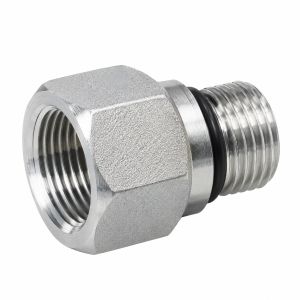
Female ORB adapters feature an internal threaded connection designed to receive compatible male fittings.
They are used in hydraulic assemblies where a female connection is required to connect different components or adapt between connection configurations.
Straight ORB Fittings
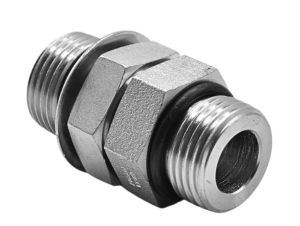
Straight ORB fittings provide a direct connection between hydraulic components.
Their simple configuration makes them suitable for installations where components are aligned and there is sufficient space for straight-line connections.
45-Degree ORB Elbow Fittings
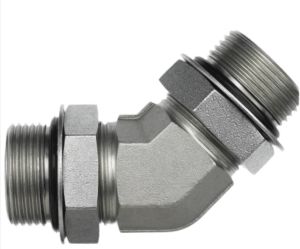
45-degree ORB elbow fittings change the direction of hydraulic flow by 45 degrees.
They are useful when hydraulic hoses or tubes need to be routed around nearby components without making a sharp turn.
90-Degree ORB Elbow Fittings
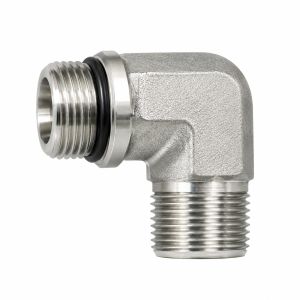
90-degree ORB elbow fittings allow hydraulic connections to turn at a right angle.
They are commonly used in compact hydraulic assemblies, especially where limited installation space makes straight fittings impractical.
ORB Bulkhead Fittings
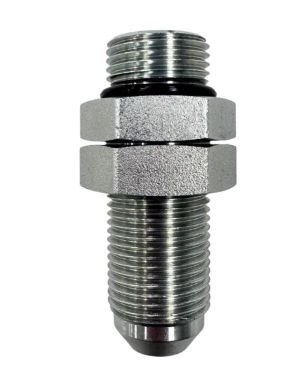
ORB bulkhead fittings are designed to connect hydraulic lines through panels, mounting plates, or equipment walls.
Their bulkhead configuration helps maintain a secure connection while allowing hydraulic lines to pass through a fixed structure.
SAE ORB Fittings Specifications
Selecting the correct SAE ORB fitting requires attention to several technical specifications. Thread dimensions, pressure ratings, material selection, and sealing requirements all influence connection performance.
SAE ORB Thread Sizes
SAE ORB fittings commonly use UN/UNF straight threads. These threads are available in different sizes to accommodate various hydraulic port dimensions.
Some commonly encountered thread sizes include:
|
ORB Size |
Thread Specification |
|
-2 |
5/16-24 UNF |
|
-3 |
3/8-24 UNF |
|
-4 |
7/16-20 UNF |
|
-5 |
1/2-20 UNF |
|
-6 |
9/16-18 UNF |
|
-8 |
3/4-16 UNF |
|
-10 |
7/8-14 UNF |
|
-12 |
1 1/16-12 UN |
|
-16 |
1 5/16-12 UN |
|
-20 |
1 5/8-12 UN |
|
-24 |
1 7/8-12 UN |
These are common nominal ORB size and thread combinations. Always verify the applicable SAE J1926 specifications and the manufacturer’s dimensional drawings before selecting a fitting.
Dimensions and Tolerances
Dimensional accuracy is essential for ensuring proper compatibility between ORB fittings and their mating ports.
Important dimensions include:
1. External thread diameter.
2. Thread pitch.
3. Thread engagement length.
4. O-ring groove dimensions.
5. Port dimensions.
6. Sealing surface geometry.
7. Overall fitting length.
Even small dimensional differences can affect installation and sealing performance. Manufacturers should maintain consistent machining tolerances to ensure reliable product quality.
Pressure Ratings
SAE ORB fittings are commonly used in medium- and high-pressure hydraulic systems. However, their maximum working pressure depends on several factors, including fitting size, material, configuration, and manufacturing quality.
Pressure performance may also be affected by the connected hose, tube, port, and other components in the hydraulic assembly.
When selecting fittings, buyers should consider:
1. Maximum system working pressure.
2. Pressure spikes and fluctuations.
3. Operating temperature.
4. Hydraulic fluid compatibility.
5. Fitting size and configuration.
6. Manufacturer pressure specifications.
The complete hydraulic connection should be rated for the system’s operating conditions.
Materials and Surface Treatments
SAE ORB fittings are manufactured using different materials to meet various operating and environmental requirements.
Carbon Steel
Carbon steel is widely used because of its mechanical strength, durability, and cost-effectiveness. It is suitable for many industrial and mobile hydraulic applications.
Stainless Steel
Stainless steel fittings offer improved corrosion resistance and are often selected for marine, chemical, food-processing, and outdoor equipment applications where the material is appropriate.
Brass
Brass fittings may be used in selected low-pressure or specialized hydraulic applications, depending on the design and manufacturer’s pressure ratings.
Surface treatments can further improve corrosion protection and service life.
Common finishes include:
➡️ Zinc plating.
➡️ Zinc-nickel plating.
➡️ Trivalent chromium passivation.
➡️ Stainless steel passivation.
➡️ Electroless nickel plating.
The best combination of material and surface treatment depends on the operating environment and required corrosion resistance.
How Do SAE ORB Fittings Work?
SAE ORB fittings create a sealed hydraulic connection through the controlled compression of an O-ring.
Although the connection design is relatively simple, each installation step contributes to its sealing performance.
Step 1: Align the fitting with the port.
The male fitting is positioned in front of the compatible ORB port. The threads and sealing surfaces should be clean and free from contamination.
Step 2: Insert the fitting.
The fitting is carefully threaded into the port. Proper alignment helps prevent cross-threading and damage to the connection.
Step 3: Compress the O-ring.
As the fitting is tightened, the O-ring contacts the port’s sealing surface and compresses to create a seal.
Step 4: Secure the connection.
The fitting is tightened according to the applicable manufacturer’s installation requirements. The straight threads provide mechanical retention, while the O-ring maintains the fluid seal.
Step 5: Inspect the assembly.
After installation, the connection should be checked for proper alignment, leakage, and other potential issues under appropriate operating conditions.
The key to reliable performance is achieving the correct O-ring compression without damaging the sealing element.
Common Applications of SAE ORB Fittings
SAE ORB fittings are used in many hydraulic systems because of their compact design and reliable sealing characteristics.
Construction Equipment
Excavators, loaders, bulldozers, and other construction machines rely on hydraulic systems to operate lifting arms, buckets, steering mechanisms, and other equipment.
SAE ORB fittings provide connections between hydraulic pumps, control valves, cylinders, and hoses.
Their O-ring sealing design helps reduce leakage in machinery exposed to vibration, pressure changes, and demanding working conditions.
Agricultural Machinery
Tractors, harvesters, sprayers, and other agricultural machines use hydraulic systems for lifting, steering, and operating attachments.
ORB fittings help connect hydraulic components while providing reliable sealing in outdoor environments.
Material and coating selection are particularly important because agricultural machinery is frequently exposed to moisture, dust, and changing weather conditions.
Industrial Hydraulic Systems
Industrial hydraulic systems use ORB fittings in hydraulic power units, presses, manufacturing equipment, and automated machinery.
Their standardized connection design helps simplify component integration and maintenance.
Mobile Hydraulic Equipment
Mobile hydraulic equipment often operates under continuous movement, vibration, and fluctuating pressure.
SAE ORB fittings are used in hydraulic steering systems, lifting equipment, material-handling machines, and other mobile applications.
Hydraulic Pumps and Valves
Hydraulic pumps and valves require secure connections to maintain consistent fluid flow and pressure.
ORB fittings provide a practical connection solution for hydraulic manifolds, valve bodies, and pump ports.
SAE ORB vs. Other Hydraulic Fittings
SAE ORB fittings are often compared with other hydraulic connection types. Understanding their differences helps prevent incorrect component selection.
SAE ORB vs. JIC Fittings
SAE ORB and JIC fittings are both widely used in hydraulic systems, but their sealing methods are different.
|
Feature |
SAE ORB |
JIC |
|
Standard |
SAE J1926 |
SAE J514 |
|
Thread type |
Straight UN/UNF |
Straight UN/UNF |
|
Sealing method |
O-ring seal |
37-degree metal-to-metal flare |
|
Sealing location |
Port sealing surface |
Flared mating surfaces |
|
Common applications |
Hydraulic ports and manifolds |
Hose and tube connections |
The main difference is the sealing structure. SAE ORB fittings use an O-ring, while JIC fittings rely on the contact between two 37-degree flare surfaces.
SAE ORB vs. NPT Fittings
NPT fittings use tapered pipe threads that create a seal through thread interference, often with an appropriate thread sealant.
SAE ORB fittings use straight threads and an O-ring for sealing.
|
Feature |
SAE ORB |
NPT |
|
Thread design |
Straight |
Tapered |
|
Sealing method |
O-ring |
Thread interference |
|
Thread sealant |
Generally not required |
Commonly used |
|
Sealing reliability |
Depends on O-ring and port condition |
Depends on thread fit and sealing method |
|
Typical use |
Hydraulic ports |
Pipe and fluid connections |
SAE ORB fittings are often preferred for hydraulic port connections where controlled O-ring sealing is required.
SAE ORB vs. ORFS Fittings
Both SAE ORB and ORFS fittings use O-rings, but their sealing locations differ.
|
Feature |
SAE ORB |
ORFS |
|
Standard |
SAE J1926 |
SAE J1453 |
|
Sealing location |
Port |
Fitting face |
|
Thread design |
Straight |
Straight |
|
O-ring position |
Fitting’s threaded end |
Face of the fitting |
|
Connection type |
O-ring boss |
O-ring face seal |
ORB fittings seal against a port surface, whereas ORFS fittings seal between two flat mating faces.
Both designs provide reliable leak-resistant connections when properly manufactured and installed.
How to Choose the Right SAE ORB Fittings
Choosing the correct SAE ORB fitting involves more than matching the thread size. Buyers should consider the entire hydraulic system and its operating requirements.
Here are several important factors to evaluate.
1. Identify the correct thread size.
Check the thread diameter, pitch, and applicable specifications. Do not rely on visual appearance alone when identifying ORB connections.
2. Confirm port compatibility.
Make sure the fitting follows the correct SAE J1926 requirements and matches the mating port dimensions.
3. Check working pressure requirements.
Select a fitting with a suitable pressure rating for the system. Consider pressure fluctuations and potential spikes during operation.
4. Select appropriate materials.
Carbon steel is suitable for many general hydraulic applications, while stainless steel may be preferred where corrosion resistance is important.
5. Consider O-ring compatibility.
Choose an O-ring material that is compatible with the hydraulic fluid and operating temperature.
6. Select the correct configuration.
Determine whether the application requires a straight adapter, elbow, bulkhead fitting, or another configuration.
7. Evaluate corrosion protection.
Consider the operating environment and choose a suitable surface treatment to improve service life.
8. Verify manufacturing quality.
Look for suppliers with consistent machining accuracy, material control, dimensional inspection, and appropriate quality management processes.
Common Installation Mistakes to Avoid
Even high-quality SAE ORB fittings can develop leakage problems if they are installed incorrectly.
The following mistakes should be avoided:
1. Using the wrong thread size: Incorrect thread dimensions can damage the port or prevent proper engagement.
2. Reusing damaged O-rings: Worn, cracked, or deformed O-rings may not provide an effective seal.
3. Over-tightening the fitting: Excessive tightening can damage the O-ring, fitting, or port.
4. Ignoring port cleanliness: Dirt and metal particles can interfere with the sealing surface.
5. Installing incompatible O-ring materials: The wrong elastomer may deteriorate when exposed to hydraulic fluid or high temperatures.
6. Mixing different connection standards: Similar-looking fittings may have different thread dimensions or sealing arrangements.
7. Ignoring installation specifications: Always follow the manufacturer’s torque and installation recommendations.
Proper installation helps maintain sealing performance and reduces unnecessary maintenance.
Why Choose a Reliable SAE ORB Fittings Manufacturer?
The quality of hydraulic fittings directly affects the reliability of hydraulic equipment. For distributors, equipment manufacturers, and hydraulic system integrators, choosing an experienced supplier is an important part of maintaining consistent product quality.
A reliable SAE ORB fittings manufacturer should offer several key capabilities.
Consistent Manufacturing Quality
Accurate machining and controlled production processes help ensure that fittings meet required dimensional specifications.
Material Options
Different applications require different materials. A manufacturer should provide suitable carbon steel and stainless steel options.
Surface Treatment Capabilities
Protective finishes such as zinc plating, zinc-nickel plating, and passivation can improve corrosion resistance and product durability.
OEM and ODM Services
Custom manufacturing allows buyers to obtain fittings designed for specific equipment, connection requirements, and hydraulic applications.
Quality Inspection
Dimensional checks, material verification, and appropriate performance testing help ensure consistent product quality.
Reliable Delivery
Stable production capacity and efficient order management are important for distributors and equipment manufacturers handling regular purchasing requirements.
As a professional hydraulic fittings manufacturer, Sannke provides hydraulic adapters, hose fittings, and related connection components for industrial and mobile hydraulic applications.
With 15 years of manufacturing experience, Sannke supports OEM and ODM requirements, offering customized fitting designs, material options, and surface treatments to meet different customer specifications.
For buyers looking for dependable hydraulic connection components, working with an experienced manufacturer can help simplify sourcing and maintain consistent product quality.
Frequently Asked Questions (FAQs)
1. What does SAE ORB stand for?
SAE ORB stands for SAE O-Ring Boss. It refers to a hydraulic fitting connection that uses straight threads and an O-ring to create a leak-resistant seal.
2. What standard governs SAE ORB fittings?
SAE J1926 is a primary standard covering inch-series straight-thread O-ring boss ports and fittings. It establishes relevant dimensional and connection requirements.
3. Are SAE ORB fittings the same as SAE J1926 fittings?
The terms are closely related. SAE ORB commonly describes the O-ring boss connection type, while SAE J1926 identifies a specific standard covering applicable inch-series port and fitting designs.
4. How do SAE ORB fittings seal?
SAE ORB fittings seal through O-ring compression. When the fitting is tightened into a compatible port, the O-ring compresses against the port’s sealing surface to prevent hydraulic fluid leakage.
5. What thread type do SAE ORB fittings use?
SAE ORB fittings commonly use straight Unified National Fine (UNF) threads. Larger sizes may use other applicable Unified thread specifications, so the exact size should be verified.
6. What is the difference between SAE ORB and JIC fittings?
SAE ORB fittings use an O-ring to create a seal against the port surface. JIC fittings use 37-degree flared mating surfaces to create a metal-to-metal seal.
7. Can SAE ORB fittings be used in high-pressure hydraulic systems?
Yes. SAE ORB fittings are used in many high-pressure hydraulic applications. However, the maximum working pressure depends on the fitting size, material, design, and manufacturer’s specifications.
8. How do you identify SAE ORB thread sizes?
You can identify SAE ORB thread sizes by measuring the external thread diameter and determining the thread pitch using a thread gauge. The O-ring boss configuration and port dimensions should also be checked.
9. Are SAE ORB fittings interchangeable with NPT fittings?
No. SAE ORB and NPT fittings have different thread designs and sealing methods. ORB fittings use straight threads and O-rings, while NPT fittings use tapered threads. They should not be treated as interchangeable.
10. What materials are commonly used to manufacture SAE ORB fittings?
Carbon steel and stainless steel are common materials. Brass may also be used in selected applications. Material selection depends on operating pressure, hydraulic fluid compatibility, corrosion exposure, and environmental conditions.
Conclusion
SAE ORB fittings are an important connection solution in modern hydraulic systems. Their straight-thread design and O-ring sealing structure provide reliable connections for pumps, valves, cylinders, hoses, and other hydraulic components.
Understanding SAE J1926 standards, thread sizes, fitting dimensions, pressure requirements, and material options helps engineers and purchasing professionals select the right products for their applications.
Whether used in construction machinery, agricultural equipment, or industrial hydraulic systems, properly specified and installed SAE ORB fittings can help reduce leakage and improve overall system reliability.
When sourcing these components, prioritize dimensional accuracy, suitable materials, reliable sealing performance, and consistent manufacturing quality.lll
Post time: Nov-06-2026