

Hydraulic hoses play an essential role in fluid power systems by transferring pressurized hydraulic fluid between pumps, valves, cylinders, and other components. However, not all hydraulic hoses are designed for the same operating conditions. Differences in working pressure, temperature, reinforcement, flexibility, and fluid compatibility make proper hose selection important for system performance and safety.
The SAE J517 standard provides widely recognized requirements for hydraulic hose construction and performance. It covers various hose classifications designed to meet the needs of different hydraulic applications, from low-pressure return lines to demanding high-pressure equipment.
Understanding SAE J517 hydraulic hoses helps engineers, equipment manufacturers, and buyers select suitable products for their systems. This guide explores the standard, common SAE 100R hose types, technical specifications, industrial applications, and practical selection considerations.
What Is SAE J517?
SAE J517 is a hydraulic hose standard developed by SAE International. It establishes requirements for different types of hydraulic hoses used to transfer fluids in hydraulic systems.
The standard covers multiple hose constructions, including textile-reinforced, wire-braided, and spiral-wire-reinforced designs. Each classification is intended for particular operating conditions and performance requirements.
SAE J517 helps manufacturers maintain consistent product specifications while giving engineers and buyers a common reference when selecting hydraulic hoses.
Overview of the SAE J517 Standard
The SAE J517 standard defines requirements for hydraulic hose designs based on their intended applications. These requirements address important characteristics such as:
1. Hose construction and reinforcement.
2. Inside and outside dimensions.
3. Working pressure requirements.
4. Minimum burst pressure requirements.
5. Temperature performance.
6. Minimum bend radius.
7. Testing and performance evaluation.
Different hose classifications have different construction and performance requirements. For example, a single-wire-braided hose is designed differently from a multi-spiral high-pressure hose.
It is important to consult the applicable edition of SAE J517 and the manufacturer’s technical documentation when checking exact specifications.
What Does SAE J517 Cover?
SAE J517 covers several categories of hydraulic hoses designed for different pressure and operating conditions.
The standard addresses the materials and construction used in hydraulic hose assemblies, including the inner tube, reinforcement layers, and outer cover.
It also provides performance requirements that help determine whether a hose is suitable for its intended operating environment.
However, SAE J517 does not mean that every hose has the same pressure rating, temperature range, or fluid compatibility. These characteristics depend on the specific hose classification, size, construction, and manufacturer.
Why Is SAE J517 Important?
Using hoses that meet the appropriate SAE J517 requirements offers several advantages:
1. Consistent specifications: Standardized classifications make it easier to compare hydraulic hose products.
2. Improved selection: Engineers can identify suitable hose constructions for different pressure requirements.
3. System reliability: Selecting hoses according to their intended operating conditions helps reduce premature failures.
4. Better compatibility: Standardized specifications provide a useful reference when designing hydraulic hose assemblies.
5. Simplified procurement: Buyers can communicate technical requirements more clearly when sourcing hydraulic hoses.
For equipment manufacturers and hydraulic system designers, understanding SAE J517 is an important step toward building reliable fluid power systems.
Common Types of SAE J517 Hydraulic Hoses
SAE J517 includes different hose classifications, commonly identified by SAE 100R designations. These classifications describe hose constructions designed for specific hydraulic applications.
The most suitable type depends on the system’s working pressure, fluid requirements, installation space, and operating environment.
SAE 100R1 – Single Wire-Braided Hydraulic Hose
SAE 100R1 hoses are commonly associated with single steel-wire-braided reinforcement. This construction provides a balance of flexibility, strength, and pressure resistance.
The hose generally consists of three main parts:
1. An inner tube that carries hydraulic fluid.
2. A single layer of braided steel-wire reinforcement.
3. An outer cover that protects against environmental exposure and abrasion.
SAE 100R1 hoses are commonly used in medium-pressure hydraulic applications, including agricultural machinery, industrial equipment, and general-purpose hydraulic systems.
Their relatively flexible construction makes them suitable for installations where moderate movement and routing flexibility are required.
SAE 100R2 – Double Wire-Braided Hydraulic Hose
SAE 100R2 hoses use two layers of braided steel-wire reinforcement. Compared with similar single-wire-braided constructions, the additional reinforcement provides greater pressure-handling capability.
Typical construction includes an oil-resistant inner tube, two braided steel-wire reinforcement layers, and a protective outer cover.
Common applications include:
1. Construction machinery.
2. Hydraulic excavators.
3. Industrial hydraulic equipment.
4. Agricultural machinery.
5. High-pressure hydraulic circuits.
SAE 100R2 hoses are suitable for applications requiring stronger reinforcement while maintaining practical installation flexibility.
SAE 100R4 – Hydraulic Suction and Return Hose
SAE 100R4 hoses are designed primarily for hydraulic suction and low-pressure return applications.
Unlike pressure hoses that rely on steel-wire reinforcement to withstand high internal pressure, suction hoses are constructed to resist collapsing under vacuum conditions.
Their construction typically includes a flexible inner tube, textile reinforcement, and suitable supporting reinforcement, depending on the design.
Common applications include:
1. Hydraulic pump inlet lines.
2. Reservoir connections.
3. Low-pressure return lines.
4. Industrial hydraulic equipment.
When selecting an SAE 100R4 hose, it is important to check its vacuum resistance, minimum bend radius, and compatibility with the hydraulic fluid.
SAE 100R5 – Textile-Covered Hydraulic Hose
SAE 100R5 hoses feature textile reinforcement and a textile-covered outer construction. They are designed for specific hydraulic and other fluid-transfer applications.
Their construction provides flexibility and protection while meeting the applicable performance requirements of the classification.
Typical applications include certain industrial hydraulic systems, mobile equipment, and other systems specified for R5 hose assemblies.
Buyers should verify the intended application and fitting requirements before choosing this hose type.
SAE 100R6 – Low-Pressure Hydraulic Hose
SAE 100R6 hoses are textile-reinforced hoses designed for relatively low-pressure hydraulic applications.
Their construction generally includes a synthetic rubber inner tube, textile reinforcement, and an outer cover.
These hoses are commonly used in:
1. Low-pressure hydraulic return lines.
2. Auxiliary hydraulic circuits.
3. Industrial machinery.
4. Equipment requiring flexible, low-pressure fluid connections.
Because of their construction, SAE 100R6 hoses are not intended to replace higher-pressure hose classifications in demanding hydraulic circuits.
SAE 100R12, R13, and R15 – High-Pressure Hydraulic Hoses
SAE 100R12, R13, and R15 hoses are designed for demanding high-pressure hydraulic applications. They use multiple layers of spiral-wound steel-wire reinforcement to provide the strength needed for heavy-duty operating conditions.
Although these classifications share a spiral-reinforced construction approach, their detailed design and performance requirements differ.
SAE 100R12
R12 hoses are designed for high-pressure hydraulic applications and use multiple spiral-wire reinforcement layers. They are commonly associated with heavy-duty industrial and mobile equipment.
SAE 100R13
R13 hoses are designed for very high-pressure applications and demanding operating conditions. Their construction provides reinforcement suitable for severe hydraulic service.
SAE 100R15
R15 hoses are intended for particularly demanding high-pressure applications. They are commonly considered for heavy-duty equipment operating under substantial hydraulic pressure requirements.
These hose types are frequently used in mining equipment, construction machinery, heavy industrial systems, and other applications where high-pressure performance is essential.
Key Specifications of SAE J517 Hydraulic Hoses
Understanding the technical specifications of SAE J517 hydraulic hoses helps buyers choose products that match their equipment requirements.
Several factors should be considered before selecting a hose.
1. Hose Construction and Materials
A hydraulic hose typically consists of three main structural components: an inner tube, reinforcement layers, and an outer cover.
Inner Tube
The inner tube is the layer that comes into direct contact with the hydraulic fluid. It is commonly manufactured from synthetic rubber compounds designed to resist hydraulic oils and other specified fluids.
The selected material must be compatible with the fluid type, temperature, and operating conditions.
Reinforcement Layer
The reinforcement provides the strength needed to withstand internal hydraulic pressure.
Common reinforcement materials include:
➡️ Braided steel wire.
➡️ Spiral-wound steel wire.
➡️ Textile fibers.
The number and arrangement of reinforcement layers depend on the hose classification.
Outer Cover
The outer cover protects the hose against external damage, including abrasion, moisture, weather exposure, and environmental contaminants.
Depending on the application, manufacturers may use different rubber compounds to improve durability and resistance to external conditions.
2. Working Pressure and Burst Pressure
Working pressure is one of the most important specifications when selecting a hydraulic hose.
It refers to the maximum pressure at which the hose is designed to operate under specified conditions.
Burst pressure, on the other hand, refers to the pressure at which a hose fails during testing. It is not an operating pressure.
When selecting an SAE J517 hydraulic hose, consider the following:
➡️ Maximum system operating pressure.
➡️ Pressure spikes and fluctuations.
➡️ Applicable hose pressure rating.
➡️ Manufacturer’s specified safety requirements.
➡️ Pressure limitations of the complete hose assembly.
The hose must be suitable for the system’s maximum operating conditions. Its pressure rating should never be confused with its burst pressure.
3. Temperature Range
Temperature affects hydraulic hose flexibility, durability, and service life.
Both the hydraulic fluid temperature and the surrounding environmental temperature should be considered.
Operating outside the manufacturer’s specified temperature range can cause the inner tube or outer cover to deteriorate.
Potential problems include:
➡️ Hardening or cracking.
➡️ Loss of flexibility.
➡️ Reduced material strength.
➡️ Premature hose failure.
➡️ Increased risk of fluid leakage.
Always check the manufacturer’s temperature specifications and fluid compatibility recommendations before installation.
4. Hose Size and Dimensions
Choosing the correct hose size is essential for maintaining suitable hydraulic flow and pressure performance.
Important dimensional specifications include:
Inside Diameter (ID): Determines the available space for hydraulic fluid flow.
Outside Diameter (OD): Affects installation clearance and compatibility with protective sleeves or clamps.
Hose Length: Determines the distance between hydraulic connection points.
Minimum Bend Radius: Indicates the smallest recommended radius at which the hose can bend without compromising its construction.
Dash Size: A standardized identification system commonly used to indicate hose inside diameter in increments of 1/16 inch.
For example, a -8 hose generally refers to a nominal inside diameter of 8/16 inch, or 1/2 inch.
Selecting the correct dimensions helps reduce excessive pressure loss, installation difficulties, and unnecessary stress on the hose assembly.
Applications of SAE J517 Hydraulic Hoses
SAE J517 hydraulic hoses are used in many industries because different hose classifications can accommodate a wide range of operating conditions.
Their applications depend on pressure requirements, equipment design, and the type of hydraulic fluid being transferred.
Construction Equipment
Construction machinery relies on hydraulic systems to operate lifting mechanisms, steering systems, attachments, and other moving components.
Common applications include:
1. Excavators.
2. Bulldozers.
3. Wheel loaders.
4. Hydraulic cranes.
5. Backhoe loaders.
These machines often require hoses that can withstand pressure fluctuations, vibration, and continuous movement.
High-pressure hose classifications are commonly used in demanding hydraulic circuits, while other hose types serve lower-pressure auxiliary functions.
Agricultural Machinery
Agricultural equipment uses hydraulic hoses to power lifting systems, steering mechanisms, and various attachments.
Common applications include:
1. Tractors.
2. Harvesters.
3. Agricultural sprayers.
4. Seeders.
5. Hydraulic implements.
Agricultural hoses may be exposed to dust, moisture, sunlight, vibration, and changing weather conditions.
Choosing the correct hose construction and protective cover helps maintain reliable operation in these environments.
Industrial Hydraulic Systems
Industrial manufacturing equipment depends on hydraulic hoses to transfer pressurized fluid between system components.
Typical applications include:
1. Hydraulic presses.
2. Injection molding machines.
3. Manufacturing equipment.
4. Material handling systems.
5. Industrial automation machinery.
In these applications, hose selection must account for operating pressure, temperature, fluid compatibility, and equipment movement.
Reliable hose assemblies also help reduce unplanned downtime and maintenance costs.
Mining and Heavy-Duty Equipment
Mining operations often involve harsh working environments and heavy machinery that operates under demanding conditions.
Hydraulic hoses are used in drilling equipment, mining vehicles, lifting systems, and other heavy-duty machinery.
Important hose requirements may include:
1. High-pressure resistance.
2. Abrasion protection.
3. Resistance to vibration.
4. Suitable temperature performance.
5. Long-term durability.
Depending on the equipment and hydraulic circuit, spiral-wire-reinforced hose classifications may be suitable for these demanding applications.
How to Choose the Right SAE J517 Hydraulic Hose
Selecting the right hydraulic hose requires more than matching its diameter or pressure rating. Buyers and engineers should evaluate the complete operating environment before making a decision.
Here are seven important factors to consider.
Working Pressure
Start by identifying the maximum operating pressure of the hydraulic system.
Choose a hose with a working pressure rating that meets or exceeds the system’s maximum pressure, including foreseeable pressure surges.
Never select a hose based only on its burst pressure.
Hydraulic Fluid Compatibility
Different hydraulic fluids can interact differently with hose materials.
Check whether the hose’s inner tube is suitable for the hydraulic oil, synthetic fluid, water-based fluid, or other media used in the system.
Incompatible materials may deteriorate over time and cause leakage or hose failure.
Operating Temperature
Consider both the fluid temperature and the ambient temperature.
For example, equipment operating outdoors may experience significant temperature changes, while industrial machinery may generate continuous heat.
Select a hose that meets the manufacturer’s temperature requirements for the actual operating environment.
Hose Size and Flow Requirements
The hose inside diameter should match the required hydraulic flow rate.
An undersized hose can increase fluid velocity and pressure loss, potentially generating excessive heat. An oversized hose may create unnecessary installation costs and space requirements.
Choose a diameter that provides suitable flow characteristics for the hydraulic circuit.
Minimum Bend Radius
Hydraulic hoses must be installed without excessive bending or twisting.
A bend radius smaller than the manufacturer’s specified minimum can damage the reinforcement structure and reduce hose service life.
Check the installation layout and available space before choosing the hose length and routing arrangement.
Application Environment
The operating environment can significantly affect hose durability.
Consider potential exposure to:
1. Abrasion and mechanical damage.
2. Moisture and chemicals.
3. Sunlight and ozone.
4. Excessive vibration.
5. High or low ambient temperatures.
Choosing an appropriate outer cover and protective accessories can help extend hose service life.
Hose and Fitting Compatibility
A hydraulic hose must work correctly with its end fittings to form a reliable hose assembly.
The fitting should be specifically designed for the hose construction and size. Compatibility also depends on the fitting’s attachment method, connection design, and assembly requirements.
Common hydraulic fitting connection standards include JIC, ORFS, BSP, and metric connections.
Using the correct hose and fitting combination helps prevent leakage, fitting separation, and premature assembly failure.
SAE J517 Hydraulic Hoses vs. Other Hydraulic Hose Standards
SAE J517 is widely used in hydraulic applications, but it is not the only standard governing hydraulic hose products.
Other standards, including European EN standards and international ISO standards, also establish requirements for hydraulic hose construction and performance.
Understanding their differences helps buyers compare products more accurately.
SAE J517 vs. EN 853
SAE J517 and EN 853 are both used as references for hydraulic hose specifications.
However, they use different classification systems and technical requirements.
|
Comparison |
SAE J517 |
EN 853 |
|
Standard origin |
SAE International |
European standard |
|
Classification |
SAE 100R designations |
EN hose designations |
|
Hose construction |
Includes braided, spiral, and other constructions |
Includes specified wire-braided hose constructions |
|
Applications |
Mobile and industrial hydraulic systems |
Mobile and industrial hydraulic systems |
|
Selection |
Based on applicable SAE requirements |
Based on applicable EN requirements |
Although some hose designs may have comparable characteristics, SAE and EN classifications should not automatically be treated as interchangeable.
Always compare the actual technical specifications, dimensions, pressure ratings, and performance requirements.
SAE J517 vs. ISO Hydraulic Hose Standards
ISO standards provide another internationally recognized reference for hydraulic hose design and performance.
For example, ISO 1436 covers wire-braid-reinforced hydraulic rubber hoses and hose assemblies, while ISO 3862 addresses spiral-wire-reinforced hydraulic rubber hoses and hose assemblies.
SAE J517 and the relevant ISO standards may cover similar application areas, but their individual requirements and classifications are not necessarily identical.
When purchasing hydraulic hoses for international projects, check the exact standard specified by the equipment manufacturer or system designer.
Common Problems with SAE J517 Hydraulic Hoses and Prevention Tips
Even a properly manufactured hydraulic hose can fail if it is incorrectly selected, installed, or maintained.
Understanding common failure causes helps equipment operators and maintenance teams reduce unexpected downtime.
Hose Leakage
Leakage can occur because of damaged hose materials, loose connections, incorrect assembly, or excessive operating pressure.
Prevention tips:
1. Select the correct hose pressure rating.
2. Use compatible hose fittings.
3. Follow the manufacturer’s assembly instructions.
4. Inspect connections regularly.
5. Replace damaged hose assemblies promptly.
Never attempt to locate a high-pressure hydraulic leak using your hands. High-pressure fluid injection injuries require immediate medical attention.
Hose Abrasion
Abrasion occurs when the hose cover repeatedly rubs against nearby equipment surfaces or other components.
Over time, this friction can damage the outer cover and expose the reinforcement layers.
Prevention tips:
1. Route hoses away from sharp edges.
2. Use protective sleeves where necessary.
3. Install suitable clamps and supports.
4. Check hose movement during equipment operation.
Hose Kinking and Excessive Bending
Incorrect hose routing can cause kinking, twisting, or bending beyond the recommended minimum radius.
These conditions may damage the internal reinforcement and restrict hydraulic fluid flow.
Prevention tips:
1. Follow the manufacturer’s minimum bend radius.
2. Avoid twisting hoses during installation.
3. Provide adequate clearance around moving components.
4. Select suitable hose lengths for the installation.
Premature Hose Failure
Premature failure can result from several factors, including incorrect pressure ratings, incompatible fluids, excessive temperatures, and poor installation practices.
Prevention tips:
1. Match the hose to the actual operating conditions.
2. Check fluid and temperature compatibility.
3. Inspect hoses for cracks, bulges, and exposed reinforcement.
4. Replace damaged assemblies before they fail.
5. Follow a regular maintenance schedule.
The Importance of Hydraulic Hose and Fitting Compatibility
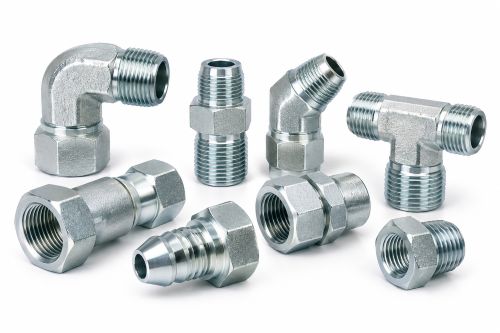
A hydraulic hose is only one part of a complete hydraulic connection system. The end fittings and adapters are equally important because they connect the hose to pumps, valves, cylinders, manifolds, and other equipment.
Even a high-quality hose may experience leakage or premature failure if the end fittings are incorrectly selected or assembled.
Common Hydraulic Hose Fitting Types
Different hydraulic systems use different connection designs depending on their operating pressure, installation requirements, and sealing methods.
Some common options include:
1. JIC Fittings: JIC fittings use a 37-degree flared sealing surface and are commonly found in mobile and industrial hydraulic systems.
2. ORFS Fittings: O-Ring Face Seal fittings use an O-ring at the connection face to provide a reliable seal in hydraulic applications.
3. BSP Fittings: British Standard Pipe connections are used in various industrial and hydraulic systems. Their sealing methods depend on the specific connection design.
4. Metric Fittings: Metric hydraulic fittings are widely used in European machinery and equipment manufactured for international markets.
Each fitting type has different thread dimensions and sealing characteristics. Selecting the correct connection is essential for proper assembly.
Why Proper Hose Assembly Matters
A hydraulic hose assembly combines the hose, end fittings, and attachment method into one functional component.
Proper assembly helps ensure that the connection can handle the intended operating pressure and mechanical demands.
Important considerations include:
1. Matching the fitting to the exact hose type and size.
2. Using the correct crimping equipment and specifications.
3. Following manufacturer-recommended assembly procedures.
4. Checking the finished assembly for defects.
5. Performing appropriate inspection and testing.
For equipment manufacturers and hydraulic system builders, working with reliable hose and fitting suppliers helps improve connection consistency and overall system reliability.
Frequently Asked Questions (FAQs)
1. What is SAE J517 for hydraulic hoses?
SAE J517 is a hydraulic hose standard developed by SAE International. It establishes requirements for different hydraulic hose classifications, including their construction and performance characteristics.
2. What are the different types of SAE J517 hydraulic hoses?
Common SAE 100R classifications include R1, R2, R4, R5, R6, R12, R13, and R15. Each classification has different construction and performance requirements for specific hydraulic applications.
3. What is the difference between SAE 100R1 and SAE 100R2 hoses?
SAE 100R1 hoses generally use a single layer of braided steel-wire reinforcement, while SAE 100R2 hoses use two layers. Their reinforcement structures result in different pressure capabilities and application requirements.
4. What is the maximum pressure of an SAE J517 hydraulic hose?
There is no single maximum pressure for all SAE J517 hydraulic hoses. Working pressure depends on the hose classification, inside diameter, construction, and manufacturer specifications.
5. Are SAE J517 and SAE 100R the same?
Not exactly. SAE J517 is the overall hydraulic hose standard, while SAE 100R designations identify individual hose classifications within the standard.
6. How do I choose the correct SAE J517 hydraulic hose?
Consider the system’s working pressure, hydraulic fluid, operating temperature, required flow rate, hose dimensions, minimum bend radius, and installation environment. You should also verify that the hose is compatible with the selected end fittings.
7. Can SAE J517 hydraulic hoses be used with different hydraulic fittings?
Yes, SAE J517 hoses can be assembled with different hydraulic fitting connection styles when the hose, fitting, attachment method, and assembly specifications are compatible. Common connection styles include JIC, ORFS, BSP, and metric fittings.
Conclusion
SAE J517 hydraulic hoses provide standardized classifications for different hydraulic hose constructions and applications. From single-wire-braided SAE 100R1 hoses to high-pressure spiral-wire-reinforced R12, R13, and R15 hoses, each type is designed to meet particular operating requirements.
Choosing the right hose involves evaluating working pressure, temperature, fluid compatibility, dimensions, bend radius, and environmental conditions. Equally important is ensuring that the hose is paired with compatible hydraulic fittings and assembled according to the manufacturer’s specifications.
For reliable hydraulic connections, equipment manufacturers and buyers should pay attention to both hose quality and fitting compatibility. Selecting the right components helps reduce leakage risks, improve equipment performance, and support longer service life.
Post time: Nov-23-2026