

Hydraulic systems depend on every component working together for safe and reliable performance, including the fittings that connect hoses, valves, and other parts. SAE banjo fittings are a popular choice because they provide secure, leak-free connections in tight spaces.
When choosing an SAE banjo fitting, material matters. The two most common options are carbon steel and stainless steel, differ in corrosion resistance, strength, maintenance, cost, and overall durability. Selecting the right material helps prevent corrosion, reduce maintenance, improve system performance, and extend service life.
This guide compares carbon steel vs. stainless steel SAE banjo fittings, highlighting their advantages, disadvantages, ideal applications, and how to choose the best option for your hydraulic system.
What Are SAE Banjo Fittings?
SAE banjo fittings are specialized hydraulic connectors designed to create secure fluid connections in areas where traditional fittings may not fit. Their unique circular design allows hydraulic fluid to flow through a hollow banjo bolt and into the hydraulic system while maintaining a compact installation profile.
Unlike standard straight fittings, SAE banjo fittings allow hoses or tubes to be connected at various angles without requiring excessive space. This makes them ideal for equipment with tight engine compartments or densely packed hydraulic systems.
These fittings are commonly manufactured according to SAE (Society of Automotive Engineers) standards to ensure compatibility, reliable sealing, and consistent performance across a wide range of hydraulic applications.
Main Components of an SAE Banjo Fitting
A complete SAE banjo fitting assembly typically includes several parts that work together to create a leak-free connection.
1. Banjo Fitting
The banjo fitting features a circular eye through which the banjo bolt passes. Hydraulic fluid flows through this opening and into the connected hose or tube.
2. Banjo Bolt
The hollow banjo bolt secures the fitting to the hydraulic port while allowing hydraulic fluid to pass through internal cross-drilled holes.
3. Sealing Washers
Soft metal or bonded sealing washers are installed on both sides of the banjo fitting to create a pressure-tight seal and prevent hydraulic fluid leakage.
4. Hydraulic Port
The threaded hydraulic port receives the banjo bolt and connects the assembly to pumps, valves, cylinders, or other hydraulic components.
Common Applications of SAE Banjo Fittings
Because of their compact design, SAE banjo fittings are used in many industries where reliable hydraulic connections are required in confined spaces.
Common applications include:
1. Construction equipment
2. Agricultural machinery
3. Hydraulic presses
4. Industrial automation systems
5. Mobile hydraulic equipment
6. Automotive hydraulic systems
7. Brake systems
8. Power steering systems
9. Material handling equipment
10. Mining machinery
Their versatility makes them a popular choice wherever durability and space efficiency are equally important.
Why Material Selection Matters
Although carbon steel and stainless steel SAE banjo fittings often share the same dimensions and design, the material used affects nearly every aspect of their performance.
Selecting the right material isn’t simply about choosing the stronger option, it’s about matching the fitting to its operating environment and maintenance requirements.
Here are the key factors influenced by material selection.
1. Pressure Resistance
Hydraulic systems frequently operate under high pressure. The fitting material must withstand these forces without deforming or failing.
Both carbon steel and stainless steel offer excellent strength, but selecting a fitting with the proper pressure rating remains essential regardless of the material.
2. Corrosion Resistance
Hydraulic equipment often operates in harsh environments that expose fittings to moisture, chemicals, fertilizers, saltwater, road salt, or industrial contaminants.
Corrosion can weaken fittings, damage sealing surfaces, and eventually lead to hydraulic leaks.
This is one of the biggest differences between carbon steel and stainless steel.
3. Temperature Performance
Hydraulic systems may experience extremely hot operating temperatures or freezing outdoor conditions.
The fitting material should maintain its structural integrity while resisting thermal expansion and contraction that could affect sealing performance.
4. Mechanical Strength
Hydraulic equipment is constantly exposed to vibration, shock loads, and heavy mechanical stress.
The fitting material must resist cracking, fatigue, and wear over years of operation.
5. Maintenance Requirements
Some materials require regular inspections, protective coatings, and corrosion prevention measures, while others need far less maintenance.
Reducing maintenance can significantly lower operating costs over the lifetime of the equipment.
6. Equipment Lifespan
A fitting that resists corrosion and mechanical wear contributes to longer hydraulic system life by preventing leaks and minimizing unexpected failures.
Choosing the appropriate material helps protect not only the fitting itself but also the surrounding hydraulic components.
Understanding Carbon Steel SAE Banjo Fittings
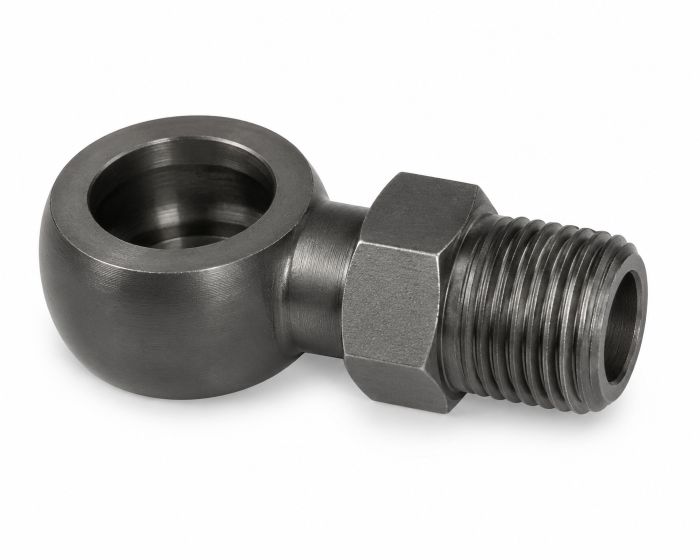
Carbon steel is one of the most commonly used materials for hydraulic fittings due to its excellent combination of strength, durability, and affordability.
It is widely used across construction, agriculture, manufacturing, and heavy equipment industries where hydraulic systems operate under demanding conditions.
To improve corrosion resistance, carbon steel fittings are usually coated with protective finishes such as:
1. Zinc plating
2. Zinc-nickel plating
3. Trivalent chromium (Cr3)
4. Other anti-corrosion coatings
These protective layers help extend service life by preventing rust from forming on the steel surface.
Advantages of Carbon Steel SAE Banjo Fittings
Excellent Strength:
Carbon steel offers outstanding mechanical strength, making it ideal for high-pressure hydraulic systems that experience heavy loads and constant vibration.
Cost-Effective:
One of its biggest advantages is affordability.
Carbon steel fittings are generally less expensive than stainless steel, making them an economical choice for large hydraulic installations.
High Pressure Capability:
Carbon steel performs exceptionally well in demanding hydraulic applications where high working pressures are required.
Wide Availability:
Because carbon steel is commonly used throughout the hydraulic industry, fittings are available in numerous sizes, thread types, and configurations.
Replacement parts are also easy to source.
Durable in Controlled Environments:
When installed indoors or in relatively dry environments, coated carbon steel fittings can provide many years of reliable service.
Limitations of Carbon Steel
Despite its many advantages, carbon steel has some drawbacks.
Susceptible to Rust:
If the protective coating becomes scratched, chipped, or worn away, moisture can reach the underlying steel and cause corrosion.
Requires Regular Maintenance:
Carbon steel fittings should be inspected periodically for damaged coatings, rust formation, and hydraulic leaks.
Routine maintenance helps maximize service life.
Less Suitable for Harsh Environments:
Applications involving saltwater, chemicals, fertilizers, or constant moisture can accelerate corrosion and shorten the fitting’s lifespan.
Best Applications for Carbon Steel SAE Banjo Fittings
Carbon steel is an excellent choice for many standard hydraulic applications, including:
➡️ Construction machinery
➡️ Excavators
➡️ Bulldozers
➡️ Agricultural tractors
➡️ Hydraulic presses
➡️ Manufacturing equipment
➡️ Material handling systems
➡️ Warehouse machinery
➡️ Mining equipment operating in controlled environments
➡️ Indoor industrial hydraulic systems
When corrosion exposure is limited and regular maintenance is performed, carbon steel provides an excellent balance of performance and cost.
Understanding Stainless Steel SAE Banjo Fittings
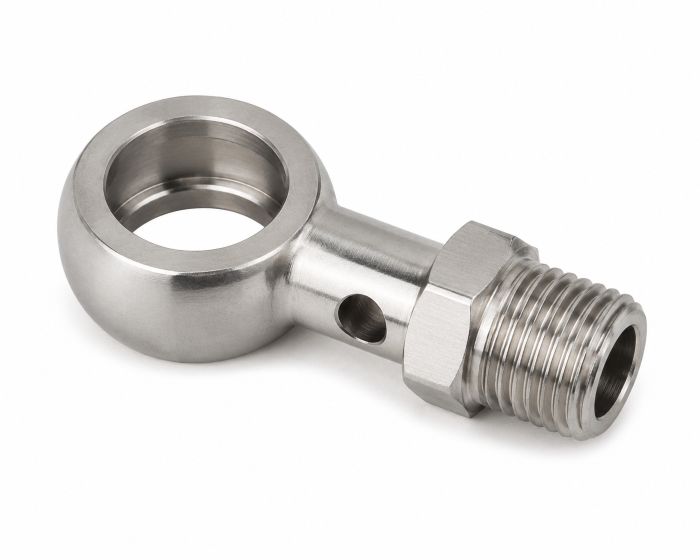
Stainless steel SAE banjo fittings are designed for hydraulic systems that operate in harsh, corrosive, or hygienic environments where long-term durability is essential. Unlike carbon steel, stainless steel contains chromium, which forms a thin protective oxide layer on the surface. This natural barrier helps prevent rust and corrosion, even when the fitting is exposed to moisture or chemicals.
The two most common grades used in hydraulic applications are:
1. 304 Stainless Steel – Offers excellent corrosion resistance and is suitable for most industrial environments.
2. 316 Stainless Steel – Provides even greater resistance to saltwater, chemicals, and aggressive environments, making it ideal for marine and offshore applications.
Because of these properties, stainless steel fittings are often selected when reliability and low maintenance are higher priorities than initial cost.
Advantages of Stainless Steel SAE Banjo Fittings
Outstanding Corrosion Resistance:
Stainless steel is highly resistant to rust, oxidation, and corrosion. This makes it an excellent choice for equipment exposed to water, humidity, cleaning agents, chemicals, or salt spray.
Long Service Life:
Thanks to its corrosion-resistant properties, stainless steel fittings often last significantly longer than carbon steel fittings in challenging environments.
Low Maintenance:
Unlike coated carbon steel, stainless steel does not rely on an external protective finish. It typically requires only routine cleaning and inspections, reducing maintenance time and costs.
Excellent Chemical Resistance:
Stainless steel performs well in environments where hydraulic systems come into contact with chemicals, solvents, or corrosive fluids, making it suitable for chemical processing and pharmaceutical industries.
Hygienic Surface:
Its smooth, non-porous surface is easy to clean and helps meet hygiene standards in food, beverage, and medical manufacturing applications.
Reliable Performance in Outdoor Conditions:
Whether exposed to rain, humidity, or fluctuating temperatures, stainless steel maintains its strength and sealing performance over time, making it a dependable option for outdoor equipment.
Limitations of Stainless Steel
While stainless steel offers many advantages, there are a few considerations to keep in mind.
Higher Initial Cost:
Stainless steel fittings generally cost more than carbon steel due to the material and manufacturing process. However, the longer service life may offset the higher upfront investment.
May Be Unnecessary for Mild Environments:
For indoor applications with minimal exposure to moisture or corrosive substances, stainless steel may provide benefits that exceed the actual operating requirements, making carbon steel the more economical choice.
Potential for Galling:
When stainless steel threaded components are installed without proper lubrication or anti-seize compounds, thread galling can occur. Following the manufacturer’s installation guidelines helps minimize this risk.
Best Applications for Stainless Steel SAE Banjo Fittings
Stainless steel SAE banjo fittings are commonly used in environments where corrosion resistance and reliability are critical, including:
1. Marine vessels and offshore platforms
2. Coastal construction equipment
3. Food and beverage processing facilities
4. Pharmaceutical manufacturing
5. Chemical processing plants
6. Water treatment systems
7. Outdoor hydraulic machinery
8. Pulp and paper mills
9. Oil and gas operations
10. Equipment exposed to frequent washdowns
In these demanding applications, stainless steel provides dependable performance and helps reduce maintenance and replacement costs over the long term.
Carbon Steel vs Stainless Steel SAE Banjo Fittings: Side-by-Side Comparison
Both carbon steel and stainless steel SAE banjo fittings are designed to provide secure, leak-free hydraulic connections. However, each material excels in different operating conditions. Understanding their differences can help you select the best option for your hydraulic system.
|
Feature |
Carbon Steel |
Stainless Steel |
|
Initial Cost |
Lower |
Higher |
|
Mechanical Strength |
Excellent |
Excellent |
|
Corrosion Resistance |
Good (with protective coating) |
Excellent |
|
Rust Resistance |
Moderate |
Outstanding |
|
Pressure Capability |
Excellent |
Excellent |
|
Temperature Resistance |
Excellent |
Excellent |
|
Chemical Resistance |
Moderate |
Excellent |
|
Outdoor Performance |
Good with maintenance |
Excellent |
|
Marine Applications |
Not recommended |
Highly recommended |
|
Maintenance |
Moderate |
Low |
|
Service Life |
Long with proper care |
Very long |
|
Best For |
Budget-conscious, indoor applications |
Harsh, corrosive environments |
While both materials can handle demanding hydraulic applications, the environment in which the fitting operates often determines which material offers the best value.
Performance Comparison
Choosing the right SAE banjo fitting involves more than comparing prices. It’s essential to evaluate how each material performs under real-world operating conditions.
Pressure Capability
Hydraulic systems often operate under high pressure, especially in construction, mining, and industrial equipment. Both carbon steel and stainless steel offer excellent strength and can safely handle high-pressure applications when manufactured to the appropriate SAE standards.
In most standard hydraulic systems, there is little difference in pressure performance between the two materials. Instead, proper fitting design, manufacturing quality, and correct installation have a greater impact on pressure handling than the material itself.
Winner: Tie
Corrosion Resistance
Corrosion resistance is where stainless steel has a clear advantage.
Carbon steel relies on protective coatings such as zinc or zinc-nickel plating to resist rust. If these coatings become damaged through impact, abrasion, or prolonged wear, the exposed metal can corrode, especially in humid or corrosive environments.
Stainless steel contains chromium, which forms a self-healing protective oxide layer that helps prevent rust even if the surface is scratched. This makes it ideal for applications exposed to moisture, chemicals, or saltwater.
Winner: Stainless Steel
Temperature Resistance
Hydraulic equipment may operate in freezing winters, hot industrial plants, or outdoor environments with significant temperature fluctuations.
Both carbon steel and stainless steel perform well across a wide temperature range. However, stainless steel generally maintains its corrosion resistance and structural integrity better when exposed to extreme heat combined with moisture or chemicals.
Winner: Slight Advantage to Stainless Steel
Wear and Fatigue Resistance
Hydraulic fittings are constantly subjected to vibration, pulsating pressure, and mechanical stress.
Both materials offer excellent durability when properly manufactured. Carbon steel is known for its toughness, while stainless steel provides comparable strength with the added benefit of corrosion protection.
Proper installation and routine inspection remain essential regardless of the material.
Winner: Tie
Maintenance Requirements
Maintenance requirements vary significantly between the two materials.
Carbon steel fittings should be inspected regularly for coating damage, corrosion, and rust formation. If the protective coating deteriorates, maintenance or replacement may be necessary to prevent hydraulic leaks.
Stainless steel fittings generally require only routine cleaning and periodic inspections, making them an attractive choice for operations aiming to reduce maintenance costs.
Winner: Stainless Steel
Expected Service Life
Service life depends largely on the operating environment.
In clean, dry, indoor facilities, carbon steel fittings can perform reliably for many years with proper maintenance.
However, in marine, chemical, or outdoor environments, stainless steel typically lasts much longer because it naturally resists corrosion and environmental degradation.
Winner: Stainless Steel
Cost Comparison
Initial purchase price is important, but it’s only one part of the overall investment. Maintenance, replacement frequency, and equipment downtime should also be considered.
Initial Purchase Cost
Carbon steel SAE banjo fittings are generally the more affordable option, making them attractive for projects with large quantities of fittings or limited budgets.
Stainless steel fittings typically have a higher upfront cost due to the material and manufacturing process.
Lower Initial Cost: Carbon Steel
Installation Costs
Installation procedures for both materials are generally similar.
However, stainless steel threaded components may require anti-seize compounds or appropriate lubricants to reduce the risk of thread galling during installation.
Overall installation costs remain comparable.
Winner: Tie
Maintenance Costs
Carbon steel fittings may require periodic inspections, corrosion prevention measures, and occasional replacement if protective coatings become damaged.
Stainless steel typically requires less maintenance, reducing labor costs over time.
Lower Maintenance Cost: Stainless Steel
Replacement Frequency
In non-corrosive environments, both materials can provide many years of reliable service.
However, in wet or corrosive conditions, carbon steel fittings often require replacement sooner than stainless steel fittings.
This difference becomes increasingly important for equipment operating in demanding environments.
Longer Replacement Interval: Stainless Steel
How to Choose the Right Material
Choosing between carbon steel and stainless steel SAE banjo fittings isn’t about determining which material is universally better, it’s about selecting the one that best matches your hydraulic system’s operating conditions, maintenance schedule, and budget.
Before making your decision, consider the following factors:
1. Operating environment (indoor or outdoor)
2. Exposure to moisture, chemicals, or saltwater
3. System pressure and temperature
4. Maintenance capabilities
5. Expected service life
6. Budget and total cost of ownership
Here’s when each material is the better choice.
Choose Carbon Steel SAE Banjo Fittings If:
Carbon steel is an excellent option when affordability and mechanical strength are your top priorities.
It is best suited for applications where:
1. The hydraulic system operates indoors or in controlled environments.
2. Exposure to moisture and corrosive substances is minimal.
3. Regular inspections and maintenance can be performed.
4. Cost is a major consideration.
5. High-pressure performance is required at a lower initial investment.
6. Replacement parts need to be readily available.
Typical applications include:
1. Manufacturing equipment
2. Warehouse machinery
3. Hydraulic presses
4. Construction equipment operating in dry environments
5. Agricultural machinery with routine maintenance
Choose Stainless Steel SAE Banjo Fittings If:
Stainless steel is the better choice when corrosion resistance and long-term reliability are critical.
It is recommended when:
1. Equipment operates outdoors year-round.
2. Hydraulic systems are exposed to rain, humidity, or washdowns.
3. Saltwater or coastal conditions are present.
4. Chemicals or corrosive fluids are involved.
5. Maintenance opportunities are limited.
6. Maximum service life is desired.
7. Equipment downtime is costly.
Typical applications include:
1. Marine vessels
2. Offshore equipment
3. Food processing facilities
4. Pharmaceutical plants
5. Chemical processing systems
6. Water treatment equipment
7. Outdoor construction machinery
8. Coastal agricultural equipment
Common Mistakes to Avoid
Even the highest-quality SAE banjo fitting can fail if the wrong material or installation method is used. Avoid these common mistakes to ensure reliable hydraulic system performance.
Choosing Based Only on Price
A lower purchase price can be appealing, but selecting carbon steel for a highly corrosive environment may result in frequent replacements and higher maintenance costs.
Instead, consider the total cost of ownership over the life of the equipment.
Ignoring Environmental Conditions
Always evaluate where the equipment will operate.
Humidity, rain, saltwater, chemicals, and extreme temperatures all influence which material is the better choice.
Using Carbon Steel in Highly Corrosive Environments
Even with protective coatings, carbon steel can corrode over time when exposed to saltwater or aggressive chemicals.
For these environments, stainless steel offers significantly better long-term performance.
Overlooking Protective Coatings
When selecting carbon steel fittings, pay attention to the quality of the protective coating.
High-quality zinc or zinc-nickel plating can substantially improve corrosion resistance and extend service life.
Mixing Incompatible Materials
Using different metals within the same hydraulic connection may increase the risk of galvanic corrosion in certain environments.
Whenever possible, use compatible materials throughout the hydraulic assembly.
Using Incorrect Sealing Washers
A banjo fitting is only as effective as its seal.
Always use sealing washers that match the fitting specifications and replace damaged or compressed washers during maintenance.
Selecting the Wrong Thread Size
Thread incompatibility can damage ports, create leaks, or compromise system safety.
Always verify thread type, size, and SAE specifications before installation.
Ignoring Pressure Ratings
Never assume that fittings with the same appearance have identical pressure capabilities.
Always confirm that the fitting’s pressure rating meets or exceeds your hydraulic system’s maximum operating pressure.
Maintenance Tips
Proper maintenance helps maximize the service life of SAE banjo fittings and reduces the risk of hydraulic leaks and unexpected equipment downtime.
Carbon Steel SAE Banjo Fittings
To keep carbon steel fittings in good condition:
1. Inspect protective coatings for scratches, chips, or wear.
2. Check regularly for signs of rust or corrosion.
3. Clean dirt, mud, and moisture from the fitting surface.
4. Tighten fittings according to the manufacturer’s torque specifications.
5. Replace damaged sealing washers during servicing.
6. Repair or replace fittings showing severe corrosion.
7. Perform routine leak inspections.
Consistent maintenance can significantly extend the lifespan of carbon steel fittings.
Stainless Steel SAE Banjo Fittings
Although stainless steel requires less maintenance, routine inspections remain important.
Recommended practices include:
1. Remove salt deposits after marine use.
2. Clean chemical residues from fitting surfaces.
3. Inspect sealing washers for wear.
4. Check for hydraulic leaks during scheduled maintenance.
5. Apply anti-seize lubricant to stainless steel threads when recommended.
6. Replace damaged fittings promptly.
Preventive maintenance helps preserve long-term reliability even in harsh operating environments.
Frequently Asked Questions (FAQs)
1. Are stainless steel SAE banjo fittings stronger than carbon steel?
Both materials provide excellent mechanical strength for hydraulic applications. The primary advantage of stainless steel is its superior corrosion resistance rather than significantly higher strength.
2. Which material lasts longer?
In dry, controlled environments, both materials can provide a long service life. However, in outdoor, marine, or chemical environments, stainless steel generally lasts much longer because it naturally resists corrosion.
3. Can carbon steel SAE banjo fittings be used outdoors?
Yes, but they should have a high-quality protective coating and be inspected regularly. In areas with high humidity, frequent rain, or salt exposure, stainless steel is usually the better choice.
4. Are stainless steel fittings worth the higher cost?
For corrosive environments or applications where maintenance is difficult or expensive, stainless steel often delivers better long-term value by reducing repairs, replacements, and downtime.
5. Which material is recommended for marine applications?
Stainless steel particularly grade 316 is the preferred choice for marine and offshore environments because of its excellent resistance to saltwater corrosion.
6. Can both materials be used in high-pressure hydraulic systems?
Yes. When manufactured to the appropriate SAE standards and pressure ratings, both carbon steel and stainless steel SAE banjo fittings are suitable for high-pressure hydraulic applications.
7. Can I replace a carbon steel fitting with a stainless steel fitting?
In many cases, yes, provided the replacement fitting has the same dimensions, thread type, pressure rating, and sealing configuration. Always verify compatibility with your hydraulic system specifications before making a replacement.
8. How do I know which material is right for my application?
Consider your operating environment, exposure to corrosion, maintenance schedule, expected service life, and budget. Carbon steel is ideal for most indoor and controlled environments, while stainless steel is the better choice for corrosive, outdoor, or marine applications.
Conclusion
Both carbon steel and stainless steel SAE banjo fittings offer reliable performance and excellent strength, making them suitable for a wide range of hydraulic systems. The best choice depends on where and how your equipment operates.
If your application is in a clean, controlled environment and cost is a key factor, carbon steel SAE banjo fittings provide outstanding value and dependable performance. However, if your equipment is exposed to moisture, chemicals, saltwater, or harsh outdoor conditions, stainless steel SAE banjo fittings are a worthwhile investment thanks to their superior corrosion resistance, lower maintenance requirements, and longer service life.
By evaluating your operating conditions, maintenance needs, and long-term costs not just the initial purchase price, you can select the material that delivers the best performance, reliability, and value for your hydraulic system.
Post time: Jul-22-2026