

Pneumatic systems are widely used across modern industries to transmit and control energy using compressed air. From factory automation to medical equipment, these systems rely on precise airflow to operate efficiently and safely. At the heart of every pneumatic system are pneumatic fitting connectors, small but critical components that ensure air moves smoothly between tubes, hoses, and devices.
This article provides a comprehensive explanation of what pneumatic fitting connectors are, why they are essential, and how they work. Whether you are an engineer, technician, or procurement professional, understanding these connectors will help you design, install, and maintain reliable pneumatic systems.
What Are Pneumatic Fitting Connectors?
Pneumatic fitting connectors are mechanical components used to connect tubing, hoses, and other pneumatic devices within a compressed air system. Their primary function is to create a secure, leak-free connection that allows air to flow efficiently from one point to another.
In pneumatic systems, connectors serve as:
1. Direct airflow between components
2. Maintain consistent pressure
3. Prevent air leakage
4. Allow easy assembly, disassembly, and system modification
Without reliable fittings, even the most advanced pneumatic system would suffer from inefficiency, pressure loss, and frequent maintenance issues.
Pneumatic vs. Hydraulic Fittings
Although pneumatic and hydraulic fittings may look similar, they are designed for different applications:
1. Pneumatic fittings handle compressed air or gas at lower pressures.
2. Hydraulic fittings are built for liquids and operate under much higher pressures.
Using hydraulic fittings in pneumatic systems, or vice versa, can lead to performance problems and safety risks.
Main Components of Pneumatic Fitting Connectors
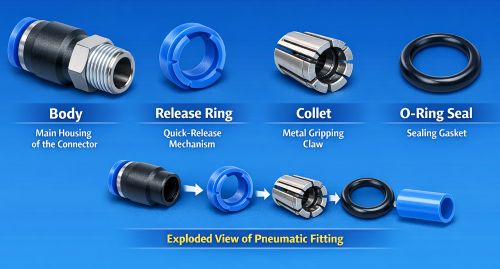
Understanding the components of a pneumatic fitting helps explain how it functions and why quality matters.
1. Body of the Fitting
The main structure that holds all parts together and connects tubing or hoses.
2. Sealing Elements
O-rings, gaskets, or seals prevent air leakage and maintain pressure integrity.
3. Threads or Push-to-Connect Mechanisms
These allow the fitting to connect securely to ports or tubing.
4. Locking and Release Components
Clamps, collets, or locking rings hold the tube in place and allow quick disconnection when needed.
Materials Used
Common materials include:
➡️ Plastic: Lightweight and corrosion-resistant
➡️ Brass: Durable and widely used in industrial applications
➡️ Stainless steel: Ideal for high temperatures, chemicals, and hygienic environments
Types of Pneumatic Fitting Connectors
A. By Connection Method
1. Push-to-Connect (One-Touch) Fittings
Allow quick installation by simply pushing the tube into the fitting.
2. Threaded Fittings
Use male or female threads to connect securely to ports or components.
3. Barbed Fittings
Hold flexible tubing in place using ridges along the fitting body.
4. Compression Fittings
Use a compression ring to create a tight seal when tightened.
B. By Shape and Function
1. Straight Connectors
Used for direct, linear connections.
2. Elbow Connectors
Change airflow direction, typically at 90° or 45° angles.
3. Tee and Y Connectors
Split airflow into multiple directions.
4. Union Connectors
Join two tubes of the same size.
5. Bulkhead Fittings
Allow tubing to pass through panels or walls.
How Pneumatic Fitting Connectors Work
1. Basic Working Principle
Compressed air flows through tubing and fittings, transferring energy to pneumatic devices such as cylinders and valves. Fittings ensure that airflow remains sealed and controlled.
2. Push-to-Connect Operation
When a tube is inserted, a collet grips it firmly while an internal seal prevents air leakage. Removing the tube requires pressing the release ring.
3. Threaded Connector Sealing
Threaded fittings seal using tapered threads, thread sealant, or O-rings to prevent leaks.
4. Role of Seals
Seals maintain airtight connections, compensate for vibration, and prevent pressure loss.
5. Handling Pressure and Vibration
Quality fittings are designed to withstand system pressure, temperature fluctuations, and mechanical vibration without loosening or failing.
How Pneumatic Fitting Connectors Are Installed
A. General Installation Steps
1. Select the correct fitting
2. Prepare tubing and ports
3. Install and secure the fitting
4. Test for leaks
B. Proper Tube Cutting and Preparation
Tubing should be cut cleanly and square to ensure a proper seal.
C. Correct Tightening Methods
Over-tightening can damage threads or seals, while under-tightening may cause leaks.
D. Common Installation Mistakes
➡️ Using incompatible tube sizes
➡️ Damaged tubing ends
➡️ Incorrect thread sealant application
E. Safety Considerations
Always depressurize the system before installation or removal.
Applications of Pneumatic Fitting Connectors
Common industries where pneumatic fitting connectors are widely used include:
1. Industrial automation and manufacturing: Powering machinery and actuators
2. Robotics and assembly lines: Precision motion control
3. Automotive and transportation: Air tools and control systems
4. Packaging machinery: Fast and repeatable operations
5. Medical and laboratory equipment: Clean, controlled air delivery
Benefits of Using Pneumatic Fitting Connectors
Here are the benefits of using pneumatic fitting connectors:
1. Fast and easy installation
2. Reliable, leak-resistant connections
3. Flexible and modular system design
4. Reduced downtime and maintenance
5. Cost-effective system expansion
Common Issues and Troubleshooting
1. Air Leakage
Often caused by damaged seals, improper installation, or worn tubing.
2. Connector Loosening or Failure
May result from vibration, pressure fluctuations, or incorrect fitting selection.
3. Tube Damage
Scratched or uneven tubing ends can compromise sealing.
4. Maintenance Tips
Regular inspection and leak testing help prevent unexpected failures.
How to Choose the Right Pneumatic Fitting Connector
Follow these best practices in choosing the right pneumatic fitting connector:
1. Pressure and temperature requirements
2. Tube size and compatibility
3. Material selection based on the environment
4. Chemical and corrosion resistance
5. Compliance with industry standards and certifications
Maintenance and Best Practices
1. Routine Inspection and Cleaning
Check fittings regularly for leaks, wear, or contamination.
2. When to Replace Fittings
Replace fittings showing cracks, corrosion, or sealing failure.
3. Storage and Handling
Store fittings in clean, dry environments to prevent damage.
4. Extending Service Life
Use correct installation techniques and compatible components.
Conclusion
Pneumatic fitting connectors are essential components that ensure efficient, safe, and reliable operation of compressed air systems. From their basic structure and working principles to installation and maintenance, understanding these connectors helps prevent system failures and improve performance.
Choosing the right pneumatic fitting connectors and installing them correctly plays a critical role in system efficiency, longevity, and overall reliability. With proper selection and maintenance, these small components can make a big difference in pneumatic system success.
Post time: Jan-28-2026