

Pipe adapters and bushings may look like small components, but they play an important role in keeping piping and hydraulic systems connected and functioning properly. They help join pipes, fittings, valves, and equipment with different connection types or sizes, making it easier to build a compatible and reliable system.
Although these two components are often mentioned together, they serve slightly different purposes. Pipe adapters provide a way to connect components with different connection configurations, while pipe bushings are commonly used to connect threaded openings of different sizes.
Understanding how pipe adapters and bushings work can help engineers, maintenance technicians, and industrial buyers select the right fittings for their applications. In this guide, we’ll explore their functions, common types, materials, applications, and key selection considerations.
What Are Pipe Adapters and Bushings?
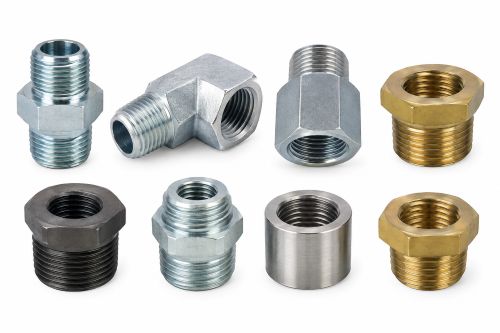
Before looking at how they work, it’s helpful to understand what each component does and how they differ.
What Is a Pipe Adapter?
A pipe adapter is a fitting designed to connect two components that have different connection configurations. Depending on its design, it can connect pipes with different thread genders, transition between connection standards, or join a pipe to a hose, valve, pump, or other piece of equipment.
For example, a threaded pipe adapter may connect a male-threaded pipe to a female-threaded port. Other designs allow transitions between different connection types, provided the threads and sealing arrangements are compatible.
Pipe adapters are widely used in hydraulic systems, industrial machinery, fluid transfer equipment, and general piping installations.
What Is a Pipe Bushing?
A pipe bushing is a fitting commonly used to connect threaded components with different nominal sizes. A typical reducing bushing has a larger external thread and a smaller internal thread, allowing a smaller male-threaded fitting to connect to a larger female-threaded port.
For example, a reducing bushing can help connect a smaller threaded component to a larger port without replacing the entire pipe or equipment connection.
Some bushings feature a hexagonal outer section that makes installation easier with a wrench. These are commonly known as hex bushings.
Key Differences Between Pipe Adapters and Bushings
Pipe adapters and bushings can sometimes perform similar connection tasks, but their designs and primary purposes differ.
1. Pipe adapters: Primarily provide a connection or transition between different connection configurations, thread genders, or connection standards.
2. Pipe bushings: Commonly reduce a threaded opening from a larger nominal size to a smaller one.
3. Typical design: Adapters come in many configurations, while reducing bushings often have external threads on one side and internal threads on the other.
4. Common applications: Both are used in piping and hydraulic systems, depending on the connection requirements.
The best choice depends on the existing port, the component being connected, and the sealing method required.
How Do Pipe Adapters and Bushings Work in Piping Systems?
Pipe adapters and bushings work by creating a compatible mechanical connection between two components. Their threads or other connection features secure the components together, while the appropriate sealing arrangement helps prevent fluid or gas leakage.
Several factors determine how effectively they perform.
1. Connecting Different Pipe Threads
One of the main functions of pipe adapters is to connect components with different connection configurations.
For example, an adapter may have male threads on one end and female threads on the other. This arrangement allows components with different thread genders to connect without changing the original pipe or equipment port.
Some adapters also provide transitions between connection standards, such as NPT, BSP, JIC, and metric connections. However, these standards are not automatically interchangeable. Even when two threads appear similar, differences in thread angle, pitch, diameter, and sealing design can prevent a reliable connection.
Before selecting an adapter, it is important to identify both connection types and confirm that the adapter is designed for the intended combination.
2. Adapting Between Different Pipe Sizes
Pipe bushings are particularly useful when a system needs to connect components with different nominal sizes.
A reducing bushing typically has larger external threads that fit into a larger female-threaded opening and smaller internal threads that accept a smaller male-threaded component.
For example, a system may have an existing larger threaded port but require a smaller fitting for a particular instrument or auxiliary line. A suitable reducing bushing can accommodate this difference without requiring a complete change to the original connection.
However, reducing the connection size may also reduce the available internal flow area. In hydraulic and other fluid systems, this can affect flow velocity and pressure drop, especially when the passage becomes a significant restriction. The bushing’s internal dimensions should therefore match the system’s flow requirements.
3. Creating Secure and Leak-Resistant Connections
A reliable connection requires more than simply matching two sets of threads.
Depending on the fitting design, sealing may occur through tapered threads, an O-ring, a bonded seal, a gasket, or a dedicated metal-to-metal sealing surface.
For example, NPT connections use tapered threads and generally require an appropriate thread sealant according to the application and manufacturer’s instructions. Other connections, such as O-ring boss fittings, rely on an O-ring to create the seal rather than using the threads as the primary sealing mechanism.
Pipe adapters and bushings must be compatible with the intended sealing method. Applying thread sealant to a connection designed to seal through an O-ring or a dedicated sealing face may be unnecessary or inappropriate.
Correct installation torque is also important. Over-tightening can damage threads, distort components, or cause sealing problems, while insufficient tightening may leave a connection loose.
4. Maintaining Fluid Flow
Pipe adapters and bushings provide a continuous passage for fluid or gas between connected components. When correctly selected, they help the system maintain the intended flow path while accommodating different connection requirements.
However, internal passage geometry matters. An adapter with a narrow passage or a bushing that significantly reduces the opening can create additional flow resistance.
In hydraulic systems, this may contribute to pressure loss, heat generation, or reduced system performance under certain operating conditions.
When choosing these fittings, check the internal passage size, operating pressure, flow rate, and fluid compatibility rather than relying on thread size alone.
Common Types of Pipe Adapters and Bushings
Pipe adapters and bushings are available in many designs to accommodate different installation requirements.
1. Threaded Pipe Adapters
Threaded adapters are widely used because they can be installed without welding or other permanent joining methods.
Common configurations include:
➡️ Male-to-female adapters: Connect a male-threaded component to a female-threaded connection.
➡️ Male-to-male adapters: Join two female-threaded ports or fittings.
➡️ Female-to-female adapters: Connect two male-threaded components.
➡️ Straight adapters: Provide a direct connection between compatible ports.
➡️ Thread-standard adapters: Allow transitions between specified thread systems when the adapter is designed for both connections.
These adapters are commonly found in industrial piping, hydraulic equipment, pumps, valves, and fluid transfer systems.
2. Reducing Pipe Bushings
Reducing bushings connect threaded components with different nominal sizes.
Common designs include:
➡️ Standard reducing bushings: Reduce a larger threaded opening to a smaller one.
➡️ Hex bushings: Include a hexagonal outer section for wrench installation.
➡️ Threaded reducer bushings: Provide a threaded transition between specified connection sizes.
When selecting a reducing bushing, check both the internal and external thread specifications. Also consider the available clearance around the connection, particularly when installing fittings in compact equipment.
3. Hydraulic Pipe Adapters
Hydraulic pipe adapters are designed for hydraulic systems where pressure resistance, dimensional accuracy, and sealing performance are important.
Common connection types include:
➡️ NPT adapters: Use tapered pipe threads and an appropriate sealing method.
➡️ BSP adapters: Use British Standard Pipe threads, with sealing requirements depending on the specific thread form and fitting design.
➡️ JIC adapters: Commonly use a 37-degree flared sealing surface.
➡️ ORB adapters: Use an O-ring to seal against a suitable port.
➡️ Metric hydraulic adapters: Use metric threads and the specified sealing arrangement.
These connection types have different design characteristics. Selecting the correct one helps ensure compatibility with the equipment port, hose assembly, and operating conditions.
For high-pressure hydraulic applications, always verify the fitting’s rated pressure, sealing method, and applicable standards before installation.
Materials Used in Pipe Adapters and Bushings
Material selection affects strength, corrosion resistance, service life, and compatibility with the operating environment.
1. Carbon Steel
Carbon steel is widely used for industrial pipe adapters and hydraulic fittings because it offers good mechanical strength and durability.
It is suitable for many demanding applications, including hydraulic machinery, industrial equipment, and fluid power systems. Protective coatings, such as zinc plating or zinc-nickel plating, may improve corrosion resistance.
The coating and base material should be selected according to the operating environment and applicable performance requirements.
2. Stainless Steel
Stainless steel is commonly chosen when corrosion resistance is a priority.
It is useful in environments exposed to moisture, certain chemicals, or corrosive conditions. Depending on the stainless steel grade, it may also be appropriate for food processing, marine equipment, and selected chemical-handling applications.
However, stainless steel fittings are not automatically suitable for every fluid or environment. Grade selection, pressure rating, temperature, and chemical compatibility still need to be evaluated.
3. Brass
Brass pipe adapters and bushings are used in selected plumbing, pneumatic, and fluid-handling applications.
Brass offers good corrosion resistance in many environments and is relatively easy to machine. It can be a practical option for applications involving water, air, or other compatible media.
Its suitability depends on the operating pressure, temperature, fluid chemistry, and mechanical requirements. Brass should not be treated as a universal substitute for steel or stainless steel in demanding hydraulic systems.
How to Choose the Right Material
Before selecting a material, consider the following factors:
1. Operating pressure: Ensure the complete fitting assembly can withstand the system’s working conditions.
2. Temperature: Confirm that the material and seals can tolerate the operating temperature.
3. Fluid compatibility: Check for potential chemical reactions, corrosion, or material degradation.
4. Environmental exposure: Consider moisture, salt, chemicals, and other corrosive conditions.
5. Service life and cost: Balance initial purchase cost with maintenance requirements and expected operating life.
The best material is the one that meets the application’s technical requirements while providing dependable performance over time.
Common Applications of Pipe Adapters and Bushings
Pipe adapters and bushings are used in a wide range of industries because they make it easier to connect components with different thread configurations or sizes.
1. Hydraulic Machinery and Mobile Equipment
Hydraulic systems use adapters to connect hoses, pumps, valves, cylinders, and manifolds. Bushings may be used where a compatible threaded size reduction is required.
In these applications, pressure ratings, vibration resistance, and sealing performance are important considerations.
2. Industrial Piping and Fluid Transfer
Manufacturing plants use pipe adapters and bushings to connect sections of piping, instruments, valves, and other equipment.
The fittings must be compatible with the transported fluid and the system’s pressure and temperature requirements.
3. Pumps, Valves, and Manifolds
Adapters can help connect equipment ports to external piping or auxiliary components. Reducing bushings may accommodate smaller threaded accessories when the port design allows their use.
Compact equipment often requires careful attention to fitting dimensions and installation clearance.
4. Manufacturing and Automation Equipment
Pneumatic and hydraulic automation systems may use adapters to connect actuators, control valves, pressure sensors, and fluid lines.
The correct connection can simplify installation and maintenance while helping preserve the intended flow path.
5. Water, Air, and Selected Fuel Systems
Pipe adapters and bushings are also found in plumbing, compressed-air systems, and certain fuel-handling applications.
For these uses, material compatibility, applicable regulations, pressure limits, and the correct sealing method should always be confirmed.
How to Choose the Right Pipe Adapters and Bushings
Choosing the right fitting starts with understanding the system’s connection requirements. A component that looks correct may still be unsuitable if its threads, dimensions, material, or pressure rating do not match the application.
1. Identify Thread Types and Sizes
Determine the thread standard, nominal size, pitch, and connection gender for both sides of the connection.
Common thread systems include NPT, BSP, and metric threads. In hydraulic applications, JIC and ORB connections may also be required.
Do not assume that similar-looking threads are interchangeable. Use technical drawings, thread gauges, manufacturer specifications, or appropriate measuring tools to verify compatibility.
2. Check Pressure and Temperature Ratings
The fitting must be suitable for the system’s operating pressure and temperature, including relevant pressure surges or other demanding conditions.
For hydraulic applications, check the manufacturer’s specified working pressure rather than relying on appearance, material, or thread size alone.
The pressure capability of the complete assembly may also be limited by the weakest component.
3. Select the Correct Material and Sealing Method
Choose a material that is compatible with the fluid and operating environment. Then confirm that the connection uses the correct sealing arrangement.
For example, a tapered pipe thread may require an appropriate sealant, while an O-ring boss fitting requires a compatible O-ring and properly prepared sealing surface.
Using the wrong sealing method can result in leaks even when the threads fit correctly.
4. Verify Dimensions and Flow Requirements
Check the fitting’s overall length, hex size, thread engagement, internal passage, and installation clearance.
For reducing bushings, pay particular attention to the smaller internal opening. If the system requires a high flow rate, an undersized passage may create unwanted pressure loss.
5. Work With a Reliable Manufacturer
For industrial and hydraulic applications, consistent manufacturing quality is essential.
When evaluating a pipe adapter or bushing manufacturer, consider:
➡️ Dimensional accuracy and thread inspection
➡️ Material specifications and traceability
➡️ Pressure and sealing performance requirements
➡️ Surface treatment and corrosion resistance
➡️ Relevant quality certifications and documented inspection procedures
➡️ OEM/ODM capabilities for custom dimensions, materials, or thread configurations
A qualified manufacturer can help confirm the appropriate fitting design for your equipment and operating conditions.
Common Installation Mistakes to Avoid
Even a well-made fitting can fail if it is selected or installed incorrectly. The following mistakes are worth avoiding.
Mixing incompatible thread standards. NPT, BSP, and metric threads should not be treated as interchangeable. Confirm the connection specifications before assembly.
Choosing the wrong size. A fitting may screw into a port partially but still fail to provide proper engagement or sealing. Verify both thread dimensions and the intended connection type.
Over-tightening the connection. Excessive torque can damage threads, distort sealing surfaces, or cause component failure. Follow the manufacturer’s installation guidance.
Using the wrong sealant. Not every threaded connection seals through its threads. Identify the intended sealing method before applying sealant.
Ignoring pressure and temperature limits. A fitting that works in a low-pressure system may not be suitable for a high-pressure hydraulic application.
Overlooking fluid compatibility. Incompatible materials or seals can deteriorate over time, leading to leaks or reduced service life.
Failing to inspect the connection. Before putting a system into service, inspect the threads, sealing surfaces, and assembled connection. Test it according to the applicable procedure, using suitable precautions for pressurized systems.
Frequently Asked Questions
1. What Is the Main Purpose of a Pipe Adapter?
A pipe adapter connects components with different connection configurations, such as different thread genders or specified thread standards. It allows pipes, hoses, valves, and equipment to be connected without redesigning the entire system.
2. What Is the Difference Between a Pipe Adapter and a Pipe Bushing?
A pipe adapter generally provides a connection or transition between components, while a pipe bushing is commonly used to reduce a larger threaded opening to a smaller size. The exact function depends on the fitting’s design.
3. Can a Pipe Bushing Reduce Pipe Size?
Yes. A reducing pipe bushing typically has larger external threads and smaller internal threads, allowing a smaller male-threaded component to connect to a larger female-threaded port. The resulting flow passage should be checked against the system’s requirements.
4. Are NPT and BSP Pipe Adapters Interchangeable?
Not generally. NPT and BSP threads can differ in thread angle, pitch, and sealing design. Some sizes may appear similar, but attempting to connect incompatible threads can cause leakage or damage. Use an adapter specifically designed for the required connection.
5. Which Materials Are Commonly Used for Pipe Adapters and Bushings?
Carbon steel, stainless steel, and brass are common choices. Carbon steel is widely used in industrial and hydraulic applications, stainless steel is useful where corrosion resistance is important, and brass is used in selected plumbing and pneumatic applications. The correct choice depends on the operating conditions.
6. How Can I Prevent Leaks When Installing Pipe Adapters and Bushings?
Confirm thread compatibility, inspect the threads and sealing surfaces, use the correct sealing method, and follow the manufacturer’s tightening instructions. After installation, check the connection using an appropriate system test procedure.
Conclusion
Pipe adapters and bushings help make piping and hydraulic systems more flexible by connecting components with different thread configurations or sizes. Adapters provide connection transitions, while reducing bushings commonly accommodate differences in threaded opening sizes.
To achieve a reliable connection, pay attention to thread compatibility, material selection, pressure and temperature ratings, sealing methods, and internal flow dimensions. Correct installation is equally important for preventing leaks and avoiding unnecessary maintenance.
For industrial buyers and equipment manufacturers, working with a dependable supplier can also make it easier to source fittings that meet specific design and performance requirements. By selecting the right pipe adapters and bushings for each application, you can build connections that support safe, efficient, and reliable system operation.
Post time: Oct-27-2026