

Hydraulic systems rely on secure, leak-free connections to operate safely and efficiently. However, not all hydraulic components use the same thread or sealing standards. When equipment with National Pipe Straight Mechanical (NPSM) threads needs to connect to hoses or fittings that use Joint Industry Council (JIC) connections, compatibility becomes a challenge. This is where an NPSM to JIC adapter plays an important role.
Rather than replacing expensive pumps, valves, cylinders, or hoses, a properly selected adapter allows these components to work together while maintaining system integrity. Whether you’re repairing existing equipment, upgrading machinery, or designing a new hydraulic circuit, understanding when to use an NPSM to JIC adapter can save time, reduce costs, and improve reliability.
In this guide, we’ll explain what an NPSM to JIC adapter is, when it’s needed, its benefits, common applications, and how to choose the right one for your hydraulic system.
What Is an NPSM to JIC Adapter?
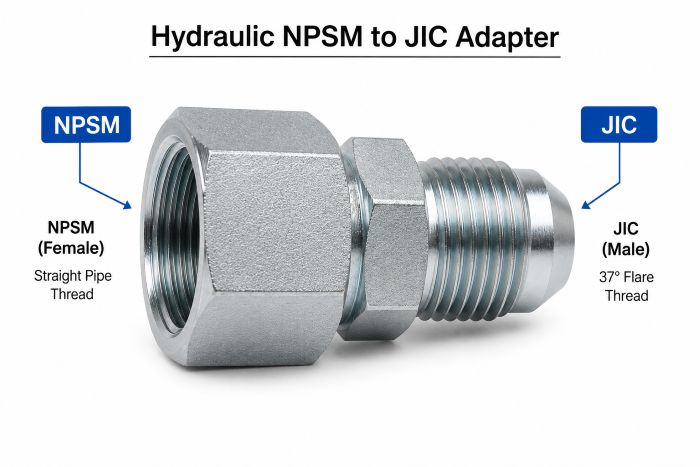
An NPSM to JIC adapter is a hydraulic fitting designed to connect components with NPSM straight threads to components that use JIC 37-degree flare fittings. Since these connection types use different sealing methods, they cannot be connected directly without an adapter.
Instead of modifying hydraulic equipment or replacing compatible components, the adapter creates a secure transition between the two connection standards.
Understanding NPSM Threads
NPSM (National Pipe Straight Mechanical) is a straight-thread connection commonly found in hydraulic equipment, pumps, valves, and cylinders. Unlike tapered pipe threads, NPSM threads do not create a seal through thread interference.
Instead, they require an additional sealing element such as:
1. An O-ring
2. A gasket
3. A bonded seal
4. A mechanical seat
Because the threads themselves are not responsible for sealing, proper installation and the correct sealing component are essential for preventing leaks.
Understanding JIC Fittings
JIC (Joint Industry Council) fittings use a 37-degree flare design that creates a metal-to-metal seal. As the male flare tightens against the female seat, the connection becomes highly resistant to vibration and high operating pressures.
JIC fittings are widely used because they offer:
1. Excellent leak resistance
2. Easy installation
3. Reusability
4. High-pressure capability
5. Availability in many hydraulic systems
These characteristics make JIC fittings one of the most common hydraulic connection standards worldwide.
How an NPSM to JIC Adapter Works
An NPSM to JIC adapter combines both connection styles into a single fitting. One side contains NPSM threads that mate with the hydraulic component, while the opposite side features a JIC flare connection for attaching hoses or other hydraulic fittings.
This allows engineers and technicians to connect components with different thread standards without compromising safety or performance.
Why Hydraulic Systems Need NPSM to JIC Adapters
Hydraulic systems often consist of components sourced from different manufacturers or installed over many years. As a result, it’s common to encounter incompatible thread standards within the same system.
An NPSM to JIC adapter solves this compatibility issue while offering several practical advantages.
Connecting Different Thread Standards
One of the most common reasons to use this adapter is to join equipment that uses different connection types.
For example:
1. An older hydraulic pump may have NPSM ports.
2. A replacement hydraulic hose may use JIC fittings.
3. A new valve assembly may include JIC connections.
Instead of replacing perfectly functional equipment, an adapter provides a straightforward and cost-effective solution.
Supporting Equipment Upgrades
Many industrial facilities modernize hydraulic systems gradually rather than replacing everything at once.
Adapters allow older equipment to remain in service while integrating newer hydraulic components that use JIC fittings. This approach minimizes downtime and extends the useful life of existing machinery.
Simplifying Hydraulic Maintenance
Standardizing hose assemblies with JIC fittings makes future maintenance easier.
Maintenance technicians can stock fewer hose types while using adapters only where necessary. This reduces inventory costs and simplifies field repairs.
When Should You Use an NPSM to JIC Adapter?
Although these adapters are versatile, certain situations make them especially valuable.
1. Connecting Hydraulic Hoses to NPSM Ports
Many hydraulic pumps, cylinders, valves, and reservoirs still feature NPSM ports.
If your replacement hydraulic hose uses JIC fittings, an adapter provides the missing connection while maintaining proper sealing performance.
Typical examples include:
➡️ Hydraulic pumps
➡️ Directional control valves
➡️ Hydraulic cylinders
➡️ Pressure control assemblies
➡️ Power units
2. Replacing Worn Hydraulic Components
Component replacement doesn’t always mean the new part uses the same connection standard as the original.
For example, an older machine may have NPSM-threaded ports, while modern replacement hoses or valves are supplied with JIC fittings.
Rather than redesigning the hydraulic circuit, installing an adapter allows the replacement component to fit immediately.
3. Upgrading Older Hydraulic Equipment
Many older machines remain mechanically sound but use outdated hydraulic connection standards.
Common examples include:
➡️ Agricultural tractors
➡️ Construction equipment
➡️ Industrial presses
➡️ Mining equipment
➡️ Forestry machinery
Adapters make modernization possible without replacing every hydraulic component.
4. Building Custom Hydraulic Systems
Custom hydraulic systems often combine components from multiple manufacturers. While this offers greater flexibility in selecting pumps, valves, cylinders, and hose assemblies, it can also introduce compatibility issues between connection standards.
An NPSM to JIC adapter makes it possible to integrate these components without machining new ports or replacing otherwise compatible parts. This is especially useful for:
➡️ Prototype hydraulic systems
➡️ OEM equipment manufacturing
➡️ Hydraulic power units
➡️ Test benches
➡️ Mobile hydraulic equipment
Using adapters also gives designers more freedom to source components based on performance rather than thread compatibility alone.
5. Performing Hydraulic Repairs
Unexpected hydraulic failures can bring production to a halt. During emergency repairs, finding an exact replacement fitting isn’t always possible.
An NPSM to JIC adapter can provide a practical solution by allowing available JIC hoses or fittings to connect to existing NPSM ports. This helps restore equipment to service quickly while maintaining a secure hydraulic connection.
Although adapters are commonly used for emergency repairs, they are equally suitable as permanent solutions when properly selected for the application’s pressure, temperature, and fluid compatibility.
6. Standardizing Hydraulic Connections
Large hydraulic systems often contain multiple fitting standards due to years of equipment upgrades and repairs.
Standardizing new hose assemblies around JIC fittings while using NPSM to JIC adapters where needed offers several advantages:
➡️ Simplifies spare parts inventory
➡️ Reduces maintenance complexity
➡️ Speeds up equipment repairs
➡️ Makes hose replacement easier
➡️ Improves consistency across hydraulic systems
For maintenance departments managing dozens or even hundreds of machines, this standardization can significantly reduce operating costs over time.
Common Hydraulic Applications
NPSM to JIC adapters are used across a wide range of industries where hydraulic power is essential.
Construction Equipment
Construction machinery operates under demanding conditions and often experiences frequent hose replacements. Adapters are commonly used on:
1. Excavators
2. Backhoes
3. Bulldozers
4. Wheel loaders
5. Skid steer loaders
These adapters allow newer hydraulic hoses to connect with older equipment without extensive modifications.
Agricultural Machinery
Agricultural equipment often remains in service for decades, making mixed fitting standards common during repairs or upgrades.
Typical applications include:
1. Tractors
2. Combines
3. Balers
4. Sprayers
5. Seeders
Using adapters helps farmers keep equipment operational while reducing replacement costs.
Manufacturing Equipment
Industrial hydraulic systems frequently require compatibility between new machinery and existing infrastructure.
Examples include:
1. Hydraulic presses
2. Injection molding machines
3. CNC equipment
4. Material handling systems
5. Automated production lines
Adapters simplify equipment integration while minimizing downtime during maintenance.
Mobile Hydraulic Equipment
Vehicles and mobile machinery often undergo regular servicing, during which replacement hoses may feature different connection standards.
Common applications include:
1. Hydraulic cranes
2. Dump trucks
3. Utility vehicles
4. Aerial work platforms
5. Tow trucks
Oil and Gas Equipment
Hydraulic systems used in drilling, pipeline maintenance, and fluid transfer require reliable, high-pressure connections. Properly selected NPSM to JIC adapters help maintain system integrity in these demanding environments.
Marine Hydraulic Systems
Marine equipment uses hydraulic systems for steering, winches, cranes, stabilizers, and deck machinery. Corrosion-resistant stainless steel adapters are often preferred because they withstand harsh saltwater conditions.
Benefits of Using an NPSM to JIC Adapter
Reliable Leak Prevention
One of the primary advantages of using the correct adapter is creating a dependable, leak-free hydraulic connection.
Because JIC fittings seal using a precision-machined 37-degree flare rather than thread deformation, they offer excellent resistance to leakage when installed correctly. Combined with the appropriate sealing method on the NPSM side, the adapter provides a secure transition between the two standards.
Lower Equipment Costs
Replacing hydraulic pumps, cylinders, or valves simply because of incompatible threads can be expensive.
Using an adapter allows existing components to remain in service while connecting them to newer hoses or fittings. This significantly reduces upgrade and repair costs.
Greater Design Flexibility
Adapters give engineers and maintenance professionals more freedom when selecting hydraulic components.
Instead of limiting purchases to equipment with matching thread standards, they can choose components based on performance, availability, or cost while relying on adapters to bridge compatibility gaps.
Faster Installation
Installing an adapter is usually much faster than modifying hydraulic ports or replacing major components.
This reduces:
1. Machine downtime
2. Labor costs
3. Installation complexity
For facilities where every hour of downtime impacts productivity, this can provide substantial savings.
Easier Future Maintenance
Once a system is standardized around JIC hose assemblies, future maintenance becomes much simpler.
Technicians spend less time identifying thread types and can often replace hoses using commonly stocked components.
How to Choose the Right NPSM to JIC Adapter
Selecting the correct adapter involves more than simply matching thread sizes. Several factors should be considered to ensure reliable and safe operation.
Verify the NPSM Thread Size
Before purchasing an adapter, identify the exact NPSM thread specifications, including:
1. Thread diameter
2. Threads per inch (TPI)
3. Port dimensions
Using thread gauges or manufacturer specifications can help avoid costly mistakes.
Match the JIC Flare Size
JIC fittings are available in various sizes, so the flare connection on the adapter must match the hose or fitting being installed.
Choosing the wrong size may result in leaks, poor sealing, or connection failure.
Select the Appropriate Material
The adapter material should match the operating environment and hydraulic fluid.
Common options include:
Carbon Steel
➡️ High strength
➡️ Excellent for general industrial hydraulic systems
➡️ Cost-effective
Stainless Steel
➡️Superior corrosion resistance
➡️ Ideal for marine, chemical, and outdoor applications
➡️ Long service life
Brass
➡️ Suitable for lower-pressure applications
➡️ Good corrosion resistance
➡️ Common in pneumatic and light-duty fluid systems
Confirm the Pressure Rating
Always verify that the adapter’s pressure rating meets or exceeds the maximum operating pressure of your hydraulic system.
Underrated fittings can become a weak point, increasing the risk of leaks or failure.
Consider Adapter Configuration
Depending on the available space and hose routing, different adapter styles may be required, including:
➡️ Straight adapters
➡️ 45-degree adapters
➡️ 90-degree adapters
➡️ Swivel adapters
Selecting the correct configuration reduces stress on hoses and improves installation efficiency.
Installation Best Practices
Proper installation is essential to ensure an NPSM to JIC adapter performs safely and reliably in a hydraulic system. Even a high-quality adapter can fail if it is installed incorrectly.
Inspect Threads Before Installation
Before assembling the connection, carefully inspect both the NPSM and JIC threads for:
➡️ Dirt or debris
➡️ Burrs or damage
➡️ Cross-threading signs
➡️ Wear or deformation
Even small imperfections can prevent proper sealing and lead to leaks under pressure.
Use the Correct Sealing Method
Because NPSM threads do not seal on their own, they require a proper sealing component such as:
➡️ O-rings
➡️ Gaskets
➡️ Bonded seals
Make sure the sealing element is compatible with the hydraulic fluid and operating temperature.
On the JIC side, the seal is created through the 37-degree metal flare, so no thread sealant should be applied to the flare surface.
Tighten to Manufacturer Specifications
Over-tightening or under-tightening hydraulic fittings is a common cause of system failure.
1. Over-tightening can damage threads or deform sealing surfaces
2. Under-tightening can lead to leaks or vibration loosening
Always follow torque specifications provided by the manufacturer whenever available.
Avoid Cross-Threading
Cross-threading can permanently damage both the adapter and the hydraulic port. To prevent this:
1. Start threading by hand
2. Ensure smooth engagement
3. Never force the connection
If resistance is felt early, remove and re-align the fitting.
Perform Pressure Testing
After installation, always test the system under controlled conditions:
1. Gradually increase pressure
2. Check for visible leaks
3. Monitor fittings under load
This ensures the adapter is performing correctly before full operation begins.
Common Mistakes to Avoid
Even experienced technicians can make mistakes when working with hydraulic adapters. Avoiding the following errors will improve system reliability.
Confusing NPSM with NPT Threads
NPSM (straight thread) and NPT (tapered thread) are often mistaken for one another. However:
1. NPSM requires a seal (O-ring or gasket)
2. NPT seals through thread interference
Using the wrong type can result in leaks or damaged components.
Over-Tightening the Adapter
Applying excessive torque can:
1. Strip threads
2. Damage sealing surfaces
3. Cause stress fractures in fittings
Hydraulic systems rely on precision sealing, not brute force.
Using Incorrect Thread Sealant
Sealant should only be used where appropriate.
1. Do NOT use sealant on JIC flare surfaces
2. Use compatible sealant only for NPSM threaded sections if required
Incorrect use can prevent proper sealing and contaminate hydraulic fluid.
Ignoring Pressure Ratings
Every hydraulic fitting has a maximum pressure rating. Exceeding it can lead to:
1. Fitting failure
2. Hose rupture
3. Safety hazards
Always ensure the adapter matches system pressure requirements.
Mixing Incompatible Standards Without Verification
While adapters are designed to solve compatibility issues, they should never be used without confirming:
1. Thread compatibility
2. Seal type
3. Pressure rating
4. Fluid compatibility
Frequently Asked Questions
Can an NPSM thread connect directly to a JIC fitting?
No. NPSM and JIC use completely different sealing mechanisms. An adapter is required to ensure a proper, leak-free connection.
Do NPSM threads require thread sealant?
Not always. NPSM threads typically rely on an O-ring or gasket for sealing. Sealant may be used in some cases, but only if compatible with the system design and manufacturer recommendations.
Are NPSM to JIC adapters suitable for high-pressure hydraulics?
Yes, provided the adapter is rated for the system’s operating pressure and installed correctly. JIC fittings are widely used in medium to high-pressure hydraulic applications.
How do I identify the correct adapter size?
You need to measure both:
➡️ NPSM thread diameter and pitch
➡️ JIC flare size (based on hose or fitting size)
Manufacturer charts or thread gauges are commonly used for accurate identification.
Can stainless steel adapters be used outdoors?
Yes. Stainless steel is highly resistant to corrosion, making it ideal for outdoor, marine, and harsh environmental applications.
Conclusion
An NPSM to JIC adapter is a simple but essential component in modern hydraulic systems. It allows equipment with incompatible thread standards to work together safely and efficiently, reducing the need for costly replacements or system redesigns.
These adapters are especially valuable when:
1. Connecting old and new hydraulic components
2. Performing repairs or emergency maintenance
3. Upgrading equipment gradually
4. Standardizing hydraulic systems for easier servicing
By selecting the correct size, material, pressure rating, and configuration, and by following proper installation practices, users can ensure long-lasting, leak-free performance.
In hydraulic applications where reliability is critical, choosing the right adapter is not just a convenience, it is a key part of maintaining system safety and efficiency.
Post time: Jul-01-2026