

Selecting the correct pipe thread connection is critical for ensuring safe, reliable, and leak-free fluid systems. Whether you’re working with hydraulic equipment, pneumatic systems, industrial machinery, or instrumentation assemblies, understanding thread compatibility can help prevent costly downtime, equipment damage, and safety risks.
One thread standard that often causes confusion is the NPSM thread. Because NPSM threads share similarities with other common thread types such as NPT, NPTF, BSPP, and BSPT, many professionals mistakenly assume they are interchangeable. However, improper thread matching can lead to poor sealing performance and connection failures.
This comprehensive guide explains everything you need to know about NPSM thread compatibility, including how NPSM threads work, how they differ from other thread standards, and how to ensure proper installation in industrial applications.
What Is an NPSM Thread?
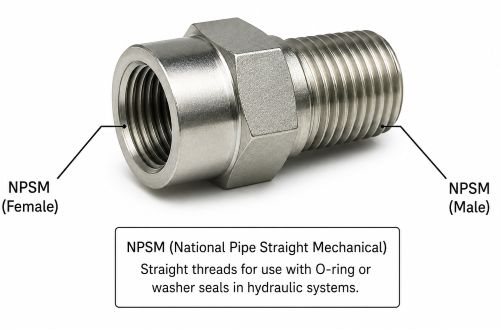
NPSM stands for National Pipe Straight Mechanical. It is a straight (parallel) pipe thread designed primarily for mechanical connections rather than creating a pressure-tight seal through the threads themselves.
Unlike tapered thread systems, NPSM threads maintain the same diameter along the entire length of the thread. This design allows components to engage mechanically while relying on separate sealing methods to prevent leaks.
Key Characteristics of NPSM Threads
1. Straight or parallel thread profile
2. -degree thread angle
3. Designed for mechanical connection
4. Requires an external sealing mechanism
5. Commonly used in hydraulic and pneumatic systems
Because NPSM threads are not self-sealing, they are often paired with gaskets, O-rings, or other sealing surfaces to achieve leak-free performance.
How NPSM Threads Create a Seal
One of the most important concepts to understand about NPSM threads is that the threads themselves do not provide the seal.
Thread Engagement vs. Sealing
Many people assume that if two threaded components fit together, they will automatically seal. This is not true for NPSM threads.
The threads provide:
➡️ Mechanical retention
➡️ Alignment
➡️ Load distribution
The sealing function must come from a separate component.
Common Sealing Methods for NPSM Threads
O-Rings
O-rings are among the most common sealing solutions used with NPSM connections. They compress between mating surfaces to create a pressure-tight seal.
Gaskets
Flat gaskets are frequently used in low- to medium-pressure applications where a sealing surface is available.
Metal-to-Metal Seats
Certain industrial fittings use precision-machined sealing surfaces that create a seal when tightened.
Why Proper Sealing Matters
Without the correct sealing mechanism, even perfectly matched NPSM threads may leak under pressure. Selecting the proper seal is just as important as selecting the correct thread type.
NPSM Thread Specifications
Understanding thread specifications helps ensure proper identification and compatibility.
Thread Form
NPSM threads use:
1. Straight thread geometry
2. 60-degree thread angle
3. Unified thread form
Common Sizes
NPSM threads are available in various nominal pipe sizes, including:
➡️ 1/8″
➡️ 1/4″
➡️ 3/8″
➡️ 1/2″
➡️ 3/4″
➡️ 1″
➡️ Larger industrial sizes
The exact dimensions vary according to established industry standards and specifications.
Thread Identification
To identify an NPSM thread:
1. Measure the major diameter.
2. Determine the thread pitch.
3. Verify whether the thread is straight or tapered.
4. Compare measurements against thread standards.
Using thread gauges and calipers can significantly improve identification accuracy.
NPSM vs NPT Threads
One of the most common questions in fluid power systems is whether NPSM and NPT threads are compatible.
What Is NPT?
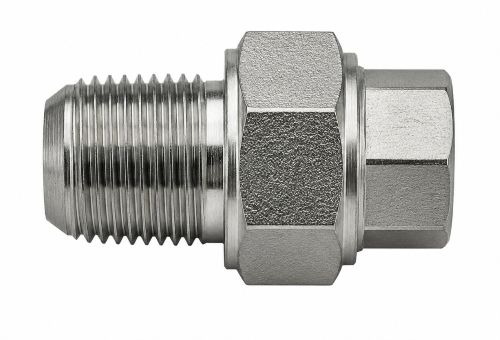
NPT (National Pipe Taper) threads are tapered threads designed to seal through thread interference.
As the male and female threads tighten together, they create a pressure-tight seal.
Key Differences
|
Feature |
NPSM |
NPT |
|
Thread Type |
Straight |
Tapered |
|
Sealing Method |
External seal required |
Thread interference |
|
Diameter |
Constant |
Decreases along length |
|
Primary Function |
Mechanical connection |
Mechanical connection and sealing |
Can They Connect?
In some situations, NPSM and NPT threads may partially engage because they share a similar thread angle and pitch. However, they are not designed to be direct replacements for one another.
Using NPSM and NPT threads together can result in:
1. Poor sealing
2. Incomplete engagement
3. Premature wear
4. Increased leak risk
Whenever possible, use proper adapters instead of attempting direct connections.
NPSM vs NPTF Threads
NPTF (National Pipe Taper Fuel) threads are often called “Dryseal” threads.
Unlike standard NPT threads, NPTF threads are manufactured to tighter tolerances, allowing them to form a seal without requiring additional thread sealants in many applications.
Compatibility Considerations
While NPSM and NPTF threads may appear similar, they are fundamentally different designs.
Potential issues include:
➡️ Sealing failures
➡️ Thread damage
➡️ Reduced pressure capability
Direct interchangeability is generally not recommended.
NPSM vs BSPP Threads
BSPP (British Standard Parallel Pipe) threads are another straight-thread system commonly found in international equipment.
Similarities
Both NPSM and BSPP:
➡️ Use straight threads
➡️ Require external sealing methods
➡️ Are common in hydraulic systems
Differences
Key differences include:
➡️ Thread angle
➡️ Thread pitch
➡️ Dimensional standards
Because of these differences, NPSM and BSPP threads should not be considered interchangeable.
NPSM vs BSPT Threads
BSPT (British Standard Pipe Taper) threads are tapered threads similar in concept to NPT.
However, BSPT threads use different dimensions and thread forms than NPT.
Why Compatibility Problems Occur
Mixing NPSM and BSPT threads can lead to:
➡️ Damaged threads
➡️ Cross-threading
➡️ Leakage
➡️ Connection failure
When working with international equipment, always verify thread specifications before installation.
NPSM Thread Compatibility Chart
The following chart provides a general compatibility overview.
|
Connection Type |
Mechanical Fit |
Reliable Seal |
Recommended |
|
NPSM to NPSM |
Yes |
Yes (with proper seal) |
Yes |
|
NPSM to NPT |
Partial |
No |
Not Recommended |
|
NPSM to NPTF |
Partial |
No |
Not Recommended |
|
NPSM to BSPP |
No |
No |
Not Recommended |
|
NPSM to BSPT |
No |
No |
Not Recommended |
This chart serves as a general guideline. Always consult manufacturer specifications for critical applications.
Common NPSM Compatibility Mistakes
Even experienced technicians occasionally make thread compatibility errors.
Assuming Similar Threads Are Identical
Threads that appear similar may have significant dimensional differences.
Relying Solely on Thread Sealant
Thread sealants cannot compensate for incompatible thread geometries.
Over-Tightening Connections
Excessive torque can damage threads and sealing surfaces.
Ignoring Thread Identification
Failing to verify thread specifications often leads to installation problems.
Mixing International Standards
Combining NPSM, BSPP, BSPT, metric, and other thread systems can create serious compatibility issues.
How to Properly Identify NPSM Threads
Correct identification is essential before selecting fittings or adapters.
Step 1: Measure Diameter
Use calipers to determine the major thread diameter.
Step 2: Measure Thread Pitch
Use a thread pitch gauge to identify thread spacing.
Step 3: Determine Thread Profile
Check whether the thread is straight or tapered.
Step 4: Compare to Standards
Match your measurements to standardized thread charts.
Recommended Tools
➡️ Digital calipers
➡️ Thread pitch gauges
➡️ Thread identification kits
➡️ Inspection manuals
Choosing the Right Adapter for NPSM Connections
Adapters provide a safe solution when connecting different thread types.
Common Adapter Configurations
1. NPSM to NPT
2. NPSM to BSPP
3. NPSM to BSPT
NPSM to hydraulic fitting standards
Factors to Consider
1. Pressure Rating
Ensure the adapter meets system pressure requirements.
2. Material Compatibility
Choose materials suitable for the fluid and operating environment.
3. Corrosion Resistance
Environmental conditions may require stainless steel or specialty materials.
4. Certification Requirements
Certain industries require certified components that meet specific standards.
Best Practices for Installing NPSM Connections
Following proper installation procedures helps maximize system reliability.
Before Installation
1. Inspect threads for damage
2. Clean all mating surfaces
3. Confirm compatibility
4. Select the correct sealing method
During Installation
1. Install seals correctly
2. proper torque
3. Avoid cross-threading
Follow manufacturer recommendations
After Installation
1. Conduct pressure testing
2. Inspect for leaks
3. Monitor system performance
4. Schedule routine maintenance
Industries That Use NPSM Threads
NPSM threads are widely used across numerous industries.
Hydraulic Systems
Hydraulic power units and fluid transfer equipment commonly utilize NPSM connections.
Pneumatic Equipment
Compressed air systems frequently employ NPSM fittings.
Manufacturing Facilities
Industrial machinery often incorporates NPSM connections for fluid handling applications.
Agriculture Equipment
Farm machinery and hydraulic implements frequently use NPSM thread systems.
Process Industries
Chemical processing, food production, and industrial automation systems may utilize NPSM fittings.
Instrumentation and Controls
Pressure gauges, sensors, and control equipment often rely on NPSM connections.
Frequently Asked Questions
Are NPSM and NPT threads interchangeable?
No. Although they may partially engage, they are designed differently and should not be considered interchangeable.
Do NPSM threads require thread sealant?
The threads themselves do not create a seal. A separate sealing method such as an O-ring or gasket is typically required.
Can NPSM threads be used in high-pressure systems?
Yes, when properly designed and sealed. The specific pressure rating depends on the fitting design and application requirements.
How do I identify an NPSM thread?
Measure the diameter, determine the thread pitch, and verify that the thread profile is straight rather than tapered.
What is the biggest mistake when using NPSM threads?
Assuming compatibility with NPT or other thread standards without proper verification.
Conclusion
NPSM threads play an important role in hydraulic, pneumatic, and industrial fluid systems. Their straight-thread design makes them excellent for mechanical connections, but they require separate sealing methods to achieve leak-free performance.
Understanding the differences between NPSM, NPT, NPTF, BSPP, and BSPT threads is essential for preventing installation errors and maintaining system reliability. While some thread types may appear similar, compatibility should never be assumed.
Before selecting fittings, adapters, or replacement components, always verify thread specifications, sealing requirements, and manufacturer recommendations. Taking the time to ensure proper compatibility can prevent leaks, reduce maintenance costs, and improve overall system performance.
Post time: Jun-25-2026