

In hydraulic and fluid power systems, selecting the correct thread type is critical for ensuring safe, reliable, and leak-free operation. Even a small mismatch between thread standards can result in costly downtime, fluid leakage, equipment damage, and increased maintenance expenses.
Among the most commonly confused thread types are the Hydraulic NPSF Thread and the NPT (National Pipe Tapered) thread. While they may appear similar at first glance and share certain dimensional characteristics, they differ significantly in design, sealing methods, and intended applications.
In this guide, we’ll explore the characteristics, advantages, applications, and compatibility considerations of Hydraulic NPSF Thread and NPT threads to help you choose the right connection for your system.
What Is a Hydraulic NPSF Thread?
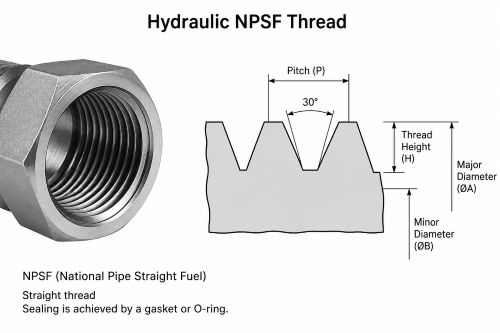
NPSF stands for National Pipe Straight Fuel. It is a straight-thread pipe connection designed primarily for hydraulic and fluid power applications where reliable sealing and high-pressure performance are required.
Unlike tapered pipe threads, NPSF threads do not rely on thread deformation to create a seal. Instead, they utilize specially designed sealing surfaces that provide a secure and leak-resistant connection.
NPSF threads are governed by standards established by organizations such as ANSI and ASME, ensuring consistency in dimensions, tolerances, and performance requirements across industries.
Key Characteristics of Hydraulic NPSF Thread
1. Straight Thread Design
One of the defining features of Hydraulic NPSF Thread is its straight, parallel thread profile. The thread diameter remains constant throughout the length of the fitting.
2. Mechanical Sealing Requirements
NPSF threads achieve sealing through a mechanical seat or sealing surface rather than through thread interference. This design helps maintain a more reliable seal under demanding hydraulic conditions.
3. Thread Profile and Dimensions
NPSF threads share similar thread pitch and profile characteristics with NPT threads but differ in taper. The straight thread design allows for improved alignment and controlled sealing.
4. Common Applications in Hydraulic Systems
Hydraulic NPSF Thread fittings are commonly found in:
➡️ Hydraulic cylinders
➡️ Hydraulic pumps
➡️ Hydraulic motors
➡️ Hydraulic power units
➡️ Industrial fluid power systems
➡️ Heavy equipment and machinery
Advantages of Hydraulic NPSF Thread
1. Reliable Sealing When Properly Assembled
Because sealing occurs at a designated sealing surface, NPSF threads can provide excellent leak resistance when installed correctly.
2. Suitable for Hydraulic Pressure Applications
NPSF connections are specifically designed to perform under the high pressures commonly encountered in hydraulic systems.
3. Reusability and Maintenance Benefits
Since the threads themselves are not responsible for sealing, fittings can often be disconnected and reinstalled with less risk of thread damage.
What Is an NPT Thread?
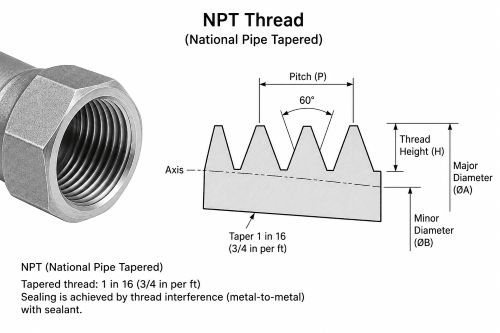
NPT stands for National Pipe Tapered, one of the most widely used pipe thread standards in North America.
NPT threads are designed with a slight taper that allows mating threads to wedge together as they are tightened, creating a seal through thread interference.
NPT threads are standardized under ANSI and ASME specifications, ensuring compatibility among fittings and components manufactured by different suppliers.
Key Characteristics of NPT Thread
1. Tapered Thread Design
Unlike NPSF threads, NPT threads gradually decrease in diameter along the thread length. This taper allows the threads to tighten progressively during assembly.
2. Sealing Through Thread Interference
As the male and female threads engage, they deform slightly and create a seal through compression. Thread sealants such as PTFE tape or pipe thread compounds are commonly used to enhance sealing performance.
3. Common Materials and Fittings
NPT fittings are available in various materials, including:
➡️ Carbon steel
➡️ Stainless steel
➡️ Brass
➡️ Aluminum
➡️ Plastic
Advantages of NPT Threads
1. Widely Available
NPT is one of the most commonly used thread standards worldwide, making fittings easy to source.
2. Simple Installation
Installation is straightforward and generally requires only thread sealant and proper torque.
3. Commonly Used in Plumbing and Industrial Applications
NPT fittings are widely used in water, air, gas, and general fluid transfer systems.
Hydraulic NPSF Thread vs NPT: Side-by-Side Comparison
|
Feature |
Hydraulic NPSF Thread |
NPT Thread |
|
Thread Type |
Straight |
Tapered |
|
Sealing Method |
Mechanical seal |
Thread interference |
|
Pressure Applications |
Hydraulic systems |
General fluid systems |
|
Installation Requirements |
Requires sealing surface |
Requires thread sealant |
|
Reusability |
High |
Moderate |
|
Leak Resistance |
Excellent when properly installed |
Good when correctly sealed |
The most obvious difference between Hydraulic NPSF Thread and NPT threads is their geometry.
NPSF threads remain parallel from end to end, while NPT threads feature a tapered profile that gradually narrows.
To identify the thread type:
➡️ Observe whether the diameter changes along the thread length.
➡️ Use thread gauges for precise measurement.
➡️ Compare dimensions against standard thread charts.
Although NPSF and NPT threads may share similar thread pitches and diameters, their differing taper characteristics make them functionally distinct.
Sealing Mechanism Differences
NPSF threads rely on specially designed sealing surfaces that create a pressure-tight connection independent of the threads themselves.
NPT threads seal through thread engagement and deformation, often requiring additional sealants to prevent leakage.
The dedicated sealing mechanism of NPSF threads generally provides greater reliability in high-pressure hydraulic environments.
Pressure Handling Capabilities
Hydraulic systems often operate at pressures significantly higher than standard plumbing systems.
NPSF threads are specifically designed to withstand demanding hydraulic pressures.
Hydraulic NPSF Thread connections often perform better under vibration, pressure cycling, and mechanical stress due to their sealing design.
Can Hydraulic NPSF Thread and NPT Be Connected Together?
1. Compatibility Considerations
Many technicians notice similarities between NPSF and NPT thread profiles and assume they are interchangeable.
However, while the threads may partially engage, the sealing methods are fundamentally different.
2. Potential Fit Issues
Mixing thread types can create:
➡️ Improper thread engagement
➡️ Incomplete sealing
➡️ Increased stress on fittings
➡️ Accelerated wear
3. Risks of Mixing Thread Types
1. Leakage Problems
Improper sealing can result in fluid leakage and contamination.
2. Damaged Threads
Mismatched threads may cause galling, deformation, or permanent damage.
3. Reduced System Performance
Leaks can reduce operating pressure and overall system efficiency.
4. Increased Maintenance Costs
Frequent repairs and replacements can significantly increase operating expenses.
4. When Adapters Are Required
When connecting systems that use different thread standards, proper adapters should always be used. Choose adapters specifically designed for NPSF-to-NPT conversions.
Best Practices for Conversions:
➡️ Verify thread specifications.
➡️ Follow manufacturer recommendations.
➡️ Perform leak testing after installation.
Common Applications of Hydraulic NPSF Thread
Hydraulic Equipment
Hydraulic NPSF Thread is commonly used in:
1. Hydraulic Cylinders
Reliable sealing under high pressure.
2. Pumps and Motors
Critical fluid transfer connections.
3. Hydraulic Power Units
High-performance fluid management systems.
Industrial Machinery
1. Manufacturing Equipment
Precision hydraulic control systems.
2. Construction Machinery
Excavators, loaders, and heavy-duty equipment.
3. Agricultural Equipment
Tractors, harvesters, and hydraulic implements.
Fluid Power Systems
1. High-Pressure Hydraulic Circuits
Industrial hydraulic networks.
2. Industrial Automation Systems
Automated manufacturing equipment requiring dependable fluid control.
Common Applications of NPT Threads
Plumbing Systems
1. Water Lines
Residential and commercial plumbing installations.
2. Air Systems
Compressed air distribution networks.
3. General Fluid Transfer
Low-to-medium pressure applications.
Industrial Piping
1. Process Industries
Manufacturing and processing facilities.
2. Utility Systems
Water, gas, and utility piping.
3. Low-to-Medium Pressure Applications
General industrial fluid transport.
Pneumatic Equipment
1. Air Compressors
Compressed air connections.
2. Pneumatic Tools
Industrial air-powered equipment.
3. Air Distribution Networks
Facility-wide compressed air systems.
How to Identify Hydraulic NPSF Thread and NPT Threads
Visual Inspection Techniques
1. Recognizing Tapered Threads
The diameter gradually decreases toward the end of the fitting.
2. Recognizing Straight Threads
The diameter remains consistent across the entire threaded section.
Measuring Thread Dimensions
Tools Required
➡️ Thread pitch gauge
➡️ Calipers
➡️ Thread identification chart
Step-by-Step Measurement Process:
1. Measure the outside diameter.
2. Determine thread pitch.
3. Check for taper.
4. Compare results with thread standards.
Common Identification Mistakes
1. Assuming Thread Compatibility
Similar appearance does not guarantee compatibility.
2. Ignoring Sealing Surfaces
Always inspect sealing features beyond the threads.
3. Misreading Thread Gauges
Use calibrated tools and verify measurements carefully.
Installation Best Practices
Hydraulic NPSF Thread Installation Tips
1. Proper Torque Procedures
Follow manufacturer torque specifications to prevent damage.
2. Seal Inspection
Inspect sealing surfaces before assembly.
3. Component Alignment
Ensure proper alignment to avoid cross-threading.
NPT Installation Tips
1. Appropriate Thread Sealants
Use PTFE tape or approved pipe sealants.
2. Torque Recommendations
Avoid excessive tightening that may crack fittings.
3. Avoiding Overtightening
Proper torque helps maintain thread integrity.
Maintenance Recommendations
1. Regular Inspections
Check for leaks, wear, and thread damage.
2. Leak Detection Procedures
Perform routine pressure testing.
3. Damage Prevention
Use proper tools and handling techniques during installation and removal.
Choosing Between Hydraulic NPSF Thread and NPT
Factors to Consider
1. Operating Pressure
Higher pressures generally favor Hydraulic NPSF Thread connections.
2. Fluid Type
Fluid compatibility may influence thread selection.
3. Industry Requirements
Many industries specify thread standards for compliance purposes.
4. Maintenance Expectations
Consider serviceability and long-term reliability requirements.
When to Choose Hydraulic NPSF Thread
Choose Hydraulic NPSF Thread when:
➡️ Operating in high-pressure hydraulic systems
➡️ Maximum leak resistance is required
➡️ Equipment reliability is critical
➡️ Frequent maintenance is expected
When to Choose NPT
Choose NPT when:
➡️ Working with general-purpose fluid systems
➡️ Installing plumbing or pneumatic equipment
➡️ Cost and availability are primary concerns
➡️ Operating pressures are moderate
Frequently Asked Questions (FAQ)
Is Hydraulic NPSF Thread the Same as NPT?
No. NPSF uses a straight thread design and mechanical sealing, while NPT uses tapered threads and thread interference for sealing.
Can NPSF and NPT Threads Be Used Together?
Direct connection is generally not recommended. Proper adapters should be used to ensure safe and reliable performance.
Which Thread Type Provides Better Leak Resistance?
For hydraulic applications, Hydraulic NPSF Thread typically provides superior leak resistance due to its dedicated sealing mechanism.
Does Hydraulic NPSF Thread Require Thread Sealant?
In many cases, the seal is created by the sealing surface rather than the threads, reducing reliance on thread sealants.
How Do You Identify an NPSF Thread?
Look for a straight thread profile, measure dimensions with thread gauges, and inspect for sealing surfaces.
Which Thread Type Is Better for Hydraulic Systems?
Hydraulic NPSF Thread is generally better suited for high-pressure hydraulic systems because it was specifically designed for fluid power applications.
Conclusion
Although Hydraulic NPSF Thread and NPT threads may appear similar, they are designed for different sealing methods and applications. Hydraulic NPSF Thread features a straight-thread design and mechanical sealing surface, making it ideal for high-pressure hydraulic systems. NPT threads use a tapered design and thread interference to create a seal, making them suitable for plumbing, pneumatic, and general industrial fluid applications.
Selecting the correct thread type is essential for ensuring safety, performance, and long-term reliability. Engineers, technicians, maintenance professionals, and equipment buyers should always verify thread specifications before installation and avoid assuming compatibility between thread standards.
By understanding the key differences between Hydraulic NPSF Thread and NPT connections, you can make informed decisions that reduce leakage risks, improve system efficiency, and extend equipment life.
Post time: Jun-04-2026