

International fuel fittings are connection components used to join fuel hoses, tubes, pipes, tanks, pumps, filters, and other fuel-system parts. Because fuel systems are used across equipment manufactured in different countries, these fittings are available with various thread standards, connection styles, materials, and sealing methods.
Choosing the right international fuel fitting is more than finding a fitting that looks like it will fit. Thread compatibility, fuel type, pressure, temperature, material, and sealing method all need to be considered before installation.
This guide covers the common types of international fuel fittings, the standards and thread systems you may encounter, their applications, and the key factors to consider when selecting them.
What Are International Fuel Fittings?
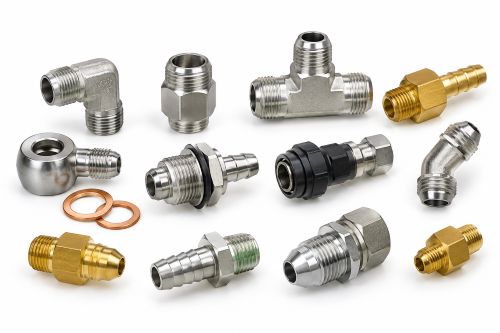
International fuel fittings are designed to provide secure connections in fuel delivery and transfer systems. They can connect fuel lines to tanks, pumps, filters, injectors, engines, valves, and other components.
The term “international” generally refers to the wide range of connection standards used in equipment around the world. For example, machinery designed in North America may use SAE or NPT-related connections, while European equipment may use metric or BSP-based connections.
A fuel fitting normally performs two important functions. First, it provides a mechanically secure connection. Second, it helps create a leak-resistant seal around the fuel passage.
A properly selected fitting should match the fuel system’s connection type, dimensions, operating pressure, temperature, and fuel compatibility requirements.
Common Types of International Fuel Fittings
Fuel fittings come in many configurations. The right design depends largely on the layout of the fuel system and the type of connection required.
Straight Fuel Fittings
Straight fittings are among the simplest fuel connection components. They connect two components that are positioned along the same axis.
They are commonly used between fuel hoses, tubes, filters, pumps, and other components where no change in direction is required.
Their simple design also makes them useful in applications where installation space is limited but the connection remains accessible.
Elbow Fuel Fittings
Elbow fittings change the direction of a fuel line. Common configurations include 45-degree and 90-degree elbows.
They are particularly useful when a straight fuel line would interfere with other components or when the available installation space is restricted.
A properly selected elbow can help create a cleaner routing path and reduce unnecessary bending of the fuel hose or tube.
Tee and Cross Fuel Fittings
Tee fittings have three connection points and are commonly used when one fuel line needs to branch into two paths or when two lines need to connect to a common line.
Cross fittings provide four connection points and can be used in more complex fuel distribution systems.
The fitting must be properly sized for the intended flow requirements and connection standards.
Adapter Fuel Fittings
Adapter fittings are especially important in international equipment because different components may use different connection standards.
For example, an adapter may allow a component with one thread type to connect to a fuel line using another compatible connection system.
However, adapters should not be selected simply because the threads appear similar. The actual thread type, dimensions, sealing method, pressure rating, and fuel compatibility should always be verified.
Bulkhead Fuel Fittings
Bulkhead fittings are designed for installations where a fuel line passes through a panel, tank wall, enclosure, or other barrier.
They typically include a mounting section that secures the fitting in place while allowing the fuel line to connect on both sides.
These fittings are useful in fuel tanks, machinery enclosures, and applications where the fuel connection must pass through a structural surface.
Banjo Fuel Fittings
Banjo fittings have a compact design that can be useful in areas where conventional straight or elbow fittings would require too much space.
A typical banjo connection uses a hollow bolt together with sealing washers to create the connection.
They are commonly found in engine and fuel-system applications where space around the connection is restricted.
Compression and Flare Fittings
Compression fittings use a mechanical compression element to secure the tube and create a seal.
Flare fittings, on the other hand, use a formed or flared end of the tube to create the sealing interface.
Both designs can provide reliable connections when correctly matched to the tube, fitting, and operating conditions.
Quick-Connect Fuel Fittings
Quick-connect fittings are designed for applications where fuel lines may need to be disconnected and reconnected during maintenance or servicing.
They can save installation time and make component replacement easier. However, the fitting must be specifically rated and compatible with the fuel system in which it is being used.
International Fuel Fitting Standards and Thread Types
One of the biggest challenges when selecting international fuel fittings is identifying the correct thread standard. Different countries, industries, and equipment manufacturers may use different systems.
SAE Fuel Fittings
SAE standards are widely used in North American automotive, industrial, and mobile equipment applications.
Depending on the specific fitting and application, SAE-related connections may use different thread and sealing configurations.
When replacing an SAE fitting, it is important to identify the exact connection specification rather than relying only on the fitting’s outside appearance.
NPT and NPTF Threads
NPT, or National Pipe Thread, is a common tapered pipe thread system.
NPTF is a related dryseal thread design intended to provide sealing through the thread itself under appropriate conditions.
Although NPT and NPTF fittings may look very similar, they should not automatically be treated as interchangeable. The specific application and manufacturer’s requirements should be checked before substitution.
BSP, BSPP, and BSPT Threads
BSP stands for British Standard Pipe. It is widely encountered in equipment and machinery used in Europe and other international markets.
BSPP uses parallel threads, while BSPT uses tapered threads.
Because BSP and NPT threads can look similar, confusing the two can lead to damaged threads, poor sealing, and fuel leakage. Thread identification should therefore be based on measurements and specifications rather than appearance alone.
Metric Fuel Fittings
Metric threads are common in European, Asian, and many internationally manufactured machines.
Metric fitting specifications are generally identified using dimensions such as thread diameter and pitch.
Metric fittings are not automatically interchangeable with imperial or pipe-thread systems simply because their dimensions appear close. Correct thread identification is essential.
JIC and Flare Connections
JIC connections are commonly associated with 37-degree flare designs and are widely used in fluid-power and industrial applications.
Where a JIC-type connection is specified for a fuel application, the fitting and sealing arrangement must be confirmed as suitable for the fuel and operating conditions.
DIN-Based Connections
DIN standards are widely encountered in European industrial equipment.
Some DIN connection systems are associated with hydraulic applications, while related connection technologies may also appear in other fluid systems. Therefore, the exact DIN specification and intended application should always be confirmed rather than treating all DIN fittings as fuel fittings.
Materials Used for International Fuel Fittings
The fitting material affects corrosion resistance, strength, weight, durability, and fuel compatibility.
Brass Fuel Fittings
Brass is widely used for various fluid connections because it offers good corrosion resistance and is relatively easy to machine.
Brass fittings can be suitable for many fuel-system applications, but the specific fuel and operating conditions should always be checked for compatibility.
Carbon Steel Fuel Fittings
Carbon steel provides high mechanical strength and is commonly used in demanding industrial applications.
Because untreated carbon steel can corrode, fuel fittings made from this material may use protective surface treatments or coatings to improve corrosion resistance.
Stainless Steel Fuel Fittings
Stainless steel is valued for its corrosion resistance and durability.
It can be a good choice for harsh environments, marine applications, and systems where long-term corrosion resistance is important.
The main disadvantage is typically higher material and manufacturing cost compared with some other fitting materials.
Aluminum Fuel Fittings
Aluminum fittings are lightweight and can be useful where reducing system weight is important.
They are commonly considered in automotive, motorsport, aerospace-related, and other weight-sensitive applications, provided the material is suitable for the fuel and operating environment.
Sealing Methods Used in Fuel Fittings
A reliable connection requires more than compatible threads. The sealing method must also match the fitting design.
O-Ring Seals
O-rings provide sealing between mating surfaces and are used in many types of fluid connections.
The O-ring material is important because it must remain compatible with the fuel, temperature range, and operating conditions.
A damaged, incorrectly sized, or chemically incompatible O-ring can result in leakage.
Flare Seals
Flare connections create a seal through contact between the mating flare surfaces.
They are useful in applications where a properly formed tube and correctly matched fitting are required.
The flare angle, tube size, and fitting specification must all match.
Sealing Washers
Banjo fittings and some other fuel connections use sealing washers between mating surfaces.
These washers may be made from materials such as copper or other application-specific sealing materials.
They need to be correctly sized and properly installed to create the intended seal.
Thread Sealants
Some threaded connections may require a compatible thread sealant, while others are designed to seal without one.
The sealant must be suitable for the fuel and the fitting material. Using an inappropriate sealant can cause leakage or introduce unwanted material into the fuel system.
Applications of International Fuel Fittings
International fuel fittings are used across a wide range of equipment and industries.
Automotive Fuel Systems
Fuel fittings are used throughout automotive fuel systems to connect tanks, fuel pumps, filters, fuel rails, hoses, and other components.
Compact fittings are particularly important in engine compartments where available space is limited.
Diesel Engines
Diesel fuel systems often require durable connections capable of handling vibration, temperature changes, and demanding operating conditions.
Fuel fittings can be used in fuel supply, return, filtration, and transfer systems.
Agricultural Machinery
Tractors, harvesters, sprayers, and other agricultural machines depend on reliable fuel connections.
Because these machines often operate in dusty, wet, and outdoor environments, fitting durability and corrosion resistance can be important considerations.
Construction Equipment
Excavators, loaders, cranes, and other construction machines operate under heavy vibration and demanding environmental conditions.
Fuel fittings used on these machines need to provide secure connections while remaining suitable for the equipment’s fuel, pressure, temperature, and maintenance requirements.
Marine Fuel Systems
Marine applications can expose fuel-system components to moisture, salt, and corrosive environments.
Material selection becomes especially important in these conditions. Stainless steel and other corrosion-resistant materials may be considered depending on the application.
Generators and Industrial Equipment
Generators and industrial machines use fuel fittings to connect tanks, filters, pumps, engines, and fuel lines.
For equipment designed for continuous or standby operation, reliable fuel connections are important for maintaining consistent fuel delivery.
How to Choose the Right International Fuel Fitting
Selecting a fuel fitting should start with the application rather than the fitting’s appearance.
1. Identify the Fuel Type
First determine what fuel the fitting will carry.
Gasoline, diesel, biodiesel blends, and other fuels can have different compatibility requirements. The fitting body and sealing materials should be suitable for the specific fuel.
2. Identify the Connection Type
Determine whether the connection requires a threaded, flare, compression, hose, banjo, bulkhead, or quick-connect fitting.
The connection style should match the component being connected.
3. Determine the Thread Standard
Identify whether the connection uses metric, NPT/NPTF, BSPP, BSPT, SAE, JIC, or another specified thread system.
Thread diameter and pitch should be measured when the specification is unknown.
4. Check the Size
Confirm the tube or hose size as well as the fitting dimensions.
Nominal sizes can vary between different standards, so the actual connection specification should be checked carefully.
5. Check Pressure and Temperature
The fitting needs to withstand the system’s operating conditions.
Consider normal operating pressure, pressure fluctuations, maximum temperature, and minimum temperature when selecting the fitting.
6. Select the Appropriate Material
Choose a material based on fuel compatibility, corrosion exposure, mechanical requirements, temperature, weight, and cost.
7. Confirm the Sealing Method
Check whether the fitting requires an O-ring, flare, sealing washer, thread sealant, or another sealing method.
The sealing component should be compatible with both the fitting and the fuel.
8. Verify the Manufacturer’s Specifications
When possible, use the manufacturer’s dimensional drawings, technical specifications, and application information.
This is particularly important for replacement parts and international equipment where similar-looking fittings may use different standards.
Common Problems When Selecting International Fuel Fittings
Many fuel fitting problems result from small compatibility mistakes.
Mixing Different Thread Standards
One of the most common mistakes is assuming that similar-looking threads are interchangeable.
Forcing an incompatible fitting can damage the threads and may result in leakage.
Confusing BSP With NPT
BSP and NPT fittings can appear similar, especially when the fitting is not measured carefully.
However, differences in thread geometry mean they should not be treated as interchangeable without confirmation.
Choosing the Wrong Material
A fitting that is mechanically strong may still be unsuitable if its material or coating is incompatible with the fuel or environment.
Corrosion, chemical degradation, and premature failure can result from poor material selection.
Ignoring Pressure and Temperature
A fitting should not be selected based solely on its thread size.
The pressure and temperature ratings also need to meet the requirements of the fuel system.
Using the Wrong Seal
An incorrect O-ring, sealing washer, or thread sealant can cause leakage even when the fitting body itself is suitable.
Always check the complete connection rather than evaluating the fitting alone.
International Fuel Fittings vs. Standard Hydraulic Fittings
International fuel fittings and hydraulic fittings can share similar manufacturing technologies, materials, threads, and connection designs. However, that does not mean they are automatically interchangeable.
Hydraulic systems commonly use hydraulic oils, while fuel systems may contain gasoline, diesel, biodiesel, or other fuels with different chemical and operating characteristics.
A hydraulic fitting should therefore not automatically be installed in a fuel system simply because the threads match.
Before substituting one fitting for another, verify the fitting’s material, seal, pressure rating, temperature range, fluid compatibility, and intended application.
Tips for Installing International Fuel Fittings
Proper installation is just as important as selecting the right fitting.
Start by cleaning the threads, sealing surfaces, hoses, and tubes before assembly. Dirt or metal particles can interfere with sealing and may contaminate the fuel system.
Never force a fitting with the wrong thread. If the fitting does not engage smoothly, stop and verify the thread type and size.
Use the manufacturer’s recommended installation torque when available. Over-tightening can damage threads, seals, or fitting bodies, while insufficient tightening may result in leakage.
For fittings using O-rings or sealing washers, make sure the sealing element is correctly positioned and free from damage.
After installation, inspect the connection carefully and check for leaks under the appropriate operating conditions.
How Manufacturers Ensure Fuel Fitting Quality
Reliable fuel fittings begin with accurate manufacturing and quality control.
Manufacturers may inspect incoming materials, control machining dimensions, check thread profiles, inspect sealing surfaces, and perform dimensional testing throughout production.
Depending on the fitting design and application, additional testing may include pressure testing, leak testing, surface-treatment inspection, and other quality checks.
For OEM applications, manufacturers may also produce customized fitting sizes, thread combinations, materials, surface finishes, and connection configurations.
When purchasing international fuel fittings in bulk, buyers should consider not only price but also dimensional consistency, material quality, production capability, testing procedures, and the manufacturer’s ability to maintain stable specifications between batches.
Frequently Asked Questions About International Fuel Fittings
What are international fuel fittings?
International fuel fittings are connection components used in fuel systems around the world. They connect fuel hoses, tubes, tanks, pumps, filters, engines, and other components using different thread and connection standards.
What thread types are commonly used for fuel fittings?
Depending on the equipment and application, you may encounter metric, NPT/NPTF, BSPP, BSPT, SAE-related, JIC, and other connection systems. The exact standard should always be confirmed before selecting a replacement fitting.
Are NPT and BSP fuel fittings interchangeable?
Generally, they should not be assumed to be interchangeable. Their thread profiles and sealing characteristics differ, so the exact specifications should be checked before installation.
How do I identify a fuel fitting thread?
Start by checking the fitting documentation. If documentation is unavailable, thread diameter, pitch, thread form, and whether the thread is tapered or parallel can help identify the connection. A thread gauge can also be useful.
What materials are commonly used for fuel fittings?
Common materials include brass, carbon steel, stainless steel, and aluminum. The best choice depends on fuel compatibility, corrosion resistance, pressure, temperature, mechanical loads, and application requirements.
Can hydraulic fittings be used for fuel?
Not automatically. Even if the hydraulic fitting has a compatible thread, its material, seals, pressure rating, and fluid compatibility must be suitable for the fuel application.
How do I choose the right international fuel fitting?
Start with the fuel type and then confirm the connection style, thread standard, size, material, sealing method, pressure rating, temperature range, and installation requirements.
Conclusion
International fuel fittings provide the connections that keep fuel systems properly assembled and functioning. With so many thread standards, materials, connection styles, and sealing methods available, selecting the right fitting requires more than matching a size.
The fuel type, thread standard, fitting dimensions, material, pressure, temperature, and sealing method should all be considered before installation.
For replacement parts, OEM equipment, or international machinery, verifying the fitting specification with a qualified manufacturer or supplier can help prevent compatibility problems, leakage, and unnecessary downtime.
Post time: Oct-08-2026