

Hydraulic systems often operate under demanding conditions. Hoses move, machinery pivots, cylinders extend and retract, and components constantly change position. When hydraulic hoses are forced to twist or bend with this movement, they can wear out faster and may eventually develop leaks or other failures.
This is where hydraulic swivel connectors become useful.
A hydraulic swivel connector is designed to allow controlled rotation between connected hydraulic components while maintaining a sealed path for hydraulic fluid. By accommodating movement, it can reduce hose twisting, improve flexibility, and help protect the hydraulic system from unnecessary mechanical stress.
In this guide, we will explain what hydraulic swivel connectors are, how they work, their main components and types, their benefits, applications, installation considerations, and how to choose the right one for your hydraulic system.
What Are Hydraulic Swivel Connectors?
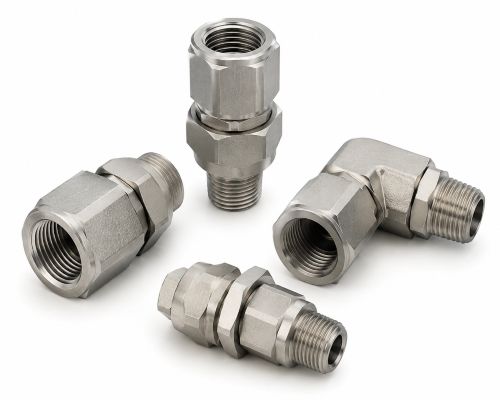
A hydraulic swivel connector is a type of hydraulic fitting that allows one connected component to rotate relative to another. Unlike a standard fixed fitting, a swivel connector has a rotating section that provides movement while maintaining the hydraulic connection.
The basic idea is simple. A hydraulic hose may need to move as a machine operates, but the hose itself should not be forced to twist continuously. The swivel connector absorbs or accommodates this rotational movement, helping the hose maintain a more natural position.
Hydraulic swivel connectors are commonly used in mobile equipment, construction machinery, agricultural equipment, material-handling systems, and industrial hydraulic applications.
They are available in different sizes, thread configurations, materials, shapes, and pressure ratings to suit different hydraulic systems.
What Is the Main Purpose of a Hydraulic Swivel Connector?
The main purpose of a hydraulic swivel connector is to provide flexibility between connected hydraulic components.
In a fixed hydraulic system, a standard fitting may work perfectly well because the connected components do not move significantly. However, mobile machinery creates a different situation.
For example, consider a hydraulic hose connected to a moving boom on an excavator. As the boom moves, the hose may change direction or position. Without sufficient flexibility, the hose can become twisted, bent, or pulled.
A swivel connector allows the connection to rotate as the equipment moves.
This can help:
1. Reduce hose twisting
2. Reduce unnecessary bending
3. Improve hose routing
4. Accommodate equipment movement
5. Reduce mechanical stress
6. Improve system reliability
7. Potentially extend hose service life
It is important to remember that a swivel connector does not make a hydraulic hose immune to damage. Correct hose routing, bend radius, pressure rating, and installation are still essential.
How Do Hydraulic Swivel Connectors Work?
The working principle of a hydraulic swivel connector is relatively straightforward.
The connector has a stationary and rotating portion. The rotating section allows controlled movement between the connected components while an internal fluid passage maintains hydraulic flow.
Sealing elements inside the connector prevent hydraulic fluid from escaping while the components move relative to each other.
For example, imagine a hydraulic hose connected to a component that rotates during machine operation. Instead of forcing the hose itself to absorb all of that rotational movement, the swivel allows the connection to rotate.
This reduces torsional stress on the hose.
The exact internal construction depends on the design. Some swivel connectors use specific bearing or support surfaces, sealing arrangements, and rotating joints designed for particular pressure, temperature, and movement requirements.
Why Rotation Matters
Hydraulic hoses are designed to handle pressure and controlled bending, but excessive twisting can cause problems.
Repeated torsional stress may contribute to:
1. Hose deformation
2. Premature wear
3. Damage to reinforcement layers
4. Fitting-related stress
5. Leakage
6. Reduced hose service life
A properly selected swivel connector can help minimize these problems by allowing movement where it is needed.
Main Components of a Hydraulic Swivel Connector
Although designs vary, most hydraulic swivel connectors contain several important components.
1. Swivel Body
The body provides the structural connection between the hydraulic components. It must be strong enough to withstand the system’s working pressure and mechanical loads.
Common materials include carbon steel and stainless steel, depending on the application.
2. Rotating Joint
The rotating joint is the key feature that differentiates a swivel connector from a standard fixed fitting.
It allows one section of the connector to rotate relative to another while maintaining the hydraulic connection.
3. Sealing Elements
Seals help prevent hydraulic fluid from leaking through the rotating joint.
Seal material is important because different hydraulic fluids and operating temperatures can affect seal performance. The seal must be compatible with the hydraulic fluid and the expected operating environment.
4. Internal Fluid Passage
The connector contains an internal passage that allows hydraulic fluid to travel through the fitting.
The passage needs to provide suitable fluid flow without creating unnecessary restrictions.
5. Threaded Connection Ends
Hydraulic swivel connectors can use different thread standards and connection configurations.
Common options include:
➡️ BSP
➡️ NPT
➡️ Metric
➡️ JIC
➡️ ORFS
➡️ Other application-specific connections
The thread type must match the corresponding hose, adapter, valve, cylinder, or equipment port.
Types of Hydraulic Swivel Connectors
Hydraulic swivel connectors are available in several configurations.
Straight Hydraulic Swivel Connectors
Straight swivel connectors provide a direct connection between two components while allowing rotational movement.
They are useful when the hose can be routed in a relatively straight line.
90-Degree Hydraulic Swivel Connectors
A 90-degree swivel connector changes the direction of the hydraulic connection while providing rotational flexibility.
These fittings can be useful in compact equipment where hose routing space is limited.
Adjustable or Multi-Angle Swivel Connectors
Some hydraulic swivel fittings provide greater positioning flexibility. These designs can make hose installation easier when the connection needs to accommodate changing equipment positions.
Hose-to-Hose Swivel Connectors
These connectors are designed to join two hydraulic hose sections while allowing relative rotation.
They can be useful in systems where two connected hose sections need additional movement.
Hose-to-Port Swivel Connectors
These fittings connect a hydraulic hose to a port on a hydraulic component such as a valve, pump, motor, or cylinder.
They can provide useful flexibility where the hose needs to move relative to the fixed component.
Benefits of Hydraulic Swivel Connectors
1. Reduce Hose Twisting
One of the biggest advantages is reduced hose twisting.
Instead of forcing the hose to rotate whenever connected equipment moves, the swivel can accommodate some of that movement.
2. Improve Hose Flexibility
A swivel connector gives hydraulic hoses more freedom to move naturally.
This is especially useful on machinery with moving arms, booms, attachments, or rotating components.
3. Reduce Mechanical Stress
Excessive twisting and bending can place stress on hydraulic hoses and their connections.
Using a properly selected swivel can help reduce these loads and improve the overall arrangement of the hydraulic system.
4. Improve Hose Service Life
Reduced mechanical stress can help minimize premature hose wear.
However, actual service life also depends on hose quality, operating pressure, temperature, routing, bend radius, abrasion, and maintenance.
5. Simplify Hose Routing
Swivel connectors can make hose routing easier, particularly in areas where components move or where installation space is limited.
6. Support Mobile Hydraulic Equipment
Mobile hydraulic equipment frequently changes position during operation. Swivel connectors are well suited to these applications because they can accommodate movement between connected components.
Hydraulic Swivel Connectors vs. Standard Hydraulic Connectors
The main difference is movement.
A standard hydraulic connector is generally designed to create a fixed connection between two components. A swivel connector, on the other hand, allows controlled rotational movement.
|
Feature |
Hydraulic Swivel Connector |
Standard Hydraulic Connector |
|
Rotation |
Allows controlled rotation |
Generally fixed |
|
Hose movement |
Better suited to moving systems |
Better suited to fixed systems |
|
Hose twisting |
Helps reduce twisting |
May transmit movement to the hose |
|
Installation flexibility |
High |
Moderate |
|
Typical use |
Mobile and dynamic applications |
Fixed connections |
|
Hose stress |
Can reduce torsional stress |
May result in greater stress if movement is present |
This does not mean swivel connectors are always better. If the hydraulic connection does not require movement, a standard fitting may be simpler and more cost-effective.
The correct choice depends on the application.
Common Applications of Hydraulic Swivel Connectors
Hydraulic swivel connectors are used across many industries.
Construction Equipment
Construction machines often have moving hydraulic components and attachments.
Common applications include:
1. Excavators
2. Loaders
3. Backhoes
4. Cranes
5. Hydraulic attachments
Swivel connectors can help hydraulic hoses accommodate movement in these machines.
Agricultural Machinery
Agricultural equipment can also require flexible hydraulic connections.
Swivel fittings may be found in:
1. Tractors
2. Harvesters
3. Sprayers
4. Agricultural implements
5. Hydraulic attachments
Forklifts and Material-Handling Equipment
Forklifts and other material-handling machines use hydraulic systems for lifting, tilting, and positioning.
Swivel connectors can help accommodate movement around hydraulic cylinders and moving assemblies.
Industrial Machinery
Industrial hydraulic equipment may use swivel connectors where hoses need to move or rotate during operation.
Examples include:
1. Hydraulic presses
2. Manufacturing machinery
3. Automated equipment
4. Material-handling systems
5. Specialized hydraulic machinery
Mobile Hydraulic Systems
Mobile hydraulic systems are one of the most common applications because hoses often move along with the machine.
Whenever a hydraulic hose is exposed to repeated movement, proper connection design becomes especially important.
How to Choose the Right Hydraulic Swivel Connector
Choosing a hydraulic swivel connector involves more than selecting a fitting that physically fits the hose.
Several specifications should be checked before installation.
1. Check the Working Pressure
Always select a connector with a suitable pressure rating for the hydraulic system.
Do not base the selection only on normal operating pressure. Pressure spikes and dynamic operating conditions should also be considered.
2. Identify the Thread Type
Confirm the thread standard before purchasing a connector.
For example, BSP, NPT, Metric, JIC, and ORFS connections are not interchangeable simply because they appear similar.
Using the wrong thread can result in poor sealing, thread damage, or leakage.
3. Select the Correct Size
The connector size should match the hydraulic hose and mating port.
The size also affects fluid flow and system performance.
4. Choose the Appropriate Material
Carbon steel is widely used for many hydraulic applications because of its strength and durability.
Stainless steel may be preferred in environments where corrosion resistance is especially important.
The best material depends on the operating environment, hydraulic fluid, temperature, pressure, and expected service conditions.
5. Check Temperature Requirements
Hydraulic systems can operate at elevated temperatures.
The connector and its sealing elements should be suitable for the expected temperature range.
6. Check Hydraulic Fluid Compatibility
The connector’s sealing materials should be compatible with the hydraulic fluid being used.
Always refer to the manufacturer’s specifications when selecting seals and materials.
7. Consider the Required Movement
Think about how the hose and equipment will move during normal operation.
A swivel connector should be selected based on the actual movement requirements rather than simply being added because it provides rotation.
Installation Tips for Hydraulic Swivel Connectors
Proper installation is just as important as choosing the correct connector.
Verify Compatibility
Before installation, confirm:
1. Thread type
2. Connector size
3. Pressure rating
4.v Hose compatibility
5. Seal material
6. Temperature rating
7. Hydraulic fluid compatibility
Keep Connections Clean
Dirt and debris can damage sealing surfaces and contaminate the hydraulic system.
Clean the fitting, hose, and connection area before assembly.
Avoid Cross-Threading
Start threaded connections carefully and make sure the threads engage correctly.
Cross-threading can permanently damage both the fitting and the mating component.
Avoid Over-Tightening
More tightening does not necessarily mean better sealing.
Excessive torque can damage threads, seals, or components. Follow the fitting manufacturer’s recommended installation procedure and torque specifications.
Position the Swivel Correctly
Set the swivel in the correct orientation during installation.
Do not use the swivel as a substitute for proper hose routing or force the hose into an unsuitable position.
Inspect After Installation
Once the system is assembled, inspect the connection for leaks and abnormal movement before returning the equipment to normal operation.
Common Problems With Hydraulic Swivel Connectors
Even a quality swivel connector can experience problems if it is incorrectly selected, installed, or maintained.
Hydraulic Fluid Leakage
Leaks may result from:
1. Damaged seals
2. Incorrect installation
3. Loose connections
4. Worn components
5. Incorrect thread selection
A leaking swivel connector should be inspected promptly.
Restricted Rotation
If the connector becomes difficult to rotate, possible causes may include contamination, wear, improper installation, or excessive mechanical loading.
Do not force a damaged swivel to rotate.
Thread Damage
Thread damage can occur when the wrong thread type is used, when connections are cross-threaded, or when excessive tightening force is applied.
Premature Hose Wear
If a hose continues to twist or bend excessively even with a swivel connector installed, check the entire hose routing arrangement.
The problem may be caused by incorrect hose length, insufficient bend radius, abrasion, or incorrect swivel positioning.
Maintenance of Hydraulic Swivel Connectors
Regular inspection can help identify problems before they lead to hydraulic failure.
During routine maintenance, check for:
1. Hydraulic fluid leaks
2. Damaged or worn seals
3. Corrosion
4. vPhysical damage
5. Loose connections
6. Unusual resistance during rotation
7. Hose abrasion
8. Excessive hose movement
If a swivel connector shows significant wear or damage, replacement is usually the safer option.
Maintenance intervals depend on the equipment, operating environment, usage frequency, and manufacturer’s recommendations.
Safety Considerations
Hydraulic systems can operate at extremely high pressures, so safety should always come first.
Before servicing a hydraulic swivel connector:
1. Shut down the equipment.
2. Relieve hydraulic pressure according to the manufacturer’s procedure.
3. Allow hot components and hydraulic fluid to cool when necessary.
4. Use appropriate personal protective equipment.
5. Never use your hands to search for a hydraulic leak.
6. Make sure replacement components have the correct pressure rating.
7. Follow the equipment and fitting manufacturer’s instructions.
A small hydraulic leak can be dangerous because pressurized fluid can penetrate the skin.
Hydraulic Swivel Connector Selection Checklist
Before purchasing or installing a hydraulic swivel connector, check the following:
1. Connector type: Is a straight, 90-degree, or other configuration required?
2. Size: Does it match the hose and port?
3. Thread: Is the thread standard correct?
4. Pressure: Is the pressure rating suitable?
5. Temperature: Can it handle the operating temperature?
6. Material: Is the material appropriate for the environment?
7. Fluid: Are the seals compatible with the hydraulic fluid?
8. Movement: Does the connector provide the required rotational flexibility?
9. Hose routing: Is the hose installed with the correct bend radius?
10. Quality: Does the fitting meet the required specifications and quality standards?
Taking a few minutes to verify these points can prevent costly installation and maintenance problems later.
Frequently Asked Questions
What is a hydraulic swivel connector?
A hydraulic swivel connector is a fitting that allows controlled rotational movement between connected hydraulic components while maintaining a sealed path for hydraulic fluid.
How does a hydraulic swivel connector work?
It uses a rotating connection and sealing system that allows one part of the fitting to move relative to another while hydraulic fluid continues to flow through the internal passage.
Why are swivel connectors used in hydraulic systems?
They are primarily used to accommodate movement and help reduce hose twisting, bending, and mechanical stress in dynamic hydraulic applications.
Can hydraulic swivel connectors rotate continuously?
It depends on the specific connector design. Not every hydraulic swivel is intended for continuous rotation. Always check the manufacturer’s specifications for allowable rotational speed, movement, pressure, and duty cycle.
What thread types are available for hydraulic swivel connectors?
Depending on the manufacturer and application, hydraulic swivel connectors may be available with BSP, NPT, Metric, JIC, ORFS, and other connection types.
How do I choose the right hydraulic swivel connector?
Consider the required connector configuration, size, thread type, working pressure, temperature, material, hydraulic fluid compatibility, seal material, and required movement.
Do hydraulic swivel connectors prevent hose damage?
They can help reduce hose twisting and mechanical stress, but they do not eliminate all causes of hose failure. Proper hose selection, routing, bend radius, pressure rating, and maintenance remain important.
How often should hydraulic swivel connectors be replaced?
There is no universal replacement interval. Replacement depends on operating conditions and component condition. A connector should be replaced when it shows significant leakage, damage, excessive wear, or other signs of failure.
Conclusion
Hydraulic swivel connectors are simple but important components in hydraulic systems that experience movement. Their ability to accommodate controlled rotation can help reduce hose twisting, improve routing flexibility, and minimize unnecessary mechanical stress.
They are especially useful in construction equipment, agricultural machinery, forklifts, industrial equipment, and other mobile hydraulic applications.
When selecting a hydraulic swivel connector, pay close attention to the size, thread type, pressure rating, material, temperature range, seal compatibility, and movement requirements. Proper installation and regular inspection are equally important for reliable performance.
The right swivel connector will not solve every hose-related problem, but when correctly selected and installed, it can make a hydraulic system more flexible, reliable, and better suited to demanding operating conditions.
Post time: Aug-11-2026