

Hydraulic lubrication fittings are small components, but they play an important role in keeping machinery properly lubricated. They provide a connection point for grease guns and lubrication systems, allowing grease or lubricant to reach bearings, joints, pins, bushings, and other moving parts.
Choosing the right fitting requires more than simply finding one that looks similar to the existing part. Thread type, size, material, pressure rating, fitting angle, and operating environment all need to be considered.
In this guide, we will explain the most important hydraulic lubrication fitting specifications and how to choose the right fitting for your application.
What Are Hydraulic Lubrication Fittings?
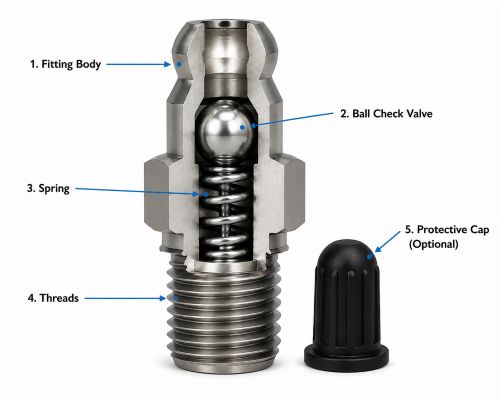
Hydraulic lubrication fittings, often called grease fittings or grease nipples, are mechanical fittings designed to provide controlled access for lubricant.
A grease gun is connected to the fitting, and pressure is used to deliver grease into the lubrication point. The grease then reaches the internal components that require lubrication.
These fittings are commonly used in:
1. Construction equipment
2. Agricultural machinery
3. Forklifts
4. Industrial machinery
5. Hydraulic equipment
6. Automotive equipment
7. Heavy-duty vehicles
8. Manufacturing equipment
Proper lubrication helps reduce friction, wear, heat, and premature component failure.
Key Hydraulic Lubrication Fitting Specifications
Several specifications should be checked before selecting a lubrication fitting.
1. Fitting Size
Fitting size is one of the first specifications to consider. It can refer to the overall dimensions of the fitting as well as the size of its threaded connection.
Common sizes vary depending on the equipment, application, and thread standard.
The correct size ensures that the fitting can be properly installed without damaging the mounting point. A fitting that is too large, too small, or incorrectly dimensioned may result in poor sealing or installation problems.
When replacing an existing fitting, measuring the original fitting and checking the equipment manufacturer’s specifications can help prevent sizing errors.
2. Thread Type
Thread type is one of the most important hydraulic lubrication fitting specifications.
Common thread types include:
➡️ Metric
➡️ BSP
➡️ NPT
➡️ UNF
Thread diameter alone is not enough to identify a thread. Thread pitch, profile, and standard must also be considered.
For example, two fittings may have similar diameters but use different thread standards. They may appear compatible but can cause leakage, cross-threading, or component damage if forced together.
Always verify the thread specification before installation.
3. Material
The material of a lubrication fitting affects its strength, durability, corrosion resistance, and service life.
Common materials include:
Carbon Steel:
Carbon steel fittings are widely used because they provide good strength and durability at a relatively low cost.
Stainless Steel:
Stainless steel fittings provide better corrosion resistance and are suitable for demanding environments where moisture, chemicals, or corrosive conditions are present.
Brass:
Brass can be used in applications where corrosion resistance and specific material properties are required.
The right material depends on the machinery, operating environment, temperature, and exposure to moisture or chemicals.
4. Surface Finish and Coating
Surface treatment can improve the durability and corrosion resistance of lubrication fittings.
Common finishes and coatings include:
➡️ Zinc plating
➡️ Nickel plating
➡️ Other protective coatings
A protective coating is particularly useful for machinery operating outdoors or in humid environments.
However, the coating should always be selected according to the actual operating conditions and manufacturer requirements.
5. Pressure Rating
Pressure rating indicates the pressure that a fitting is designed to withstand under specified conditions.
Although lubrication fittings are generally used to deliver grease rather than control the main hydraulic flow, they can still experience significant pressure during lubrication.
Using a fitting beyond its rated capacity can result in leakage, deformation, or fitting failure.
Always check the manufacturer’s pressure specifications and make sure the fitting is suitable for the grease gun and lubrication system being used.
6. Temperature Range
Temperature can affect the performance of both the fitting and the lubricant.
Equipment operating in high-temperature environments may require materials and seals that can withstand elevated temperatures. Cold environments may also affect grease flow and fitting performance.
Before selecting a fitting, consider:
➡️ Minimum operating temperature
➡️ Maximum operating temperature
➡️ Type of lubricant
➡️ Material compatibility
➡️ Environmental conditions
The fitting should be suitable for the complete operating range of the application.
7. Fitting Angle
Lubrication fittings are available in different angles to make lubrication points easier to access.
Common configurations include:
➡️ Straight fittings
➡️ 45-degree fittings
➡️ 90-degree fittings
A straight fitting works well when the lubrication point is easily accessible.
A 45-degree or 90-degree fitting can be more suitable when the lubrication point is located in a restricted or difficult-to-reach area.
Choosing the right angle can make routine maintenance faster and easier.
Common Types of Hydraulic Lubrication Fittings
Straight Lubrication Fittings
Straight fittings have a simple design with the lubrication passage aligned with the mounting point.
They are commonly used where there is enough space for direct access with a grease gun.
45-Degree Lubrication Fittings
These fittings have an angled outlet that provides better access to lubrication points located away from a direct line.
They are useful when nearby components make a straight fitting difficult to reach.
90-Degree Lubrication Fittings
90-degree fittings provide a sharp change in direction and are useful in compact machinery.
They can help position the grease gun connection away from surrounding components.
Button-Head Lubrication Fittings
Button-head fittings have a larger head than conventional grease fittings. They are often used in applications that require frequent or higher-volume lubrication.
Flush-Type Lubrication Fittings
Flush fittings have a low-profile design. They are useful in applications where there is limited clearance and where a protruding fitting could be damaged.
Specialty Lubrication Fittings
Some machinery requires specialized fittings for particular installation or maintenance conditions. These may include extended fittings, special adapters, and application-specific designs.
Hydraulic Lubrication Fitting Standards
Standards help ensure that fittings have consistent dimensions, threads, and performance characteristics.
Depending on the application, fittings may be manufactured according to specific national, international, or industry standards.
When selecting a fitting, do not rely only on its appearance. Check:
1. Thread standard
2. Dimensional requirements
3. Material specification
4. Pressure rating
5. Manufacturer specifications
6. Equipment requirements
Using a fitting that matches the required standard can improve compatibility and reduce installation problems.
Hydraulic Lubrication Fitting Specification Chart
|
Specification |
What to Check |
Why It Matters |
|
Size |
Diameter and dimensions |
Ensures proper installation |
|
Thread |
Metric, BSP, NPT, UNF, etc. |
Prevents thread mismatch |
|
Material |
Carbon steel, stainless steel, brass |
Determines durability |
|
Finish |
Zinc, nickel, or other coating |
Helps resist corrosion |
|
Pressure |
Rated working pressure |
Supports reliable operation |
|
Temperature |
Operating temperature range |
Maintains performance |
|
Angle |
Straight, 45°, or 90° |
Improves accessibility |
|
Connection |
Threaded or specialized |
Ensures compatibility |
How to Choose the Right Hydraulic Lubrication Fitting
Selecting the right fitting becomes easier when you follow a few basic steps.
Step 1: Identify the Application
First, determine where the fitting will be installed.
Consider the type of machinery, lubrication point, operating conditions, and frequency of lubrication.
Step 2: Check the Existing Fitting
If you are replacing an existing fitting, inspect the old component carefully.
Check its:
➡️ Size
➡️ Thread
➡️ Shape
➡️ Angle
➡️ Material
➡️ Connection type
Do not select a replacement based only on its appearance.
Step 3: Confirm Thread Compatibility
Identify the thread standard, diameter, and pitch.
Make sure the replacement fitting matches the mounting hole or lubrication point. Never force a fitting into an incompatible thread.
Step 4: Select the Right Material
Consider the environment where the fitting will operate.
For standard industrial applications, carbon steel may be suitable. For wet, outdoor, or corrosive environments, stainless steel or a corrosion-resistant finish may be a better option.
Step 5: Check Pressure and Temperature Requirements
Verify the fitting’s pressure and temperature ratings.
The fitting should be suitable for the lubrication equipment and operating environment.
Step 6: Consider Accessibility
Think about how the grease gun will connect to the fitting.
If the lubrication point is difficult to reach, an angled or extended fitting may make maintenance easier.
Common Mistakes When Selecting Lubrication Fittings
Even a small fitting mismatch can create maintenance problems. Some common mistakes include:
Choosing the Wrong Thread
Installing a fitting with an incompatible thread can damage the mounting point and cause leakage.
Ignoring Fitting Size
A fitting that does not match the required dimensions may not install correctly.
Selecting the Wrong Material
Using a material that cannot withstand the operating environment may result in corrosion or premature failure.
Ignoring Pressure Requirements
A fitting should never be used outside its specified pressure range.
Choosing the Wrong Angle
A fitting may technically fit but still be difficult to access. Choosing the correct angle can make lubrication much easier.
Mixing Thread Standards
Metric, BSP, NPT, and other thread standards should not be assumed to be interchangeable.
Failing to Check Manufacturer Specifications
The equipment manufacturer’s recommendations should always be considered before selecting a replacement fitting.
Installation and Maintenance Tips
Proper installation and maintenance can extend the service life of lubrication fittings.
Follow these basic practices:
1. Clean the fitting before lubrication. Remove dirt and debris from the fitting head.
2. Use the correct grease gun connection. Make sure it attaches securely.
3. Avoid excessive force. Do not overtighten threaded fittings.
4. Inspect fittings regularly. Look for corrosion, cracks, damage, or leakage.
5. Replace damaged fittings. A blocked or damaged fitting can prevent proper lubrication.
6. Keep fittings clean. Contamination can enter the lubrication system.
7. Follow the recommended lubrication schedule. Regular lubrication helps reduce component wear.
8. Use compatible grease. The lubricant should match the machinery manufacturer’s recommendations.
Benefits of Using Properly Specified Lubrication Fittings
Using the correct lubrication fitting can provide several benefits.
Improved Lubrication
A properly fitted connection allows grease to reach the intended lubrication point more effectively.
Reduced Wear
Adequate lubrication helps reduce friction between moving components, which can reduce wear.
Longer Component Life
Proper lubrication can help extend the service life of bearings, bushings, pins, joints, and other components.
Easier Maintenance
The correct fitting size and angle make routine lubrication more convenient.
Reduced Downtime
Reliable lubrication can help prevent lubrication-related failures and unexpected equipment downtime.
Better Equipment Performance
Properly lubricated components generally operate more efficiently and reliably.
Frequently Asked Questions
What is the most important hydraulic lubrication fitting specification?
There is no single specification that is most important for every application. Thread compatibility, size, material, pressure, temperature, and fitting configuration should all be considered.
How do I identify a lubrication fitting thread?
Thread identification typically requires checking the thread diameter, pitch, and profile. Comparing these measurements with the manufacturer’s specifications can help identify the correct thread standard.
Are metric and BSP lubrication fittings interchangeable?
They should not be assumed to be interchangeable. Even when dimensions appear similar, differences in thread pitch and profile can prevent proper sealing and installation.
What materials are commonly used for lubrication fittings?
Carbon steel is widely used for general applications, while stainless steel is often selected for applications requiring greater corrosion resistance. Other materials may be used for specialized applications.
What is the difference between straight and angled lubrication fittings?
A straight fitting provides direct access to the lubrication point, while 45-degree and 90-degree fittings change the direction of the connection. Angled fittings are useful when access is restricted.
How often should lubrication fittings be replaced?
Replacement depends on the condition of the fitting and the operating environment. Fittings should be replaced when they become damaged, corroded, blocked, or unable to accept lubricant properly.
Can lubrication fittings be used in high-pressure applications?
Some lubrication fittings are designed to withstand significant pressure, but the correct pressure rating must always be verified before use. Never exceed the manufacturer’s specified limits.
Conclusion
Understanding hydraulic lubrication fitting specifications makes it easier to select the right component for your equipment. Important factors include fitting size, thread type, material, surface finish, pressure rating, temperature range, and fitting angle.
Choosing a fitting based on the correct specifications helps ensure reliable lubrication, easier maintenance, and longer component life. Before purchasing or installing a lubrication fitting, always verify the fitting dimensions and thread with the equipment and manufacturer requirements.
The right fitting may be a small component, but selecting the correct one can make a significant difference in the reliability and performance of your machinery.
Post time: Aug-10-2026