

Proper lubrication is one of the most important factors in keeping machinery running efficiently. Whether you’re maintaining heavy construction equipment, agricultural machinery, industrial production lines, or even passenger vehicles, the quality and type of grease fitting you use can significantly affect equipment performance and longevity.
Among the many lubrication components available, Hydraulic Grease Nipples and standard grease nipples are often confused because they perform similar functions. While both deliver grease to moving parts, they are designed for different operating conditions and performance requirements.
Choosing the wrong type can lead to inadequate lubrication, premature component wear, grease leakage, and costly equipment downtime.
In this comprehensive guide, we’ll compare Hydraulic Grease Nipples vs. Standard Grease Nipples, explain their differences, discuss their applications, and help you determine which option best suits your equipment.
What Are Hydraulic Grease Nipples?
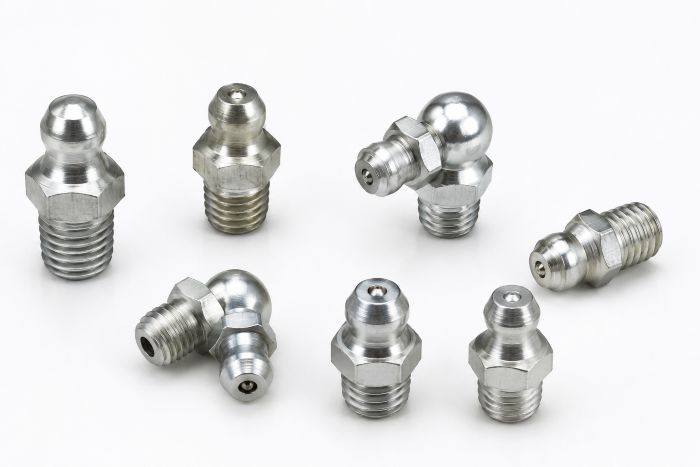
Hydraulic Grease Nipples, often referred to as hydraulic grease fittings or Zerk fittings, are specialized connectors designed to inject grease into mechanical components under high pressure. They provide a secure connection between a grease gun and the lubrication point, ensuring grease reaches bearings, bushings, pins, and other moving parts.
Unlike ordinary grease fittings, hydraulic grease nipples are built to withstand demanding operating environments where equipment experiences heavy loads, constant vibration, high pressures, and exposure to dirt, moisture, and chemicals.
A typical hydraulic grease nipple consists of:
1. A threaded body
2. A hardened steel housing
3. A spring-loaded ball check valve
4. A grease inlet
5. A precision-machined seat
The internal ball check valve opens when grease is injected and immediately seals once pressure is released, preventing contaminants from entering the lubrication system.
Common Applications
Hydraulic grease nipples are widely used in:
1. Hydraulic systems
2. Construction equipment
3. Excavators
4. Bulldozers
5. Agricultural machinery
6. Mining equipment
7. Industrial automation
8. Heavy-duty trucks
9. Marine equipment
10. Manufacturing machinery
Their robust construction makes them ideal wherever reliable lubrication under pressure is essential.
What Are Standard Grease Nipples?
Standard grease nipples perform the same basic function providing a lubrication point, but they are generally intended for lower-pressure and less demanding applications.
These fittings are commonly found on passenger vehicles, trailers, lawn equipment, bicycles, and light industrial machinery where lubrication requirements are relatively moderate.
Although standard grease nipples also feature a ball check valve, they typically have simpler construction and lower pressure ratings than hydraulic versions.
Typical Applications
Standard grease nipples are commonly used on:
1. Passenger cars
2. Utility trailers
3. Lawn mowers
4. Small tractors
5. Garden equipment
6. Light industrial machines
7. Household mechanical equipment
For everyday maintenance, they provide a cost-effective lubrication solution.
Hydraulic Grease Nipples vs. Standard Grease Nipples: Comparison Table
|
Feature |
Hydraulic Grease Nipples |
Standard Grease Nipples |
|
Pressure Rating |
High-pressure applications |
Low to medium pressure |
|
Durability |
Heavy-duty construction |
Standard-duty construction |
|
Materials |
Hardened steel, stainless steel |
Carbon steel, brass, stainless steel |
|
Corrosion Resistance |
Excellent |
Moderate |
|
Service Life |
Long |
Moderate |
|
Sealing Performance |
Superior |
Standard |
|
Vibration Resistance |
Excellent |
Moderate |
|
Industrial Applications |
Heavy equipment |
General machinery |
|
Initial Cost |
Higher |
Lower |
|
Long-Term Value |
Excellent |
Good |
Key Differences Between Hydraulic Grease Nipples and Standard Grease Nipples
Although they may look similar, these fittings differ in several important ways.
1. Pressure Rating
The most significant difference is their ability to withstand pressure.
Hydraulic grease nipples are engineered to handle high-pressure grease injection without leaking or deforming. Heavy machinery often requires grease to be forced through long lubrication channels and into tightly fitted bearings. High-pressure fittings ensure the grease reaches every critical component.
Standard grease nipples, on the other hand, are intended for applications with much lower lubrication pressures. While they perform well for everyday maintenance, they are not designed for extreme operating conditions.
If high-pressure lubrication is required, hydraulic grease nipples are the safer and more reliable choice.
2. Material Strength
Material selection has a major impact on durability and performance.
Hydraulic grease nipples are commonly manufactured from:
➡️ Hardened carbon steel
➡️ Stainless steel
➡️ Zinc-plated steel
These materials provide excellent resistance to wear, corrosion, and impact.
Standard grease nipples may also be made from carbon steel or brass, which are suitable for general-purpose applications but may not offer the same level of strength in harsh environments.
For outdoor equipment exposed to mud, rain, saltwater, or chemicals, stainless steel hydraulic grease nipples provide superior corrosion resistance.
3. Thread Standards
Selecting the correct thread is essential for proper installation and leak-free performance.
Common thread standards include:
➡️ Metric
➡️ BSP
➡️ BSPT
➡️ NPT
➡️ UNF
➡️ UNC
Using the wrong thread type can damage equipment, cause grease leakage, or prevent proper sealing.
Before replacing a grease nipple, always verify the manufacturer’s thread specifications.
4. Sealing Performance
One of the primary purposes of a grease nipple is to keep contaminants out while allowing grease to enter.
Hydraulic grease nipples generally feature precision-machined ball check valves that create a tighter seal after lubrication.
This improved sealing helps prevent:
➡️ Dust intrusion
➡️ Water contamination
➡️ Dirt buildup
➡️ Grease leakage
Maintaining a clean lubrication system significantly extends bearing life and reduces maintenance costs.
5. Durability
Heavy machinery operates in challenging environments where components are constantly exposed to:
➡️ Shock loads
➡️ Vibration
➡️ Dirt
➡️ Moisture
➡️ Extreme temperatures
Hydraulic grease nipples are designed specifically for these demanding conditions.
Their stronger construction provides:
➡️ Better impact resistance
➡️ Higher fatigue strength
➡️ Longer service life
➡️ Improved reliability
Standard grease nipples may wear more quickly when subjected to these harsh operating conditions.
6. Lubrication Efficiency
Effective lubrication isn’t just about injecting grease—it’s about ensuring the grease reaches the areas where it is needed most.
Hydraulic grease nipples provide:
➡️ More consistent grease flow
➡️ Better grease penetration
➡️ Reduced friction
➡️ Improved bearing protection
➡️ Lower operating temperatures
Efficient lubrication minimizes wear on expensive machine components and helps maintain smooth operation over time.
7. Cost vs. Long-Term Value
Standard grease nipples are typically less expensive upfront, making them a practical option for light-duty equipment and routine maintenance.
Hydraulic grease nipples usually cost more due to their superior materials, precision manufacturing, and higher pressure capabilities. However, they often provide better long-term value by reducing maintenance frequency, minimizing equipment downtime, and extending the lifespan of critical components.
When viewed as part of the overall maintenance budget, the higher initial investment can lead to significant cost savings over the life of the equipment.
Advantages of Hydraulic Grease Nipples
Hydraulic grease nipples offer several important benefits for demanding applications:
1. Withstand high-pressure lubrication systems
2. Deliver grease efficiently to hard-to-reach components
3. Provide excellent sealing against contaminants
4. Reduce grease leakage
5. Extend bearing and bushing life
6. Improve equipment reliability
7. Lower maintenance costs over time
8. Resist corrosion and harsh environments
9. Support longer maintenance intervals
For industries where equipment reliability is critical, these advantages make hydraulic grease nipples the preferred choice.
Advantages of Standard Grease Nipples
Despite their simpler design, standard grease nipples remain an excellent solution for many applications.
Key benefits include:
1. Affordable and widely available
2. Easy to install and replace
3. Suitable for general maintenance
4. Compatible with most manual grease guns
5. Ideal for light-duty machinery
6. Cost-effective for routine lubrication tasks
They continue to be a reliable option where high-pressure performance is not required.
How to Choose the Right Hydraulic Grease Nipples
When selecting hydraulic grease nipples, consider the following factors:
Thread Compatibility
Always confirm the correct thread size and standard before purchasing.
Material
Choose materials based on the operating environment:
1. Carbon steel for general industrial use
2. Zinc-plated steel for added corrosion protection
3. Stainless steel for highly corrosive or outdoor environments
Pressure Rating
Ensure the grease nipple is designed to handle your lubrication system’s operating pressure.
Angle Configuration
Grease nipples are available in several styles:
➡️ Straight
➡️ 45-degree
➡️ 90-degree
Selecting the correct angle makes lubrication easier, especially in confined spaces.
Environmental Conditions
Consider exposure to:
➡️ Dust
➡️ Water
➡️ Salt
➡️ Chemicals
➡️ Extreme temperatures
The right material and finish will improve durability and reduce maintenance requirements.
Installation Best Practices
Proper installation is just as important as selecting the right grease nipple.
For optimal performance:
1. Clean threads thoroughly before installation.
2. Use the correct thread type.
3. Tighten according to the manufacturer’s specifications.
4. Avoid overtightening, which can damage threads.
5. Test grease flow after installation.
6. Inspect for leaks during the first lubrication cycle.
7. Replace damaged fittings immediately.
Routine inspections help ensure your lubrication system continues operating efficiently.
Maintenance Tips
To maximize the service life of grease nipples and the equipment they protect:
1. Inspect fittings regularly for wear or damage.
2. Clean grease nipples before every lubrication cycle.
3. Replace clogged or damaged fittings promptly.
4. Use the correct lubricant specified by the equipment manufacturer.
5. Protect exposed fittings from dirt and moisture whenever possible.
6. Maintain a consistent lubrication schedule.
Preventive maintenance is far less costly than repairing worn bearings or damaged hydraulic components.
Frequently Asked Questions
What is the main difference between hydraulic grease nipples and standard grease nipples?
Hydraulic grease nipples are designed for high-pressure lubrication systems and heavy-duty applications, while standard grease nipples are intended for lower-pressure, general-purpose lubrication.
Can I replace a standard grease nipple with a hydraulic grease nipple?
In many cases, yes, provided the thread size, thread type, and dimensions are compatible with the equipment. Always verify the manufacturer’s specifications before making a replacement.
Which material is best for hydraulic grease nipples?
Stainless steel is ideal for corrosive environments, while hardened carbon steel offers excellent strength and durability for most industrial applications.
How often should grease nipples be replaced?
Replace grease nipples whenever they become damaged, clogged, leak grease, or fail to accept lubricant properly. Regular inspections can help identify wear before it affects equipment performance.
Are hydraulic grease nipples suitable for outdoor use?
Yes. When manufactured from stainless steel or protected with corrosion-resistant coatings, hydraulic grease nipples perform reliably in outdoor environments exposed to moisture, dirt, and harsh weather.
Which One Should You Choose?
The right choice depends on your operating conditions and maintenance requirements.
Choose Hydraulic Grease Nipples if your equipment:
1. Operates under heavy loads
2. Requires high-pressure lubrication
3. Works in dusty or wet environments
4. Experiences frequent vibration
5. Is used in construction, mining, agriculture, or manufacturing.
Choose Standard Grease Nipples if your equipment:
1. Operates under light loads
2. Requires only routine lubrication
3. Is used in automotive or household applications
4. Has limited maintenance demands
5. Operates in relatively clean environments
Matching the grease nipple to the application ensures optimal lubrication and helps prevent unnecessary wear.
Post time: Jul-13-2026