

Hydraulic systems power machines across industries such as construction, agriculture, manufacturing, mining, and transportation. Because these systems rely on pressurized fluid, every connection must be secure to prevent leaks, maintain efficiency, and reduce downtime.
Hydraulic cutting ring fittings provide reliable, leak-free tube connections that withstand high pressure and vibration without requiring welding. Their durability and easy installation make them a trusted choice for hydraulic systems worldwide.
This guide explains how hydraulic cutting ring fittings work and why they are essential for reliable hydraulic performance.
What Are Hydraulic Cutting Ring Fittings?
Hydraulic cutting ring fittings, also known as bite ring fittings, are mechanical tube fittings that connect hydraulic tubing securely to pumps, valves, cylinders, and other hydraulic components. Unlike welded or flared connections, these fittings use a specially designed cutting ring that grips the outside of the tube during assembly.
As the fitting nut is tightened, the cutting ring is compressed between the fitting body and the tube. The ring bites into the outer surface of the tube, creating both a strong mechanical connection and a reliable seal capable of handling demanding hydraulic applications.
Many hydraulic cutting ring fittings are manufactured according to internationally recognized standards such as DIN 2353 and ISO 8434, ensuring compatibility, safety, and consistent performance across a wide range of hydraulic systems.
Main Components of a Hydraulic Cutting Ring Fitting
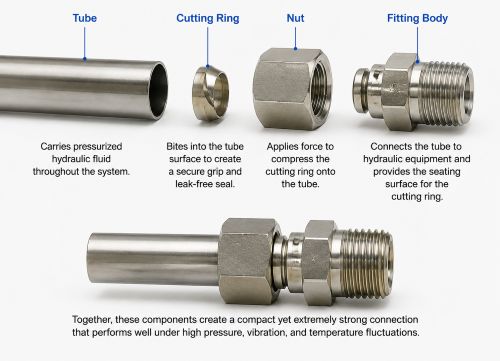
Although the design is straightforward, each component serves an essential purpose.
Tube
The hydraulic tube carries pressurized hydraulic fluid throughout the system. It is typically made from seamless steel or stainless steel for strength and durability.
Cutting Ring
The cutting ring is the heart of the fitting. Its specially engineered edges bite into the tube surface during installation, creating a secure mechanical grip while helping form a leak-free seal.
Nut
The fitting nut applies the force needed to compress the cutting ring onto the tube. Proper tightening is essential for achieving the correct bite and ensuring long-term sealing performance.
Fitting Body
The fitting body connects the tube to hydraulic equipment and provides the seating surface that allows the cutting ring to function properly.
Together, these components create a compact yet extremely strong connection that performs well under high pressure, vibration, and temperature fluctuations.
How Hydraulic Cutting Ring Fittings Work
The effectiveness of hydraulic cutting ring fittings comes from their unique mechanical sealing principle.
When the tube, cutting ring, and nut are assembled onto the fitting body, tightening the nut pushes the cutting ring forward. As compression increases, the sharp inner edge of the ring bites slightly into the tube’s outer wall.
This action accomplishes two important goals:
1. It firmly locks the tube into place, preventing movement or pull-out.
2. It creates a metal-to-metal seal that minimizes the risk of hydraulic fluid leakage.
Unlike fittings that rely primarily on elastomer seals, cutting ring fittings maintain their sealing performance even in demanding operating conditions.
Why This Design Is So Reliable
Several design features contribute to the outstanding performance of hydraulic cutting ring fittings.
1. Excellent Tube Retention
The cutting ring securely grips the tubing, making accidental separation extremely unlikely, even under high-pressure loads.
2. Leak-Free Performance
The precise metal-to-metal sealing surface helps prevent hydraulic fluid leaks, protecting equipment and reducing maintenance requirements.
3. Superior Vibration Resistance
Construction equipment, agricultural machinery, and industrial systems often operate under constant vibration. Cutting ring fittings maintain tight connections even during continuous movement.
4. High Pressure Capability
These fittings are specifically designed for hydraulic applications where operating pressures can be extremely high.
5. Temperature Stability
Hydraulic systems often experience significant temperature changes. Cutting ring fittings continue to perform reliably under both hot and cold operating conditions.
Key Benefits of Hydraulic Cutting Ring Fittings
Hydraulic cutting ring fittings offer several advantages that make them one of the most trusted connection methods in hydraulic engineering.
1. Reliable Leak-Free Connections
Preventing hydraulic fluid leaks is essential for maintaining system efficiency and protecting the environment. A properly installed cutting ring fitting creates a dependable seal that minimizes fluid loss while maintaining consistent hydraulic pressure.
Leak-free systems also reduce cleanup costs and improve workplace safety.
2. Outstanding Mechanical Strength
Once installed correctly, the cutting ring forms a powerful mechanical grip on the tube. This helps prevent tube movement caused by pressure surges or vibration, improving the overall reliability of the hydraulic system.
For heavy-duty equipment operating in demanding environments, this added strength is a significant advantage.
3. Easy Installation
Unlike welded connections, hydraulic cutting ring fittings can be assembled using standard installation tools. No specialized welding equipment or heat treatment is required.
This simplifies installation and reduces labor costs while allowing technicians to complete repairs more quickly.
4. Long Service Life
Quality cutting ring fittings are manufactured from durable materials such as carbon steel or stainless steel. When installed correctly and maintained properly, they provide years of dependable service, even in harsh operating environments.
Protective surface finishes such as zinc plating further improve corrosion resistance and extend product lifespan.
5. Reduced Maintenance Costs
Because cutting ring fittings create reliable, long-lasting connections, they help reduce the frequency of repairs and hydraulic leaks. Fewer maintenance issues translate into lower operating costs and less unplanned downtime.
In industries where equipment availability is critical, this can result in substantial long-term savings.
6. Improved System Safety
Hydraulic systems operate under high pressure, making secure connections essential for safe operation. A properly installed cutting ring fitting helps reduce the risk of sudden leaks or connection failures that could damage equipment or pose safety hazards to operators.
Carbon Steel vs. Stainless Steel Hydraulic Cutting Ring Fittings
One of the most important decisions when selecting hydraulic cutting ring fittings is choosing the right material. The two most common options are carbon steel and stainless steel, each offering unique advantages depending on the operating environment.
Carbon Steel Cutting Ring Fittings
Carbon steel fittings are widely used in standard hydraulic applications because they provide an excellent balance of strength, durability, and affordability. They are commonly finished with zinc or zinc-nickel plating to improve corrosion resistance and extend service life.
Benefits of carbon steel fittings include:
1. High mechanical strength
2. Excellent pressure resistance
3. Cost-effective for general industrial use
4. Suitable for construction, agriculture, and manufacturing equipment
5. Available in a wide range of sizes and configurations
For most indoor and heavy-duty hydraulic systems, carbon steel remains the preferred choice.
Stainless Steel Cutting Ring Fittings
Stainless steel fittings are designed for applications where corrosion resistance is critical. They perform exceptionally well in harsh environments exposed to moisture, chemicals, saltwater, or extreme temperatures.
Advantages of stainless steel fittings include:
1. Outstanding corrosion resistance
2. Long service life in demanding environments
3. Excellent durability under extreme temperatures
4. Ideal for food processing, marine, pharmaceutical, and chemical industries
5. Lower maintenance requirements in corrosive conditions
Although stainless steel fittings typically cost more than carbon steel, their longevity often makes them the more economical option in challenging environments.
Common Applications of Hydraulic Cutting Ring Fittings
Hydraulic cutting ring fittings are used across a wide range of industries because they deliver dependable performance under high pressure and continuous operation.
Construction Equipment
Construction machinery operates in demanding environments where hydraulic systems are constantly exposed to heavy loads, vibration, dirt, and changing weather conditions.
Common applications include:
➡️ Excavators
➡️ Bulldozers
➡️ Wheel loaders
➡️ Cranes
➡️ Backhoes
Reliable tube connections help prevent hydraulic failures that could lead to costly downtime on job sites.
Agricultural Machinery
Modern farming equipment relies heavily on hydraulic power for steering, lifting, harvesting, and planting operations.
Hydraulic cutting ring fittings are commonly found in:
➡️ Tractors
➡️ Harvesters
➡️ Sprayers
➡️ Balers
➡️ Seed drills
Their durability ensures dependable operation during long working hours in challenging outdoor environments.
Manufacturing and Industrial Equipment
Factories use hydraulic systems in equipment that requires precise motion and consistent pressure.
Typical applications include:
➡️ Hydraulic presses
➡️ CNC machines
➡️ Injection molding machines
➡️ Material handling equipment
➡️ Automated production lines
Leak-free hydraulic connections improve production efficiency while reducing maintenance interruptions.
Mining Equipment
Mining machinery operates under some of the harshest conditions imaginable. Hydraulic cutting ring fittings provide secure tube connections that withstand dust, vibration, heavy loads, and high operating pressures.
Marine Applications
Ships and offshore equipment require fittings that can resist corrosion while maintaining hydraulic performance. Stainless steel cutting ring fittings are commonly used for steering systems, deck machinery, and marine hydraulic equipment.
Oil and Gas Industry
Hydraulic systems used in drilling rigs and energy production demand reliable, high-pressure connections. Cutting ring fittings help maintain system integrity while minimizing the risk of fluid leaks.
Advantages Over Other Hydraulic Connection Methods
Hydraulic systems use several different types of tube connections, but cutting ring fittings offer distinct advantages in many applications.
Compared with Welded Connections
Welded tube connections provide strength but require specialized equipment and skilled labor.
Hydraulic cutting ring fittings offer several benefits:
1. Faster installation
2. No welding required
3. Easier maintenance
4. Simpler replacement of damaged components
5. Reduced installation costs
These advantages make them ideal for field repairs and equipment maintenance.
Compared with Standard Compression Fittings
Although compression fittings are commonly used for lower-pressure fluid systems, hydraulic cutting ring fittings provide a stronger mechanical grip and better sealing performance under demanding hydraulic conditions.
Additional benefits include:
1. Higher pressure capability
2. Better vibration resistance
3. Improved tube retention
4. Greater reliability in heavy-duty applications
Compared with Flared Tube Fittings
Flared fittings require the tube end to be carefully formed before installation, adding extra preparation time.
Cutting ring fittings simplify installation while providing:
1. Secure metal-to-metal sealing
2. Excellent pressure resistance
3. Easier assembly
4. Reliable long-term performance
How to Choose the Right Hydraulic Cutting Ring Fittings
Selecting the correct fitting helps maximize system safety, efficiency, and service life.
Choose the Correct Tube Size
Always match the fitting to the outside diameter and wall thickness of the hydraulic tube. Incorrect sizing can result in poor sealing or tube damage.
Verify the Thread Type
Hydraulic systems use different thread standards depending on equipment design.
Common thread types include:
➡️ Metric
➡️ BSP
➡️ NPT
➡️ UNF
➡️ JIC
Using the wrong thread can lead to leakage or installation problems.
Check the Pressure Rating
Every hydraulic fitting has a maximum operating pressure. Select a fitting that meets or exceeds your system’s pressure requirements to ensure safe operation.
Select the Appropriate Material
Choose carbon steel for most industrial applications and stainless steel for environments where corrosion resistance is essential.
Confirm Industry Standards
Look for fittings manufactured according to recognized international standards such as:
➡️ DIN 2353
➡️ ISO 8434
Standard-compliant fittings provide better compatibility and consistent performance.
Buy from a Trusted Manufacturer
Quality matters in hydraulic systems. Purchasing from an experienced manufacturer ensures consistent dimensions, reliable materials, and rigorous quality control.
Companies like Sannke manufacture precision-engineered hydraulic cutting ring fittings that meet international standards and are designed for dependable performance in demanding applications.
Installation Best Practices
Proper installation is essential for getting the best performance from hydraulic cutting ring fittings. Even a high-quality fitting can fail if it is installed incorrectly. Following recommended assembly procedures helps ensure a secure connection, minimizes the risk of leaks, and extends the service life of the hydraulic system.
Prepare the Tube Correctly
Before installation, inspect the hydraulic tube carefully. The tube should be cut squarely using the proper cutting tool to ensure a clean, even end. Remove any burrs from the inside and outside of the tube, as rough edges can prevent the cutting ring from seating correctly.
The tube should also be free from dirt, oil, rust, and metal chips before assembly.
Assemble the Components Properly
Slide the fitting nut and cutting ring onto the tube in the correct order. Insert the tube fully into the fitting body before tightening the nut. Keeping the tube firmly seated during assembly helps the cutting ring bite into the correct position.
Always follow the manufacturer’s installation instructions for the specific fitting series being used.
Tighten to the Recommended Torque
Proper tightening is one of the most important steps. Under-tightening may prevent the cutting ring from gripping the tube securely, while over-tightening can damage the fitting, tube, or cutting ring.
Using a torque wrench helps achieve consistent installation and reduces the chance of assembly errors.
Inspect the Cutting Ring
After initial assembly, disassemble the fitting and inspect the cutting ring if required by the installation procedure. The ring should show a uniform bite around the tube, indicating that it has seated correctly.
A proper bite ensures both strong tube retention and reliable sealing performance.
Perform Pressure Testing
Before placing the hydraulic system into regular service, perform a pressure test to verify that all connections are leak-free. Testing helps identify installation issues before the equipment begins operating under full load.
Common Installation Mistakes to Avoid
Even experienced technicians can make mistakes during installation. Avoiding these common errors helps improve fitting performance and system reliability.
Over-Tightening
Applying excessive torque can deform the cutting ring, damage the tube, or crack the fitting body. Always tighten according to the manufacturer’s specifications.
Under-Tightening
If the nut is not tightened enough, the cutting ring may fail to grip the tube securely, increasing the risk of leaks or tube pull-out.
Poor Tube Preparation
Uneven tube cuts, burrs, or contamination can prevent the cutting ring from sealing properly.
Mixing Incompatible Components
Using components from different fitting systems or manufacturers without verifying compatibility may result in poor sealing or improper assembly.
Reusing Damaged Cutting Rings
A worn or damaged cutting ring should always be replaced. Reusing compromised components can lead to unreliable connections and hydraulic leaks.
Ignoring Pressure Requirements
Every hydraulic fitting is designed for a specific pressure range. Selecting a fitting with an insufficient pressure rating can compromise both safety and system performance.
Maintenance Tips for Long-Term Performance
Hydraulic cutting ring fittings require relatively little maintenance, but routine inspections can help prevent unexpected failures and extend equipment life.
Some recommended maintenance practices include:
1. Inspect fittings regularly for signs of hydraulic fluid leakage.
2. Check for corrosion, especially in outdoor or marine environments.
3. Look for loose connections caused by vibration.
4. Replace damaged or worn cutting rings immediately.
5. Keep hydraulic fluid clean by maintaining filters and following recommended fluid replacement intervals.
6. Perform routine inspections during scheduled equipment maintenance.
Preventive maintenance helps reduce costly downtime while ensuring hydraulic systems continue operating safely and efficiently.
Frequently Asked Questions
What is a hydraulic cutting ring fitting?
A hydraulic cutting ring fitting is a tube fitting that uses a specially designed metal ring to bite into the outer surface of a hydraulic tube. This creates both a secure mechanical grip and a leak-free seal for high-pressure hydraulic systems.
How does a cutting ring fitting prevent leaks?
When the fitting nut is tightened, the cutting ring compresses against the tube and fitting body, forming a precise metal-to-metal seal that resists leakage even under high operating pressure.
Are hydraulic cutting ring fittings reusable?
The fitting body and nut can often be reused if they remain in good condition. However, the cutting ring should be carefully inspected and replaced if it shows signs of wear, deformation, or damage.
What materials are hydraulic cutting ring fittings available in?
The most common materials are carbon steel and stainless steel. Carbon steel is suitable for most industrial hydraulic systems, while stainless steel is recommended for corrosive environments such as marine, food processing, and chemical applications.
Which industries use hydraulic cutting ring fittings?
These fittings are widely used in construction equipment, agricultural machinery, manufacturing plants, mining equipment, marine systems, transportation, and oil and gas applications.
How do I choose the right hydraulic cutting ring fitting?
Consider the tube size, thread type, pressure rating, material, and operating environment. It is also important to select fittings that comply with international standards and are supplied by a reputable manufacturer.
Conclusion
Hydraulic cutting ring fittings provide secure, leak-free connections that are essential for safe and efficient hydraulic system performance. Their durability, vibration resistance, and ease of installation make them a trusted choice across a wide range of industries.
By selecting high-quality fittings from Sannke and following proper installation practices, you can improve system reliability, reduce maintenance, and extend equipment lifespan.
Post time: Jul-24-2026