

In industrial applications, fastening systems play a critical role in ensuring the safety, stability, and performance of machinery and structural components. From heavy manufacturing plants to construction sites and offshore equipment, the choice of fastening technology directly impacts operational efficiency and equipment reliability.
Among the many fastening solutions available today, conventional nuts have long been the standard option across industries. However, as industrial demands continue to grow, hydraulic bite type nuts are becoming increasingly popular for high-load and precision applications.
This article explores the key differences between hydraulic bite type nuts and conventional nuts, helping engineers, maintenance professionals, and industrial buyers make informed decisions.
What Are Conventional Nuts?
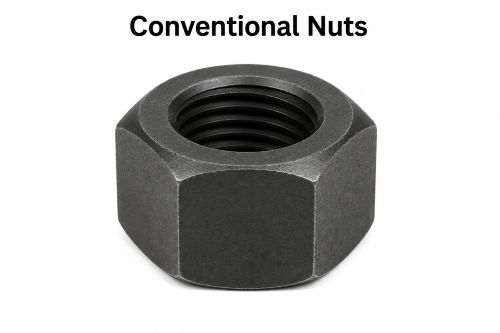
Conventional nuts are threaded fasteners designed to secure bolts and hold components together. They are widely used because of their simplicity, affordability, and easy availability.
Common Types of Conventional Nuts
Some of the most commonly used conventional nuts include:
➡️ Hex nuts
➡️ Lock nuts
➡️ nuts
➡️ Wing nuts
These nuts are typically tightened manually using hand tools or powered torque equipment.
Common Applications
Conventional nuts are commonly found in:
1. Automotive assemblies
2. Construction structures
3. Household machinery
4. General industrial equipment
Advantages of Conventional Nuts
Cost-Effective
Conventional nuts are affordable and suitable for standard fastening requirements.
Easy to Install
Most installations require basic tools and minimal technical expertise.
Widely Available
They are readily available in different materials, sizes, and thread types.
Limitations of Conventional Nuts
Despite their popularity, conventional nuts also have several limitations:
1. Uneven load distribution during tightening
2. Inconsistent torque application
3. Risk of loosening under vibration
4. Increased maintenance requirements in heavy-duty environments
These challenges become more noticeable in high-pressure industrial applications where precision and reliability are essential.
What Are Hydraulic Bite Type Nuts?
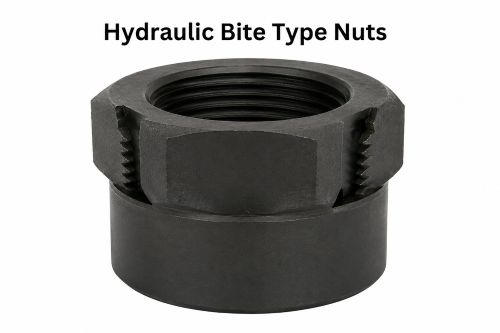
Hydraulic bite type nuts are advanced fastening solutions designed to provide highly accurate and uniform clamping force using hydraulic pressure. Unlike conventional nuts, these systems minimize manual tightening errors and improve fastening efficiency.
How Hydraulic Bite Type Nuts Work:
Hydraulic pressure is applied to generate controlled tension in the bolt assembly. This process creates even load distribution while reducing operator effort.
The “bite type” mechanism enhances grip and locking performance, making the fastening system highly secure even in demanding environments.
Key Features:
High Clamping Force
Hydraulic systems generate significantly greater and more uniform clamping force than manual tightening methods.
Precision Tightening
The hydraulic mechanism ensures consistent bolt tension across multiple fasteners.
Reduced Manual Effort
Operators can tighten large fasteners more quickly and safely.
Enhanced Safety
Accurate tensioning reduces the chances of bolt failure and equipment damage.
Common Applications of Hydraulic Bite Type Nuts
Hydraulic bite type nuts are widely used in industries where heavy loads, vibration, and high operating pressures are common.
Typical Applications Include:
1. Mining equipment
2. Wind turbines
3. Heavy manufacturing machinery
4. Oil and gas operations
5. Marine equipment
6. Power generation systems
These applications demand fastening systems capable of maintaining long-term reliability under extreme conditions.
Hydraulic Bite Type Nuts vs Conventional Nuts: Key Differences
1. Tightening Mechanism
Hydraulic bite type nuts offer greater consistency and accuracy.
Conventional Nuts
Conventional nuts rely on manual torque or mechanical tools for tightening. The final clamping force often depends on operator skill and tool accuracy.
Hydraulic Bite Type Nuts
Hydraulic systems use controlled hydraulic pressure to achieve precise and repeatable bolt tension.
2. Clamping Force
Hydraulic bite type nuts reduce stress concentration and improve joint stability.
Conventional Nuts
Manual tightening can produce uneven load distribution, especially in large bolt assemblies.
Hydraulic Bite Type Nuts
Hydraulic pressure creates uniform clamping force across the joint.
3. Installation Time
Hydraulic bite type nuts improve productivity and reduce labor time.
Conventional Nuts
Large fasteners often require significant manual effort and installation time.
Hydraulic Bite Type Nuts
Hydraulic systems speed up installation by simplifying the tightening process.
4. Safety and Reliability
Hydraulic fastening systems provide better operational safety in critical applications.
Conventional Nuts
Improper tightening may lead to loosening, vibration damage, or bolt fatigue.
Hydraulic Bite Type Nuts
Accurate tensioning improves fastening reliability and reduces the risk of mechanical failure.
5. Maintenance Requirements
Hydraulic bite type nuts help minimize downtime and maintenance costs.
Conventional Nuts
Frequent retightening and inspections may be necessary in vibration-prone environments.
Hydraulic Bite Type Nuts
Stable clamping force reduces maintenance frequency.
6. Performance in Heavy-Duty Applications
Hydraulic systems offer superior long-term performance.
Conventional Nuts
Standard nuts may struggle in extreme pressure or heavy vibration conditions.
Hydraulic Bite Type Nuts
Designed specifically for demanding industrial environments.
7. Cost Comparison
Although hydraulic systems cost more initially, they often reduce downtime, maintenance expenses, and equipment failures over time.
Conventional Nuts
Lower initial purchase cost.
Hydraulic Bite Type Nuts
Higher upfront investment due to advanced technology.
Although hydraulic systems cost more initially, they often reduce downtime, maintenance expenses, and equipment failures over time.
Advantages of Hydraulic Bite Type Nuts Over Conventional Nuts
Hydraulic bite type nuts provide several operational benefits, including:
Improved Efficiency
Faster installation and removal processes increase productivity.
Better Precision
Uniform tensioning improves equipment performance and reliability.
Reduced Downtime
Fewer fastening failures lead to lower maintenance interruptions.
Enhanced Equipment Lifespan
Even load distribution reduces wear on bolts and connected components.
Higher Safety Standards
Reliable fastening minimizes accident risks in critical industrial operations.
When Conventional Nuts Are Still a Good Choice
Despite the advantages of hydraulic systems, conventional nuts remain practical for many applications.
Conventional Nuts Are Suitable For:
1. Light-duty machinery
2. Budget-sensitive projects
3. Low-vibration environments
4. Non-critical fastening applications
For simple applications, conventional nuts can still provide adequate performance at a lower cost.
How to Choose the Right Nut for Your Application
Selecting the right fastening solution depends on several operational factors.
Consider the Following:
Load Requirements
Heavy loads may require hydraulic fastening systems.
Operating Environment
High vibration, temperature, or pressure conditions demand more secure fastening.
Maintenance Frequency
Applications requiring minimal downtime benefit from hydraulic solutions.
Safety Standards
Critical systems often require precision tightening technology.
Budget Considerations
Evaluate both initial investment and long-term operating costs.
More articles here ⬇️⬇️⬇️
Get Ahead with Tubing Nuts: Essential Plumbing Hacks
Compression Fitting Nuts vs. Flare Nuts: What’s the Difference?
Compression Nuts [What They Are and Why They Matter]
Conclusion
Both hydraulic bite type nuts and conventional nuts serve important roles in industrial fastening applications. Conventional nuts remain a cost-effective option for standard applications, while hydraulic bite type nuts offer superior precision, safety, and performance in demanding industrial environments.
For industries dealing with heavy loads, vibration, and critical safety requirements, hydraulic bite type nuts provide clear long-term advantages through improved reliability, reduced maintenance, and enhanced operational efficiency.
Choosing the right fastening solution ultimately depends on your application requirements, operating conditions, and long-term maintenance goals.
Frequently Asked Questions (FAQs)
What are hydraulic bite type nuts used for?
Hydraulic bite type nuts are used in heavy-duty industrial applications requiring precise bolt tension and high clamping force.
Are hydraulic bite type nuts better than conventional nuts?
They are generally better for high-load and critical applications where precision, safety, and reliability are essential.
Can hydraulic bite type nuts reduce equipment downtime?
Yes. Their accurate and stable fastening performance helps reduce maintenance and unexpected failures.
What industries commonly use hydraulic bite type nuts?
Industries such as mining, oil and gas, marine, wind energy, and heavy manufacturing commonly use them.
Are hydraulic bite type nuts more expensive?
Yes, they typically have a higher initial cost, but they can provide long-term savings through reduced maintenance and improved efficiency.
Post time: May-19-2026