

Forklifts rely on hydraulic systems to lift, tilt, steer, and move heavy loads safely and efficiently. Every hydraulic component plays an important role, but even small parts like hydraulic banjo fittings can have a significant impact on the overall performance of the machine. A poorly selected fitting can cause hydraulic leaks, pressure loss, equipment downtime, and expensive repairs.
Hydraulic banjo fittings are specially designed to provide reliable fluid connections in areas where space is limited. Their compact design allows hydraulic hoses to be installed at various angles without compromising fluid flow, making them an ideal choice for modern forklifts.
However, not all banjo fittings are the same. They come in different thread types, sizes, materials, pressure ratings, and sealing options. Selecting the wrong fitting can lead to compatibility issues and shorten the lifespan of your hydraulic system.
In this guide, we’ll explain how to choose the right hydraulic banjo fittings for forklifts, the key specifications to consider, and practical tips to ensure long-lasting hydraulic performance.
What Are Hydraulic Banjo Fittings?
Hydraulic banjo fittings are specialized connectors used to join hydraulic hoses or tubes to components such as valves, cylinders, pumps, and manifolds. Unlike traditional hydraulic fittings, a banjo fitting features a round, hollow eye connected by a hollow bolt, allowing hydraulic fluid to flow through the center while maintaining a compact connection.
This design makes banjo fittings especially useful in confined spaces where conventional elbow or straight fittings may not fit.
Main Components of a Hydraulic Banjo Fitting
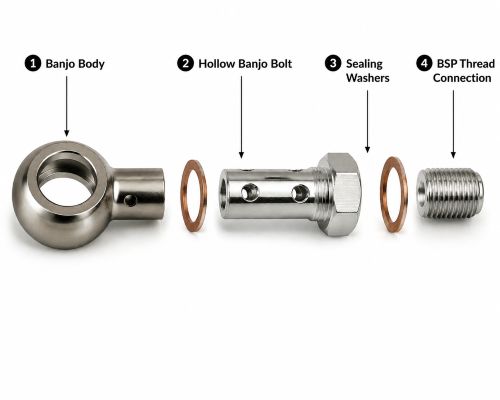
A typical hydraulic banjo fitting consists of:
1. Banjo body – The circular eye that allows hydraulic fluid to pass through.
2. Banjo bolt – A hollow bolt that secures the fitting while allowing fluid flow.
3. Sealing washers – Usually copper, aluminum, or bonded seals that prevent hydraulic leaks.
4. Hydraulic hose connection – Connects the fitting to the hydraulic hose or tubing.
Together, these components create a reliable, leak-resistant hydraulic connection capable of handling high-pressure applications commonly found in forklifts.
How Hydraulic Banjo Fittings Work
The operating principle of a hydraulic banjo fitting is relatively simple. Hydraulic fluid enters through the hose connected to the banjo body, passes through the circular eye, and flows into the hollow banjo bolt before entering the hydraulic component.
Because the fitting can rotate around the bolt before tightening, installers can easily position hydraulic hoses without twisting or bending them excessively.
This design offers several advantages:
➡️ Allows flexible hose routing
➡️ Saves installation space
➡️ Reduces hose stress
➡️ Maintains consistent hydraulic flow
➡️ Simplifies maintenance and replacement
These benefits explain why banjo fittings are commonly found on forklift hydraulic systems.
Why Forklifts Use Hydraulic Banjo Fittings
Forklifts operate in environments where available installation space is extremely limited. Hydraulic hoses must often pass between lifting mechanisms, steering assemblies, engines, counterweights, and protective frames.
Hydraulic banjo fittings solve many of these installation challenges.
1. Space-Saving Design
One of the biggest advantages of hydraulic banjo fittings is their compact profile.
Unlike standard elbow fittings that require additional clearance, banjo fittings sit close to the hydraulic component. This allows engineers to design more compact hydraulic systems while still maintaining unrestricted fluid flow.
For forklifts, where every inch of available space matters, this design is invaluable.
2. Better Hydraulic Hose Routing
Hydraulic hoses that are forced into sharp bends experience additional stress during operation.
Banjo fittings allow hoses to exit at the most practical angle, reducing unnecessary bending and minimizing strain on both the hose and fitting.
Proper hose routing can significantly extend the lifespan of hydraulic components.
3. Leak-Free Hydraulic Connections
When paired with the correct sealing washers and properly tightened, hydraulic banjo fittings create highly reliable seals capable of handling demanding operating conditions.
This reduces:
➡️ Hydraulic oil leakage
➡️ Pressure loss
➡️ Environmental contamination
➡️ Maintenance costs
Leak-free connections are especially important for forklifts operating continuously in warehouses, construction sites, ports, and manufacturing facilities.
4. Reliable Hydraulic Performance
Forklift operators depend on smooth hydraulic performance for safe material handling.
Properly selected banjo fittings help maintain consistent hydraulic pressure throughout the system, ensuring:
➡️ Smooth lifting
➡️ Accurate steering
➡️ Responsive tilt control
➡️ Stable hydraulic operation
Even a small hydraulic leak can reduce lifting efficiency and negatively affect productivity.
Key Factors to Consider When Choosing Hydraulic Banjo Fittings for Forklifts
Selecting the correct hydraulic banjo fitting involves much more than matching the thread size. You must consider several technical specifications to ensure compatibility, durability, and long-term performance.
1. Identify the Correct Thread Type
The first step is determining the thread type used by your forklift’s hydraulic system.
Using the wrong thread can damage ports, create leaks, or prevent proper installation.
Some of the most common thread standards include:
BSPP (British Standard Pipe Parallel)
BSPP threads create a seal using bonded washers or O-rings rather than the threads themselves. They are commonly found on European forklifts and industrial hydraulic equipment.
BSPT (British Standard Pipe Taper)
BSPT threads seal through thread interference and are often used in older hydraulic systems.
Metric Threads
Metric threads are widely used by European and Asian forklift manufacturers. They are available in various diameters and pitches depending on the equipment specifications.
JIC Threads
JIC (37-degree flare) fittings are commonly used in North American hydraulic systems. They offer excellent sealing performance and are easy to service.
SAE Threads
SAE fittings are widely used in heavy-duty hydraulic equipment and are designed to withstand high operating pressures.
NPT Threads
National Pipe Thread (NPT) fittings rely on tapered threads to create a seal and are occasionally used in hydraulic applications.
Always consult your forklift manufacturer’s specifications before selecting a thread type. Even threads with similar dimensions may not be interchangeable.
2. Choose the Correct Banjo Bolt Size
The banjo bolt is just as important as the fitting itself. It determines both the flow capacity and the strength of the hydraulic connection.
Common banjo bolt sizes include:
➡️ M10
➡️ M12
➡️ M14
➡️ M16
➡️ M18
➡️ M20
Larger bolts generally allow greater hydraulic flow, making them suitable for high-capacity hydraulic circuits. Smaller bolts are commonly used for steering systems or auxiliary hydraulic functions.
Never assume the bolt size based solely on appearance. Always verify the manufacturer’s specifications or measure the existing component before ordering a replacement.
3. Consider the Hydraulic Pressure Rating
Hydraulic forklifts operate under demanding conditions, with hydraulic systems often subjected to continuous pressure during lifting, lowering, tilting, and steering operations. Because of this, choosing a banjo fitting with the correct pressure rating is essential for both safety and performance.
Every hydraulic banjo fitting is designed to withstand a specific maximum working pressure. This rating indicates the highest continuous pressure the fitting can safely handle without deforming or failing. In addition to the working pressure, manufacturers also specify a burst pressure, which is significantly higher and represents the point at which the fitting could fail under extreme conditions.
When selecting a fitting, always ensure its pressure rating meets or exceeds your forklift’s maximum hydraulic operating pressure. Using an under-rated fitting can result in:
➡️ Hydraulic oil leaks
➡️ Pressure drops
➡️ Reduced lifting performance
➡️ Premature fitting failure
➡️ Unexpected equipment downtime
Choosing a fitting with an appropriate safety margin helps maintain reliable hydraulic performance even during demanding applications.
4. Select the Right Material
The material used to manufacture a hydraulic banjo fitting greatly affects its strength, corrosion resistance, and service life. Forklift operating conditions vary widely, so selecting the right material ensures dependable performance in your specific environment.
➡️ Carbon Steel Banjo Fittings
Carbon steel is one of the most commonly used materials for hydraulic fittings due to its excellent strength and affordability.
Advantages include:
1. High mechanical strength
2. Excellent pressure resistance
3. Cost-effective for general industrial use
4. Widely available in various sizes
5. Often protected with zinc plating for corrosion resistance
Carbon steel fittings are suitable for indoor warehouses, manufacturing facilities, and other environments where exposure to moisture and corrosive substances is limited.
➡️ Stainless Steel Banjo Fittings
Stainless steel banjo fittings are designed for applications where corrosion resistance is a top priority. They offer excellent durability in harsh operating conditions and maintain their appearance and structural integrity over time.
Advantages include:
1. Superior corrosion resistance
2. Excellent resistance to chemicals and moisture
3. Longer service life
4. Low maintenance requirements
5. Suitable for food processing and marine environments
Although stainless steel fittings are generally more expensive than carbon steel options, they often provide better long-term value in demanding applications.
Carbon Steel vs. Stainless Steel
|
Feature |
Carbon Steel |
Stainless Steel |
|
Strength |
Excellent |
Excellent |
|
Corrosion Resistance |
Good (with plating) |
Outstanding |
|
Cost |
Lower |
Higher |
|
Maintenance |
Moderate |
Low |
|
Best Applications |
Indoor forklifts, warehouses |
Outdoor forklifts, ports, chemical plants, food processing |
The best choice depends on your operating environment, maintenance schedule, and budget.
5. Check Corrosion Resistance
Forklifts are often exposed to conditions that accelerate corrosion, including rain, humidity, road salt, chemicals, and frequent washing. Corrosion can weaken hydraulic fittings, damage sealing surfaces, and eventually cause hydraulic leaks.
If your forklifts operate outdoors or in harsh industrial environments, corrosion-resistant fittings should be a priority.
Industries that particularly benefit from corrosion-resistant hydraulic banjo fittings include:
➡️ Construction
➡️ Agriculture
➡️ Mining
➡️ Marine operations
➡️ Food processing
➡️ Cold storage facilities
➡️ Chemical manufacturing
➡️ Waste management
6. Verify the Seal Type
Even the highest-quality hydraulic fitting cannot perform properly without the correct sealing method. The seal creates a leak-free connection between the banjo fitting, the banjo bolt, and the hydraulic component.
Different hydraulic systems use different sealing methods, so it’s important to choose a fitting that matches your forklift’s specifications.
Common seal types include:
➡️ Copper Washers
Copper sealing washers are widely used because they are soft enough to conform to sealing surfaces when tightened. They create a reliable seal and are typically replaced whenever the fitting is removed.
➡️ Bonded Seals
Bonded seals combine a metal washer with a rubber sealing element. They offer excellent leak protection and are commonly used in high-pressure hydraulic systems.
➡️ O-Ring Seals
Some banjo fittings use O-rings to create a tight seal. O-rings provide excellent sealing performance and can accommodate slight movement without compromising the connection.
Regardless of the seal type, always inspect sealing components during maintenance. Reusing damaged or flattened washers can lead to hydraulic leaks and reduced system performance.
7. Match the Hydraulic Hose Size
Choosing the correct hydraulic hose size is just as important as selecting the proper banjo fitting. A mismatch between the hose and fitting can restrict hydraulic flow, reduce system efficiency, and increase pressure losses.
When selecting a hydraulic banjo fitting, consider:
➡️ Hose inside diameter (ID)
➡️ Hose outside diameter (OD)
➡️ Hydraulic flow requirements
➡️ Connection type
➡️ Hose pressure rating
A fitting that is too small may restrict oil flow, causing slower lifting speeds and additional strain on the hydraulic pump. Conversely, an oversized fitting may not provide the secure connection required for safe operation.
Always ensure the hose assembly, banjo fitting, and hydraulic port are compatible with one another to maintain smooth and efficient hydraulic performance.
8. Consider Operating Temperature
Forklifts operate in a wide range of temperatures depending on their application. Some are used in refrigerated warehouses, while others work outdoors in hot climates or industrial facilities with elevated ambient temperatures.
Temperature affects not only the hydraulic fluid but also the performance of seals and fitting materials.
High temperatures can:
➡️ Accelerate seal wear
➡️ Reduce seal elasticity
➡️ Increase hydraulic fluid degradation
➡️ Shorten component lifespan
Low temperatures can:
➡️ Make seals brittle
➡️ Increase hydraulic fluid viscosity
➡️ Affect lifting performance during startup
If your forklift operates under extreme temperature conditions, select banjo fittings and sealing materials specifically designed for those environments. Using temperature-resistant components helps maintain reliable hydraulic performance year-round.
9. Choose OEM-Compatible Fittings
Whenever possible, select hydraulic banjo fittings that meet the original equipment manufacturer (OEM) specifications for your forklift.
OEM-compatible fittings are manufactured to match the dimensions, thread standards, and performance requirements of the original components, making installation straightforward and helping maintain the integrity of the hydraulic system.
Benefits of using OEM-compatible fittings include:
➡️ Proper fit and alignment
➡️ Reliable sealing performance
➡️ Simplified installation
➡️ Consistent hydraulic operation
➡️ Reduced risk of compatibility issues
➡️ Support for equipment warranty requirements in some cases
While aftermarket fittings can also provide excellent performance, they should always meet or exceed the specifications of the original part to ensure safe and efficient operation.
10. Buy from a Trusted Hydraulic Fitting Manufacturer
The quality of a hydraulic banjo fitting is determined not only by its specifications but also by the manufacturer behind it like Sannake. A fitting that appears identical to another may differ significantly in material quality, machining precision, and testing standards. These differences can directly impact the reliability and safety of your forklift’s hydraulic system.
Reputable manufacturers follow strict quality control processes to ensure every fitting meets industry standards for dimensional accuracy, pressure resistance, and sealing performance. Investing in high-quality fittings may have a slightly higher upfront cost, but it often reduces maintenance expenses and minimizes unexpected equipment downtime.
When evaluating a hydraulic fitting supplier, consider the following factors:
➡️ High-quality raw materials
➡️ Precision CNC machining
➡️ Strict quality inspection procedures
➡️ Pressure and leak testing
➡️ Compliance with international standards
➡️ Consistent product availability
➡️ Technical support and after-sales service
Working with a trusted manufacturer ensures that every fitting performs as expected, even in demanding forklift applications.
Common Mistakes When Selecting Hydraulic Banjo Fittings
Choosing the wrong hydraulic banjo fitting can lead to reduced system efficiency, hydraulic leaks, and costly repairs. Avoiding these common mistakes will help ensure a reliable hydraulic connection and extend the life of your forklift’s hydraulic system.
Using the Wrong Thread Type
One of the most common installation errors is selecting a fitting with an incompatible thread type.
Although some thread standards may look similar, they are not interchangeable. Installing the wrong thread can result in:
1. Cross-threading
2. Damaged hydraulic ports
3. Poor sealing
4. Hydraulic leaks
5. Expensive component replacement
Always verify the thread standard specified by the forklift manufacturer before purchasing replacement fittings.
Ignoring Pressure Ratings
Every hydraulic fitting is designed to operate within a specific pressure range. Using a fitting with a lower pressure rating than your hydraulic system requires increases the risk of failure.
Potential consequences include:
1. Fitting deformation
2. Oil leakage
3. Hydraulic pressure loss
4. Equipment downtime
5. Safety hazards for operators
Choosing fittings with an adequate pressure rating provides an extra margin of safety during heavy lifting operations.
Choosing Low-Quality Hydraulic Fittings
Low-cost fittings may appear attractive, but poor manufacturing quality often leads to premature failure.
Inferior fittings may suffer from:
1. Poor machining accuracy
2. Weak materials
3. Inconsistent thread dimensions
4. Rough sealing surfaces
5. Reduced corrosion resistance
Over time, these issues can increase maintenance costs and reduce the overall reliability of the forklift.
Reusing Old Sealing Washers
Many hydraulic leaks occur because old sealing washers are reused during maintenance.
Copper and bonded sealing washers deform slightly when tightened to create a proper seal. Once compressed, they often cannot provide the same sealing performance if reused.
Whenever a banjo fitting is removed, it is good practice to install new sealing washers to help ensure a leak-free connection.
Signs It’s Time to Replace Hydraulic Banjo Fittings
Hydraulic banjo fittings are durable components, but they are not designed to last forever. Regular inspections can help identify wear before it causes hydraulic system failure.
Common signs that indicate a fitting should be replaced include:
Hydraulic Oil Leaks
Oil around the banjo bolt or fitting usually indicates a damaged seal, worn fitting, or loose connection.
Rust and Corrosion
Visible corrosion weakens the fitting and may eventually compromise its pressure resistance.
Cracked or Damaged Fittings
Even small cracks can grow under hydraulic pressure, increasing the risk of sudden failure.
Worn or Damaged Threads
Damaged threads prevent proper tightening and often result in leaks.
Loose Hydraulic Connections
If a fitting repeatedly loosens during normal operation, replacement may be necessary.
Hydraulic Pressure Loss
Reduced lifting speed, poor steering response, or weak hydraulic performance may indicate leakage around hydraulic fittings.
Replacing worn components early helps prevent unexpected downtime and protects other hydraulic system components.
Installation Tips for Hydraulic Banjo Fittings
Proper installation is just as important as selecting the correct fitting. Even premium-quality hydraulic banjo fittings can leak if installed incorrectly.
Clean All Components
Before installation, thoroughly clean:
1. Hydraulic ports
2. Banjo bolts
3. Banjo fittings
4. Sealing surfaces
Removing dirt, metal particles, and old sealing material helps prevent contamination and improves sealing performance.
Install New Sealing Washers
Always replace sealing washers when reinstalling a banjo fitting.
Using new washers helps create a secure hydraulic seal and minimizes the risk of leaks.
Tighten to the Recommended Torque
Over-tightening can crush sealing washers, damage threads, or deform the fitting.
Under-tightening may leave gaps that allow hydraulic fluid to escape.
Always follow the manufacturer’s recommended torque specifications using a calibrated torque wrench.
Perform a Leak Inspection
After installation:
1. Start the forklift.
2. Build hydraulic pressure gradually.
3. Operate the lift and tilt functions.
4. Inspect all banjo fittings carefully for leaks.
Address any issues immediately before returning the forklift to service.
Maintenance Tips to Extend Banjo Fitting Life
Routine maintenance helps maximize the lifespan of hydraulic banjo fittings while reducing repair costs and preventing unexpected failures.
Follow these maintenance practices:
1. Inspect hydraulic fittings during scheduled maintenance.
2. Check for oil leaks after daily operation.
3. Remove dirt and debris from hydraulic connections.
4. Replace damaged sealing washers immediately.
5. Tighten loose fittings according to manufacturer specifications.
6. Protect fittings from excessive corrosion.
7. Replace worn fittings before they fail.
8. Use clean hydraulic oil and replace hydraulic filters regularly.
A proactive maintenance program keeps the entire hydraulic system operating efficiently and reduces costly downtime.
Applications of Hydraulic Banjo Fittings in Forklifts
Hydraulic banjo fittings are used throughout forklift hydraulic systems wherever compact, high-pressure connections are required.
Common applications include:
1. Lift Cylinders
Provide hydraulic fluid to raise and lower heavy loads safely.
2. Tilt Cylinders
Control the forward and backward movement of the forks for secure load handling.
3. Steering Systems
Deliver hydraulic pressure for smooth, responsive steering.
4. Side Shifters
Enable operators to move loads sideways without repositioning the forklift.
5. Fork Positioners
Allow quick adjustment of fork spacing to accommodate different pallet sizes.
6. Brake Systems
Some hydraulic brake systems also use banjo fittings to maintain secure fluid connections.
7. Auxiliary Hydraulic Attachments
Forklift attachments such as clamps, rotators, carton handlers, and paper roll clamps frequently rely on banjo fittings for efficient hydraulic fluid delivery.
Because these components operate under constant pressure and vibration, selecting durable, high-quality banjo fittings is essential for long-term performance and operational safety.
Why High-Quality Hydraulic Banjo Fittings Matter
Hydraulic banjo fittings may be relatively small components, but they play a vital role in maintaining the performance, safety, and reliability of a forklift’s hydraulic system. Investing in high-quality fittings helps prevent common hydraulic issues while reducing maintenance costs and improving overall equipment efficiency.
Here are some of the key benefits of using premium hydraulic banjo fittings.
Improved Hydraulic Efficiency
A properly manufactured banjo fitting provides unrestricted hydraulic fluid flow while maintaining a secure seal. This helps preserve consistent system pressure, allowing hydraulic cylinders, steering systems, and lifting mechanisms to operate smoothly.
Improved hydraulic efficiency offers several advantages, including:
1. Faster lifting and lowering speeds
2. More responsive steering
3. Smooth hydraulic operation
4. Reduced energy loss
5. Better overall equipment productivity
Reduced Maintenance Costs
Frequent hydraulic leaks often lead to expensive repairs, fluid replacement, and unexpected downtime. High-quality banjo fittings are manufactured with precision threads, smooth sealing surfaces, and durable materials that minimize the risk of leakage.
As a result, forklift owners can benefit from:
1. Fewer hydraulic repairs
2. Lower maintenance expenses
3. Reduced hydraulic oil consumption
4. Less time spent replacing damaged fittings
5. Longer service intervals
Preventive investment in quality components is often more cost-effective than dealing with repeated equipment failures.
Longer Service Life
Premium banjo fittings are engineered to withstand demanding operating conditions, including high hydraulic pressure, constant vibration, and repeated load cycles.
Features that contribute to longer service life include:
1. High-strength materials
2. Precision machining
3. Corrosion-resistant coatings
4. Superior sealing performance
5. Strict quality control during manufacturing
With proper installation and routine maintenance, quality hydraulic banjo fittings can provide years of dependable service.
Enhanced Operator Safety
Hydraulic failures can create serious safety risks in forklift operations. A leaking or failed hydraulic fitting may result in reduced lifting capacity, unstable loads, or loss of hydraulic control.
Using high-quality fittings helps improve workplace safety by:
1. Preventing sudden hydraulic failures
2. Maintaining stable lifting performance
3. Reducing the risk of hydraulic oil leaks
4. Supporting consistent hydraulic pressure
5. Improving overall equipment reliability
Reliable hydraulic connections contribute to safer operation for both forklift operators and nearby personnel.
Increased Equipment Uptime
Every hour a forklift is out of service can affect warehouse productivity, manufacturing schedules, or construction timelines. Durable hydraulic banjo fittings reduce the likelihood of unexpected failures, helping businesses keep their equipment operating efficiently.
Greater equipment uptime leads to:
1. Higher productivity
2. Better workflow efficiency
3. Reduced repair interruptions
4. Lower operating costs
5. Improved return on equipment investment
For businesses that rely heavily on forklifts, dependable hydraulic components are essential to maintaining continuous operations.
Frequently Asked Questions (FAQs)
What is the purpose of a hydraulic banjo fitting on a forklift?
A hydraulic banjo fitting connects hydraulic hoses to components such as cylinders, valves, and pumps while allowing hydraulic fluid to flow efficiently. Its compact design makes it ideal for the limited installation space found in forklift hydraulic systems.
How do I know which hydraulic banjo fitting size I need?
The correct fitting size depends on several factors, including the thread type, banjo bolt size, hydraulic hose dimensions, and the forklift manufacturer’s specifications. Always refer to the equipment manual or consult your hydraulic fitting supplier before purchasing a replacement.
Are stainless steel banjo fittings better than carbon steel?
Neither material is universally better—it depends on the application.
1. Carbon steel is strong, economical, and suitable for most indoor forklift operations.
2. Stainless steel offers superior corrosion resistance and is ideal for outdoor environments, food processing facilities, marine applications, and chemical plants.
Choose the material that best matches your operating conditions.
Can hydraulic banjo fittings be reused?
The fitting itself can often be reused if it remains free from corrosion, cracks, damaged threads, or excessive wear. However, sealing washers should generally be replaced whenever the fitting is removed to ensure a reliable, leak-free seal.
How often should hydraulic banjo fittings be inspected?
Hydraulic banjo fittings should be inspected during routine forklift maintenance. It is also a good practice to perform a visual inspection before daily operation, checking for leaks, corrosion, loose connections, and signs of physical damage.
What causes hydraulic banjo fittings to leak?
Hydraulic leaks can occur for several reasons, including:
1. Worn or damaged sealing washers
2. Incorrect installation torque
3. Damaged threads
4. Corrosion
5. Cracked fittings
6. Using incompatible thread types
7. Excessive hydraulic pressure
Regular inspections and proper installation practices help prevent these issues.
Can I use any banjo fitting on my forklift?
No. Hydraulic banjo fittings must match your forklift’s thread standard, pressure rating, hose size, sealing method, and hydraulic system requirements. Using an incompatible fitting can lead to leaks, equipment damage, or unsafe operating conditions.
What pressure can forklift hydraulic banjo fittings handle?
The pressure rating varies depending on the fitting’s design, size, material, and manufacturer. Always select a fitting with a maximum working pressure that meets or exceeds your forklift’s hydraulic system requirements, and refer to the manufacturer’s specifications for exact ratings.
Conclusion
Choosing the right hydraulic banjo fittings for forklifts is about more than simply finding a part that fits. The correct fitting ensures efficient hydraulic fluid flow, secure sealing, and reliable performance under the demanding conditions of daily forklift operation.
When selecting a hydraulic banjo fitting, pay close attention to factors such as thread type, banjo bolt size, pressure rating, material, corrosion resistance, sealing method, hose compatibility, operating temperature, and OEM specifications. Taking the time to evaluate these details helps prevent hydraulic leaks, minimizes equipment downtime, and extends the lifespan of your forklift’s hydraulic system.
Equally important is sourcing your fittings from a reputable manufacturer or supplier that prioritizes precision machining, rigorous quality control, and compliance with industry standards. High-quality hydraulic banjo fittings not only improve hydraulic efficiency but also reduce maintenance costs, enhance workplace safety, and deliver long-term value.
By making informed purchasing decisions and following proper installation and maintenance practices, you can keep your forklifts operating at peak performance while ensuring safe and reliable material handling for years to come.
Post time: Aug-06-2026