

Hose nozzle adapters make it easier to connect hoses, spray nozzles, and other fittings with different connection sizes or designs. Whether you’re working with a garden hose, pressure washer, irrigation system, or industrial water supply, the right adapter helps create a secure connection and maintain reliable fluid flow.
However, not all hose nozzle adapters are interchangeable. Differences in thread types, connection sizes, materials, and pressure ratings can affect how well an adapter performs in a particular application.
In this guide, we’ll explore the different types of hose nozzle adapters, their materials and applications, and the key factors to consider when choosing one for your needs.
What Is a Hose Nozzle Adapter?
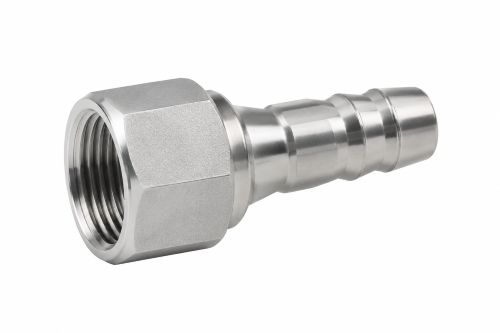
A hose nozzle adapter is a fitting designed to connect a hose nozzle to a hose or another component with a different connection type or size. It helps bridge compatibility gaps between components, allowing them to work together without replacing the entire hose assembly.
For example, you might have a garden hose with a threaded connection and a spray nozzle designed for a quick-connect fitting. A compatible hose nozzle adapter can connect the two components.
Depending on the design, these adapters may use threaded connections, quick-connect mechanisms, or different inlet and outlet sizes.
A typical hose nozzle adapter has three main features:
1. Connection end: Attaches to the hose, nozzle, or another fitting.
2. Adapter body: Provides the structural connection between the two ends.
3. Sealing surface or element: Helps prevent leakage when the adapter is properly installed.
The exact design varies depending on the intended application, fluid, operating pressure, and connection standard.
What Are the Different Types of Hose Nozzle Adapters?
Hose nozzle adapters come in several designs to accommodate different connection requirements. Understanding these options makes it easier to find a suitable fitting for your equipment.
1. Threaded Hose Nozzle Adapters
Threaded adapters use male or female threads to connect a hose nozzle to another component. They are common in garden watering equipment, plumbing connections, and certain industrial water systems.
These adapters may feature different thread standards and sizes. For example, some connections use garden hose threads, while others use pipe threads such as NPT or BSP.
Although some threaded connections look similar, they may not be compatible. Check the thread standard, diameter, and pitch before connecting components.
2. Quick-Connect Hose Nozzle Adapters
Quick-connect adapters allow users to attach or detach hoses and nozzles without repeatedly threading the components together.
They typically use a coupling mechanism that locks into place when the compatible connector is inserted. This design is useful for garden watering, equipment cleaning, and applications where nozzles need to be changed frequently.
Before choosing a quick-connect adapter, verify that its connector profile matches the existing equipment. Similar-looking quick-connect systems do not always fit together.
3. Male and Female Hose Nozzle Adapters
Male and female adapters differ in the design of their connection ends.
A male threaded adapter has external threads, while a female threaded adapter has internal threads. The two can connect when their thread specifications and sealing arrangements are compatible.
For example, a hose with a female threaded end may require a male adapter to connect to a compatible nozzle.
The important point is to check more than the gender of the connection. Thread size, standard, and sealing design must also match.
4. Size-Reducing and Size-Expanding Adapters
Reducing and expanding adapters connect components with different nominal sizes.
A reducing adapter may allow a larger hose connection to connect to a smaller nozzle inlet. An expanding adapter performs the opposite function, connecting a smaller connection to a larger one.
These adapters are useful when equipment has different connection dimensions. However, changing the connection size can affect flow characteristics and pressure losses.
Choose an adapter that suits the system’s required flow rate and operating conditions rather than relying on size compatibility alone.
5. Swivel Hose Nozzle Adapters
Swivel adapters allow relative rotation between connected components. Depending on the design, they can help reduce hose twisting and make nozzle positioning more convenient.
They are useful in applications where the hose or nozzle needs to move during operation.
Not every swivel adapter is designed to rotate while pressurized. Always check the manufacturer’s operating instructions, pressure rating, and intended use before selecting one.
What Materials Are Used to Make Hose Nozzle Adapters?
The material of a hose nozzle adapter affects its durability, corrosion resistance, weight, and suitability for different fluids and environments.
Here are some common options.
Brass Hose Nozzle Adapters
Brass is widely used for hose connections because it offers good corrosion resistance in many water-service environments, reasonable strength, and good machinability.
Brass adapters are common in garden hoses, watering equipment, and general-purpose water connections.
However, brass is not automatically suitable for every fluid or environment. Confirm material compatibility when the adapter will contact chemicals, treated water, or other specialized fluids.
Stainless Steel Hose Nozzle Adapters
Stainless steel adapters are valued for their strength and corrosion resistance. They can be suitable for demanding environments where durability and resistance to rust are important.
Depending on the stainless steel grade, these adapters may be used in industrial water systems, commercial equipment, and selected chemical-handling applications.
The appropriate grade depends on the fluid, temperature, exposure conditions, and other operating requirements. Stainless steel should not be assumed to resist every corrosive substance.
Aluminum Hose Nozzle Adapters
Aluminum adapters are lightweight and can be useful when reducing equipment weight is a priority.
They may be found in certain water-handling, agricultural, and industrial applications. Their suitability depends on the alloy, surface treatment, fluid compatibility, and mechanical requirements.
When connecting aluminum adapters to other metal components, consider the possibility of galvanic corrosion in wet environments.
Plastic Hose Nozzle Adapters
Plastic adapters are lightweight and can be economical for general-purpose applications. They are commonly used in garden watering equipment and low-pressure water connections.
Their performance depends on the plastic material, design, temperature, and operating pressure.
For applications involving hot water, chemicals, or higher pressures, check the manufacturer’s specifications rather than assuming that a plastic adapter is suitable.
What Are Hose Nozzle Adapters Used For?
Hose nozzle adapters serve a range of applications, from everyday watering tasks to specialized industrial operations.
Garden and Irrigation Systems
In garden and irrigation systems, adapters help connect hoses to spray nozzles, sprinklers, watering wands, and other accessories.
For example, an adapter may be needed when a garden hose uses a different connection style from a sprinkler. The correct fitting makes it easier to change accessories without replacing the hose.
Pressure Washers and Cleaning Equipment
Pressure washers often require specific connectors to attach spray guns, hoses, lances, and nozzles.
Adapters can help connect compatible components with different connection designs. However, pressure washer fittings must be selected according to the equipment’s working pressure, temperature, and connection specifications.
A general-purpose garden hose adapter should never be used in a high-pressure washer circuit unless it is explicitly rated and approved for that service.
Industrial Water Transfer Systems
Industrial facilities may use hose nozzle adapters to connect hoses to spray equipment, washdown systems, and water delivery components.
In these applications, factors such as frequent use, operating pressure, temperature, and exposure to contaminants can influence adapter selection.
A durable adapter with compatible connections can simplify equipment setup and maintenance.
Agricultural Applications
Agricultural operations use hoses for irrigation, equipment washing, and other water delivery tasks.
Adapters help connect hoses to watering accessories and compatible equipment. For outdoor use, resistance to weather, corrosion, and mechanical wear may be important considerations.
The best option depends on the type of equipment and the conditions in which it operates.
Commercial and Industrial Fluid Transfer
Some adapters are used in specialized fluid-transfer systems where hoses connect to spray devices or other equipment.
These applications require additional care because not every hose nozzle adapter is suitable for industrial fluids. Material compatibility, sealing design, pressure ratings, and applicable safety requirements must be verified.
Hydraulic systems require fittings specifically designed and rated for hydraulic service. Ordinary hose nozzle adapters should not be substituted for hydraulic fittings.
How to Choose the Right Hose Nozzle Adapter
Choosing the right adapter involves more than finding two ends that appear to fit. The following factors can help you narrow down the options.
1. Check the Hose and Nozzle Sizes
Start by identifying the connection sizes of the hose and nozzle.
Look for size information in the equipment manual, product markings, or manufacturer’s specifications. If these details are unavailable, measure the connection carefully and determine whether the stated size refers to a nominal hose size or a thread dimension.
Remember that nominal hose size and thread diameter are not necessarily the same measurement.
An adapter that fits one end but does not match the other connection will not solve the compatibility problem.
2. Identify the Thread Type and Connection Standard
Thread compatibility is one of the most important factors when selecting a threaded adapter.
Common connection types include garden hose threads and pipe threads such as NPT and BSP. These standards can differ in thread angle, pitch, profile, and sealing method.
For example, NPT and BSP threads are not generally interchangeable, even when their diameters appear similar.
Check the thread standard, gender, size, and sealing arrangement for both components before ordering an adapter.
3. Select a Suitable Material
Choose the adapter material according to the application and operating environment.
For general-purpose water connections, brass or suitable plastics may be sufficient. Stainless steel may be preferable where greater durability or resistance to particular corrosive conditions is required.
Consider the following questions:
➡️ What fluid will pass through the adapter?
➡️ Will the fitting be exposed to moisture, chemicals, or outdoor conditions?
➡️ What temperature range will it experience?
➡️ Will it be subject to frequent connection and disconnection?
These details help determine which materials are appropriate.
4. Check the Operating Pressure and Temperature
Every adapter has operating limits. Exceeding those limits can lead to leaks, deformation, or connection failure.
Check the manufacturer’s pressure and temperature ratings, including any limitations that apply when the adapter is used with other components.
For a pressure washer, for instance, the adapter must be suitable for the washer’s operating pressure and water temperature. A fitting designed for ordinary garden watering may not be suitable.
For pressurized applications, the complete assembly must be compatible with the operating conditions, not just the adapter itself.
5. Consider the Fluid and Application
The intended fluid affects material and seal selection.
An adapter designed for clean water may not be suitable for oils, fuels, chemicals, or other fluids. Certain materials and elastomer seals can deteriorate when exposed to incompatible substances.
Review the manufacturer’s compatibility information and select an adapter intended for the specific service.
6. Verify Sealing Requirements and Leak Resistance
Different connections use different sealing methods. Some seal through a washer or O-ring, while others rely on compatible tapered threads or a separate sealing component.
Using the wrong sealing method can cause leaks or damage the connection.
Before installation, inspect the threads, sealing surfaces, and washers for damage. Use thread sealant only when appropriate for the specific connection and the manufacturer’s instructions.
How to Install a Hose Nozzle Adapter
Correct installation helps prevent leaks and reduces the risk of damaging the adapter or connected equipment.
Follow these general steps, while observing any product-specific instructions.
Step 1: Check the connection sizes and threads.
Confirm that the adapter matches both the hose and the nozzle. Check the thread standard and sealing method if the connection is threaded.
Step 2: Inspect and clean the connection surfaces.
Remove dirt, debris, and residue from the connection points. Check for damaged threads, worn washers, or cracked components.
Step 3: Position the adapter correctly.
Align the adapter with the mating connection. For threaded fittings, start the threads by hand to reduce the risk of cross-threading.
Step 4: Tighten according to the manufacturer’s guidance.
Avoid excessive tightening, which can damage threads, seals, or plastic components. Use the specified tightening method and torque, where applicable.
Step 5: Test the connection.
Restore the water supply gradually and inspect the connection for leaks. For pressurized equipment, follow the manufacturer’s testing and safety procedures.
If a connection leaks, depressurize the system before inspecting or adjusting it. Never attempt to tighten or disconnect a fitting while it is under pressure.
Common Hose Nozzle Adapter Problems and How to Fix Them
Even a suitable adapter can develop problems because of incorrect installation, wear, or incompatible components.
Leaking Connections
Leaks can result from damaged washers, worn O-rings, incompatible threads, or improper installation.
What to do: Shut off the water supply, release the pressure, and inspect the sealing components. Replace damaged seals and verify that the adapter uses the correct sealing method.
Mismatched Threads or Sizes
An adapter may appear to fit but fail to engage correctly because the thread standard, diameter, or pitch differs.
What to do: Confirm the specifications of both connections. Do not force mismatched threads together, as this can damage the fitting and create an unreliable connection.
Corrosion and Wear
Exposure to moisture, chemicals, dirt, and repeated use can gradually damage an adapter.
What to do: Inspect the fitting regularly and replace components that show significant corrosion, cracking, deformation, or thread damage. Choose a material suited to the operating environment.
Loose or Difficult-to-Remove Adapters
Repeated use, vibration, corrosion, and overtightening can make adapters difficult to remove or cause them to loosen during service.
What to do: Use the recommended installation method and inspect the connection for damage. Replace worn components rather than applying excessive force.
Reduced Water Flow
Restricted flow may be caused by debris, a blocked nozzle, an adapter with a smaller internal passage, or a kinked hose.
What to do: Shut off the supply and depressurize the system before checking for obstructions. Clean or replace the affected component and confirm that the adapter’s internal passage is suitable for the required flow rate.
Hose Nozzle Adapter vs. Hose Coupling: What’s the Difference?
Hose nozzle adapters and hose couplings both connect components, but their primary functions differ.
A hose nozzle adapter is generally used to make a hose, nozzle, or fitting compatible with another connection type or size. A hose coupling connects two hose sections or joins a hose to another component through a compatible coupling interface.
|
Feature |
Hose Nozzle Adapter |
|
|
Primary purpose |
Adapts between different connection types or sizes |
Joins hose sections or connects compatible components |
|
Connection design |
May have different ends, threads, or connector profiles |
Depends on the coupling system |
|
Typical applications |
Connecting nozzles to hoses or equipment |
Joining hoses or creating detachable hose connections |
|
Selection factors |
Thread compatibility, size, material, and pressure rating |
Coupling type, hose compatibility, sealing, and pressure rating |
The distinction is not always absolute because some products perform both functions. Manufacturers may also use the terms differently, so it is best to check the actual connection design and specifications.
Frequently Asked Questions
Are Hose Nozzle Adapters Universal?
No. Some adapters fit common hose connections, but compatibility depends on the thread standard, connection size, connector design, and sealing method. Always check the specifications before purchasing.
How Do I Know What Size Hose Nozzle Adapter I Need?
Identify the connection type and size on both the hose and nozzle. Check the product documentation or markings first. If necessary, measure the thread diameter and pitch, then identify the correct standard. Do not rely on diameter alone because different thread systems can have similar dimensions.
What Is the Difference Between Male and Female Hose Nozzle Adapters?
Male threaded adapters have external threads, while female threaded adapters have internal threads. They can connect when their thread standards, sizes, and sealing arrangements are compatible.
Do Hose Nozzle Adapters Need Thread Sealant?
Not always. Some threaded connections require an appropriate thread sealant, while others seal with a washer, O-ring, or dedicated sealing face. Follow the manufacturer’s instructions and avoid applying sealant to connections that are designed to seal without it.
Can Hose Nozzle Adapters Be Used for High-Pressure Applications?
Only if the adapter is specifically rated for the intended pressure, temperature, fluid, and connection type. General-purpose hose adapters should not be assumed suitable for pressure washers or industrial pressure systems.
How Do I Prevent a Hose Nozzle Adapter From Leaking?
Use compatible fittings, inspect seals before installation, align threads correctly, and tighten the connection according to the manufacturer’s instructions. Regular inspection and timely replacement of worn seals can also help prevent leaks.
Conclusion
Hose nozzle adapters provide a practical way to connect hoses, nozzles, and equipment with different connection requirements. Choosing the right one means checking more than the fitting’s appearance: thread standards, sizes, materials, sealing methods, and operating limits all matter.
For everyday watering, a compatible brass or plastic adapter may be sufficient. For commercial or industrial applications, material compatibility, pressure ratings, and equipment requirements deserve closer attention.
Before purchasing, confirm the specifications of both connected components and select an adapter designed for the intended application. Doing so helps reduce leaks, avoid unnecessary replacements, and maintain reliable performance.
If you’re sourcing hose adapters for industrial use, review the available connection standards, material options, and operating specifications to find a product that meets your system’s requirements.
Post time: Oct-21-2026