

Hydraulic systems operate under high pressure, so monitoring pressure is essential for keeping equipment safe, efficient, and reliable. When a hydraulic system develops a problem, checking the pressure at different points can help identify the cause quickly.
This is where high-pressure hydraulic test port fittings become useful. These compact fittings provide convenient connection points for pressure gauges, test hoses, and diagnostic equipment. They allow technicians to check hydraulic pressure without having to disconnect major hydraulic lines.
In this guide, we will explain how high-pressure hydraulic test port fittings work, their main components, common applications, benefits, and what to consider when selecting and installing them.
What Are High-Pressure Hydraulic Test Port Fittings?
A hydraulic test port fitting is a component installed at a specific point in a hydraulic circuit to provide access for pressure testing and system diagnostics.
Instead of connecting a pressure gauge directly to a hydraulic hose or removing a component to check pressure, a technician can connect testing equipment to the test port. This makes pressure monitoring faster and more convenient.
High-pressure hydraulic test port fittings are designed for hydraulic systems where operating pressures can be significant. They are manufactured to withstand pressure, vibration, temperature changes, and exposure to hydraulic fluids.
These fittings are commonly used in hydraulic pumps, valves, cylinders, power units, mobile equipment, and industrial machinery.
Main Components of a Hydraulic Test Port Fitting
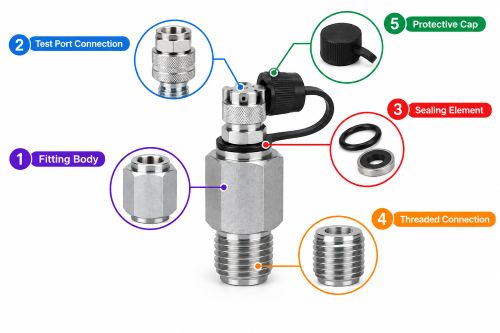
Although test port fittings are relatively small, several components work together to provide a reliable connection.
1. Fitting Body
The fitting body is the main structural component. It contains the internal passage that allows hydraulic fluid pressure to reach the test point.
It is commonly manufactured from materials such as carbon steel or stainless steel, depending on the application and environmental requirements.
2. Test Port Connection
The test port is the connection point used for attaching a test hose, pressure gauge, or diagnostic device.
Different systems may use different connection designs, so compatibility between the test port and testing equipment is important.
3. Sealing Element
The sealing element helps prevent hydraulic fluid from escaping around the connection.
Depending on the fitting design, sealing may be provided by an O-ring, bonded seal, metal-to-metal sealing surface, or another suitable sealing method.
4. Threaded Connection
The threaded section allows the fitting to be installed into a hydraulic manifold, valve block, pipe, or other component.
The thread must match the hydraulic port correctly. Common hydraulic systems can use different thread standards, making thread identification an important part of fitting selection.
5. Protective Cap
Many test port fittings include a protective cap or dust cover. It helps protect the connection from dirt, moisture, and other contaminants when the port is not being used.
Keeping the test port clean is important because contamination can enter the connection during testing or maintenance.
How High-Pressure Hydraulic Test Port Fittings Work
The basic working principle is straightforward.
A test port fitting creates a controlled access point to the hydraulic circuit. When the hydraulic system is operating, pressure is present inside the fitting and connected circuit.
When a compatible test hose or measuring device is connected, the device can sense the pressure at that point.
The process generally works as follows:
1. The fitting is installed at the required location in the hydraulic circuit.
2. Hydraulic pressure reaches the internal passage of the fitting.
3. A compatible test hose or measuring device is connected to the test port.
4. The pressure is transferred to the gauge or diagnostic instrument.
5. The technician reads the pressure and compares it with the expected system value.
6. The testing equipment is disconnected when testing is complete.
7. The protective cap is replaced to keep the port clean.
This simple arrangement makes it possible to monitor pressure at several locations throughout a hydraulic system.
How Is Pressure Measured Through a Test Port?
Pressure testing through a test port is commonly performed during troubleshooting, commissioning, inspection, and preventive maintenance.
First, the technician identifies the correct test point. The protective cap is removed and the connection is inspected for dirt or damage.
A compatible test hose or pressure measuring device is then connected. Depending on the test port design, the connection may open the measuring path automatically when the test device is attached.
Once connected, the pressure gauge or electronic sensor can provide a pressure reading.
The technician may compare readings from different points in the system. For example, comparing pressure before and after a hydraulic valve can provide useful information about system performance.
After testing, the equipment should be disconnected according to the manufacturer’s recommended procedure, and the protective cap should be replaced.
Types of High-Pressure Hydraulic Test Port Fittings
Hydraulic test ports are available in different configurations to suit different systems and testing requirements.
Screw-In Test Port Fittings
These fittings are installed directly into a threaded hydraulic port. They provide a compact and relatively simple way to add a testing point to a hydraulic circuit.
Test Point Adapters
Test point adapters can connect different hydraulic ports and diagnostic equipment. They are useful when the existing connection does not directly match the required testing device.
Diagnostic Test Couplings
Diagnostic couplings are designed for quick connection to compatible test hoses and pressure measuring equipment. They can make repeated pressure testing more convenient.
Test Port Fittings With Different Thread Standards
Hydraulic equipment may use metric, BSP, NPT, SAE, or other thread standards depending on its design and market.
Selecting the correct thread is essential for obtaining a secure connection and preventing leaks.
Key Features of High-Pressure Test Port Fittings
Good-quality high-pressure test port fittings are designed to provide reliable performance under demanding operating conditions.
Important features can include:
1. High working-pressure capability
2. Reliable sealing performance
3. Compact construction
4. Easy connection to diagnostic equipment
5. Resistance to vibration
6. Corrosion-resistant materials or surface treatments
7. Compatibility with hydraulic fluids
8. Durable construction
9. Convenient pressure monitoring
The exact pressure and temperature capabilities depend on the fitting design, material, sealing system, and manufacturer specifications.
Where Are High-Pressure Hydraulic Test Port Fittings Used?
Test port fittings can be found in many types of hydraulic equipment.
Common applications include:
1. Hydraulic pumps
2. Hydraulic cylinders
3. Hydraulic control valves
4. Hydraulic manifolds
5. Hydraulic power units
6. Construction machinery
7. Agricultural equipment
8. Material-handling equipment
9. Industrial machinery
10. Mobile hydraulic systems
They are particularly useful in equipment where regular pressure monitoring and troubleshooting are required.
Benefits of Using High-Pressure Hydraulic Test Port Fittings
One of the biggest advantages of test ports is convenience. Technicians can access hydraulic pressure without repeatedly modifying the main hydraulic circuit.
Faster Troubleshooting
Pressure readings can help technicians determine whether a pump, valve, cylinder, or other component is operating correctly.
Easier Preventive Maintenance
Regular pressure checks can help identify changes in hydraulic system performance before a major failure occurs.
Reduced Downtime
Because test ports provide convenient access for diagnostic equipment, troubleshooting can often be completed more quickly.
Multiple Measurement Points
Several test ports can be installed at strategic locations throughout a hydraulic system. This allows technicians to compare pressure at different stages of the circuit.
Improved System Monitoring
Consistent pressure measurements can help identify unusual operating conditions and support better maintenance decisions.
How to Choose the Right High-Pressure Hydraulic Test Port Fitting
Choosing a test port should not be based on size alone. Several factors need to be considered.
Check the Working Pressure
The fitting must be rated for the maximum pressure expected at the installation point.
Never assume that a fitting is suitable simply because it physically fits the port. Always check the manufacturer’s pressure rating.
Confirm the Thread Type and Size
The fitting thread must match the hydraulic connection. Incorrect threads can cause leakage, thread damage, or an unsafe connection.
Consider the Material
Carbon steel is widely used for many hydraulic applications, while stainless steel may be preferred where increased corrosion resistance is required.
Check Fluid Compatibility
Make sure the fitting and sealing materials are compatible with the hydraulic fluid being used.
Consider Temperature
Operating temperature can affect seals and fitting materials. Check the fitting’s temperature range before installation.
Check Test Equipment Compatibility
The test port must be compatible with the pressure gauge, diagnostic hose, sensor, or other equipment that will be connected to it.
How to Install High-Pressure Hydraulic Test Port Fittings
Correct installation is important for reliable operation.
Before installation, inspect the fitting, hydraulic port, threads, and sealing surfaces. Make sure they are clean and free from damage.
Install the fitting according to the manufacturer’s instructions. Avoid excessive tightening because overtightening can damage threads, sealing surfaces, or the fitting itself.
After installation, inspect the connection and perform an appropriate leak check.
It is also important to follow the manufacturer’s torque requirements when they are specified.
For high-pressure hydraulic systems, installation and testing should be performed by appropriately trained personnel following applicable safety procedures.
Common Problems and Troubleshooting
Even a properly selected test port can develop problems if it is damaged, contaminated, or incorrectly installed.
Hydraulic Leaks
Leaks can result from damaged seals, incorrect installation, loose connections, damaged threads, or incompatible components.
Inspect the connection and replace damaged sealing components as necessary.
Damaged Threads
Cross-threading or overtightening can damage the fitting or hydraulic port. Always confirm thread type and size before installation.
Incorrect Pressure Readings
A faulty pressure gauge, blocked test connection, incorrect test equipment, or a problem elsewhere in the hydraulic system can produce unexpected readings.
If a reading appears unusual, compare it with another known measurement point and inspect the testing equipment.
Contamination
Dirt entering the test port can interfere with the connection or contaminate the hydraulic system.
Keep protective caps installed when the test port is not being used.
Safety Tips When Using High-Pressure Test Ports
High-pressure hydraulic systems can be dangerous. Hydraulic fluid released under pressure can cause serious injury, so testing should always be performed carefully.
Keep these safety practices in mind:
1. Never exceed the fitting’s rated pressure.
2. Use test hoses and gauges rated for the system pressure.
3. Inspect testing equipment before use.
4. Make sure connections are secure.
5. Never disconnect components unnecessarily while the system is pressurized.
6. Follow proper pressure-relief procedures.
7. Keep hands away from suspected hydraulic leaks.
8. Wear appropriate personal protective equipment.
9. Follow the equipment manufacturer’s safety instructions.
A small test fitting can still be connected to a highly pressurized circuit, so it should never be treated as a low-risk component.
High-Pressure Test Port Fittings vs. Standard Test Fittings
The main difference is generally the pressure and operating requirements for which the fitting is designed.
High-pressure test port fittings are intended for applications where the fitting must safely withstand higher hydraulic pressures. They may also be designed for demanding environments involving vibration, temperature changes, and frequent diagnostic connections.
Standard test fittings may be suitable for lower-pressure applications, but their ratings should never be assumed.
The best choice depends on the actual pressure, temperature, fluid, connection type, and operating environment.
Maintenance Tips for Hydraulic Test Port Fittings
Test ports should be included in routine hydraulic maintenance.
Inspect them periodically for:
➡️ Hydraulic leaks
➡️ Corrosion
➡️ Damaged threads
➡️ Worn seals
➡️ Contamination
➡️ Physical damage
➡️ Missing protective caps
Keep unused ports covered and clean. Replace damaged fittings or sealing components instead of continuing to operate with a compromised connection.
Regular inspection is especially important in mobile equipment and machinery exposed to vibration, dust, moisture, and harsh operating environments.
Frequently Asked Questions
What is a hydraulic test port fitting?
A hydraulic test port fitting provides an access point for connecting pressure gauges, test hoses, sensors, and other diagnostic equipment to a hydraulic circuit.
How does a hydraulic test port work?
The fitting provides access to hydraulic pressure at a selected point in the system. A compatible test device connects to the port and measures the pressure at that location.
How much pressure can a test port fitting handle?
The maximum pressure depends on the specific fitting, material, design, connection, and manufacturer rating. Always check the product specification before use.
Can test port fittings be connected while the system is pressurized?
Some test port designs are specifically intended for connection to pressurized hydraulic systems, while others may require pressure to be relieved first. Always follow the manufacturer’s instructions and use equipment rated for the actual pressure.
What thread types are used for hydraulic test ports?
Hydraulic test port fittings may be available with different thread standards, including metric and various international or regional thread types. The correct thread depends on the hydraulic system.
How do I prevent leaks from a test port?
Use the correct fitting, compatible sealing elements, proper installation procedures, and the manufacturer’s recommended tightening specifications. Keep threads and sealing surfaces clean.
How do I choose the right test port fitting?
Consider working pressure, thread type and size, material, hydraulic fluid compatibility, temperature, sealing method, and compatibility with your diagnostic equipment.
How often should hydraulic test ports be inspected?
Inspection frequency depends on the equipment and operating conditions. Test ports should generally be checked during routine hydraulic maintenance and whenever a leak, damage, or unusual pressure reading is observed.
Conclusion
High-pressure hydraulic test port fittings provide a simple but valuable way to monitor and diagnose hydraulic systems. By creating convenient access points for pressure gauges, test hoses, and sensors, they can make troubleshooting and preventive maintenance much easier.
Choosing the right fitting requires more than checking physical dimensions. Pressure rating, thread type, material, sealing method, temperature, fluid compatibility, and test equipment compatibility all need to be considered.
With proper selection, installation, inspection, and safe testing procedures, hydraulic test port fittings can help improve system monitoring, reduce troubleshooting time, and support reliable hydraulic equipment performance.
Post time: Sep-08-2026