

Drain tube adapters are small but important components used to connect drain tubes to ports, pipes, and other fluid-handling components. They help create a secure connection that allows fluids to move out of equipment during normal operation, maintenance, or servicing. In hydraulic systems and industrial machinery, choosing the right adapter can make a difference in drainage efficiency, connection reliability, and long-term performance.
Although drain tube adapters may look simple, their design, material, thread type, and sealing method all affect how well they perform. Understanding these factors helps engineers, maintenance technicians, and equipment manufacturers select suitable adapters for their applications.
What Are Drain Tube Adapters?
Drain tube adapters are connection components designed to join a drain tube or line to a compatible port or fitting. Depending on the design, they may connect tubing to a threaded opening, redirect a drainage line, or provide a transition between different connection types.
These adapters are used in various fluid-handling applications, including hydraulic equipment, lubrication systems, industrial machinery, and fluid reservoirs. They help direct oil or other compatible fluids toward a designated drainage point, making it easier to manage fluid removal and perform routine maintenance.
A drain tube adapter typically consists of a main body, a tube connection, and a threaded or other mounting interface. Some designs also include an O-ring or another sealing element to help prevent leakage.
It’s important to note that drain tube adapters are not all designed for the same purpose. Some are intended for low-pressure drainage, while others may be suitable for specific pressurized fluid applications. The correct choice depends on the equipment design and operating conditions.
How Do Drain Tube Adapters Work?
The basic function of a drain tube adapter is to establish a connection between a drainage line and the component from which fluid needs to be removed.
For example, a hydraulic reservoir may have a designated drain port for removing oil during maintenance. A compatible adapter can connect this port to a drain tube, directing the oil toward a collection container or another designated location.
The process generally involves three main steps.
1. Connecting the Adapter to the Port
The adapter is installed into a compatible port or connected to another fitting. Depending on its design, the connection may use metric threads, BSP threads, NPT threads, or another specified interface.
Correct thread compatibility is essential. Two connections may appear similar but have different thread profiles or sealing requirements. Using incompatible threads can damage the connection and cause leakage.
2. Creating a Secure Seal
Once the adapter is installed, its sealing mechanism helps prevent fluid from escaping around the connection.
Some adapters seal through a designated metal-to-metal sealing surface, while others use an O-ring or a separate sealing element. The sealing method depends on the adapter design and the mating port.
Proper installation is equally important. Incorrect tightening, damaged threads, contaminated sealing surfaces, or unsuitable seals can compromise the connection.
3. Directing Fluid Through the Drainage Line
After the connection is secured, fluid can pass through the adapter’s internal passage into the drain tube. The tube then directs the fluid to the intended destination.
The adapter’s internal diameter, the tube size, and the routing of the drainage line can all affect flow. An undersized connection or a restricted tube may slow drainage, while a poorly routed tube can create unnecessary bends or interfere with nearby equipment.
In hydraulic systems, always follow the equipment manufacturer’s instructions for depressurization and fluid drainage. Never loosen a fitting on a pressurized system unless the connection is specifically designed for that operation and the procedure is approved.
Key Components of a Drain Tube Adapter
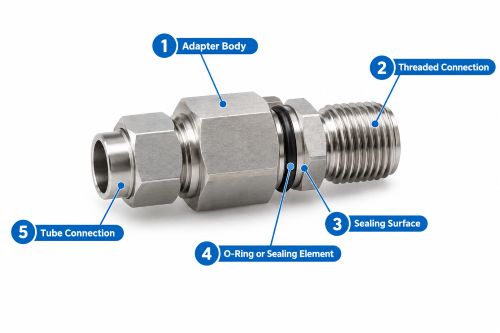
Drain tube adapters come in different shapes and configurations, but many share several basic features.
1. Adapter Body
The adapter body forms the main structure of the component. It contains the fluid passage and supports the connection between the drain tube and the equipment port.
Its dimensions, wall thickness, and material influence the adapter’s mechanical strength and suitability for the intended application.
2. Threaded Connection
The threaded section allows the adapter to connect to a compatible port, fitting, or other component. Thread types and sizes vary according to the equipment and regional or industry requirements.
Before selecting an adapter, check the exact thread specification rather than relying on visual similarity alone.
3. Sealing Surface
The sealing surface helps establish a leak-resistant connection between mating components. Depending on the design, sealing may occur at a tapered thread, a flat face, a cone, or another designated surface.
Cleanliness and surface condition are important because scratches, debris, and damage can interfere with sealing.
4. O-Ring or Sealing Element
Some drain tube adapters use an O-ring or another sealing element to improve sealing performance. The seal must be compatible with the fluid, operating temperature, and connection design.
An incorrect seal material or size may cause swelling, hardening, deterioration, or leakage over time.
5. Tube Connection
The tube connection joins the adapter to the drainage line. Depending on the product, this may be a compression connection, a push-in connection, or another tube attachment design.
The tube’s outside diameter and connection requirements must match the adapter specifications to ensure a secure fit.
Common Types of Drain Tube Adapters
Drain tube adapters are available in different configurations to accommodate equipment layouts, tube sizes, and connection requirements.
Straight Drain Tube Adapters
Straight adapters provide a direct connection between the port and the drain tube. Their simple layout makes them useful where there is sufficient installation space and the tube can run directly from the connection.
They are often a practical choice when minimizing directional changes in the drainage line is important.
90-Degree and Angled Drain Tube Adapters
Angled adapters change the direction of the drainage line. A 90-degree configuration can be useful when a straight connection would interfere with nearby components or when the tube needs to follow a specific route.
However, the available space, tube bend radius, and expected flow should be considered before selecting an angled design.
Threaded Drain Tube Adapters
Threaded adapters connect to ports or fittings through a specified thread interface. They are common in industrial fluid systems because they can provide a compact and secure connection when properly matched and installed.
The thread standard, nominal size, and sealing method must be confirmed before installation.
Tube-to-Port Adapters
Tube-to-port adapters connect tubing to a designated equipment port. They may be used in reservoirs, manifolds, or other fluid-handling components where a drainage line needs to connect directly to the equipment.
The port design and tubing specifications determine which adapter configuration is appropriate.
Custom Drain Tube Adapters
Some equipment requires a particular thread combination, tube size, body length, angle, or material. In these cases, a custom adapter may be more suitable than a standard component.
Custom designs should be based on accurate drawings, dimensional requirements, operating conditions, and the intended sealing method.
Materials Used in Drain Tube Adapters
Material selection affects corrosion resistance, mechanical strength, service life, and overall compatibility with the application.
Carbon Steel
Carbon steel is widely used in industrial and hydraulic fittings because of its strength and suitability for many demanding mechanical applications.
Depending on the environment, carbon steel adapters may receive a protective surface treatment, such as zinc plating, to improve corrosion resistance. The coating specification should be selected according to the expected exposure and performance requirements.
Stainless Steel
Stainless steel is a common choice for applications where corrosion resistance is a priority. It may be suitable for equipment exposed to moisture, certain chemicals, or demanding environmental conditions.
However, stainless steel grades vary in their corrosion resistance and mechanical properties. The grade must be selected based on the fluid, environment, temperature, and mechanical requirements.
Brass
Brass adapters may be appropriate for compatible fluid systems where corrosion resistance and machinability are important. They are used in selected industrial and fluid-handling applications, depending on the pressure, temperature, and chemical compatibility requirements.
Brass should not automatically be treated as a substitute for steel or stainless steel. Its suitability depends on the specific application and the manufacturer’s ratings.
How to Choose the Right Material
Before selecting a drain tube adapter, consider the following factors:
1. Fluid compatibility: Confirm that the material and sealing elements are suitable for the fluid being handled.
2. Operating conditions: Check the expected pressure and temperature.
3. Environmental exposure: Consider moisture, corrosive substances, and outdoor conditions.
4. Mechanical requirements: Evaluate vibration, installation loads, and the strength needed for the connection.
5. Maintenance expectations: Consider inspection intervals, service life, and replacement requirements.
The best material is the one that meets the application’s technical requirements without introducing unnecessary cost or maintenance.
Common Applications of Drain Tube Adapters
Drain tube adapters are used wherever a compatible connection is needed to direct fluid from equipment to a designated drainage line.
Hydraulic Systems and Reservoirs
Hydraulic equipment often requires controlled oil drainage during maintenance, inspection, and fluid replacement. Suitable adapters can connect designated drain ports to tubing or drainage lines.
The adapter must match the equipment’s port design and the conditions under which the drainage system operates.
Hydraulic Pumps and Motors
Some pumps and motors include designated drain or case-drain connections. These connections may require specialized fittings to route fluid according to the manufacturer’s instructions.
Case-drain connections are not interchangeable with ordinary reservoir drain ports. Their flow, pressure limits, and connection requirements must be checked carefully.
Industrial Machinery
Manufacturing equipment may use drain connections to remove oil, lubricants, or other process fluids. Drain tube adapters can help connect these points to a collection line or maintenance system.
A suitable configuration can also help simplify access during servicing.
Lubrication Systems
Certain lubrication systems require designated lines or connections for fluid drainage and maintenance. Adapters can provide the necessary interface between compatible components.
The material and seal must be suitable for the lubricant and the system’s operating conditions.
Equipment Maintenance
During scheduled maintenance, fluid may need to be removed from tanks, housings, or other components. Properly selected adapters can make it easier to direct the fluid and reduce unnecessary spills when used with an appropriate drainage setup.
How to Choose the Right Drain Tube Adapter
Choosing an adapter involves more than matching the connection to the available space. Several technical details should be checked before ordering or installation.
1. Confirm the Tube Size
Start by identifying the required tube outside diameter and the connection type. Even a small dimensional mismatch can prevent proper assembly or compromise the seal.
Check the manufacturer’s dimensional drawings when available.
2. Verify the Thread Type and Size
Determine whether the port uses a metric, BSP, NPT, or another thread specification. Also confirm whether the connection seals through the threads or through a separate sealing surface.
Do not assume that threads with similar dimensions are interchangeable.
3. Check Pressure and Temperature Requirements
Identify the maximum expected operating pressure and temperature. A component designed for a low-pressure drain line may not be appropriate for a pressurized hydraulic connection.
Verify the ratings of the complete connection, including the adapter, tube, seals, and mating port.
4. Select the Correct Material
Choose carbon steel, stainless steel, brass, or another suitable material based on fluid compatibility, corrosion exposure, and mechanical requirements.
Consider surface treatments where additional protection is necessary.
5. Evaluate the Sealing Method
Determine whether the adapter requires an O-ring, bonded seal, compression mechanism, tapered thread seal, or another specified sealing arrangement.
Use only compatible sealing components and follow the manufacturer’s installation instructions.
6. Consider Installation Space
A straight adapter may be suitable for a direct connection, while an angled adapter may help route the tube around nearby components.
Allow enough space for installation tools, tube movement, inspection, and future maintenance.
7. Review Quality and Documentation
For industrial purchasing, review dimensional tolerances, material specifications, applicable standards, and quality inspection requirements.
If the adapter is part of an OEM assembly, confirm that the design meets the equipment manufacturer’s drawings and specifications.
Installation and Maintenance Tips
Even a well-made adapter can develop problems if it is installed incorrectly or used outside its intended operating conditions.
Follow these practical guidelines:
1. Inspect before installation: Look for damaged threads, scratches, cracks, corrosion, or defects around the sealing surface.
2. Clean the connection: Remove dirt and debris from the port, adapter, and tube before assembly.
3. Confirm compatibility: Verify thread specifications, tube dimensions, and sealing components.
4. Use the correct tightening method: Follow the manufacturer’s torque or assembly instructions. Excessive tightening can damage threads or sealing surfaces.
5. Support the tubing: Avoid placing unnecessary bending forces or side loads on the adapter.
6. Check for leakage: After installation, inspect the connection under the approved operating conditions.
7. Perform regular inspections: Look for loose connections, damaged seals, corrosion, or signs of fluid leakage.
Before servicing a hydraulic system, isolate the equipment, release stored pressure according to the manufacturer’s procedure, and allow hot fluid and components to cool as required.
Common Drain Tube Adapter Problems and Solutions
Understanding common connection problems can help maintenance teams identify the cause and prevent repeat failures.
Fluid Leakage
Leakage may result from damaged seals, incorrect thread engagement, contaminated sealing surfaces, or improper installation.
What to do: Safely isolate the system, inspect the connection, and replace damaged components. Confirm that the thread and sealing method match the equipment specifications.
Restricted Drainage
Slow drainage may be caused by a blocked tube, an undersized passage, excessive bends, or an obstruction elsewhere in the system.
What to do: Check the drainage route and verify that the tube and adapter sizes meet the required flow conditions.
Thread Damage
Cross-threading, incompatible thread types, or excessive tightening can damage the adapter or mating port.
What to do: Confirm the specifications before assembly. Replace damaged components rather than forcing the connection into place.
Corrosion
Exposure to moisture, chemicals, or unsuitable operating conditions can cause corrosion that affects appearance and potentially compromises component integrity.
What to do: Select a suitable base material and surface treatment. Inspect the component regularly and replace it if corrosion affects the connection or its sealing surfaces.
Loose Connections
Vibration, incorrect assembly, or external forces on the tube can contribute to connection problems.
What to do: Check the installation method, tube support, and manufacturer’s tightening requirements. Avoid using additional tightening as a substitute for diagnosing the actual cause.
Why Choose a Reliable Drain Tube Adapter Manufacturer?
For equipment manufacturers, distributors, and industrial buyers, selecting the right supplier is an important part of maintaining consistent product quality.
A reliable manufacturer should be able to provide clear technical specifications, consistent dimensions, suitable material options, and dependable quality control. These factors help buyers integrate adapters into their equipment while reducing the risk of compatibility issues.
When evaluating a supplier, consider the following:
1. Manufacturing consistency: Look for repeatable dimensions and controlled production processes.
2. Material options: Confirm the availability of materials and surface treatments suited to your application.
3. Customization capabilities: Check whether the supplier can accommodate specific thread combinations, tube sizes, angles, or drawings.
4. Quality inspection: Ask about dimensional inspection, material verification, and any required testing.
5. OEM and ODM support: For specialized equipment, engineering support and custom manufacturing may be valuable.
6. Order requirements and lead times: Confirm minimum order quantities, production schedules, packaging, and delivery arrangements.
Sannke specializes in hydraulic fittings and related connection components, offering manufacturing and customization options for suitable hydraulic applications. For buyers sourcing drain tube adapters or related fittings, confirming the exact product configuration, material, thread specification, and sealing requirements with the manufacturer is an important step toward finding the right solution.
Frequently Asked Questions (FAQs)
1. What is a drain tube adapter used for?
A drain tube adapter connects a drainage tube or line to a compatible port or fitting. It helps direct fluid from equipment toward a designated drainage point during operation or maintenance, depending on the system design.
2. How does a drain tube adapter work?
The adapter creates a connection between the equipment port and the drain tube. Its internal passage allows fluid to flow through the connection, while the specified threads and sealing elements help prevent leakage.
3. What materials are commonly used for drain tube adapters?
Common materials include carbon steel, stainless steel, and brass. The appropriate choice depends on fluid compatibility, operating pressure, temperature, corrosion exposure, and mechanical requirements.
4. How do I choose the correct drain tube adapter size?
Check the tube outside diameter, port dimensions, thread specification, and required flow capacity. Consult the equipment drawings and adapter manufacturer’s specifications to confirm compatibility.
5. Are drain tube adapters suitable for hydraulic systems?
Yes, suitable drain tube adapters can be used in hydraulic systems when their connection design, pressure and temperature ratings, materials, and seals match the application. Specialized connections, such as hydraulic case drains, require particular attention to equipment specifications.
6. What is the difference between a drain tube adapter and a drain plug?
A drain tube adapter connects a drainage line to a port or another component. A drain plug is generally used to close an opening and prevent fluid from escaping. Some systems use both: a plug closes the port during normal operation, while a suitable adapter or other connection is installed when drainage is required.
7. How can I prevent leaks in drain tube adapter connections?
Use compatible threads and seals, keep sealing surfaces clean, follow the recommended assembly procedure, and avoid excessive tightening. Regular inspection can help identify damaged seals, corrosion, and other connection problems before they worsen.
Conclusion
Drain tube adapters provide a practical way to connect drainage lines to compatible ports and fluid-handling components. Their performance depends on several factors, including connection design, tube size, thread compatibility, material selection, and sealing method.
For hydraulic equipment and industrial machinery, choosing the right adapter helps support reliable fluid drainage and simplifies maintenance. Before purchasing, verify the technical requirements and operating conditions rather than relying on appearance alone.
Whether you need a standard connection or a customized fitting for an OEM application, working with a qualified manufacturer can help ensure that the selected adapter matches your equipment and intended use.
Post time: Oct-26-2026