

In piping systems, whether in plumbing, HVAC, automotive, or industrial applications, secure and leak-proof connections are essential. Even a minor leak can lead to system inefficiency, safety hazards, or costly repairs. One small but critical component that helps prevent these issues is the compression flare cap.
In this guide, we’ll explore what compression flare caps are, how they work, their key components, applications, and how to choose the right one for your needs.
What Are Compression Flare Caps?
Compression flare caps are specialized fittings used to seal the end of a flared pipe or tube. They are designed to create a tight, leak-proof seal by combining the principles of both compression fittings and flare fittings.
Unlike standard caps that simply cover a pipe end, compression flare caps are engineered to work with flared tubing, ensuring a more secure and pressure-resistant seal. They are commonly used in systems where reliability and safety are critical, such as gas lines, refrigeration systems, and hydraulic equipment.
Key Components of Compression Flare Caps
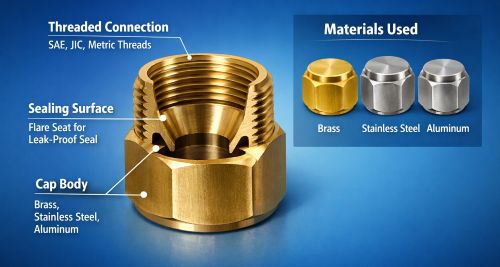
Understanding the structure of compression flare caps helps explain their effectiveness. These fittings typically consist of the following elements:
1. Cap Body
The cap body is the main outer shell, usually made from durable materials like brass, stainless steel, or aluminum. It provides strength and protection against environmental factors such as corrosion and pressure.
2. Threaded Connection
Compression flare caps feature internal threads that allow them to be securely attached to a compatible male flare fitting. These threads must match the system’s specifications, such as SAE or metric standards.
3. Sealing Surface
The most important part of the cap is the internal sealing surface, which mates with the flared end of the pipe. This interface is what creates the leak-proof seal when tightened.
4. Materials Used
Different materials are chosen based on application needs:
➡️ Brass – corrosion-resistant and widely used in plumbing and HVAC
➡️ Stainless Steel – ideal for high-pressure and harsh environments
➡️ Aluminum – lightweight and suitable for certain automotive uses
How Do Compression Flare Caps Work?
Compression flare caps operate through a straightforward but highly effective mechanical process:
Step 1: Placement
The cap is positioned over the flared end of a pipe or tube. The flare—typically formed at a 37° or 45° angle—creates a conical sealing surface.
Step 2: Alignment
The cap is aligned with the male flare fitting or directly with the flared tube end, ensuring proper contact between surfaces.
Step 3: Tightening
As the cap is tightened onto the threads, it pushes the flared surface firmly against the mating seat inside the cap.
Step 4: Sealing
The force generated by tightening creates a metal-to-metal seal. This seal is highly effective at preventing leaks, even under pressure.
This method does not rely on additional sealants like tape or paste, making it both clean and reliable when installed correctly.
Types of Compression Flare Caps
Compression flare caps come in various types to suit different systems and standards:
Based on Flare Angle
➡️ 37-degree flare caps (JIC/AN fittings) – common in hydraulic and industrial systems
➡️ 45-degree flare caps (SAE fittings) – widely used in plumbing and refrigeration
Based on Material
➡️ Brass flare caps
➡️ Stainless steel flare caps
➡️ Aluminum flare caps
Based on Application
➡️ High-pressure flare caps
➡️ Corrosion-resistant caps
➡️ Standard-purpose caps
Based on Thread Type
➡️ SAE threads
➡️ Metric threads
➡️ BSP (British Standard Pipe) threads
Compatibility and performance depend on selecting the right type.
Common Applications
Compression flare caps are used across multiple industries due to their reliability and versatility:
Automotive Systems
They are commonly found in fuel lines, brake systems, and transmission lines, where leak prevention is critical for safety.
HVAC Systems
In heating, ventilation, and air conditioning systems, flare caps are used to seal refrigerant lines and prevent gas leaks.
Plumbing Systems
Used in water and gas piping, especially where secure sealing is required.
Gas and Hydraulic Systems
Ideal for high-pressure environments where durability and tight sealing are essential.
Industrial Machinery
Widely used in manufacturing equipment and heavy machinery for fluid control systems.
Advantages of Compression Flare Caps
Compression flare caps offer several benefits that make them a preferred choice:
1. Leak-Proof Seal: The metal-to-metal contact ensures a highly reliable seal.
2. Ease of Installation: No need for additional sealing materials like Teflon tape.
3. Reusability: Many flare caps can be reused if they remain undamaged.
4. Durability: Made to resist changes in temperature and high pressure.
5. Versatility: Compatible with a variety of materials and systems.
Limitations and Considerations
Despite their advantages, there are some factors to keep in mind:
1. Proper Alignment Is Crucial: Misalignment can lead to leaks or damage.
2. Over-Tightening Risks: Excessive force can deform the flare or threads.
3. Compatibility Issues: Incorrect thread type or flare angle can result in poor sealing.
4. Sizing Matters: Using the wrong size can compromise system integrity.
Being aware of these limitations helps ensure optimal performance.
How to Choose the Right Compression Flare Cap
Selecting the correct compression flare cap involves several considerations:
1. Pipe Size and Thread Type
Ensure the cap matches the diameter and threading of your system.
2. Material Selection
Choose a material suited to your environment:
➡️ Corrosive environments → stainless steel
➡️ General use → brass
3. Pressure Rating
Check that the cap can handle the system’s operating pressure.
4. Flare Angle Compatibility
Match the cap to the correct flare angle (37° or 45°).
5. Industry Standards
Look for compliance with relevant standards to ensure quality and safety.
Installation Tips and Best Practices
Proper installation is key to achieving a leak-free seal:
1. Inspect all components before use
2. Ensure the flare surface is clean and smooth
3. Align threads carefully to avoid cross-threading
4. Use appropriate tools for tightening
5. Avoid over-tightening
6. Perform a leak test after installation
Following these steps helps maximize performance and longevity.
Maintenance and Troubleshooting
Regular inspection and maintenance can prevent issues:
Signs of Wear or Failure
➡️ Visible cracks or deformation
➡️ Corrosion or discoloration
➡️ Persistent leaks
Troubleshooting Tips
➡️ Retighten connections if loose
➡️ Replace damaged caps immediately
➡️ Ensure proper alignment during reinstallation
Storage Tips
➡️ Keep caps in a dry, clean environment
➡️ Avoid exposure to corrosive substances
FAQs
1. Are compression flare caps reusable?
Yes, as long as they are not damaged or deformed, they can often be reused.
2. What is the difference between a flare cap and a compression cap?
Flare caps seal against a flared surface, while compression caps use a ferrule to compress around the pipe.
3. Can compression flare caps handle high pressure?
Yes, especially those made from stainless steel and designed for high-pressure applications.
4. How do I know the correct size to use?
Check the pipe diameter, thread type, and system specifications to ensure compatibility.
Conclusion
Compression flare caps may be small components, but they play a vital role in ensuring the safety and efficiency of piping systems. By creating a strong, leak-proof seal through a simple mechanical process, they are indispensable in industries ranging from automotive to HVAC and beyond.
Understanding how compression flare caps work and how to choose and install them correctly can help you maintain reliable, high-performing systems. Whether you’re a professional technician or a DIY enthusiast, investing in the right fittings and following best practices will always pay off in the long run.
Post time: Mar-30-2026