

PEX pipe has become one of the most popular plumbing materials in residential and commercial construction due to its flexibility, durability, and ease of installation. However, even the best piping system depends on the quality and suitability of its fittings.
Choosing the right connection method is essential to ensure a secure, leak-free plumbing system. Compression fittings are a practical and widely used option for connecting PEX pipe, especially in repair, retrofit, and transition applications.
This guide will walk you through everything you need to know about compression fittings for PEX pipe, from how they work and where they’re used to installation tips and common mistakes to avoid.
What Is PEX Pipe?
PEX (cross-linked polyethylene) is a flexible plastic piping material commonly used for water supply lines. It is known for its resistance to corrosion, scale buildup, and freezing compared to traditional metal pipes.
There are three main types of PEX:
➡️ PEX-A – Highly flexible and resistant to kinking
➡️ PEX-B – Most commonly used and cost-effective
➡️ PEX-C – Less flexible but still suitable for many applications
PEX is widely used in residential plumbing, radiant heating systems, and some commercial installations.
What Are Compression Fittings?
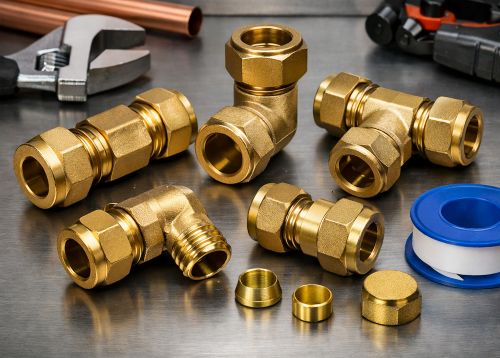
Compression fittings are mechanical fittings that create a watertight seal by compressing a ring (also known as a ferrule) against the pipe as the nut is tightened. Unlike crimp or clamp fittings, compression fittings do not require specialized tools.
A typical compression fitting consists of:
1. A compression nut
2. A compression ring (ferrule)
3. The fitting body
When tightened properly, the ferrule grips the pipe and forms a tight seal around the fitting body.
Are Compression Fittings Compatible with PEX Pipe?
Yes, compression fittings can be used with PEX pipe, but with an important requirement. Because PEX is softer than metal piping, a PEX insert (stiffener) must be installed inside the pipe before tightening the fitting. The insert prevents the pipe from collapsing and ensures a reliable seal.
Compression fittings designed for copper or CPVC are not always suitable for PEX unless they specifically state compatibility and include or allow for a PEX insert.
Advantages of Compression Fittings for PEX Pipe
Compression fittings offer several benefits, making them a popular choice in many plumbing scenarios:
1. No special tools required, ideal for DIYers and quick repairs
2. Easy to install and remove, making adjustments simple
3. Reusable in many cases, unlike crimp fittings
4. Strong, leak-resistant connection when installed correctly
5. Excellent for retrofit projects and transitioning between pipe materials
Limitations and Considerations
While compression fittings are convenient, they do have some limitations:
1. Often not recommended for concealed or in-wall installations
2. Risk of leaks if over-tightened or under-tightened
3. Must comply with local plumbing codes
4. Not ideal for high-vibration or high-temperature environments
Always check local code requirements before choosing compression fittings for permanent installations.
Common Applications of Compression Fittings with PEX
Compression fittings are commonly used in:
1. Plumbing repairs and replacements
2. Connecting PEX to copper or threaded fixtures
3. Shut-off valve installations
4. Accessible locations such as under sinks or behind access panels
They are especially useful where future disassembly may be required.
Types of Compression Fittings for PEX Pipe
Compression fittings come in a variety of styles, including:
➡️ Straight connectors
➡️ Elbows and tees
➡️ Compression-to-thread adapters
➡️ Brass or polymer fittings
Brass fittings are more durable and commonly used for potable water, while polymer fittings may be used in lighter-duty applications.
How to Install Compression Fittings on PEX Pipe
Tools and Materials Needed
➡️ PEX pipe cutter
➡️ Compression fitting
➡️ PEX insert (stiffener)
➡️ Adjustable wrench
Step-by-Step Installation
1. Cut the PEX pipe square and clean the edge.
2. Slide the compression nut and ferrule onto the pipe.
3. Insert the PEX stiffener into the pipe.
4. Push the pipe onto the fitting body fully.
5. Tighten the nut hand-tight, then use a wrench to snug it securely.
6. Do not over-tighten.
Leak Testing
Turn on the water supply and check for leaks. If necessary, gently tighten the fitting slightly more.
Compression Fittings vs. Other PEX Fitting Methods
Compared to other PEX connection methods:
1. Crimp fittings require specialized tools but are code-approved for concealed installations.
2. Clamp (cinch) fittings offer uniform compression and easy verification.
3. Push-to-connect fittings are fast and tool-free but more expensive.
Compression fittings excel in accessibility and ease of use but are not always suitable for every application.
Common Mistakes to Avoid
1. Forgetting to install a PEX insert
2. Over-tightening the compression nut
3. Using fittings not rated for PEX
4. Skipping pressure or leak testing
Avoiding these mistakes will significantly reduce the risk of leaks or failures.
Maintenance and Longevity
Compression fittings should be inspected periodically, especially in accessible installations. Look for signs of moisture, corrosion, or loosening. With proper installation and maintenance, compression fittings can last many years.
Choosing the Right Compression Fitting for Your Project
When selecting compression fittings, consider:
1. Pipe size and compatibility
2. Pressure and temperature ratings
3. Material quality
4. Certifications such as NSF and ASTM
High-quality fittings provide better reliability and longer service life.
Code Compliance and Safety Considerations
Always follow local plumbing codes and manufacturer instructions. Some codes restrict the use of compression fittings in concealed spaces. When in doubt, consult a licensed plumber to ensure compliance and safety.
Frequently Asked Questions (FAQ)
Can compression fittings be reused?
Yes, in many cases, they can be reused if undamaged.
Are compression fittings leak-proof?
When installed correctly with a PEX insert, they are highly reliable.
Can compression fittings be buried or concealed?
Typically, no, check local code requirements.
How long do compression fittings last on PEX?
They can last decades when installed properly and used in approved locations.
Conclusion
Compression fittings offer a flexible, tool-free solution for connecting PEX pipe, especially in repairs, retrofits, and accessible installations. By understanding how they work, where they’re best used, and how to install them correctly, you can confidently incorporate compression fittings into your PEX plumbing system for safe, long-lasting performance.
If you need help choosing the right fittings or planning your project, consulting a professional plumber is always a smart next step.
Post time: Jan-07-2026