

In hydraulic and fluid control systems, choosing the right fitting is critical to ensuring efficiency, safety, and long-term performance. Among the most commonly used components are tee fittings, which allow fluid to branch or combine within a system.
Two popular options, compression branch tee fittings and traditional tee fittings, serve similar purposes but differ significantly in design, installation, and application. Understanding these differences can help engineers, technicians, and buyers make informed decisions.
In this guide, we’ll break down the key differences between compression branch tee and traditional tee fittings, along with their advantages, disadvantages, and best use cases.
What Are Tee Fittings?
Tee fittings are connectors used in piping and hydraulic systems to split or combine the flow of fluids. They are shaped like the letter “T,” with one inlet and two outlets (or vice versa).
Common Types of Tee Fittings
1. Equal tee (same diameter on all ends)
2. Reducing tee (different branch size)
3. Branch tee (used for directional flow control)
Typical Materials
1. Stainless steel
2. Brass
3. Carbon steel
4. Plastic (PVC, nylon)
What Is a Compression Branch Tee Fitting?
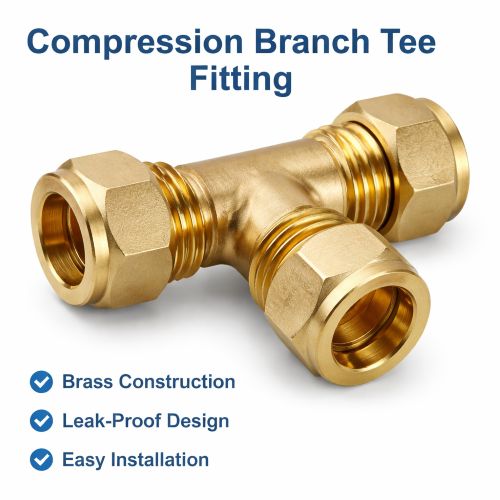
A compression branch tee fitting is a mechanical fitting that uses compression to create a tight seal between pipes or tubes.
Key Components
1. Compression nut
2. Ferrule (olive)
3. Fitting body
How It Works
When the nut is tightened, the ferrule compresses against the pipe, forming a secure, leak-resistant seal without the need for welding or threading.
Common Applications
1. Hydraulic systems
2. Pneumatic systems
3. Instrumentation and control lines
What Is a Traditional Tee Fitting?
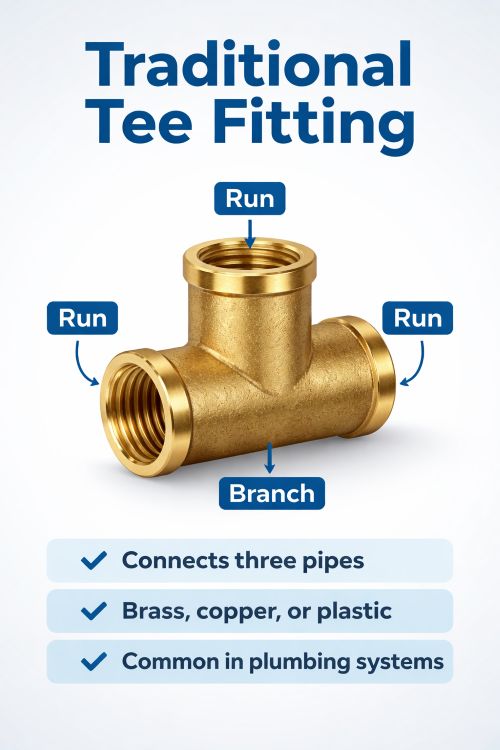
A traditional tee fitting connects pipes using more permanent or semi-permanent methods.
Types of Traditional Tee Fittings
1. Threaded tee
2. Welded tee
3. Soldered or brazed tee
How They Work
These fittings rely on threads, heat (welding), or bonding techniques to create strong and durable connections.
Typical Applications
1. Plumbing systems
2. Industrial pipelines
3. High-pressure or high-temperature environments
Key Differences Between Compression Branch Tee and Traditional Tee Fittings
1. Installation Process
➡️ Compression branch tee fittings are quick and easy to install. They require minimal tools and no heat or threading.
➡️ Traditional tee fittings often require specialized tools, welding equipment, or threading processes, making installation more labor-intensive.
2. Sealing Mechanism
➡️ Compression fittings use a ferrule-based compression seal.
➡️ Traditional fittings depend on threads, welds, or sealants for leak prevention.
3. Pressure and Temperature Resistance
➡️ Compression tees are suitable for moderate to high-pressure applications.
➡️ Traditional tees, especially welded ones, are ideal for extreme pressure and temperature conditions.
4. Reusability and Maintenance
➡️ Compression fittings can often be disassembled and reused, making maintenance easier.
➡️ Traditional fittings are typically permanent, especially welded types, making modifications difficult.
5. Cost Considerations
➡️ Compression fittings have a higher upfront cost but reduce installation time and labor.
➡️ Traditional fittings are cheaper per unit but may incur higher installation costs.
6. Application Flexibility
➡️ Compression tees are ideal for tight spaces and retrofitting projects.
➡️ Traditional tees are better suited for large, fixed systems.
Advantages of Compression Branch Tee Fittings
1. Fast and simple installation
2. No need for welding or specialized tools
3. Easy to maintain and replace
4. Reliable sealing when properly installed
5. Ideal for systems requiring frequent adjustments
Advantages of Traditional Tee Fittings
1. Strong and highly durable
2. Excellent for high-pressure and high-temperature environments
3. Cost-effective for large-scale installations
4. Long lifespan in permanent systems
Disadvantages of Each Type
Compression Branch Tee Fittings
1. Can loosen under vibration if not properly tightened
2. Not always suitable for extreme conditions
3. Requires correct installation technique
Traditional Tee Fittings
1. Time-consuming installation
2. Requires skilled labor and equipment
3. Difficult to modify once installed
How to Choose the Right Tee Fitting
When selecting between a compression branch tee and a traditional tee fitting, consider the following:
1. System pressure and temperature requirements
2. Installation environment (space, tools available)
3. Need for flexibility or permanence
4. Maintenance frequency
5. Total cost (materials + labor)
Comparison Table
|
Feature |
Compression Branch Tee |
Traditional Tee |
|
Installation |
Easy |
Complex |
|
Tools Required |
Minimal |
Specialized |
|
Reusability |
Yes |
Limited |
|
Pressure Handling |
Moderate–High |
High–Very High |
|
Best Use |
Flexible systems |
Permanent systems |
Industry Applications
Compression Branch Tee Fittings
1. Instrumentation systems
2. Hydraulic maintenance setups
3. Laboratory and testing environments
Traditional Tee Fittings
1. Oil and gas pipelines
2. Heavy industrial systems
3. Building plumbing infrastructure
Frequently Asked Questions (FAQ)
1. What is the main difference between compression branch tee and traditional tee fittings?
The key difference is the connection method. Compression fittings use mechanical compression, while traditional fittings rely on threading, welding, or soldering.
2. Are compression branch tee fittings suitable for high-pressure systems?
Yes, they can handle moderate to high pressure. However, for extremely high-pressure environments, welded traditional fittings are often preferred.
3. Can compression branch tee fittings be reused?
Yes, they are generally reusable if the components are in good condition, although repeated use may reduce sealing performance.
4. Which type of tee fitting is easier to install?
Compression branch tee fittings are significantly easier to install since they do not require heat or specialized tools.
5. Do compression fittings leak more than traditional fittings?
No. When installed correctly, compression fittings provide a reliable, leak-proof seal. Most leaks occur due to improper installation.
6. When should I choose a traditional tee fitting?
Choose traditional fittings for:
➡️ High-pressure or high-temperature systems
➡️ Permanent installations
➡️ Large industrial pipelines
7. Are compression branch tee fittings more expensive?
They typically have a higher upfront cost but can save money on labor and installation time.
8. What materials are commonly used?
Both types are available in stainless steel, brass, carbon steel, and plastic, depending on application requirements.
Conclusion
Both compression branch tee fittings and traditional tee fittings play essential roles in hydraulic and fluid systems. The right choice depends on your specific application, including pressure requirements, installation conditions, and maintenance needs.
If you need flexibility, quick installation, and easy maintenance, compression fittings are an excellent choice. For permanent, high-performance systems, traditional tee fittings remain the industry standard.
Post time: Apr-01-2026