

Hydraulic systems rely on secure, leak-free connections to deliver fluid efficiently under high pressure. While there are many types of hydraulic fittings available, BSP hydraulic banjo fittings are a popular choice for applications where installation space is limited and flexible hose routing is essential. Their compact design and dependable sealing make them a valuable component in industries ranging from agriculture and construction to manufacturing and automotive engineering.
In this guide, you’ll learn what BSP hydraulic banjo fittings are, how they work, their key features, common applications, and the benefits they provide in hydraulic systems.
What Are BSP Hydraulic Banjo Fittings?
A BSP hydraulic banjo fitting is a specialized hydraulic connector designed to join hoses or tubing to hydraulic components while allowing fluid to flow through a hollow bolt. The fitting gets its name from its circular “banjo” shape, which resembles the body of a banjo instrument.
Unlike standard straight or elbow fittings, banjo fittings allow the hydraulic hose to be positioned in tight spaces without creating excessive stress or sharp bends. This makes them particularly useful in compact machinery where every inch of space matters.
Understanding BSP Threads
BSP stands for British Standard Pipe, one of the most widely used thread standards for hydraulic and fluid transfer systems.
There are two common BSP thread types:
1. BSPP (British Standard Pipe Parallel): Uses parallel threads and seals with bonded washers, O-rings, or sealing faces.
2. BSPT (British Standard Pipe Taper): Uses tapered threads that create a seal as they tighten.
Choosing the correct BSP thread type is essential to ensure a leak-free hydraulic connection and prevent thread damage.
Main Components of a BSP Hydraulic Banjo Fitting
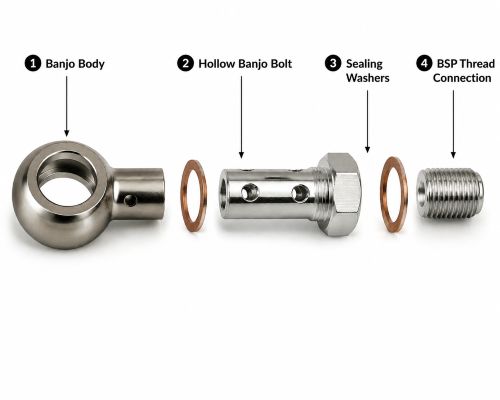
A BSP hydraulic banjo fitting consists of several simple yet important components.
1. Banjo Body
The banjo body features a circular eye that allows hydraulic fluid to pass through while connecting the hose or tube to the hydraulic system.
2. Hollow Banjo Bolt
The hollow bolt passes through the center of the banjo fitting and allows hydraulic fluid to flow from one component to another while securing the fitting in place.
3. Sealing Washers
Copper washers, bonded seals, or O-rings are installed on both sides of the banjo fitting to create a leak-proof seal under pressure.
4. BSP Thread Connection
The banjo bolt or fitting includes BSP threads that connect securely to compatible hydraulic ports.
How BSP Hydraulic Banjo Fittings Work
BSP hydraulic banjo fittings operate by allowing hydraulic fluid to travel through the hollow center of the banjo bolt and into the circular banjo body before flowing into the connected hose.
During installation:
1. A sealing washer is placed on each side of the banjo fitting.
2. The hollow bolt passes through the fitting.
3. The bolt threads into the hydraulic component.
4. Once tightened to the recommended torque, the washers compress and create a reliable hydraulic seal.
Because the fitting can often be rotated before final tightening, installers can easily position hydraulic hoses in the most efficient direction.
Key Features of BSP Hydraulic Banjo Fittings
1. Compact Design
The slim profile allows installation in confined areas where standard hydraulic fittings cannot easily fit.
2. Flexible Hose Positioning
Banjo fittings make it easier to route hydraulic hoses around engines, pumps, cylinders, and valves while minimizing hose stress.
3. High Pressure Performance
Quality BSP hydraulic banjo fittings are manufactured to withstand demanding hydraulic pressures commonly found in industrial and mobile equipment.
4. Reliable Leak Prevention
Properly installed sealing washers create dependable leak-free connections, helping maintain system efficiency.
5. Excellent Vibration Resistance
Their secure design makes banjo fittings suitable for machinery exposed to continuous vibration and movement.
6. Easy Installation
The straightforward assembly process simplifies installation, maintenance, and replacement when servicing hydraulic equipment.
7. Multiple Material Options
BSP hydraulic banjo fittings are commonly available in:
➡️ Carbon steel
➡️ Stainless steel
➡️ Brass (primarily for lower-pressure systems)
Different materials provide varying levels of corrosion resistance and durability depending on the application.
Benefits of Using BSP Hydraulic Banjo Fittings
1. Saves Valuable Space
Their compact construction makes them ideal for machinery where installation space is limited.
2. Reduces Hose Twisting
The adjustable positioning helps reduce unnecessary hose bending and twisting, extending hose life.
3. Improves System Reliability
Secure hydraulic connections reduce the chances of pressure loss and unexpected leaks.
4. Minimizes Leakage
Proper sealing washers provide consistent sealing even under high operating pressures.
5. Simplifies Maintenance
Banjo fittings are relatively easy to remove and replace during routine equipment servicing.
6. Extends Hose Life
Better hose routing reduces mechanical stress, helping hoses last longer.
7. Maintains Efficient Fluid Flow
The hollow bolt design allows hydraulic fluid to flow smoothly while maintaining reliable pressure.
Common Applications of BSP Hydraulic Banjo Fittings
Because of their versatility, BSP hydraulic banjo fittings are used across numerous industries.
1. Construction Equipment
➡️ Excavators
➡️ Backhoes
➡️ Wheel loaders
➡️ Bulldozers
2. Agricultural Machinery
➡️ Tractors
➡️ Harvesters
➡️ Sprayers
➡️ Hydraulic implements
3. Industrial Equipment
➡️ Hydraulic presses
➡️ Manufacturing machinery
➡️ Injection molding machines
➡️ Hydraulic power units
4. Automotive Systems
They are commonly used in:
➡️ Hydraulic brake systems
➡️ Clutch hydraulics
➡️ Power steering systems
5. Marine Equipment
Marine hydraulic steering systems and deck equipment often use corrosion-resistant stainless steel banjo fittings.
6. Material Handling Equipment
➡️ Forklifts
➡️ Lift tables
➡️ Cranes
➡️ Aerial work platforms
Types of BSP Hydraulic Banjo Fittings
Several types are available depending on the application.
1. Straight Banjo Fittings
Suitable for standard hydraulic connections requiring minimal directional change.
2. Adjustable Banjo Fittings
Allow easier hose alignment before final tightening.
3. Single Banjo Fittings
Connect one hydraulic line to a component.
4. Double Banjo Fittings
Allow two hydraulic lines to connect through a single banjo bolt.
5. Male BSP Banjo Fittings
Feature external BSP threads for direct installation.
6. Female BSP Banjo Fittings
Designed to connect with male-threaded hydraulic components.
BSP Hydraulic Banjo Fittings vs. Standard Hydraulic Elbow Fittings
Although both fitting types perform similar functions, they are designed for different installation needs.
|
Feature |
BSP Banjo Fittings |
Standard Elbow Fittings |
|
Space Requirement |
Excellent for tight spaces |
Requires more clearance |
|
Hose Positioning |
Highly flexible |
Limited |
|
Installation Flexibility |
High |
Moderate |
|
Leak Protection |
Excellent |
Excellent |
|
Maintenance |
Easy |
Moderate |
For compact hydraulic systems, banjo fittings often provide a more practical solution.
How to Choose the Right BSP Hydraulic Banjo Fitting
Selecting the correct fitting helps maximize hydraulic system performance.
Consider the following:
1. BSP thread type (BSPP or BSPT)
2. Thread size
3. Pressure rating
4. Material selection
5. Corrosion resistance
6. Hydraulic fluid compatibility
7. Operating temperature
8. Installation space
9. Industry standards and equipment specifications
Matching these factors ensures safe and reliable operation.
Installation Best Practices
To achieve long-lasting performance:
1. Inspect all threads before installation.
2. Always replace sealing washers when reinstalling fittings.
3. Follow the manufacturer’s recommended torque specifications.
4. Avoid over-tightening the banjo bolt.
5. Align hoses properly before final tightening.
6. Perform a pressure test after installation.
7. Inspect regularly for leaks and loose connections.
Common Mistakes to Avoid
Avoid these common installation errors:
1. Mixing BSP and NPT thread types
2. Reusing damaged sealing washers
3. Over-tightening the banjo bolt
4. Using fittings with insufficient pressure ratings
5. Ignoring corrosion on sealing surfaces
6. Installing dirty or contaminated fittings
Preventing these mistakes helps reduce downtime and costly repairs.
Maintenance Tips
Routine maintenance improves the lifespan of both the fitting and the hydraulic system.
Recommended practices include:
1. Inspect fittings for leaks during regular maintenance.
2. Replace worn sealing washers immediately.
3. Monitor fittings for corrosion.
4. Clean hydraulic connections before servicing.
5. Tighten loose fittings to the specified torque.
6. Replace damaged banjo bolts without delay.
7. Proper maintenance contributes to safer and more efficient hydraulic operation.
Frequently Asked Questions
What is a BSP hydraulic banjo fitting?
A BSP hydraulic banjo fitting is a compact hydraulic connector that uses a hollow bolt to transfer hydraulic fluid while allowing flexible hose routing in confined spaces.
What is the purpose of a banjo fitting?
Its primary purpose is to create a secure hydraulic connection where installation space is limited and hose positioning flexibility is important.
Are BSP hydraulic banjo fittings suitable for high-pressure systems?
Yes. High-quality BSP hydraulic banjo fittings are designed to handle demanding hydraulic pressures when correctly installed.
What materials are BSP hydraulic banjo fittings made from?
They are commonly manufactured from carbon steel, stainless steel, and brass depending on the application requirements.
What is the difference between BSPP and BSPT banjo fittings?
BSPP fittings use parallel threads and rely on sealing washers or O-rings, while BSPT fittings use tapered threads that create a seal as they tighten.
Can BSP hydraulic banjo fittings be reused?
The fitting itself can often be reused if it remains undamaged. However, sealing washers should always be replaced to maintain a reliable seal.
How can I prevent hydraulic leaks?
Use the correct BSP thread type, install new sealing washers, tighten the fitting to the recommended torque, and inspect the connection regularly.
Conclusion
BSP hydraulic banjo fittings offer an effective solution for hydraulic systems that require compact, reliable, and leak-free connections. Their unique design allows for efficient hose routing, excellent sealing performance, and dependable operation in high-pressure environments.
Whether used in construction machinery, agricultural equipment, industrial systems, automotive hydraulics, or marine applications, these fittings help improve system reliability while simplifying installation and maintenance. By selecting the correct thread type, material, and pressure rating, and by following proper installation practices, you can maximize the performance and longevity of your hydraulic system.
Post time: Aug-05-2026