

Fluid transfer systems are the backbone of countless industries, from hydraulic machinery and oil refineries to residential plumbing and instrumentation systems. No matter the application, the reliability of the connection points within these systems plays a major role in operational safety, efficiency, and long-term performance.
Choosing the correct fitting type is more important than many people realize. A poorly selected fitting can lead to leaks, pressure loss, vibration-related failures, and expensive downtime. Among the many fitting options available today, bite type bulkhead fittings and compression fittings are two of the most commonly used solutions.
Although these fittings may appear similar at first glance, they are designed for very different operating conditions. Bite type bulkhead fittings are engineered for demanding hydraulic and industrial applications, while compression fittings are typically preferred for lighter-duty systems that prioritize simplicity and cost efficiency.
This article explains the differences between bite type bulkhead fittings and compression fittings, including how they work, where they are used, and which option is best suited for your application.
What Are Bite Type Bulkhead Fittings?
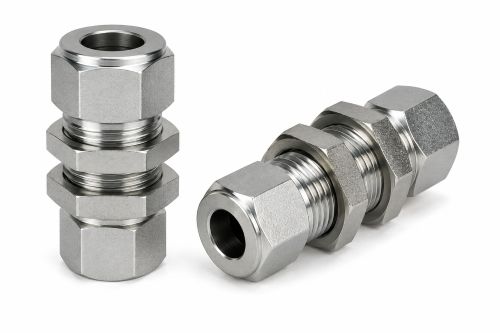
Bite type bulkhead fittings are specialized tube fittings designed to create secure, leak-proof connections in high-pressure systems. They are commonly used in hydraulic and industrial applications where reliability and vibration resistance are critical.
The defining feature of these fittings is the “bite” mechanism. During installation, the ferrule or cutting ring grips and slightly penetrates the outer surface of the tubing. This creates a strong mechanical hold and forms a highly reliable seal capable of withstanding high pressure and vibration.
How the “Bite” Mechanism Works
When the fitting nut is tightened, the ferrule is compressed between the nut and fitting body. The ferrule then bites into the tube surface, creating:
1. A firm mechanical grip
2. Excellent resistance to tube pull-out
3. A high-integrity metal-to-metal seal
This biting action is what gives the fitting its superior durability in demanding industrial environments.
Key Components
Nut: The nut applies the force needed to compress the ferrule onto the tubing.
Ferrule/Ring: The ferrule is the critical sealing component that bites into the tube surface to create the seal and mechanical grip.
Fitting Body: The fitting body provides the connection pathway for fluid transfer and supports the ferrule assembly.
Bulkhead Mounting Structure: The bulkhead section allows the fitting to pass securely through panels, walls, or equipment enclosures while maintaining system integrity.
Common Applications
Bite type bulkhead fittings are widely used in industries that operate under high pressure and harsh environmental conditions, including:
➡️ Hydraulic systems
➡️ High-pressure industrial pipelines
➡️ Oil and gas operations
➡️ Heavy machinery
➡️ Construction equipment
➡️ Manufacturing plants
Main Advantages
Strong Leak-Proof Sealing
The metal-to-metal bite connection creates a highly dependable seal.
High Vibration Resistance
These fittings perform exceptionally well in systems exposed to constant movement or shock.
Reliable Performance Under Pressure
Bite type fittings are specifically engineered for high-pressure hydraulic environments.
What Are Compression Fittings?
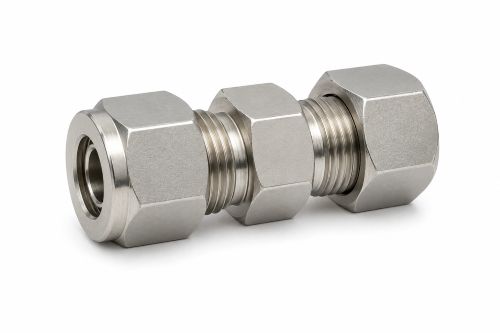
Compression fittings are mechanical fittings designed to connect tubing without requiring welding, soldering, or threading. They are commonly used in plumbing, gas distribution, and instrumentation systems.
Unlike bite type fittings, compression fittings rely on compressive force around the tubing rather than penetration into the tube surface.
How Compression Sealing Works
As the compression nut is tightened, the ferrule compresses around the outer diameter of the tube. This compression creates a seal by applying even pressure around the tubing surface.
The sealing mechanism depends primarily on compression rather than a mechanical bite.
Key Components
Compression Nut: The nut tightens the fitting assembly and applies pressure to the ferrule.
Compression Ring/Ferrule: The ferrule compresses around the tubing to form the seal.
Fitting Body: The fitting body contains the internal sealing surfaces and fluid pathway.
Common Applications
Compression fittings are frequently used in:
1. Plumbing systems
2. Water supply lines
3. Gas distribution systems
4. Instrumentation tubing
5. Low-to-medium pressure systems
Main Advantages
Easy Installation
Compression fittings are straightforward to install and usually require only basic hand tools.
Cost-Effective Solution
They are generally less expensive than industrial-grade bite type fittings.
Suitable for Lightweight Applications
Compression fittings work well in systems with moderate pressure and limited vibration exposure.
Bite Type Bulkhead Fittings vs. Compression Fittings: Core Differences
Understanding the core differences between these two fitting types is essential for selecting the right solution.
Sealing Mechanism
Bite Type Bulkhead Fittings
1. The ferrule bites into the tubing surface
2. Creates a strong mechanical grip
3. Forms a durable metal-to-metal seal
Compression Fittings
1. The ferrule compresses around the tube
2. Relies mainly on pressure sealing
3. Does not penetrate the tubing surface
Key Takeaway
Bite type fittings generally provide stronger sealing performance in demanding industrial environments.
Pressure Handling Capacity
Bite Type Bulkhead Fittings
These fittings are designed specifically for high-pressure hydraulic systems and industrial fluid transfer applications.
Compression Fittings
Compression fittings are better suited for low-to-medium pressure systems where extreme pressure resistance is not required.
Comparison Insight
In heavy-duty operations, bite type fittings typically outperform compression fittings in terms of pressure tolerance and reliability.
Resistance to Vibration and Shock
Bite Type Bulkhead Fittings
➡️ Excellent resistance to vibration
➡️ Strong tube retention
➡️ Ideal for moving machinery and dynamic systems
Compression Fittings
➡️ Can loosen over time under constant vibration
➡️ Less effective in high-shock environments
Key Takeaway
Bite type fittings are generally the safer and more reliable option for systems exposed to continuous movement or vibration.
Installation Process
Bite Type Bulkhead Fittings
1. Require accurate assembly procedures
2. Often need specialized installation tools
3. Proper torque settings are critical
Compression Fittings
1. Faster and easier to install
2. Minimal tools required
3. Suitable for quick field installations
Comparison Insight
Compression fittings are more beginner-friendly and convenient for simple installations.
Maintenance Requirements
Bite Type Bulkhead Fittings
1. Require less maintenance after installation
2. Offer strong long-term durability
3. Reduced risk of loosening
Compression Fittings
1. May require periodic inspection and retightening
2. More susceptible to wear in demanding conditions
Key Takeaway
Bite type fittings can help reduce maintenance downtime in industrial environments.
Cost Comparison
Bite Type Bulkhead Fittings
1. Higher upfront investment
2. Longer service life
3. Better long-term performance value
Compression Fittings
1. Lower initial cost
2. Economical for basic systems
3. Suitable for budget-sensitive projects
Comparison Insight
The best choice depends on both operational demands and available budget.
Material Options for Both Fitting Types
Both bite type bulkhead fittings and compression fittings are available in several material options.
Common Materials
Stainless Steel: Offers excellent corrosion resistance, strength, and durability in harsh environments.
Brass: Commonly used in plumbing and low-pressure systems due to its affordability and ease of machining.
Carbon Steel: Provides strong mechanical performance and is often used in industrial hydraulic systems.
Material Selection Factors
When selecting fitting materials, consider:
➡️ Corrosion resistance
➡️ Operating temperature range
➡️ Chemical compatibility
➡️ Pressure rating
➡️ Environmental conditions
Choosing the wrong material can significantly reduce fitting lifespan and system reliability.
Which Fitting Type Is Best for Your Application?
The right fitting depends entirely on your operating conditions and system requirements.
Choose Bite Type Bulkhead Fittings If:
1. You need high-pressure performance
2. Your system experiences frequent vibration
3. Long-term reliability is essential
4. You operate industrial hydraulic systems
5. Equipment safety is a top priority
Choose Compression Fittings If:
1. You need quick and simple installation
2. Your system operates at moderate pressure
3. Budget limitations are important
4. You are working with plumbing or light-duty systems
5. Minimal tooling is preferred
Common Mistakes to Avoid When Selecting Fittings
Even high-quality fittings can fail if they are incorrectly selected or installed.
Using Low-Pressure Fittings in High-Pressure Systems
One of the most common mistakes is using compression fittings in systems that exceed their pressure capacity. This can result in:
➡️ Fluid leakage
➡️ System inefficiency
➡️ Sudden fitting failure
➡️ Safety hazards
Always verify pressure ratings before installation.
Ignoring Material Compatibility
Using incompatible materials can lead to:
➡️ Corrosion
➡️ Chemical degradation
➡️ Premature wear
➡️ Reduced sealing performance
Material compatibility should always match the fluid and environmental conditions.
Improper Installation
Both over-tightening and under-tightening can create problems.
Over-Tightening Risks:
➡️ Damaged ferrules
➡️ Tube deformation
➡️ Reduced sealing performance
Under-Tightening Risks:
➡️ Leaks
➡️ Loose connections
➡️ Pressure loss
Following manufacturer installation guidelines is essential.
Choosing Based Only on Cost
While lower-cost fittings may reduce initial expenses, they can create higher long-term operational costs through:
1. Frequent maintenance
2. Downtime
3. Replacement expenses
4. System failures
Evaluating total lifecycle value is often more important than initial purchase price.
Conclusion
Bite type bulkhead fittings and compression fittings both play important roles in fluid transfer systems, but they are designed for different operating conditions.
Bite type bulkhead fittings provide:
1. Superior pressure handling
2. Excellent vibration resistance
3. Long-term durability
4. Reliable sealing in industrial hydraulic systems
Compression fittings offer:
1. Easier installation
2. Lower upfront cost
3. Practical performance for moderate-pressure applications
4. Convenience for plumbing and instrumentation systems
Selecting the correct fitting is critical for system safety, efficiency, and long-term reliability. The best choice ultimately depends on factors such as pressure requirements, vibration exposure, installation complexity, maintenance expectations, and budget.
For critical applications, it is always advisable to consult experienced fitting specialists or manufacturers to ensure proper sizing, material compatibility, and installation procedures.
FAQ Section
1. Are bite type bulkhead fittings better than compression fittings?
Not necessarily in every situation. Bite type fittings are better for high-pressure and vibration-heavy environments, while compression fittings are ideal for lighter-duty systems that prioritize easy installation and lower cost.
2. Can compression fittings be used in hydraulic systems?
Yes, but typically only in low-pressure hydraulic applications. High-pressure hydraulic systems usually require more robust fitting designs such as bite type fittings.
3. Do bite type fittings require special tools?
Yes. Proper installation often requires specialized assembly tools and accurate torque control to ensure correct ferrule engagement.
4. Which fitting type lasts longer?
In industrial and high-pressure conditions, bite type fittings generally provide a longer service life due to their stronger mechanical grip and superior resistance to vibration.
5. Are stainless steel fittings better than brass fittings?
Stainless steel fittings usually offer better corrosion resistance, strength, and durability. Brass fittings, however, remain a cost-effective choice for many plumbing and low-pressure applications.
Post time: May-20-2026